Robbie Thain
Founder, CEO

Learn how top consumer brands replace booth chaos with pre-scheduled meetings and experiential zones to turn trade show foot traffic into measurable sales ROI.

Nearly forty percent of marketing budgets vanish into live events with little to show for the massive expense. By replacing hopeful booth lingering with pre scheduled meetings and targeted experiential zones, brands can transform trade show chaos into reliable sales outcomes.
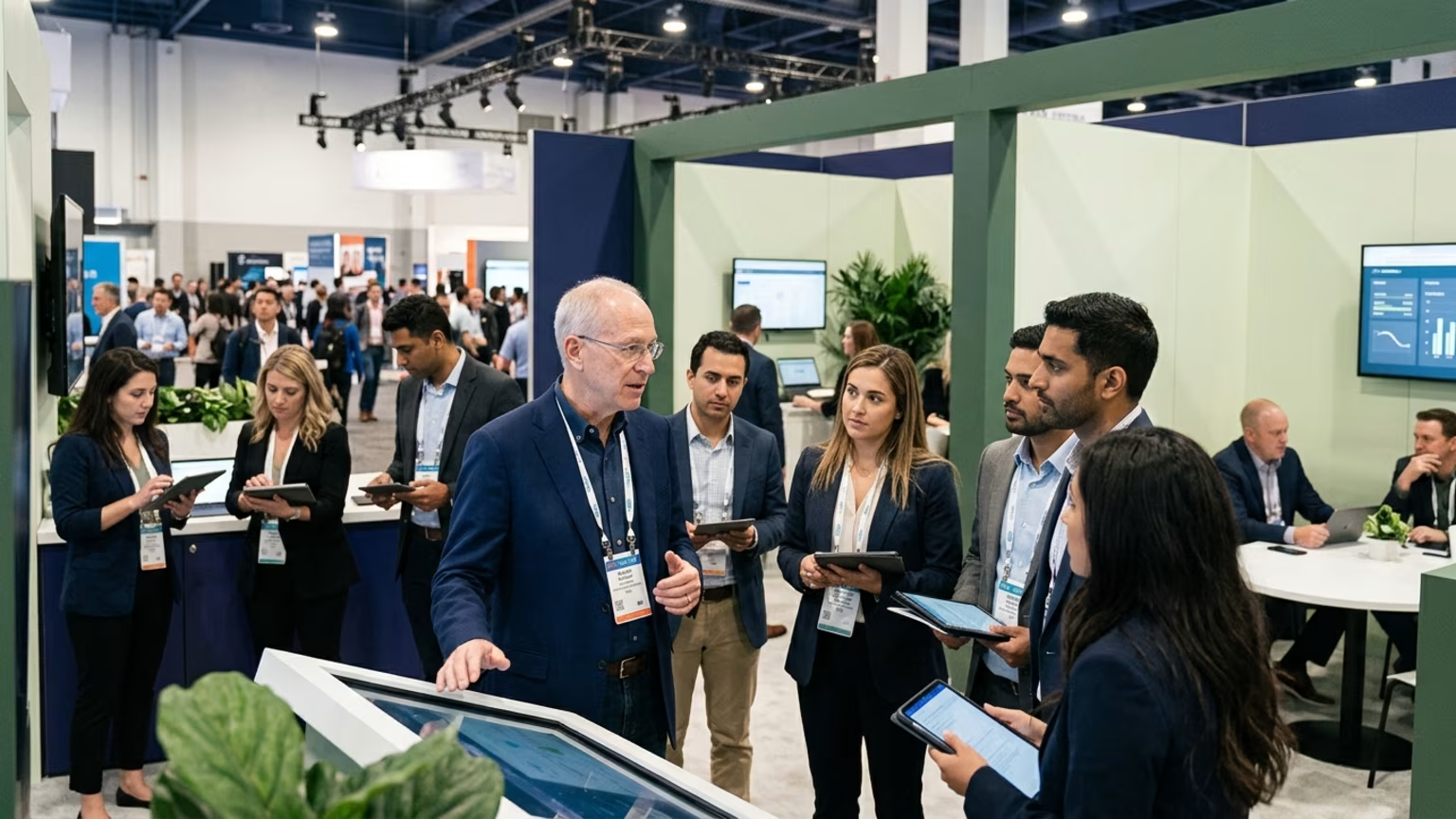
The doors open at a major national trade show. A massive sea of lanyards floods the main aisle. Your field marketing team stands by the booth scanning badges like retail clerks. They are quietly praying that a key decision maker wanders into your footprint.
You have invested six figures in floor space, custom fabrication, and travel logistics. The visual presentation is absolutely flawless. The sampling station is fully stocked with your newest product lines. But without a strict plan to lock in conversations before the event, your sales representatives are left fighting for scraps of attention.
Many consumer brands treat massive trade shows as giant awareness exercises. They hand out thousands of free snacks, branded merchandise, or drinks to casual attendees. At the end of the long week, they measure their performance by the sheer volume of empty sample boxes. This outdated model produces extreme exhaustion rather than qualified pipeline.
The true cost of this passive approach becomes obvious during the post show debrief. The sales team complains loudly about the low quality of the scanned leads. The executive team questions the large budget allocation for future events. The marketing department struggles to defend the significant spend with weak vanity metrics.
The solution requires an operating model that aligns marketing attraction directly with sales execution. A recent feature in Event Marketer highlights a major shift in how top brands approach these large exhibitions. Consumer packaged goods companies are completely abandoning the open floor free for all. They are building their entire trade show presence around hosted buyer programs and highly targeted zones.
This proactive approach begins weeks before the expo doors ever open. Field marketing and sales teams collaborate closely to identify key retail buyers, regional distributors, and strategic partners. They deploy targeted outreach campaigns to book hard appointments well in advance. Employing strategies that prioritize securing buyer appointments in advance is a non negotiable step for serious operators. By the time the team arrives on site, their daily calendar is fully booked with high value prospects.
Inside the physical booth space, the strategy dictates a strict division of labor and real estate. Brands must build distinct areas tailored to different attendee intents. A public facing experiential zone captures the attention of general attendees and industry media. A private lounge area provides the quiet space needed to conduct actual commercial business.
This dual zone layout requires rigorous discipline from the onsite field staff. Brand ambassadors run the high volume sampling stations with incredible energy and efficiency. Senior sales executives stay completely out of the general fray to focus entirely on their pre scheduled meetings. This clean separation of duties turns a noisy display into a highly functional commercial environment.
Transforming your trade show presence from a sampling free for all into a targeted sales engine requires strict execution. You must manage both the physical environment and the human capital with absolute precision. Below is the exact step by step playbook to implement this commercial strategy at your next major exhibition.
To prove the true value of your experiential marketing investments, you must stop reporting on total badge scans and free samples distributed. True commercial operators track the exact data points that accurately predict revenue. Establishing clear lead and lag metrics allows you to calculate a highly defensible Return on Investment.
Lead metrics show if your strategy is working during your active time on the show floor. Track the percentage of your pre scheduled meetings that actually occur. Measure the total number of target accounts that check into your private sales lounge. Monitor the exact ratio of qualified commercial conversations to general attendee badge scans.
These leading indicators provide real time feedback on your team performance and booth flow. If buyer meeting attendance drops, your onsite manager can deploy immediate corrective actions. They can text buyers to reschedule or send field staff to locate missing prospects on the floor. Relying on structured tracking models during complex activations keeps your field team focused on outcomes rather than busy work.
Lag metrics require patience but tell the final story of your total commercial success. Calculate the total pipeline value generated directly from the live event. Measure the average cost per qualified meeting to compare the trade show against other marketing channels. Track the win rate of sales opportunities sourced from your experiential zones over a full six month period.
Theoretical frameworks only matter if they survive contact with a chaotic live event environment. We see this harsh reality play out constantly with premium food and beverage brands aiming to secure national retail distribution. A recent client activation at a large industry expo perfectly demonstrates the sheer power of this segmented approach.
A national beverage client was launching a new line of functional drinks and needed to secure major shelf space with regional grocers. Instead of building a massive sampling bar, they split their huge footprint into a public tasting zone and a private buyer lounge. Their field team managed the massive public crowds with high energy product demonstrations. The executive sales team sat quietly in the enclosed lounge conducting thirty minute strategic reviews with pre booked category managers.
We create experiential marketing programs built to connect emotion with action. Our process blends creativity, strategy, and data so that every brand interaction drives measurable results. We craft experiences that engage all five senses. We help people not just see brands but feel them. This turns fleeting moments into meaningful business outcomes. This exact philosophy powered their dual zone execution.
The brand did not just collect a bowl full of random business cards from passing attendees. They recorded concrete commercial commitments for retail trials and regional product rollouts. By treating their trade show presence as a precise commercial tool, they generated immediate sales pipeline that dwarfed their initial floor space investment.
When the final bell rings and the sea of lanyards begins to recede, your team should not be standing around feeling exhausted and hopeful. They should be packing up their gear with a fully booked calendar and a huge pipeline of qualified retail meetings. If you are ready to stop hoping and start converting, book a strategy call with our team today.

30 Years Experiential & Retail Activation Partner for CPG & Beverage Brands | Multi-Market Demos, Roadshows & Costco/Club Programs That Actually Sell