Robbie Thain
Founder, CEO

Renting a traditional trade show booth guarantees you will be ignored. Learn how to design interactive, data-rich event environments that drive real pipeline.
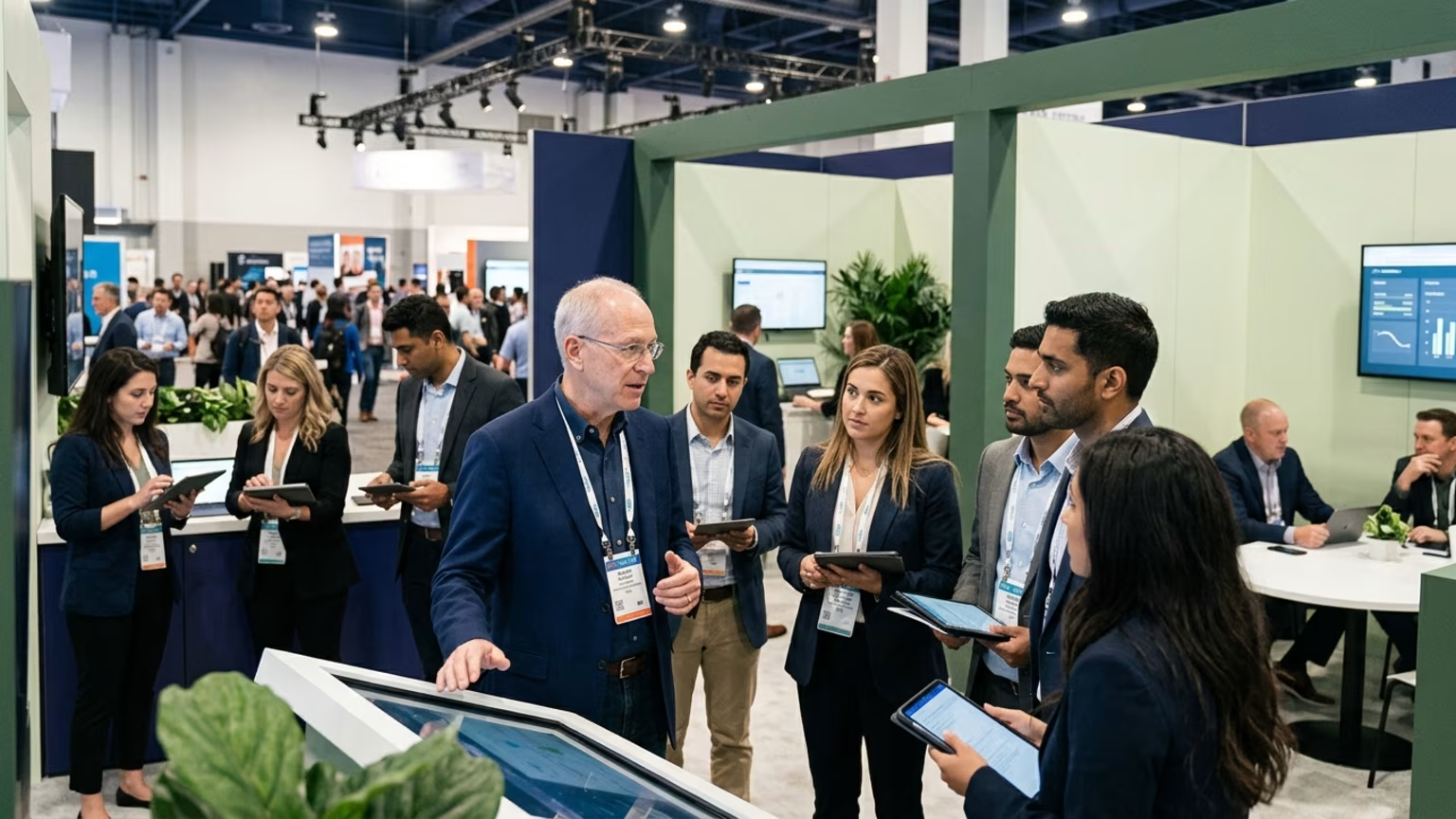
Renting a standard trade show booth in 2026 is an expensive way to be ignored by your target audience. The upcoming IAAPA sports and entertainment expo in Los Angeles proves that brands must build highly interactive environments to capture attention.
Walk onto any major expo floor today and you will notice a stark divide. On one side sit the traditional brand pavilions. These spaces feature branded table skirts, neat rows of brochures, and bored representatives checking their phones. The foot traffic here is painfully thin.
Passersby avoid eye contact to escape awkward sales pitches. The atmosphere feels stiff, corporate, and entirely disconnected from the actual consumer.
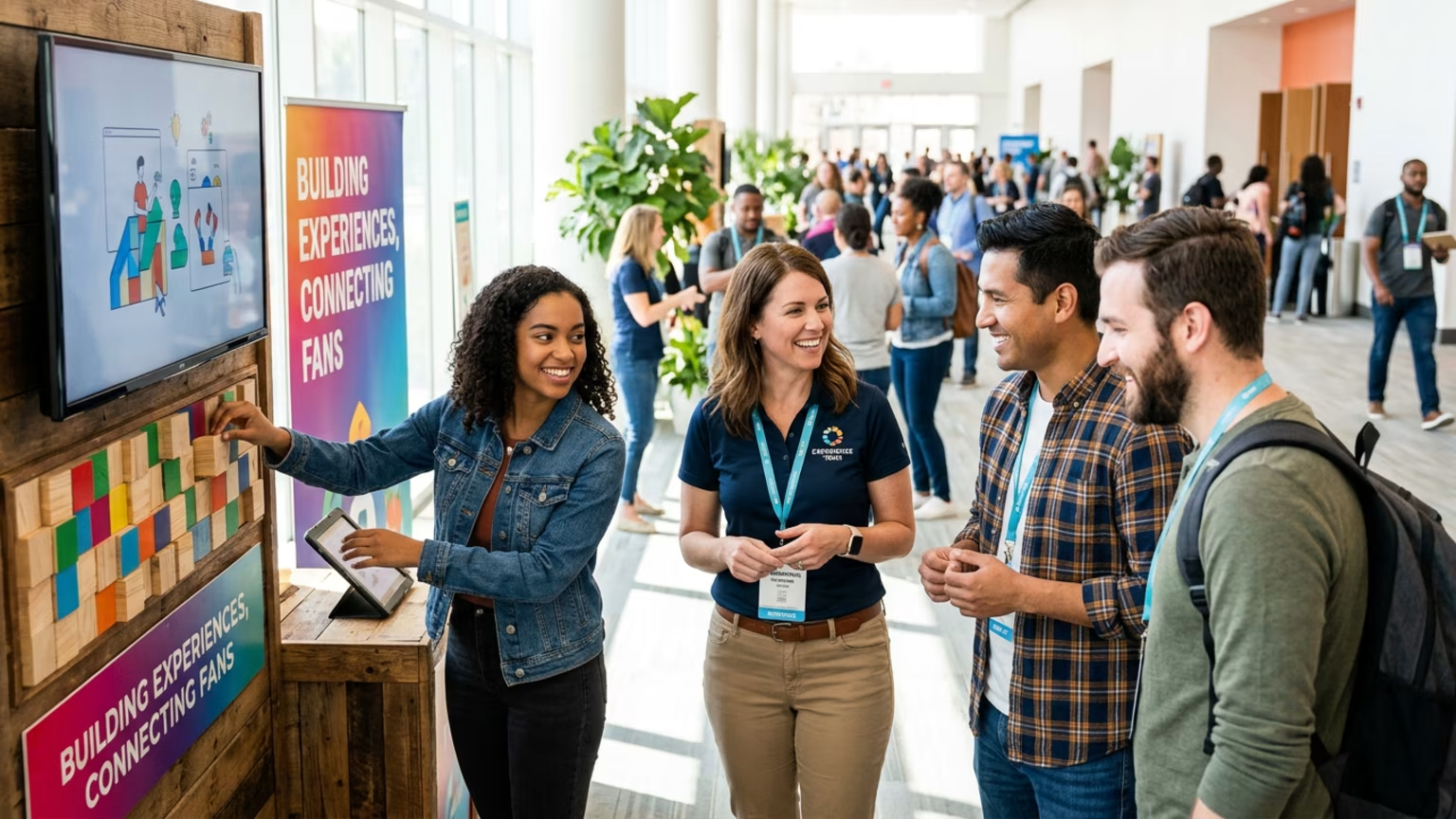
Across the aisle stands a completely different scene. High volume crowds gather around interactive sports simulators, live product tastings, and tactile brand experiences. Attendees are laughing, recording videos on their phones, and willingly trading their contact information for a chance to participate. The energy is electric.
The noise level forces people to step closer and engage directly with the activation. The contrast highlights a massive operational failure for the brands stuck in the past. Consumers no longer tolerate passive marketing environments. They expect a physical connection to the brand story before they commit their time or money.
When field marketing teams fail to adapt, they waste massive event budgets on activations that generate zero pipeline. The chaos of a busy sports expo only amplifies this failure. A poorly planned activation becomes a ghost town surrounded by high energy competitors.
The financial drain of a bad event strategy extends far beyond the rental fee. You are paying for travel, lodging, shipping, and hourly wages for staff who are standing around doing nothing. This operational waste destroys your marketing budget and kills any chance of proving your event strategy works. The transition to an interactive model is no longer an option.
Sports fans represent the most demanding demographic in the live event space. They are accustomed to high production value, instant replays, and constant stimulation. When they walk into a sports and entertainment expo, their expectations remain incredibly high. A brand that shows up with a pop up tent and some free pens looks completely out of touch.
To win this audience, your activation must mirror the intensity of the sport itself. Fans want to feel the adrenaline of competition. They want to test their skills against their friends and see their names on a digital screen. This competitive edge transforms a boring product demonstration into a memorable event.
The physical environment must reflect this energy through sound design, dynamic lighting, and clear visual boundaries. This approach requires treating your event space like a broadcast set. Every angle must look good on a smartphone camera. The lighting must flatter the participants.
The branding must be clearly visible in the background of every shot without looking like a desperate billboard. When you nail this environmental design, the attendees become your dedicated content creators. They gladly broadcast your brand message to their entire social network.
The shift toward immersive events requires a complete tear down of traditional trade show strategy. You cannot simply add a digital screen to a static booth and call it an experience. True interactive environments demand a precise combination of physical movement, sensory engagement, and frictionless data capture. This approach requires treating every attendee as a participant rather than a spectator.
We build festival zones, premieres, and pop-ups that turn viewers into fans and fans into advocates. We design moments people want to share, using music tie-ins, screenings, and live stunts to bring stories to life. Our crews manage execution and track reach and response metrics. This physical engagement must connect directly to your core brand value.
If you sell a high protein snack, your activation should test endurance or strength. A static booth assumes the consumer wants to be sold a product. An interactive environment assumes the consumer wants to be entertained or challenged. This subtle shift changes the entire dynamic of the floor.
When you offer an experience, the consumer drops their natural sales resistance. They stop looking for an escape route and start looking for instructions. Your field team can then guide them through a branded journey that feels completely natural.
The layout of your space must guide attendees through a deliberate narrative. You need clear entry points, a primary interaction zone, and a seamless exit strategy. Every step of this physical flow must serve a specific data collection goal. This structured engagement transforms unpredictable foot traffic into highly qualified sales conversations.
Brands that invest in a centralized command for field operations see far better results on the floor. Managing an interactive space requires strict logistical control. Your brand ambassadors need to know exactly how to guide interactions without breaking the immersive spell.
Creating a data rich environment requires meticulous planning long before the venue doors open. You must build your activation around predictable human behavior. Here is the operational playbook for executing a high converting experiential setup.
Experiential marketing often gets dismissed as brand theater. You must prove the financial impact of your physical footprint to secure future event budgets. This requires tracking the right combination of lead and lag indicators. Measuring success means replacing vanity metrics with true event analytics that executives actually care about.
The most critical lead metric is the interaction rate. This measures the percentage of total foot traffic that actually stops to participate in your core activation. A high interaction rate proves your initial hook works. You must pair this with average dwell time.
If people stay in your footprint for more than three minutes, your brand relevance goes up significantly. Lag metrics determine your actual Return on Investment (ROI) over the next quarter. Track the meeting conversion rate from leads generated directly from the interactive station. You need to know how many players or tasters eventually became paying customers or retail buyers.
Data from recent reports on business conferences confirms that targeted live engagements close deals faster than passive outreach. Finally, measure the cost per qualified interaction. Take your total activation spend and divide it by the number of high intent leads captured. This gives you a hard number to compare against your digital marketing acquisition costs.
Another powerful lag metric is the retailer confidence score. When you activate near a key retail partner, track the sell through rate at that specific location during the week of the event. A highly visible consumer activation gives retail buyers the proof they need to expand your shelf space.
We recently deployed this exact strategy for a national premium snack brand. The company wanted to break away from the traditional sampling table setup. They secured a large footprint at a major national lifestyle expo. The goal was to prove the real world impact of their new protein line on active consumers.
Instead of handing out small cups of product, we built a fully integrated vertical jump challenge. Attendees swiped their digital badges to enter the arena. The system recorded their names and linked their jump scores to a public leaderboard. After their jump, brand ambassadors handed them a full sized sample of the new product line.
The logistics required a massive coordinated effort. Our operations team shipped custom flooring, truss structures, and digital tracking screens across the country. The setup had to be perfectly calibrated before the first attendee arrived. We trained the local brand ambassadors to run the station like a professional sports combine.
They understood exactly how to reset the jumping platform in seconds to keep the line moving. The crowd energy was absolutely magnetic. Attendees cheered for strangers, recorded the jumps for social media, and repeatedly engaged with the brand ambassadors. The activation generated thousands of qualified leads with complete contact details and demographic data.
Beyond the event metrics, the brand saw a massive spike in direct to consumer sales within the event radius over the next two weeks.
Returning to the typical trade show floor, the difference between success and failure is obvious. The brands sitting behind standard tables will continue to waste their budgets on invisible marketing. The brands that build interactive, data rich environments will dominate the conversation and the pipeline. Passive marketing in a physical space simply does not work anymore.
You have the power to turn a chaotic event floor into a highly controlled revenue engine. Stop settling for low quality leads and empty interactions. Bring your brand out from behind the table and let your consumers actively participate in your story. If you want to transform your next event presence into a measurable success, book a strategy call with our team today.

30 Years Experiential & Retail Activation Partner for CPG & Beverage Brands | Multi-Market Demos, Roadshows & Costco/Club Programs That Actually Sell