Robbie Thain
Founder, CEO

New workforce management tools help CPG brands eliminate no shows, improve training, and turn unpredictable event teams into measurable revenue pipeline.
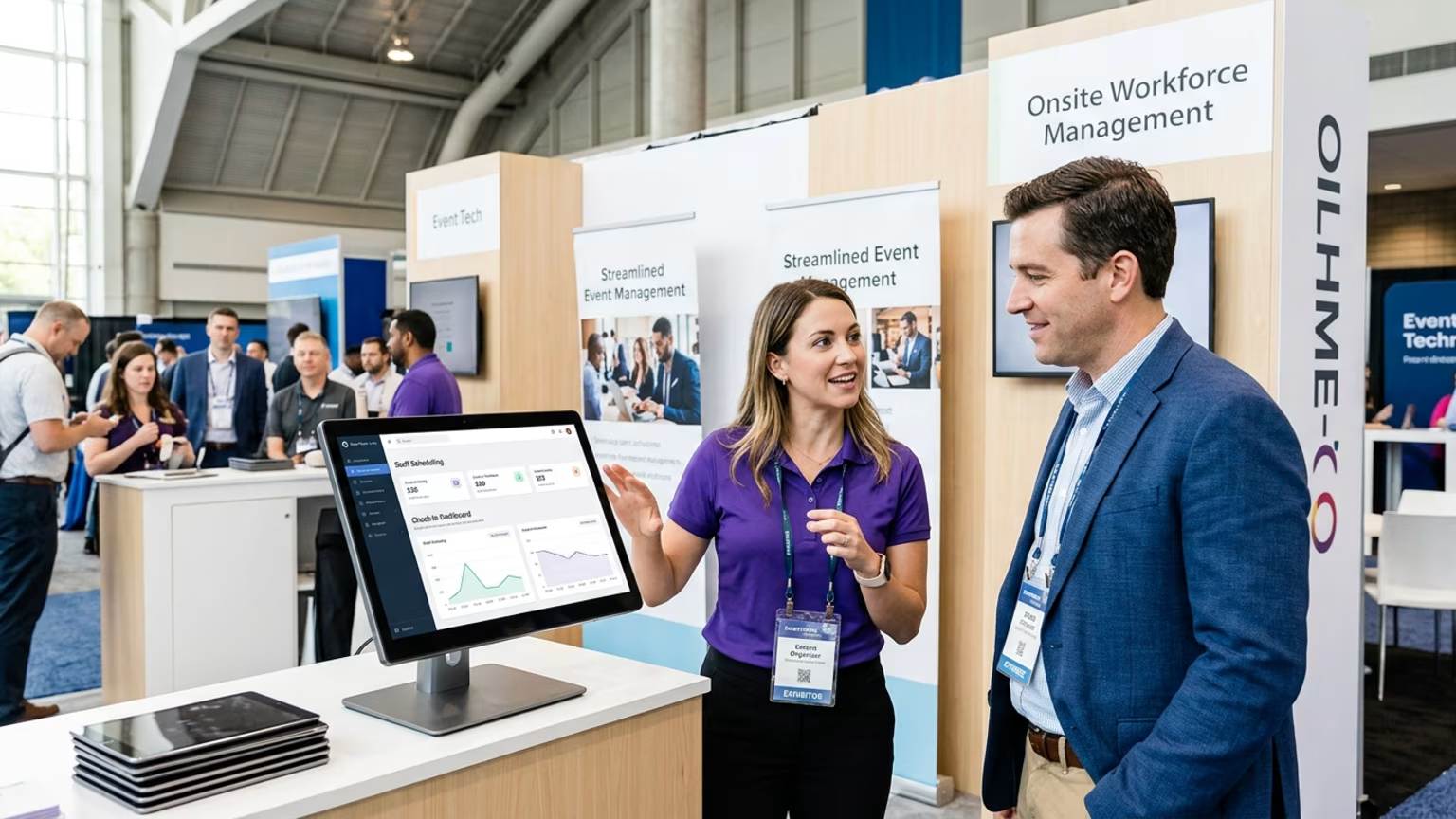
Most brands treat event staffing as an afterthought when it is actually the biggest variable in pipeline generation. Recent sessions at event industry conferences proved that throwing random bodies at a booth is a fast track to lost revenue. Today, smart operators use advanced workforce management tools to turn unpredictable field teams into highly measurable sales engines.
New advancements in onsite workforce management are turning chaotic trade show operations into disciplined conversion systems. By integrating scheduling software with real-time performance tracking, marketing leaders can eliminate staff no shows and measure the true sales impact of their experiential teams.
The reality of a live event often looks much different than the pristine planning decks suggest. A brand might spend six months designing a beautiful booth and securing prime placement. They ship expensive product samples across the country before the actual show opens. Two scheduled brand ambassadors miss their flights, and the local hires show up late without basic product knowledge.
Marketing directors end up playing substitute teachers instead of talking to major retail buyers. This operational breakdown happens across the entire consumer packaged goods industry. Experiential marketing relies entirely on the people delivering the message in the physical space. If the staff fails, the entire activation falls flat.
High volume events compound these simple errors rapidly. Managers lose hours texting individual staff members to confirm shift times. They spend the first hour of every single day re-explaining the brand talking points. This administrative burden distracts from the core goal of driving trial and building retailer confidence.
Fixing this chaos requires a systematic framework that completely removes guesswork from field execution. Industry analysts report that adopting centralized workforce management platforms can drastically reduce onsite friction. The core approach involves building a closed loop system connecting scheduling tools to credentialing and real-time training verifications. Brands that build repeatable event staffing teams consistently outperform competitors in lead generation.
The strategy centers on creating a single source of truth for the entire field staff. Before a brand ambassador even sets foot in the convention center, they must complete a verified digital pathway. This includes submitting compliance documents, passing knowledge checks, and confirming transit plans. By forcing these checkpoints into the software, the focus shifts from hoping people show up to managing a proven workforce.
When brands integrate mobile access control with their staffing software, accountability instantly improves. Event managers can verify who is on the floor and confirm they completed product modules before interacting with consumers. We blend physical and digital experiences by integrating QR codes, mobile technology, and real-world activations into a cohesive layer across retail, event, and tour experiences. This upgraded approach drives connected results across every single interaction.
Data flows from the venue floor back to the headquarters in real time. Field marketing directors can see exactly how many hours are logged against the budget and reallocate personnel to the busiest sampling stations. If you are tired of wondering whether your field team is actively selling your product, it is time to act. Book a strategy call with our team to rebuild your experiential staffing model.
Deploying this strategy requires precise execution long before the venue doors open. Successful U.S. brands follow a rigid operational playbook for managing a high performing event workforce.
Following these steps transforms the role of the onsite manager. They transition from a frustrated babysitter into a strategic operator. They spend their time coaching brand ambassadors on better closing techniques instead of managing clipboards. This level of discipline is what separates memorable activations from expensive disasters.
Return on Investment (ROI) from live activations is impossible to prove without hard numbers. Vague promises of brand awareness do not satisfy modern financial officers. Marketers must track specific lead metrics and lag metrics to validate their experiential spend. The old method of simply counting booth visitors is no longer acceptable.
Lead metrics give you immediate feedback on floor operations. Track the shift completion rate to measure staffing reliability and commitment. Monitor the average training module score to gauge product knowledge before the event starts. Count the daily qualified interactions per brand ambassador to confirm pacing remains steady. If an ambassador is logging low interaction numbers, the manager can intervene immediately to correct the behavior.
Lag metrics prove the long term financial impact of the activation. Measure the cost per qualified lead across the entire three day show. Track the retail sales lift in the specific market during the weeks following the event. Calculate the exact visitor to lead conversion rate for the entire footprint. These are the numbers that secure budget for next year.
Connecting these data points gives leadership a clear picture of event performance. When the executive team asks for results, the field marketer can produce a reliable pipeline report. This data feeds directly into onsite lead scoring frameworks to rank retail prospects quickly.
A premium sparkling water brand recently faced severe staffing issues during a national music festival tour. They experienced a twenty percent no show rate among local brand ambassadors. The teams that did show up struggled to communicate the core health benefits of the product. This lack of discipline resulted in low sample distribution and terrible lead capture.
The brand overhauled its approach by implementing a centralized workforce application. They restricted event check ins to staff who passed a mobile quiz on product ingredients. Using advanced event staffing tools cured their multi city execution headache almost instantly. The no show rate dropped to near zero within two weeks of the new protocol.
With reliable staff on the floor, the brand could focus on actual engagement. Managers tracked which team members handed out the most samples per hour. They gamified the experience by offering incentives for the highest daily lead capture rate. The entire dynamic of the field team shifted from passive attendance to active participation.
More importantly, the quality of consumer conversations improved dramatically. Brand ambassadors hit their sampling targets with time to spare. Retail buyers visiting the activation noted the professionalism and product knowledge of the staff. The field marketing director could finally prove to the executive team that the festival tour generated actual pipeline.
The physical world requires a level of human coordination that digital campaigns simply never face. The people standing in the booth carry the entire weight of the brand message on their shoulders. A well supported team transforms a brief interaction into a lasting memory.

30 Years Experiential & Retail Activation Partner for CPG & Beverage Brands | Multi-Market Demos, Roadshows & Costco/Club Programs That Actually Sell