Robbie Thain
Founder, CEO

Adweek's 2026 Tech Stack Awards reveal how AI and unified data platforms help experiential marketing teams track trade show conversion and revenue attribution.

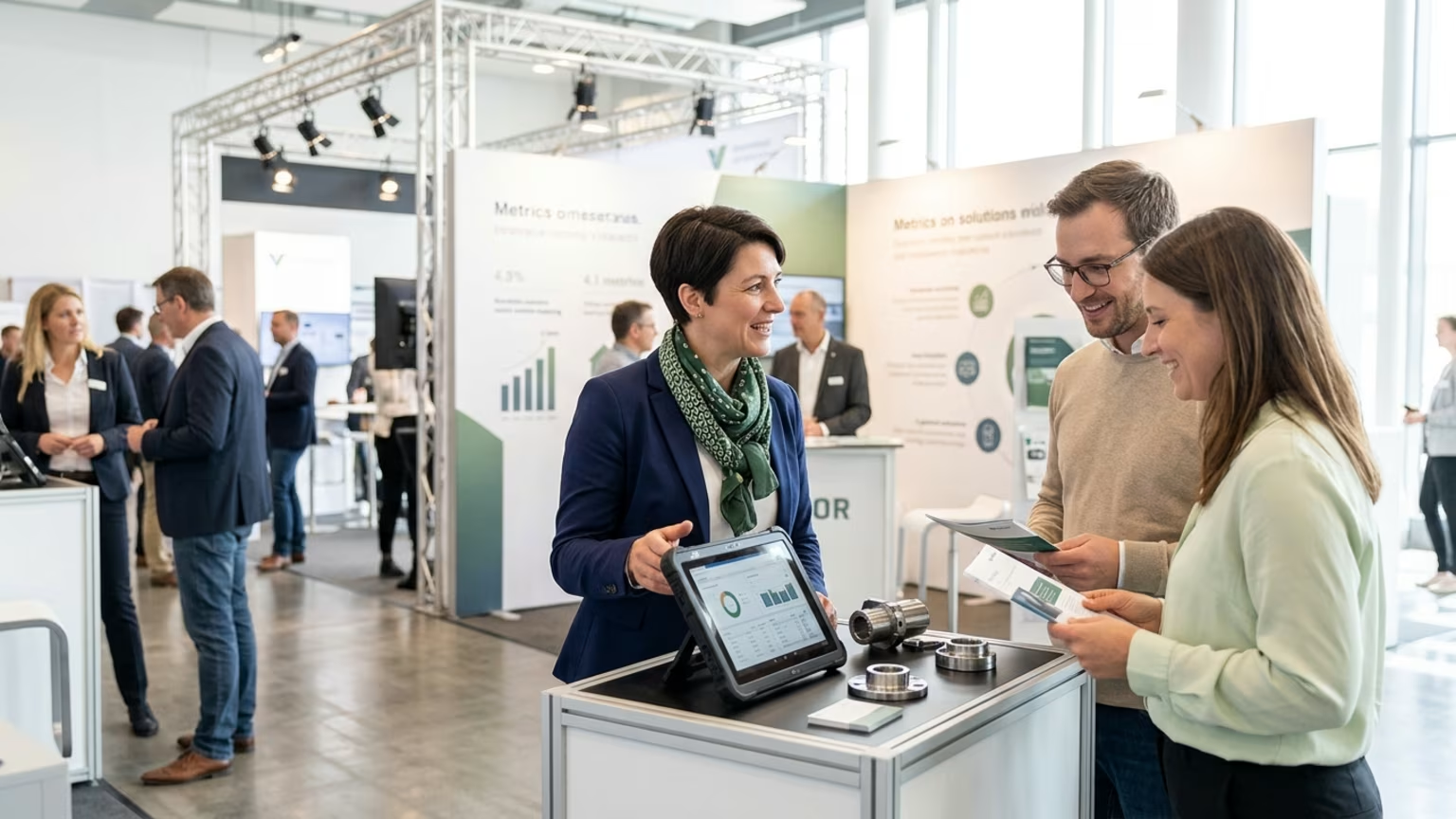
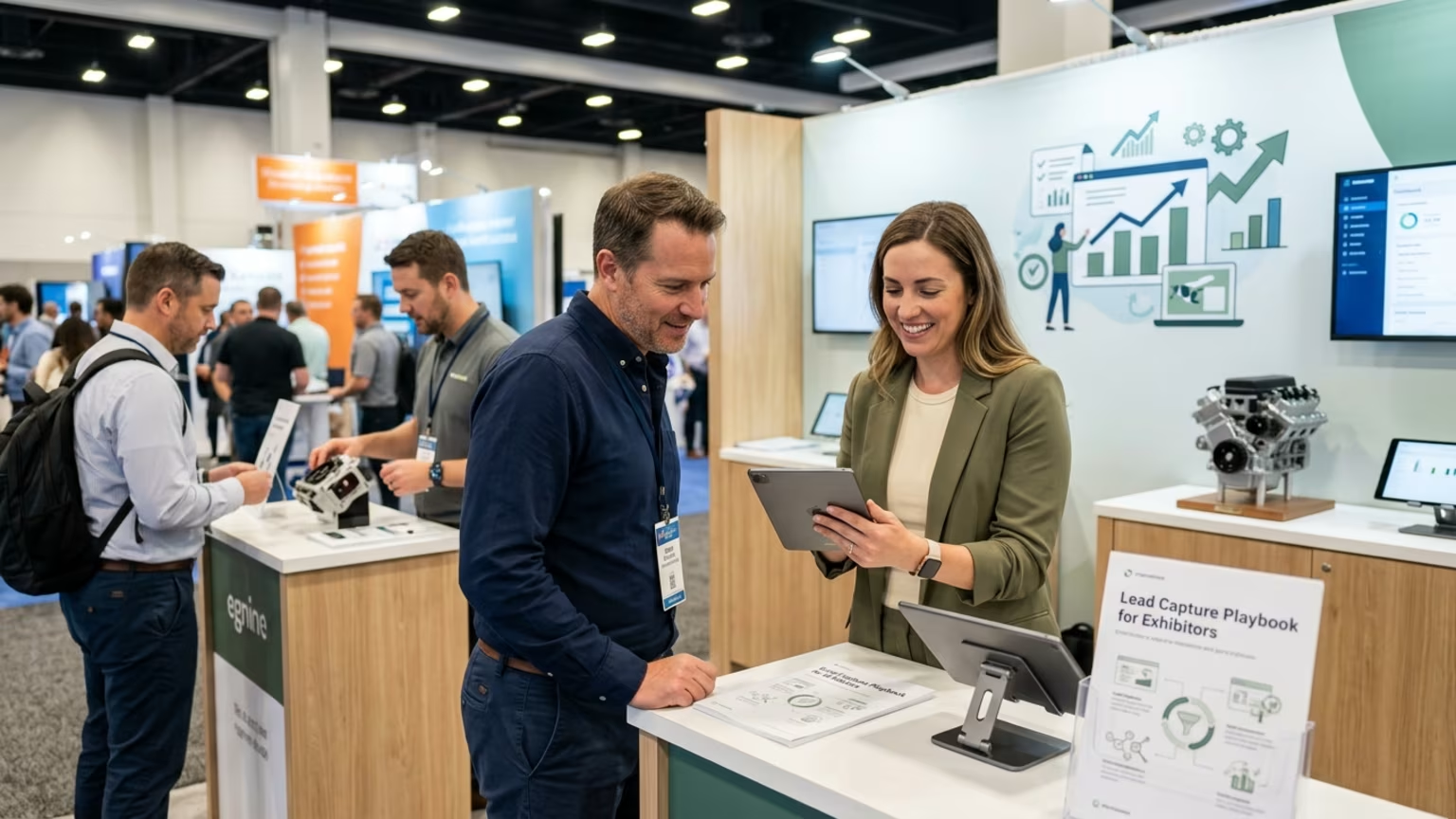
The badge scanner beeps on a crowded trade show floor. A buyer walks away with a product sample. A field marketer adds one more name to a massive spreadsheet. This isolated transaction represents the old way of running events.
Engagement marketing is the operational discipline of turning physical brand interactions into measurable commercial pipeline. It rejects isolated vanity metrics in favor of connected data systems. Brands must capture attention in the physical world and immediately route that interest into digital workflows. This approach confirms every physical activation translates into qualified sales opportunities rather than just fleeting memories.
By treating the physical footprint as a data collection point, operators can justify their budgets with hard math. For a premium beverage or snack brand, the disconnect is even more severe. Retail demo programs get judged on cups poured or samples handed out. The data rarely reaches the team managing digital media or retailer relations. Connecting these localized moments to nationwide sales targets requires a complete mindset shift.
Event marketers often struggle to assign true business value to live interactions. Adweek published its 2026 Tech Stack Awards on August 4, 2026. The publication positioned the program around technology platforms intended to create measurable revenue impact across marketing, advertising and media. This recognition reflects a market where teams have too much raw data and too few actionable insights.
The Adweek awards span publisher tools and commerce technology connecting digital and physical retail. They also highlight audience targeting in an identity-restricted ecosystem. The central theme is that data alone is insufficient for modern marketing. Marketers need systems that can interpret data, activate campaigns and connect activity to business results.
We blend physical and digital experiences by integrating QR codes, mobile technology and real-world activations into a cohesive layer across retail, event and tour experiences. This upgraded approach requires technology that can interpret visitor behavior across multiple touchpoints. The awards include platforms operating across customer identity and audience targeting. They also cover programmatic media, commerce, mobile and connected television.
Platforms must navigate an environment where conventional tracking methods face severe limitations. For example, Adweek recognized Verve in the Mobile Product/Platform category for work involving LinkedIn and its Dataseat performance DSP. Verve won for helping optimize user-acquisition campaigns within Apple’s SKAdNetwork environment. This shows how technology must adapt when traditional identifiers disappear or face strict privacy limitations.
A consumer might see a streaming advertisement before attending a regional trade show. They might scan a code at the booth and later receive a targeted mobile offer. The physical activation only generates a measurable Return on Investment when these fragmented moments connect logically. Marketing teams must evaluate how AI-native platforms turn trade show chaos into measurable revenue.
Software cannot replace the value of a firm handshake or a great product sample. However, it provides the tracking infrastructure needed to prove that the handshake mattered. Modern engagement relies on building a bridge between physical trial and digital commerce. Implementing a modern measurement approach requires three distinct operational capabilities.
The first pillar is continuous cross-channel intelligence. Brands need tools that unify customer identity and adapt to real-time behavior. Adweek recognized Attentive in the Agentic AI Product/Platform category for this specific capability. Attentive says its platform combines customer identity and real-time intelligence with execution across SMS, email, RCS and push notifications.
Attentive Chief Executive Officer Amit Jhawar argued that marketers should be able to combine personalization with results they can prove. He stated that marketing systems are intended to help marketers determine the best action for individual customers. This reflects a strategic vendor position where systems move beyond simple automation to active decision-making. The second pillar is media extension.
A physical event cannot exist in a vacuum. StackAdapt won in the Connected TV/Over-the-Top Product/Platform category for technology supporting campaign planning, activation, optimization and measurement. StackAdapt described the recognition as its second consecutive award, following a 2025 recognition in the Buy-Side Programmatic Product/Platform category. By integrating connected television and programmatic advertising, marketers can reach trade show audiences long after they leave the venue.
These platforms increasingly claim to connect identity, audience selection, activation and measurement rather than treating each function separately. This orchestration matters immensely to trade show programs. A visitor may encounter a brand through pre-event advertising, registration systems, booth interaction and product demonstrations. They might also engage through QR codes, email follow-ups and eventual retailer outreach.
The third pillar is verified attribution. Teams must align their physical event data with their broader digital media reporting. This alignment proves that a specific activation directly caused a sale or retail lift. Building an integrated event operations stack requires careful planning and flawless execution.
Marketers must orchestrate identity and audience selection. They must also manage creative messaging, activation and optimization as one unified system. If these pillars operate in silos, the entire measurement framework will inevitably collapse. Proving the value of live marketing requires strict criteria for conversion and revenue attribution.
Vendor-reported figures often show massive potential for connected campaigns. Attentive reports that ILIA Beauty achieved 31x program Return on Investment. The Frye Company’s journey deliveries increased 1,198%. Sigma Sports increased SMS campaign revenue by 770% year over year.
While these vendor-supplied metrics highlight digital performance, experiential teams face a harder path entirely. Tracking a physical interaction to a retail purchase requires connecting the booth scan to a subsequent sales event. The available material does not provide comparison groups or time periods to treat those figures as typical market results. Brands focus on evaluating key data-driven metrics to prove roadshow success.
Smart operators evaluate their activations by tracking specific business milestones instead of general awareness. They measure qualified lead velocity, retail sell-through rates and trial conversions. Marketing platforms can assign digital credit, but field teams must verify that the real-world action generated the opportunity. A dashboard should distinguish among leads captured, meetings completed, opportunities created and revenue directly attributed by the platform.
This distinction is necessary because a platform’s attribution report may assign credit without proving that the event caused the purchase. For categories sold through retailers, the event-to-purchase path may not be immediate. Teams may need to connect event data with retailer sell-through, ecommerce purchases, distributor orders and geographic sales trends. Capturing fewer, better data points usually yields superior strategic insights.
A useful event data model might include consent status, attendee identity, product interest and a defined next action. Tools that support identity resolution and real-time behavior can help extend an event interaction directly. A product demonstration could trigger a consented follow-up sequence, a retailer-specific offer or a targeted sales appointment. Operators must define the business outcome before selecting any software platform.
A team must decide whether an event is intended to generate qualified leads, product trials, retailer meetings or direct purchases. Engagement alone is far too broad to support a credible financial discussion. Field marketing directors must dictate these objectives clearly so that technology vendors can align their reporting systems accordingly. Marketing directors must audit their integration plans to confirm clean data flows into sales systems.
A platform that cannot pass clean data into the systems used by sales and finance may create another reporting silo. Brands must ask vendors for precise definitions of conversion, revenue and incrementality. A unified platform does not automatically create unified data without consistent naming conventions and campaign identifiers. Measuring experiential marketing is no longer about estimating crowd size or tracking total badge scans.
The platforms recognized in recent industry awards show a clear shift toward orchestrated attribution. Marketers must build campaigns that directly connect the physical floor to the digital ledger. The bottom line is that experiential marketing only drives real growth when physical interactions are captured, tracked and converted by an integrated technology stack.
At makai, we build these connected campaigns for operators who demand absolute precision. Live events must generate irrefutable pipeline evidence. The technology is finally ready to prove the true value of the physical experience.

30 Years Experiential & Retail Activation Partner for CPG & Beverage Brands | Multi-Market Demos, Roadshows & Costco/Club Programs That Actually Sell