Robbie Thain
Founder, CEO

Learn how integrating your event operations stack with CRM tools can turn chaotic roadshows into a measurable, high-performing revenue engine.
A tired field marketing manager stares at her phone in a dimly lit convention center. She has three chat groups buzzing with staffing changes, a clipboard of wrinkled sign-in sheets, and zero idea if yesterday's VIP attendees entered the sales pipeline. The disconnect between physical execution and digital tracking is a silent killer of event value.
Recent guidance from Salesforce makes it clear that live events must operate as a core part of the revenue technology stack rather than a standalone silo. Marketing teams can now integrate customer data tools and event automation to turn chaotic roadshows into measurable sales pipeline.
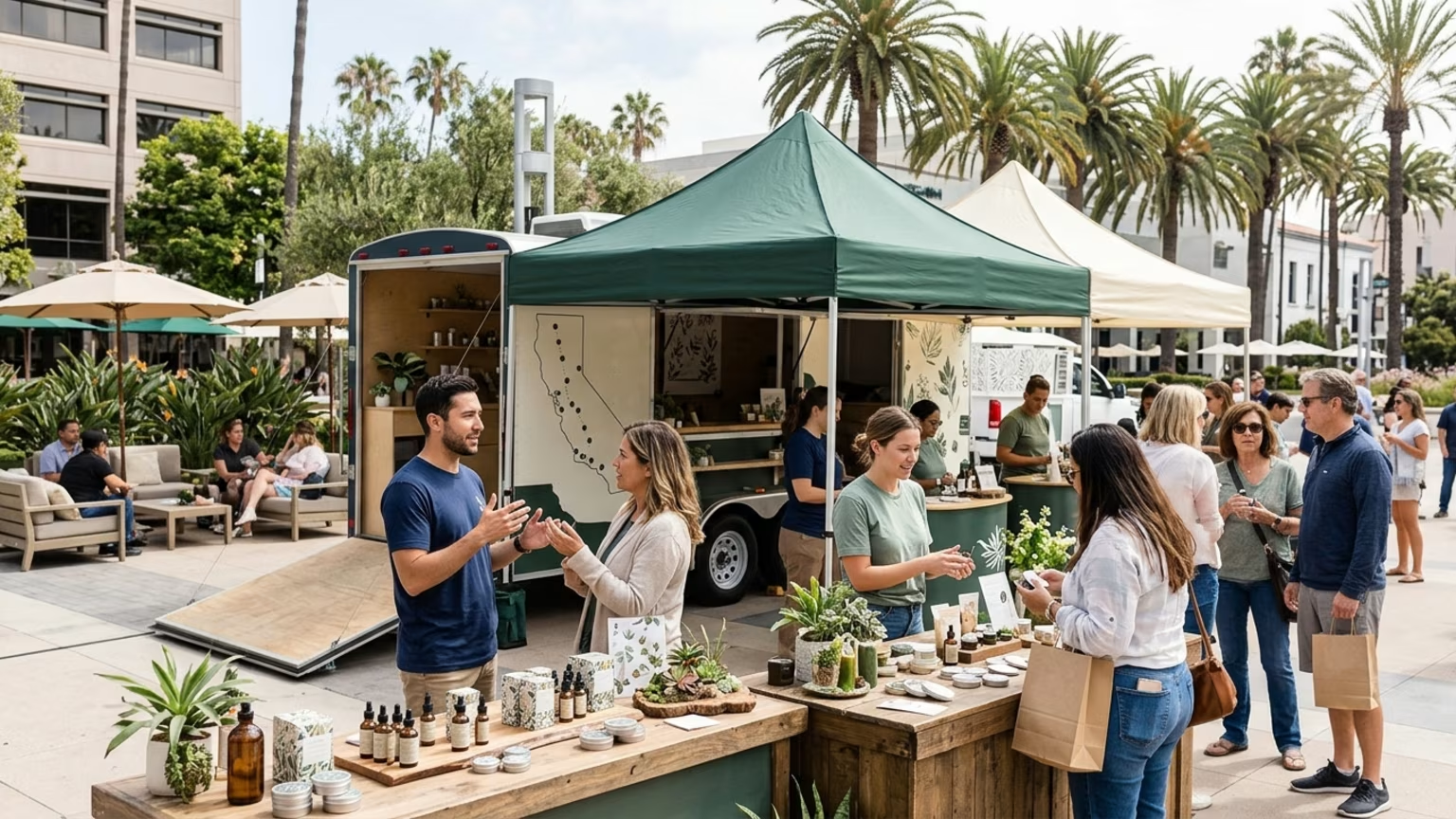
Most companies invest heavily in customer facing processes. The polish usually stops at the back office. Experiential programs often run on fragmented spreadsheets, scattered email threads, and tribal knowledge. When a major food brand launches a national sampling tour, the field team typically scrambles to upload manual CSV files of attendee data days after the fact.
This delay means hot leads cool down before sales reps ever see them. Without an integrated system, marketing leaders cannot definitively prove their experiential budget influenced revenue. B2B companies allocate up to eighteen percent of their marketing budget to live events. Executives want to see clear pipeline attribution from these costly activations.
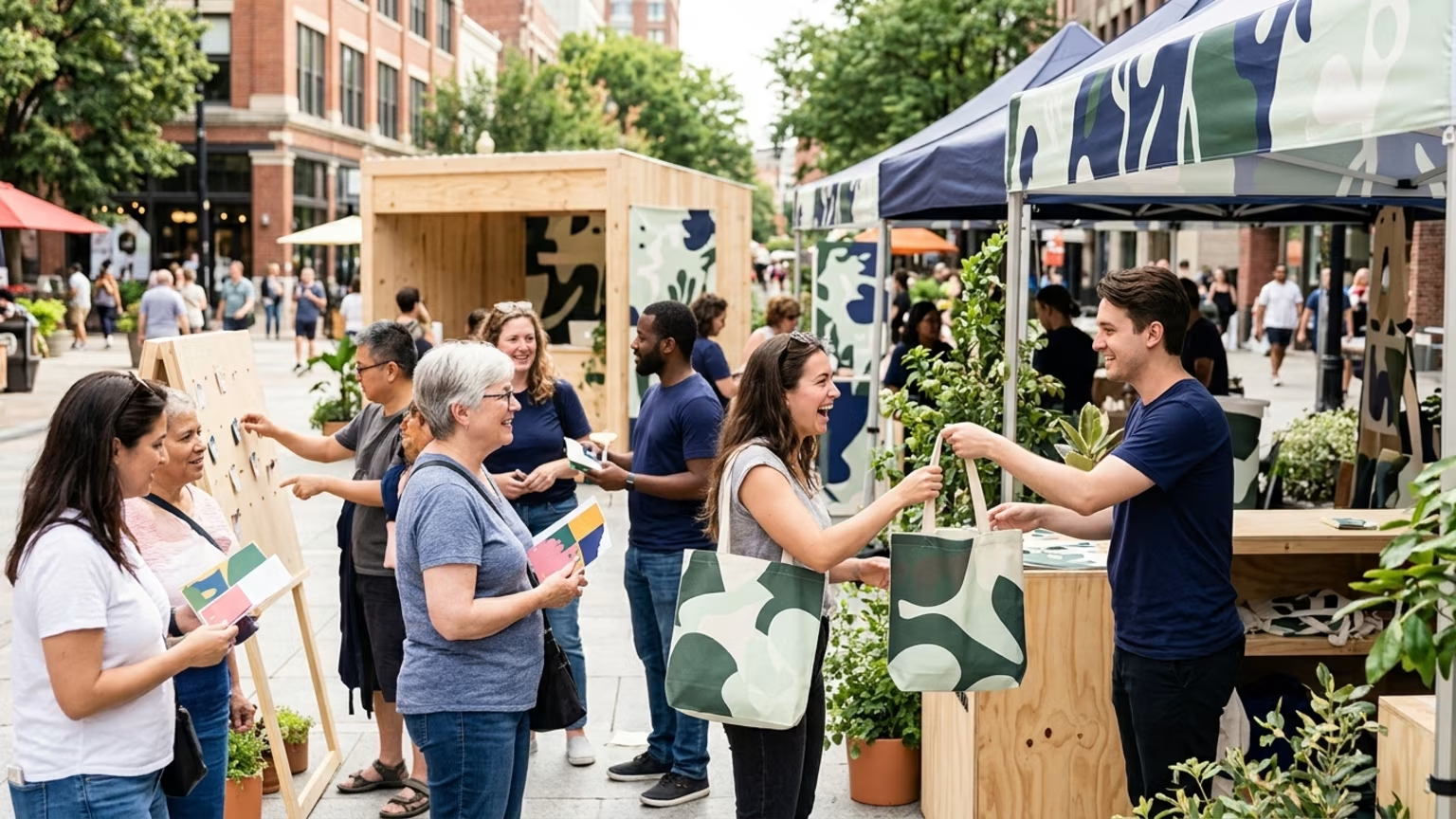
For decades, experiential marketing operated purely as a brand awareness play. Field teams handed out samples and hoped the positive sentiment would translate into future sales. That relaxed standard no longer flies with modern finance departments. Marketing operators face intense pressure to prove that their live experiences drive direct trial and retail sell through.
Salesforce explicitly warns startups against relying on a patchwork of disconnected apps. A disconnected approach leaves you with busy events that produce fog instead of evidence. Data silos trap valuable consumer interactions and prevent accurate forecasting. Connecting physical lead capture to your customer relationship management tools in real time solves this gap.
Salesforce frames modern marketing toolkits as orchestrated systems where data flows seamlessly across platforms. The first step is digitizing your internal intake processes and routing approvals into a formal workflow. Structuring these baseline operations alone can deliver early efficiency gains of fifteen to twenty percent. Moving away from manual data entry allows your team to manage campaigns from a single source of truth.
Once basic processes are digitized, you can orchestrate automated workflows across your event tools and customer records. Data entry, status updates, and post-show system syncs happen automatically in the background. Automated processes like these can push efficiency gains up to sixty percent based on recent operations research. This frees up your field personnel to focus on high value human interactions.
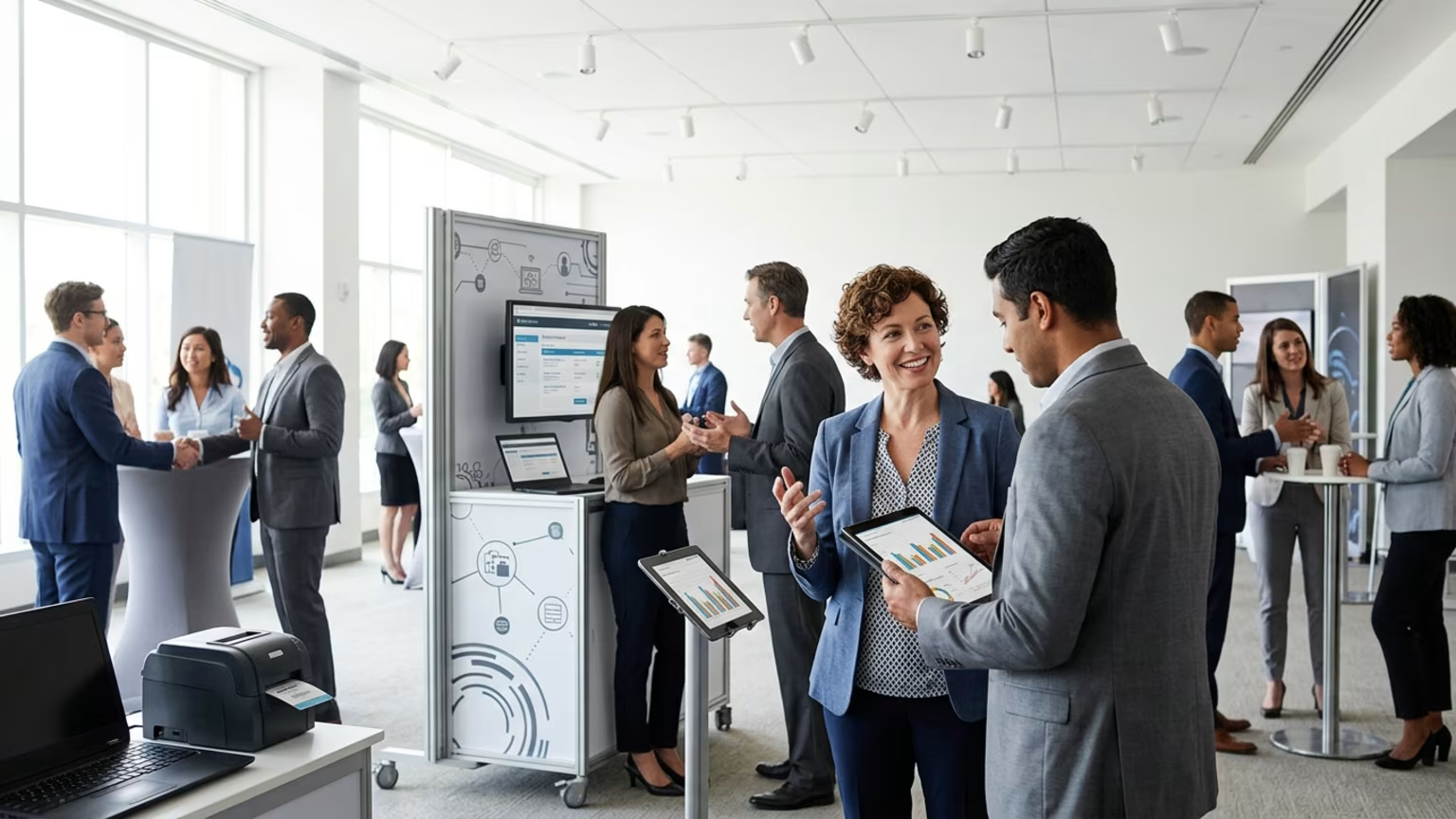
An effective ecosystem connects your field marketing efforts directly into your primary sales systems. This usually involves linking your registration platform and lead capture software into a central customer database. When these tools communicate freely, your sales team gets an immediate view of every physical interaction. You stop treating events as a side project and start running them as predictable revenue generators.
The ultimate goal is treating your roadshow as core demand infrastructure. Events should feed the exact same forecasting and attribution models as your digital channels. Marketing leaders who adopt this approach can accurately track cost per sampled buyer and defend their budgets confidently. Teams that reach an artificial intelligence first design state can see efficiency improvements up to ninety five percent.
Transforming your experiential setup requires a systematic rollout. Do not try to overhaul your entire technology stack overnight. Start with high impact processes that immediately relieve administrative pressure on your field staff. Focus on workflows that directly impact the attendee experience and your data quality.
Scaling this automation requires buy in from your field staff and regional managers. You must design workflows that make their daily operations easier rather than adding administrative burden. A perfectly integrated technology stack will still fail if your brand ambassadors refuse to use the mobile intake forms. Train your team thoroughly on the new digital processes before you launch the next major roadshow.
An integrated stack amplifies your ability to measure success across the entire consumer experience. You must track both the immediate physical outcomes and the lagging digital conversions. Without a unified system, these data points remain isolated and tell an incomplete story.
Lead metrics show you how well the actual activation performed in the moment. Track total verified check-ins against your initial registration goals. Monitor the volume of active product samples distributed during peak traffic hours. These immediate physical indicators help validate the effectiveness of your brand ambassadors before the event even ends.
Lag indicators prove the financial value of your experiential investments over time. Measure the total sales pipeline generated or influenced by the activation. Track the timeline from event scan to closed revenue for new accounts. Finally, monitor retail sell-through velocity in the specific markets where your roadshows took place.
You should never ignore the qualitative feedback that your field staff gathers on the ground. Brand ambassadors often hear direct objections or praise that a digital form cannot fully capture. Train your team to log store manager comments and consumer sentiment directly into your central database. Having this subjective feedback attached to a specific customer profile provides massive value for your product development teams.
Integrating technology with physical execution completely changes the dynamic of a product launch. Our team recently handled a massive rollout where field operations and digital follow-up had to work perfectly together. Every interaction on the floor needed to translate into measurable momentum for the business.
A Director of Brand Strategy in the CPG snack division shared: 'The Makai team turned our product launch into a sensory event that shoppers still talk about. From creative storytelling to flawless in-store execution, they made snack time unforgettable. We couldn't have asked for a stronger partner.' Our team created an in-store experience that left a lasting impression on consumers and became a memorable brand moment.
Our field staff utilized mobile scanning technology to instantly capture shopper interest and product feedback. This data flowed immediately into the client's central marketing platform for rapid analysis. The regional sales directors could log in and see real time spikes in consumer engagement across different target markets. This instantaneous visibility allowed the brand to adjust their retail merchandising strategy mid-campaign.
With tight data collection, the brand could see exactly which retail locations drove the most post-show engagement. The seamless transition from a physical bite to a digital touchpoint proved the value of the campaign. This is the exact type of performance standard that modern marketing stacks are built to support.
The days of running national tours off clipboards and isolated web forms are officially over. You have the tools available to connect every handshake and product sample directly to your bottom line. Look at your very next scheduled event and automate just one post-show communication sequence right out of your primary system today. Book a strategy call with our team to start turning your live experiences into a measurable revenue engine.

30 Years Experiential & Retail Activation Partner for CPG & Beverage Brands | Multi-Market Demos, Roadshows & Costco/Club Programs That Actually Sell