Robbie Thain
Founder, CEO

Learn how physical immersion and mobile roadshows de-risk premium product launches. Turn expensive upgrades into measurable pipeline and retail success.

Most marketing operators believe digital reach is the most reliable engine for launching premium products. The truth is that physical immersion is the only reliable way to de-risk expensive upgrades and turn skeptics into buyers. Lufthansa (officially Deutsche Lufthansa AG) recognized this reality when planning a massive product overhaul. The global airline realized that commanding higher prices requires letting customers touch the product before they purchase.
Launching a premium upgrade often triggers logistical and messaging chaos on the front lines. Marketing teams build beautiful digital renders of new offerings. They buy expensive ad placements to reach decision-makers. Then they watch those campaigns fail to convert since buyers do not trust what they cannot experience.
In many organizations, the disconnect between corporate vision and field reality destroys product launches. Executives approve massive budgets for premium upgrades. They expect immediate market adoption based entirely on digital awareness campaigns. Field marketing directors know this approach rarely works in isolation.
When consumers face a premium price point, their natural reaction is skepticism. They want to know exactly what they are getting before they hand over their money. On a crowded trade show floor or retail aisle, digital promises evaporate. Field teams struggle to explain why a new formulation or service warrants a higher price tag.
Reps shout over competitors and hand out basic brochures that fail to convey true value. Consumers walk away confused, leaving brands with poor Return on Investment and wasted marketing budgets.
To break through this confusion, successful operators build physical roadshows that bring the product directly to the consumer. The Lufthansa Group offers a clear blueprint for this approach. The aviation group operates a portfolio consisting of network airlines and point-to-point airlines. This portfolio includes Austrian Airlines, Brussels Airlines, Eurowings, and SWISS alongside the core Lufthansa brand.
They are investing 2.5 billion euros in product and service improvements up to 2025. This massive initiative features the new Allegris cabin across their long-haul fleet. To prove this value, Lufthansa toured Germany with new Allegris cabin mock-ups to showcase them to business partners. Selected customers even reviewed the seats virtually with preconfigured VR glasses.
The airline's leadership noted that prioritizing yield over volume requires passengers to fully understand the product differences. Premium segments are the largest driver of international traffic revenue growth. By putting physical seats in front of people, they removed the abstract nature of the upgrade.
Other global aviation brands share this exact mindset. Singapore Airlines built a mock-up of its luxury flight experience on a mobile truck and trailer. They toured high-traffic locations in Singapore to reach potential buyers directly in their daily routines. Qatar Airways hosted a pop-up event at The Grove in Los Angeles featuring its Business Class seats.
This hands-on strategy directly impacts long-term profitability. Research from Bain & Company indicates that customers who emotionally connect with a brand through real experiences have two times greater lifetime value. Those same customers show three times faster repeat purchase rates. When consumers physically interact with a premium product, their purchase hesitation drops significantly.
Taking a premium product on the road requires operator-grade discipline. Field marketing leaders must design activations that translate high-ticket features into accessible moments. A flawless mobile tour relies on structured execution steps.
Leaders must measure mobile tours with extreme precision to prove their financial impact. Vanity metrics like foot traffic do not justify large experiential budgets. You need to track hard numbers that connect directly to pipeline. It is critical to prove mobile roadshows drive sales lift by establishing clear reporting standards early.
Lead metrics should monitor real-time engagement quality during the event. Track the number of qualified conversations your ambassadors complete each day. Measure the conversion rate of passing traffic into active product demonstrations. Monitor immediate data capture rates via QR scans or digital sign-up forms. These daily indicators tell you if the activation is resonating with the local audience.
Lag metrics evaluate the financial return after the roadshow leaves town. Track the percentage of captured leads that convert into paying customers within ninety days. Measure the retail sell-through rate in the specific zip codes where your activation took place. Calculate the overall Return on Investment by comparing activation costs against net new revenue. If you cannot track the post-event sales lift, you cannot defend your budget next quarter.
The principles that work for global airlines apply perfectly to consumer goods. When CPG brands launch new products, they face the exact same trust barriers as global aviation companies. A new organic snack or functional beverage often carries a premium price point on the retail shelf. Consumers will not switch from their legacy choice based entirely on a billboard.
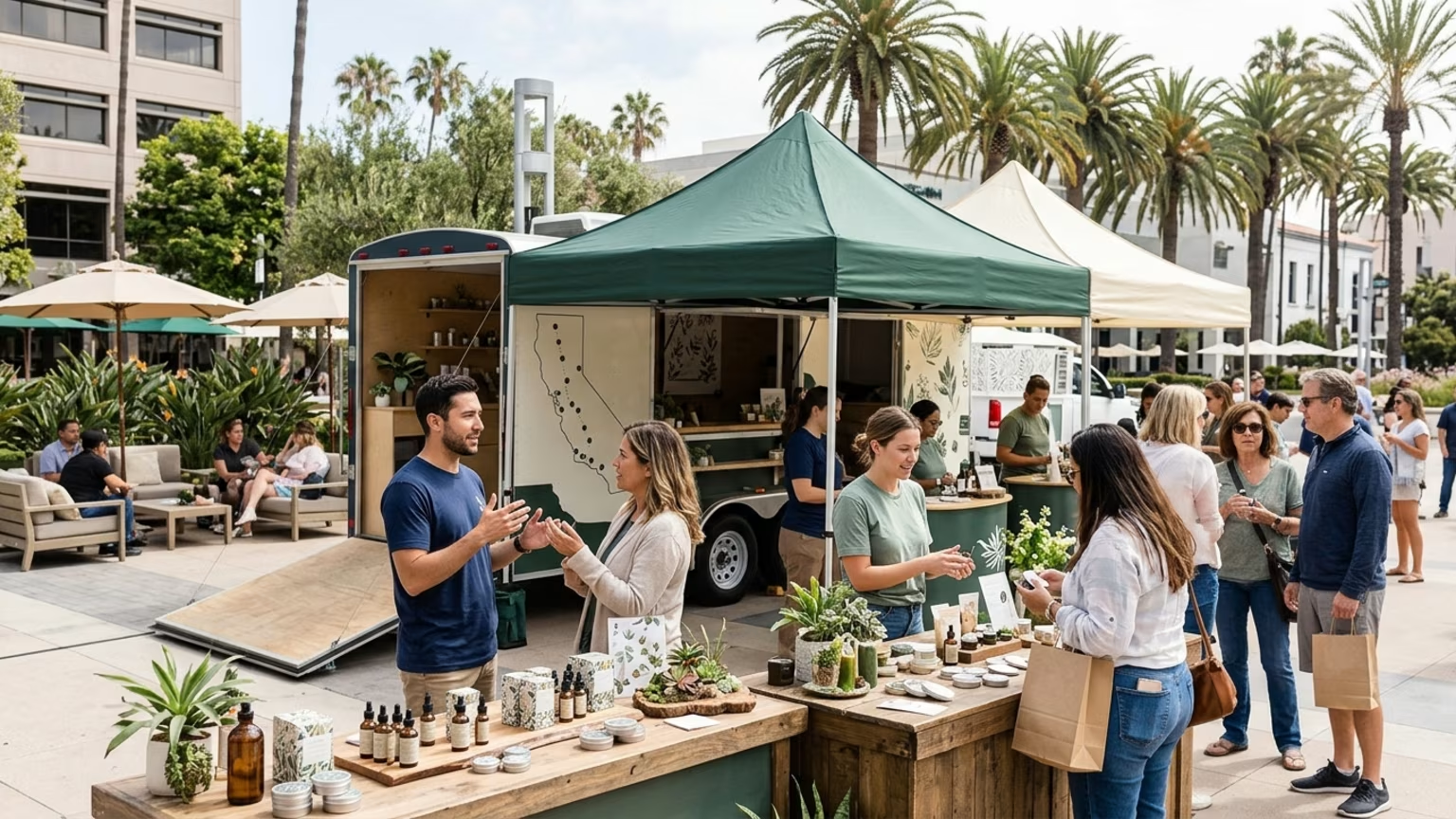
They need to taste the product in a physical environment before committing to a purchase. Brands often lean on mobile pop-up tours to support retail expansion in critical new markets. By deploying custom sampling trucks to local festivals or busy downtown centers, field teams can intercept thousands of potential buyers.
This strategy mirrors the aviation industry's approach to cabin mock-ups. You are taking the product out of its normal retail constraint and placing it directly into the consumer's hands. For a mid-to-senior marketing operator, the goal is turning live brand experiences into measurable pipeline. You are responsible for driving trial, boosting retail sell-through, and making field execution actually work.
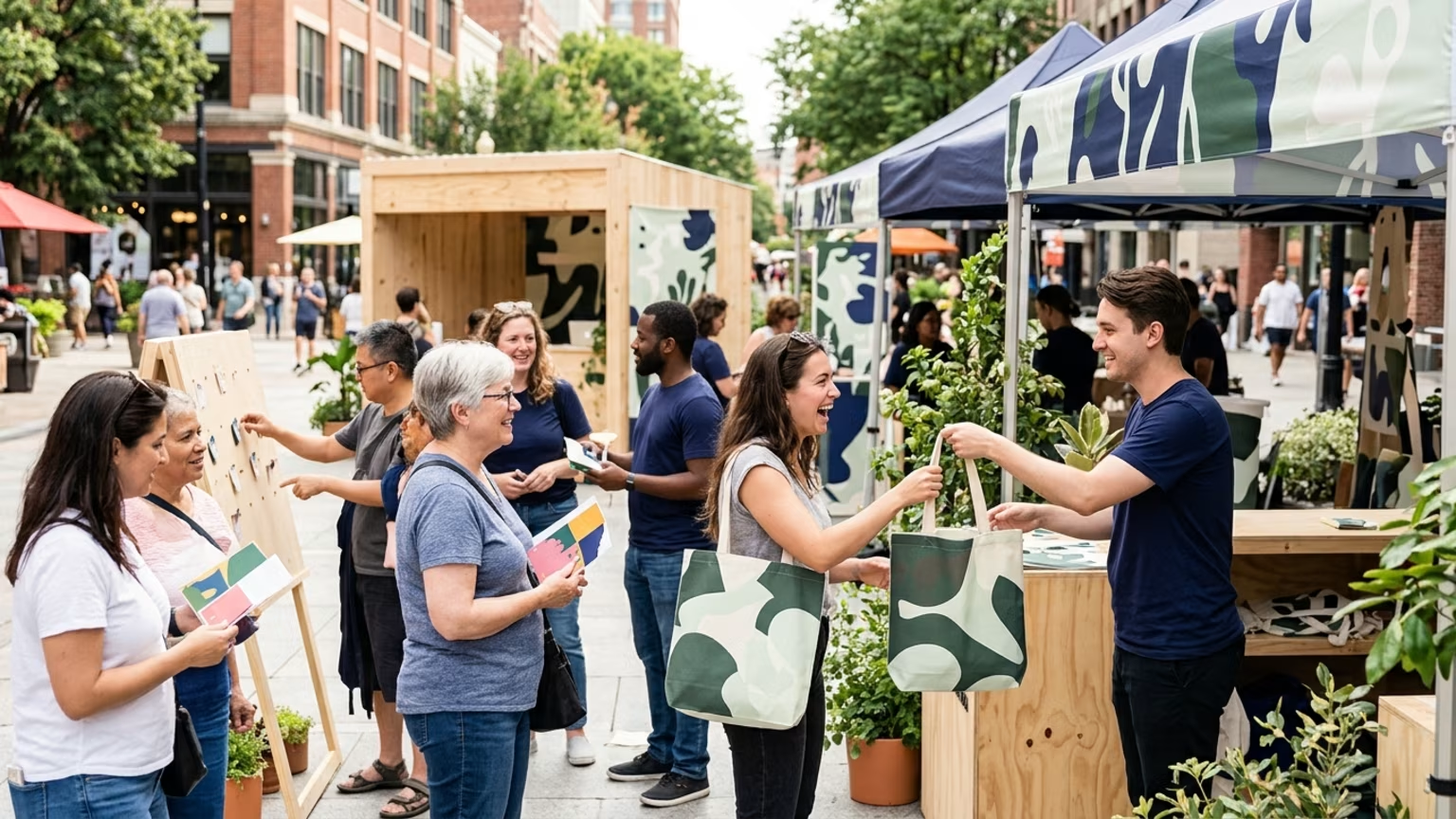
When you activate sponsorships or show up at trade shows, the experience must convert. Shopper marketing leads know that standing out in a crowded Costco aisle requires more than bright packaging. Trained brand ambassadors drive in-store sales through real conversations and product trials.
We build festival zones, premieres, and pop-ups that turn viewers into fans and fans into advocates. We design moments people want to share, using music tie-ins, screenings, and live stunts to bring stories to life. Our crews manage execution and track reach and response metrics simultaneously. This level of operational control guarantees that every interaction serves a commercial purpose.
Whether you are selling a luxury airline ticket or a premium hydration beverage, the required outcome is identical. You must give the consumer a risk-free environment to validate your claims. Tactile engagement builds a foundation of trust that digital channels simply cannot replicate. The brands that win tomorrow are the ones showing up in the physical world today.
When the digital noise fades, people remember what they felt. A well-executed physical experience leaves an imprint that outlasts any fleeting ad impression. True brand loyalty is built quietly in the real world, one tangible moment at a time.

30 Years Experiential & Retail Activation Partner for CPG & Beverage Brands | Multi-Market Demos, Roadshows & Costco/Club Programs That Actually Sell