Robbie Thain
Founder, CEO

Discover how CPG brands use mobile pop-up tours and roadshows to drive retail expansion, capture data, and secure measurable Return on Investment.

Food and beverage brands are shifting their field marketing budgets into mobile roadshows that directly support retail expansion. By linking sampling trucks to exact store doors and measuring exact sales lift, marketing leaders turn fleeting consumer interactions into proven pipeline.
A regional sales manager stands near a pallet of newly launched energy drinks at a crowded club store. The product is not moving. The initial slotting fee is burning a hole in the quarterly budget. The buyer is already asking for a meeting next week.
This tension is common on the retail floor today. Brands secure coveted shelf space at major grocers or club channels but fail to generate the immediate velocity needed to keep it. Traditional field marketing often relies on generic event tents at music festivals or scattered street fairs. These events look busy and generate social media impressions. They rarely translate into immediate sales at the stores that matter most.
Marketing operators are tired of funding beautiful activations that produce no real evidence of sell-through. Executive teams demand proof that experiential spending moves cases off shelves. Without measurable local impact, a promising retail expansion can quickly become a costly retreat. The gap between field teams and sales teams often widens during a national launch. Marketing wants brand love, and sales needs register rings.
Operating a national campaign without local sales alignment creates friction. Field staff might distribute thousands of premium samples blocks away from a retailer that does not even carry the product. Consumers fall in love with the taste but cannot find the item to purchase it. This logistical mismatch wastes budget and frustrates potential buyers.
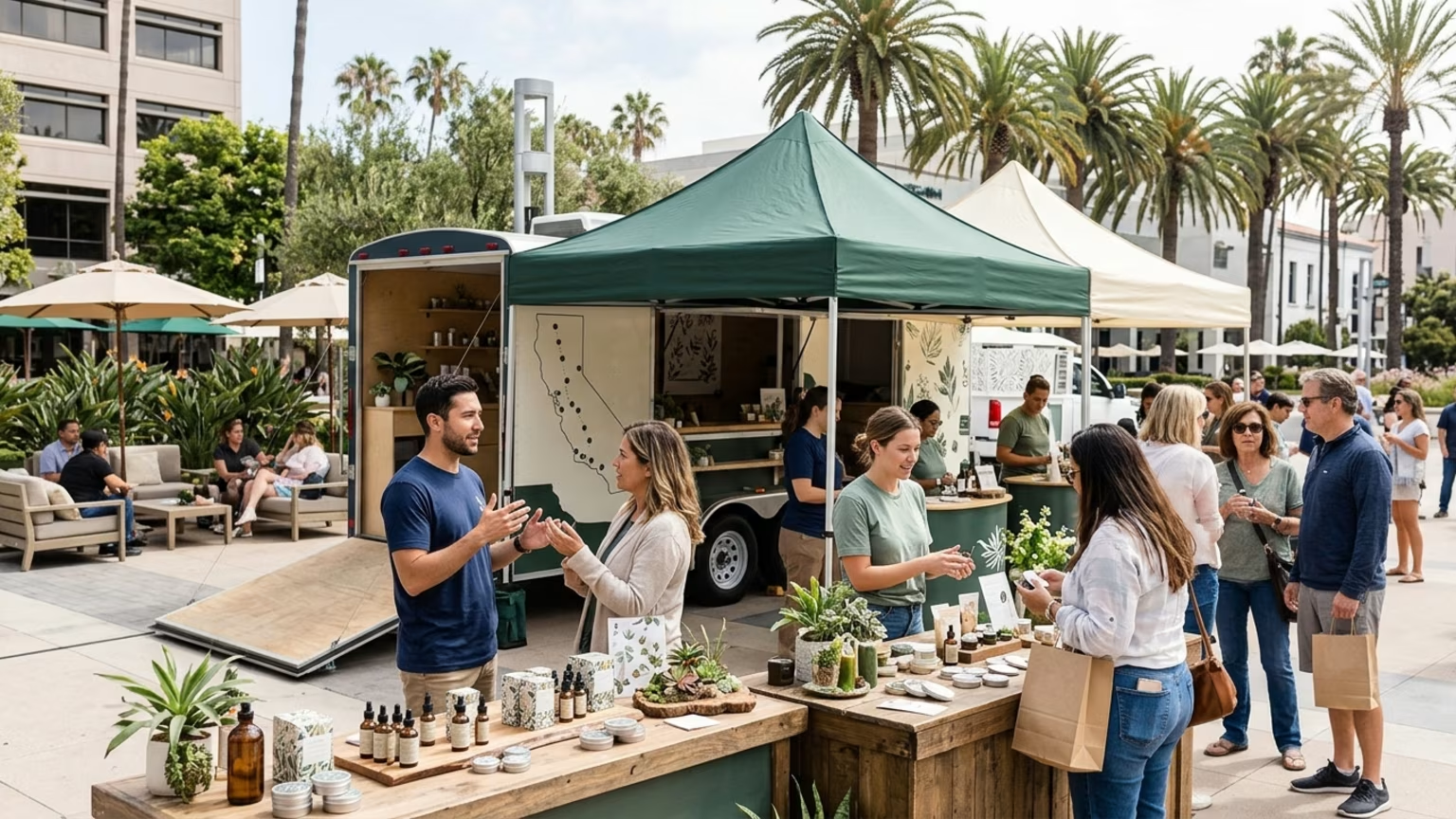
The solution is a disciplined approach that treats mobile tours as precision field artillery. Instead of routing a sampling truck based on cultural events, teams map their stops to new distribution wins. Leading consumer packaged goods companies coordinate their roadshow operations closely with their retail buyers. They build tour schedules that hit priority doors within the first two months of a product launch.
This method creates localized awareness exactly where the product is sold. We have executed over 1000 campaigns across all 50 states, bringing brands to life in every major U.S. market. From retail demos in Seattle to roadshows in Miami and events in Honolulu, our teams activate brands wherever our clients' audiences are located. This widespread execution proves that a localized strategy works better than scattered event appearances.
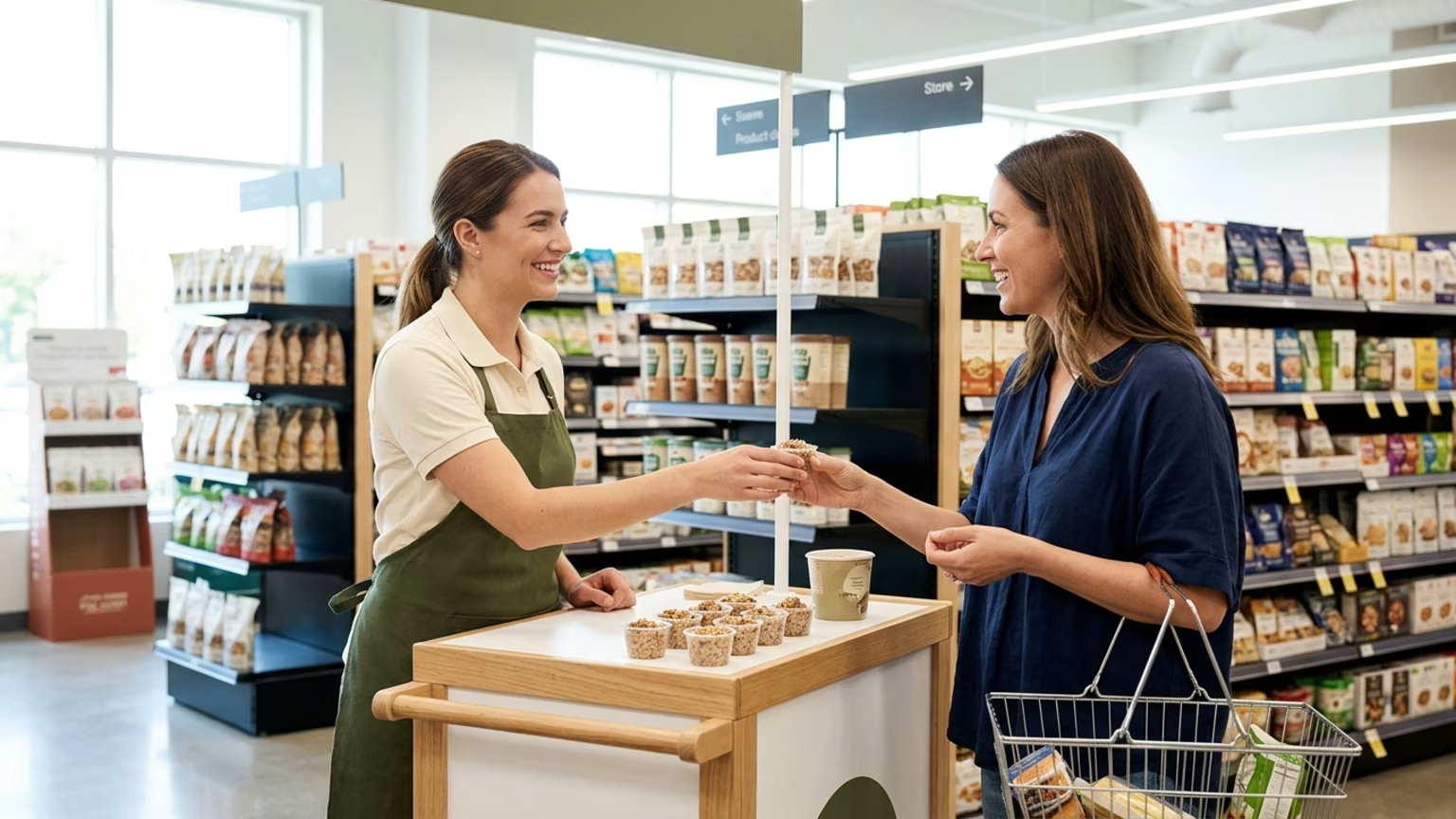
Brands rolling into club channels use mobile pop-up tours to accelerate sell-through in the first eight weeks. If you do not move velocity quickly at wholesale clubs, your listing is at risk. A roving sampling unit that hits multiple warehouses in a territory helps build a track record. This rapid deployment gives the retailer immediate confidence in the brand.
The modern approach integrates shopper marketing budgets with field operations. Teams match their physical stops with concurrent retail media buys. Industry analysts report that food and beverage brands often see a twenty to sixty percent trial-to-purchase conversion rate when sampling happens near the point of sale. This level of coordination turns a simple product sample into a measurable commercial outcome.
By focusing on exact geographic zones, brands simplify their logistics and maximize their media spend. A mobile truck parked near a target grocery chain acts as a physical billboard. Store managers see the effort and often reward the brand with better endcap placements. Retail merchants appreciate partners who show up with compliant and measurable field support.
Moving from theory to a live event requires strict operational discipline. Marketing teams must treat every stop as an opportunity to collect data and move inventory. Building a successful sampling strategy takes more than a wrapped truck and a friendly staff. It requires a detailed plan that aligns field representatives with store managers.
Marketers will not secure future budgets without clear evidence of Return on Investment from their activations. The era of reporting only on total interactions and samples distributed is over. Teams must track precise indicators that show financial impact. You need to establish a clear baseline before the tour starts.
Start by measuring the percentage of meaningful engagements that result in first-party data capture. Well-designed tours often convert twenty to forty percent of interactions into an email or loyalty program signup. Monitor daily sample distribution rates against localized foot traffic benchmarks. Measure the immediate redemption rate of your localized digital offers to gauge initial interest.
Many brands now use mobile location data to track footfall patterns. You can compare store visits among exposed consumers against non-exposed control groups. This location-based tracking bridges the gap between the outdoor activation and the indoor transaction. Teams integrate these insights with in-store retail media dashboards to form a complete picture. Recent digital agency reports project that marketing budgets will increasingly blend these physical activations with advanced digital tracking.
The true test is the unit velocity lift at the activated doors. Compare point-of-sale data over a four-week period against non-activated control stores. Industry research consistently shows that successful programs deliver a five to twenty-five percent lift in unit velocity. Track these figures diligently to build a compelling case for your executive board.
You must measure long-term distribution gains and expanded shelf space commitments from retail buyers. To measure these metrics without guesswork, tie event data directly to your trade promotion software. A proven track record of sell-through makes future buyer meetings much easier. When you present concrete sales data, buyers view you as a strategic partner.
Consider a better-for-you snack brand trying to secure its foothold in a major club channel. They skipped the traditional music festival sponsorships and opted for an intense regional blitz. The brand routed a mobile showroom to visit thirty wholesale warehouses in six weeks. The team aimed to prove sustainable volume to a skeptical retail buyer.
They handed out club-sized flavor samples right at the warehouse entrances. The field staff captured phone numbers for an ongoing wellness challenge. They checked inventory levels every morning alongside regional sales managers. This daily verification kept the shelves stocked during peak traffic hours.
The staff engaged thousands of shoppers with high-energy product demonstrations. The data showed a distinct surge in weekly register rings at those exact locations. The brand maintained a consistent presence in the parking lot and inside the aisles. The retail buyer noticed the increased sell-through and quickly approved a national rollout.
The activation proved that precise targeting yields better outcomes than broad awareness campaigns. Brand leaders who treat field marketing as a revenue engine win market share. They stop wasting money on isolated events and start building integrated retail missions. The brands that survive the modern retail environment understand how to convert attention into transactions. If you are ready to build a high-impact campaign, Book a strategy call with our operations team today.
Before you approve your next experiential budget, demand that every planned stop corresponds directly to a retail door you need to support.

30 Years Experiential & Retail Activation Partner for CPG & Beverage Brands | Multi-Market Demos, Roadshows & Costco/Club Programs That Actually Sell