Robbie Thain
Founder, CEO

Learn how AI event staffing tools and automated matching eliminate manual scheduling chaos to secure your experiential marketing return on investment.
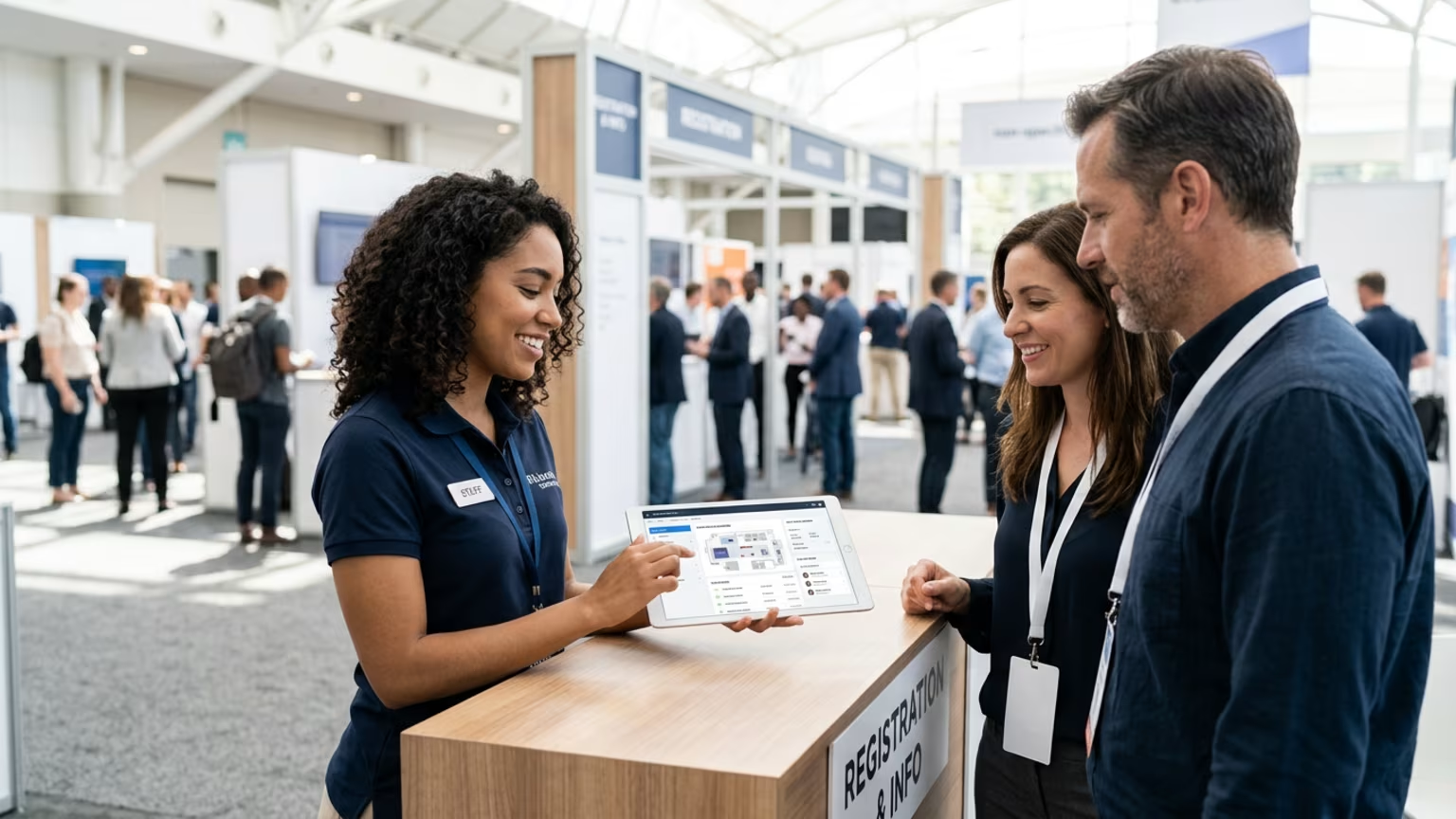
Sarah stood frozen at the Miami convention center entrance. Her lead brand ambassador just texted a positive COVID test an hour before doors opened. The backup roster was buried in a sprawling spreadsheet that she could not open on her phone.
The introduction of natural language software for event staffing marks a major shift from basic shift filling to strategic workforce orchestration. Brands that adopt automated matching and compliance tracking will transform live event chaos into measurable pipeline growth.
Live brand experiences look incredible on paper but often unravel on the show floor. You spend six months planning a national sampling tour or a massive trade show booth. Then a simple operational failure derails the entire investment. A brand ambassador forgets their food handler permit, or a specialized tech demonstrator gets scheduled for a generic floor walking shift.
We have executed over 1000 campaigns across all 50 states. We bring brands to life in every major U.S. market. From retail demos in Seattle to roadshows in Miami and events in Honolulu, our teams activate brands wherever our clients' audiences are located. Through this exposure, we see how fragile manual event staffing truly is. When operations teams rely on static spreadsheets, they cannot react to real time changes.
Event workforce software provider Rosterfy recently launched new artificial intelligence scheduling tools to tackle this exact vulnerability. According to their product developers, these natural language features identify accidental eighteen hour shifts and catch expired certifications before doors open. This points to a much broader reality in field marketing today. The biggest threat to your Return on Investment is not poor creative direction.
The real threat is fragmented execution and exhausted field managers. Relying on outdated methods forces your best people to spend hours fixing spreadsheets instead of coaching field staff. This administrative burden limits your ability to scale operations across multiple cities. To win on the show floor, you must upgrade your operational foundation.
The consequences of a fragmented system go far beyond a single stressful morning. Retail partners notice when your demonstration booth opens late or looks disorganized. Trade show attendees walk right past an exhibit if the brand ambassadors appear confused or poorly trained. These subtle failures quietly erode your brand equity and destroy your sales pipeline. Fixing the core logistics is the only way to stop this slow bleed.
A strategic approach to experiential staffing requires moving from basic headcount fulfillment to skills based matching. A body in a branded shirt does not automatically generate sales. You need the right person with the right product knowledge in the right location. Software that automates these matching processes acts as a force multiplier for your logistics team.
Rosterfy notes that matching staff to micro tasks based on exact qualifications creates strong operational resilience. You can apply this exact framework to your next consumer activation. Instead of assigning generic roles, segment your talent pool by specific proficiencies. Identify who holds active alcohol sampling certifications, who speaks multiple languages, and who excels at high volume retail demonstrations.
When you implement retail staffing solutions for roadshows, this level of segmentation becomes your operational baseline. You stop guessing who is capable of handling a chaotic Costco weekend. You start deploying talent based on verified past performance and certified training. This transition eliminates the guesswork that plagues large scale consumer events.
Artificial intelligence is rapidly moving from a novelty to a mandatory control layer for event management. Rather than forcing administrators to click through complex drop down menus, modern systems accept natural language prompts to build complex schedules. You can ask the software to schedule five bilingual brand ambassadors for a weekend retail push. The system will instantly filter the database, check availability, and send the necessary shift invitations.
This operational discipline mitigates legal risk and avoids venue penalties. Software that tracks compliance and automates onboarding reminders guarantees your team never faces a shutdown from a missing permit. When you automate the repetitive administrative work, your field managers can focus on driving consumer engagement. Industry analysts report that removing manual friction allows organizations to respond to field staff in seconds rather than days.
Transitioning your field operations to a data driven system requires strict discipline. You cannot overlay smart software onto broken operational habits. Build your execution playbook around clear protocols to get the most value from your new tools. Your operations team must adopt these practices to maintain control during live events.
You cannot improve what your operations team fails to measure. Relying strictly on raw attendance numbers provides a false sense of security. You must track specific leading and lagging indicators to prove the true value of your physical activations. These metrics turn subjective event feedback into hard business data.
Leading indicators tell you if your event is set up for success before the doors open. Track your shift fill rate to guarantee complete coverage across all planned activation zones. Monitor compliance readiness to verify that every scheduled ambassador holds the required active permits. A fast time to fill metric proves your operations team maintains an engaged and responsive talent pool.
Lagging indicators measure the actual business impact of your field staff. Track your sample to purchase conversion rate during retail demonstrations to evaluate staff persuasion skills. Monitor total qualified leads captured to determine if your trade show team is successfully routing prospects. Measure execution consistency across different markets by comparing consumer engagement scores from multiple cities.
The accuracy of your data directly impacts your ability to secure future marketing budgets. When a Chief Marketing Officer asks for the results of a national sampling tour, you cannot simply hand over a list of hours worked. You must demonstrate how those hours directly influenced consumer behavior on the show floor. Precise metrics give you the evidence to defend your program costs.
Linking staffing data to actual sales evidence is entirely possible with real time reporting tools. When you analyze which staff members consistently drive higher retail sell through, you can optimize future schedules. This process turns your staffing budget from an unavoidable expense into a measurable revenue driver. You stop burning cash on generic labor and start investing in proven brand builders.
Consider a fast growing functional beverage brand launching a national retail roadshow. They needed to activate simultaneously across fifty big box retail locations over a single holiday weekend. Every venue required strict food handling compliance, active insurance certificates, and specialized product knowledge. The stakes were incredibly high for their retail partnership.
In the past, their marketing manager handled this through massive email chains and frantic phone calls. Shifts went unfilled, and two locations shut down the activation after ambassadors arrived without printed permits. They decided to adopt an automated workforce system to regain control over their local field teams. The goal was to remove administrative bottlenecks and protect the retailer relationship.
The new platform automatically verified health certifications before allowing talent to claim an open shift. The software flagged overlapping schedules and matched specialized brand ambassadors to the highest foot traffic stores. This transition eliminated the administrative chaos that previously plagued their promotional weekends. Field managers finally had time to coach their brand ambassadors on product messaging.
The operations team used the new reporting dashboards to monitor attendance across all fifty markets simultaneously. If a brand ambassador failed to check in via their mobile device, the system instantly alerted the regional supervisor. The supervisor could then deploy a backup team member before the store manager even noticed the absence. This real time visibility completely changed how they managed their brand reputation.
The results were immediate and highly measurable for the executive team. They achieved a complete shift fill rate across all fifty retail locations. Their on site conversion metrics improved after the system prioritized staff with proven retail experience. They successfully turned an operational nightmare into a highly repeatable consumer sales engine.
Do not let outdated scheduling spreadsheets sabotage your next major consumer activation. Audit your current field staffing process this week to identify exactly where manual tasks are slowing down your team. Find the gaps in your compliance tracking, and evaluate how long it takes to replace a sudden cancellation. Fixing these operational leaks is the fastest way to protect your event investments.

30 Years Experiential & Retail Activation Partner for CPG & Beverage Brands | Multi-Market Demos, Roadshows & Costco/Club Programs That Actually Sell