Robbie Thain
Founder, CEO

Learn how to integrate mobile roadshows into major product launches, sponsorships, and expos to turn fleeting event attention into sustained retail momentum.

Sponsors can secure 15 minutes of undivided attendee attention by deploying well executed branded environments. For marketing operators, this focused time is the difference between a fleeting glance and an actual product trial. The modern convention center is crowded. This playbook breaks down how to integrate mobile roadshows into major product launches so you can turn fleeting attention into sustained retail momentum.
Walk onto any major trade show floor and the chaos is immediate. Exhibitors are shouting over each other to grab the attention of tired buyers rushing past. Your premium booth gets lost in an ocean of identical displays and flashing screens. Brands spend heavily on a single tentpole moment only to watch their momentum fade when the hall closes.
Many marketing leaders treat an expo as a standalone stunt rather than a strategic starting line. They pour their entire budget into a massive footprint. Then they wait passively for foot traffic to arrive. The floor reality is a blur of shallow interactions that rarely convert into actual sales pipeline.
When the lights go down on the final day, the brand presence vanishes completely from the market. The pressure on marketing operators is immense during these tentpole moments. You are tasked with justifying a massive budget to your executive board. Your team spends months coordinating logistics, training staff, and designing booth graphics.
Even with this massive effort, the actual consumer experience often feels rushed and disjointed. You need a system that captures attention before the show and sustains it long after the event concludes.
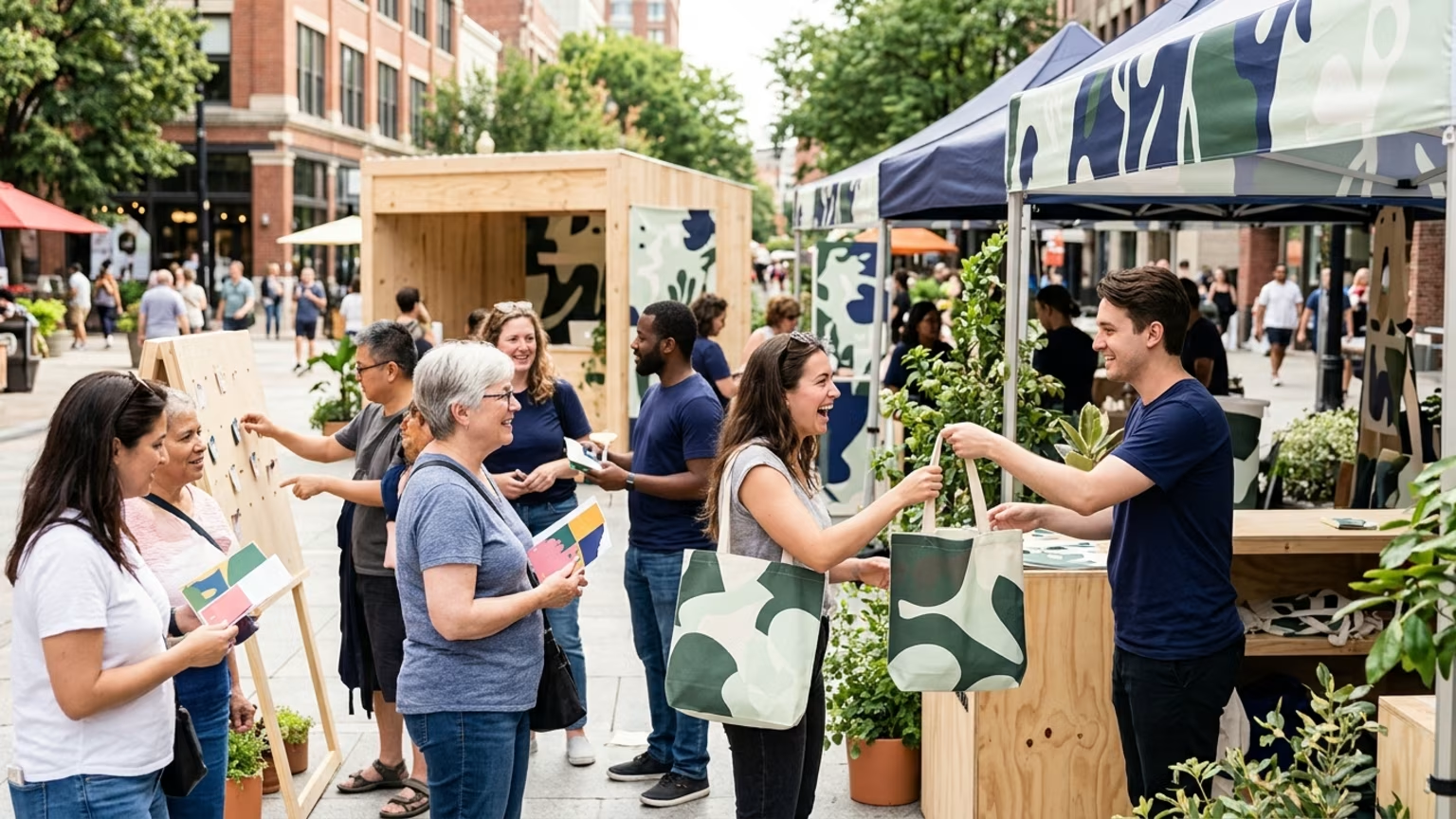
The solution is not a bigger booth but a synchronized strategy that extends far beyond the venue walls. A brand activation is an interactive experience that brings a brand to life and prompts an audience to engage with it directly. The goal is active participation, not passive exposure. Attendees touch, play, sample, or step inside the brand instead of just watching an ad.
By integrating a mobile roadshow, you can surround the main event with multiple physical touchpoints. Sponsorship doesn't have to start on event day. You can build momentum early through branded email placements, teaser campaigns, early bird giveaways, or countdown contests. This approach warms up the market and primes buyers before they ever scan their badges.
To achieve maximum impact, teams must look beyond the booth to orchestrate surround show activations that reach buyers in multiple locations. The physical activation unit becomes a traveling extension of your core message. It allows you to intercept target demographics in places where your competitors are absent. This method turns a single date on the calendar into a multi week regional takeover.
Modern buyers are highly skeptical of traditional advertising formats. They want to experience a product physically before making a purchasing decision. A mobile pop up removes the friction between buyer and seller by bringing the showroom directly to the consumer. This hands on approach builds trust and accelerates the sales cycle significantly.
Executing a multi phase roadshow requires operator grade discipline and clear timelines. You need distinct phases to warm the market, capture peak event attention, and drive post show retail velocity. This framework guarantees that every dollar spent on a sponsorship translates into measurable engagement.
Your activation begins weeks before the actual tentpole date. During this critical window, the goal is to build anticipation and secure meetings. You want the market to feel your presence before the convention doors even unlock. This proactive stance separates seasoned operators from reactive participants.
By executing these steps, your sales team walks into the main event with a calendar full of warm leads.
When the expo opens, your strategy shifts to capturing undivided attention. Your mobile assets should work in harmony with your main booth. The exterior activations act as a massive funnel for your primary display. This coordination prevents your target audience from getting distracted by aggressive competitors.
This dual presence guarantees that every attendee interacts with your brand at least once during their visit.
The real work begins after the trade show ends. You must capitalize on the fresh buzz before buyers return to their normal routines. A stagnant post show strategy is the fastest way to waste your marketing investment. You have to take the momentum from the expo and inject it directly into local stores.
This follow up phase is critical for bridging trade shows with high conversion roadshows that impact the bottom line. It transforms a one time meeting into a lasting commercial relationship.
A scalable roadshow falls apart when headquarters and field teams operate in silos. You need absolute role clarity to maintain brand standards across different cities. Headquarters must own the strategic narrative and define the core objectives. The field marketing team must adapt that playbook to local realities and manage daily execution.
Headquarters is responsible for designing the interaction flow and the measurement framework. They build the toolkits, draft the ambassador scripts, and establish the data capture methods. This central authority guarantees that the activation delivers a uniform message in every single market. Without this oversight, regional managers might drift away from the core campaign goals.
The on site team brings that strategy to life by navigating weather changes, retailer quirks, and local crowd dynamics. They provide real time feedback to corporate leaders regarding product objections or operational bottlenecks. This continuous loop of communication keeps the activation agile and highly effective. True operator grade discipline is achieved when both sides respect these distinct boundaries.
Field marketing managers need standardized reporting templates to capture interaction data accurately. If every local team uses a different method to track leads, the final report will be a useless mess. Headquarters must enforce a single source of truth for all metrics. This operational rigor allows makai and the brand to measure success clearly across multiple geographic regions.
Deploying a national roadshow around a major tentpole is not without its challenges. Operators must navigate complex permitting processes across multiple municipalities. Securing prime parking spaces near a convention center requires aggressive negotiation and advanced planning. Without a dedicated logistics partner, these operational hurdles can quickly derail your entire timeline.
Staffing consistency is another major point of failure for expanding brands. You cannot rely on untrained temporary workers to communicate your premium brand story. Every brand ambassador must undergo rigorous training to understand the product specifications and the core campaign message. This investment in human capital separates a mediocre pop up from a highly profitable retail pipeline engine.
Weather contingencies must also be baked into your foundational planning. A sudden rainstorm can instantly kill foot traffic at an outdoor sampling trailer. Experienced operators always have a backup plan that shifts the activation indoors or utilizes weatherproof structures. This level of preparation guarantees that your activation continues to capture leads regardless of external conditions.
Every field activation must connect to concrete business outcomes. You cannot justify a massive experiential budget with vague vanity metrics or empty promises. It is critical to track both lead and lag indicators to prove true Return on Investment. We advise marketing operators to build a rigid reporting framework before any trucks hit the road.
Lead metrics tell you if your live activation is successfully capturing attention. These numbers reflect the immediate quality of your on site execution.
Tracking these initial interactions is one of the metrics to prove trade show success in post event roadshows. They validate that your team is talking to the right people.
Lag metrics demonstrate the ultimate business value of your campaign. These figures are what your executive board actually cares about.
These downstream data points help turn mobile roadshows into retail revenue engines that impress senior leadership. They bridge the gap between marketing spend and financial performance.
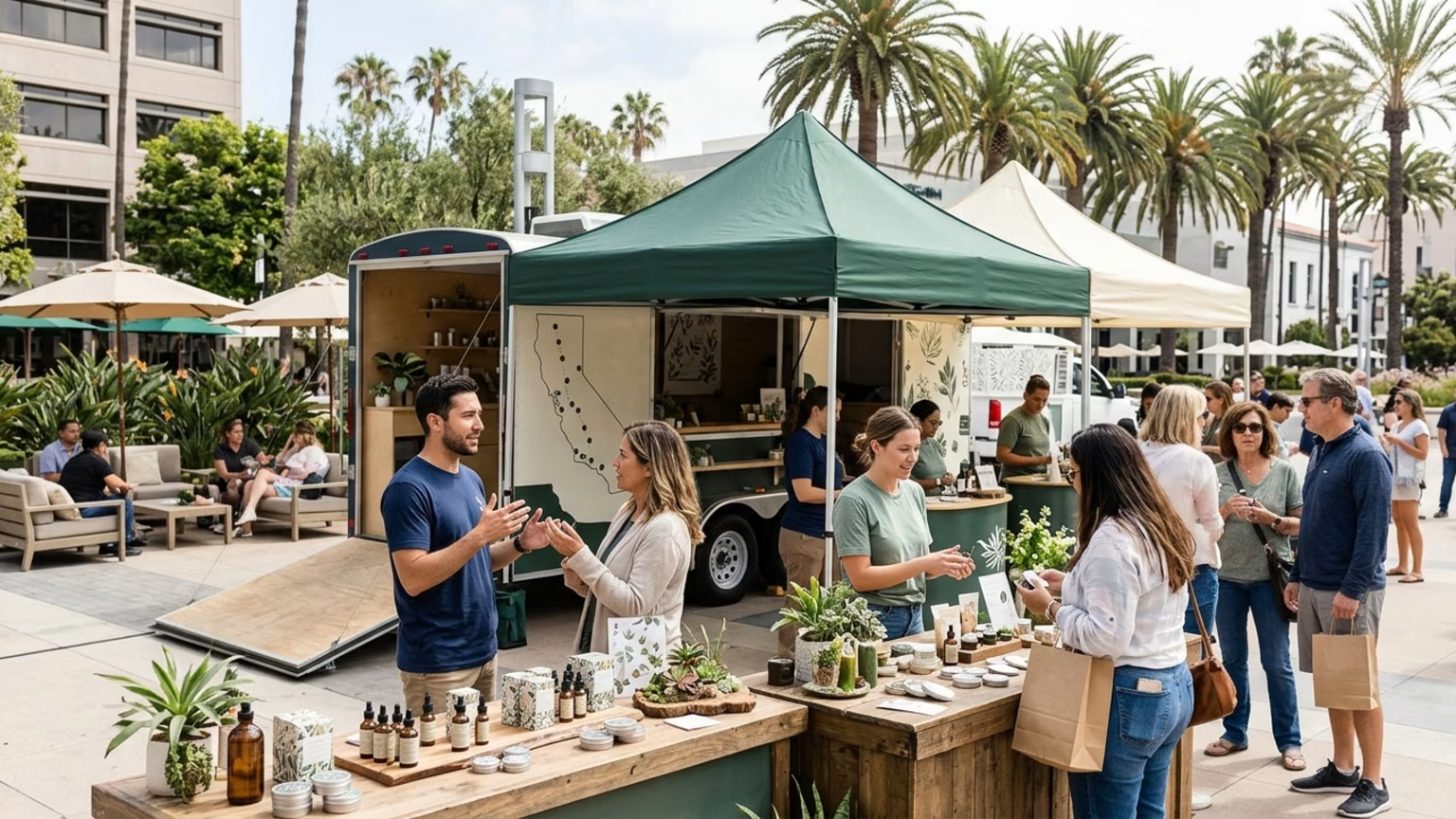
We specialize in creating retail demos, product sampling programs, and roadshows that bring brands face to face with their audiences. Each program is designed to drive trial, build consumer relationships, and accelerate retail velocity across multiple locations. When a premium beverage company needs to launch a new product, we do not just build a display. We coordinate a national routing plan that puts the product directly into the hands of target shoppers.
By parking customized sampling trailers outside regional expos, we capture the attention of attendees before they step inside. This creates an immediate spike in product awareness. We then move those same trailers to nearby retail locations to capitalize on the fresh buzz. This sequence transforms an isolated marketing expense into a reliable pipeline engine. If your team is ready to scale these results, it is time to book a strategy call.
The convention center floor will always be a chaotic battleground for attention. Buyers will continue to rush past identical booths in search of something genuinely different. By extending your presence through a disciplined mobile roadshow, you escape the noise of the expo hall. You secure that 15 minutes of undivided attention and turn a fleeting moment into a lasting retail victory.

30 Years Experiential & Retail Activation Partner for CPG & Beverage Brands | Multi-Market Demos, Roadshows & Costco/Club Programs That Actually Sell