Robbie Thain
Founder, CEO

Kraft Heinz is backing its NFL and Disney retail activations with a $700 million investment. See how field operational discipline drives CPG shopper engagement.
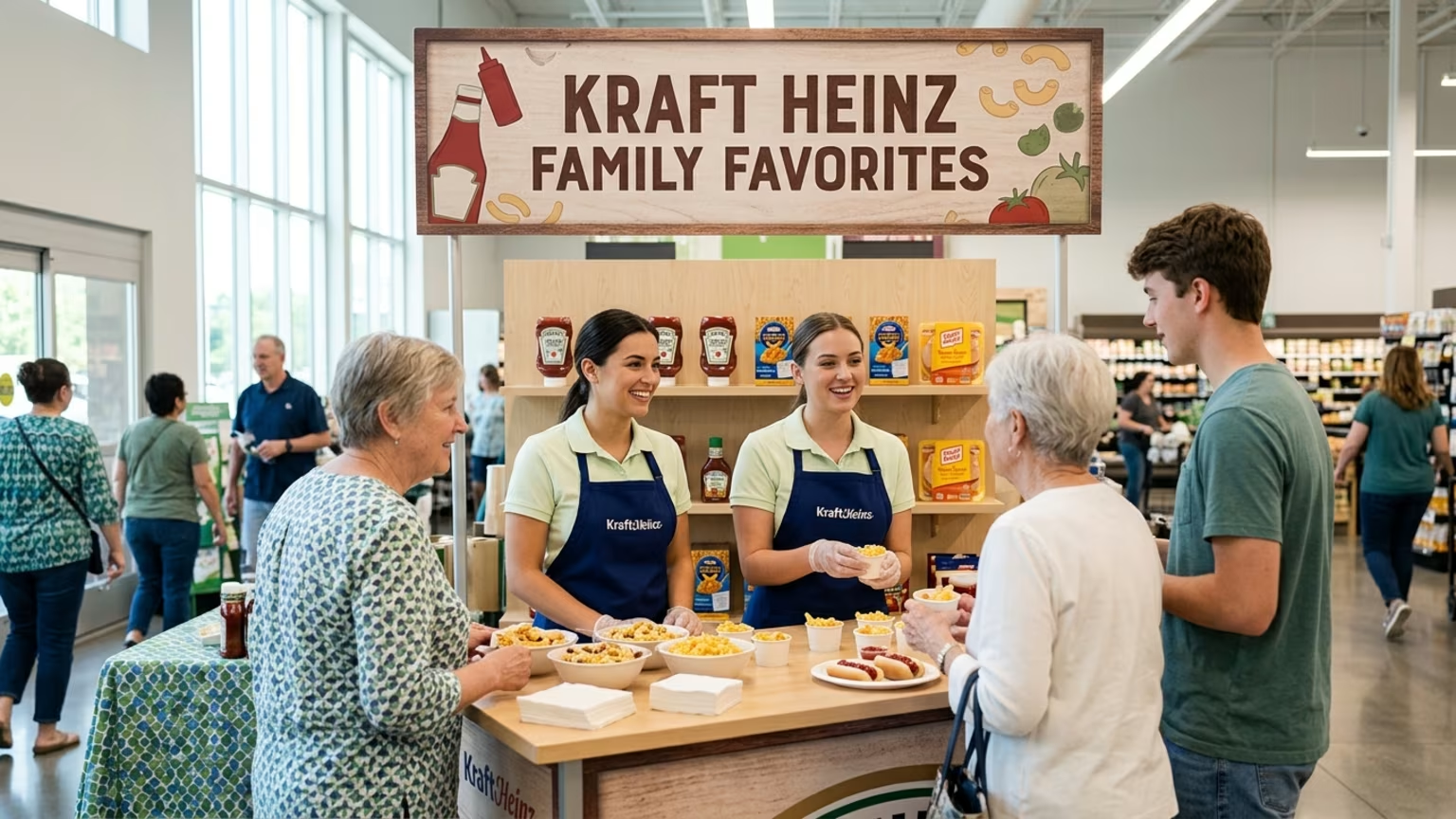
Kraft Heinz is increasing its 2026 incremental investment by $100 million, bringing the total to approximately $700 million compared with 2025, according to Reuters. This massive capital allocation shows exactly how much is riding on physical retail execution for modern consumer brands. To make these high-stakes retail interventions actually perform, operators must face a few harsh truths about turning licensed properties into measurable pipeline.
Before any NFL or Disney display hits the supermarket floor, operators must finalize the unglamorous groundwork that keeps programs on track. This means securing complex location permissions, coordinating supply chain staging, and ensuring every brand ambassador understands the precise conversion goal. We have been connecting brands with people through live experiences, retail programs, and national activations since 1995. Over three decades, we have built a track record of creating meaningful brand moments across the country by treating logistics as our primary weapon.
A compelling creative concept falls apart instantly without proper CRM routing setup and reliable inventory management. Regional managers must align vehicle staging and promotional inventory weeks in advance to avoid supply chain gaps during critical family shopping moments. If a brand wants to connect pop-up retail activations to shelf velocity, it needs rigorous backend preparation before the doors even open. At makai, we handle the strict permitting, the product storage, and the nationwide delivery coordination so every activation stays on schedule.
A successful program also demands rigorous ambassador training before anyone steps onto the floor. Floor personnel must understand how to steer a conversation toward a purchase rather than just handing out free items. Proper ambassador training turns a simple interaction into a highly qualified retail lead. We ensure that every team member knows exactly how to pitch the product benefit alongside the cultural hook.
Retail buyers have zero patience for sloppy setups or late deliveries during peak weekend hours. Teams must build detailed checklists for every single location to guarantee absolute consistency across regions. This intense preparation phase filters out unserious agencies and protects the core brand reputation. Operators must respect the physical space and prepare for every possible logistical friction point.
Deploying high-attention cultural properties requires strict adherence to a proven field strategy. The available research outlines clear methods for executing these campaigns effectively in crowded physical environments. Marketing leaders must follow a precise sequence to ensure their substantial investments translate into actual basket growth. Field teams can use these step-by-step methods to drive better retail outcomes.
Many brands spend millions on licensing rights but fail entirely at the point of physical retail execution. The most common logistical mistake is treating retail displays like static billboards rather than active conversion zones. Inexperienced field teams often lose valuable consumer insights on messy clipboards or fail to set up proper CRM routing before the event starts. This lack of operational rigor turns a massive financial investment into an unmeasurable vanity project.
Another critical failure point is underestimating store flow and retailer compliance during high-traffic moments. If field staff cannot manage large crowds during peak weekend hours, shoppers will simply walk past the activation without engaging. Operators must implement a simple execution system with approved layouts, photo verification, and strict reporting dashboards. Without these basic controls, brands cannot know if their street level sampling programs are actually driving product trial.
Relying purely on the visual appeal of a licensed property is another amateur mistake. Characters and sports partnerships can attract attention, but they also introduce heavy execution requirements, intense retailer coordination, and potential distraction from the product proposition. The physical campaign must still make the core product benefit, the retail price, and the usage idea perfectly clear. A famous mascot cannot save a poorly designed floor layout or a missing inventory shipment.
When brands fail to manage these logistics, they lose more than just immediate sales. Retailers notice when a vendor promises a massive national push but delivers half-empty shelves and missing promotional materials. This damages the long-term relationship with the retail buyer and makes securing future floor space much harder. True operators know that protecting retailer trust is just as important as engaging the end consumer.
Serious marketing leaders require concrete financial justification for their large experiential budgets. A recent Mondelez and Albertsons activation offers a directly relevant example of how CPG marketers are attempting to connect retail media exposure with in-store purchase. The program used in-store digital screens for Sargento Cheese Bakes and applied a matched market incrementality methodology to evaluate performance. The case study reported that the fall Sargento activation delivered significantly stronger return on ad spend than the spring campaign.
Kraft Heinz is connecting three elements that are often managed separately to drive these financial goals. The brand is utilizing a high-attention cultural moment in football, a high-affinity family property in Disney princesses, and a physical conversion environment at the supermarket shelf. That combination gives the brand multiple ways to compete for attention during critical shopping trips. However, the exact commercial effectiveness of these specific campaigns has not yet been publicly demonstrated.
Kraft Heinz plans to raise marketing spending to at least 6% of net sales and is leaning on partnerships with the NFL and Disney, according to The Wall Street Journal. The company recently raised its 2026 outlook, according to Reuters, now expecting organic sales to decline between 0.5% and 2.0%, compared with its previous forecast of a 1.5% to 3.5% decline. It also forecast adjusted earnings per share of $2.03 to $2.09, versus its previous range of $1.98 to $2.10. These specific financial stakes illustrate exactly why well-executed in-store programs can help convert consideration into purchase.
Proving this value requires moving past basic vanity metrics and focusing entirely on business impact. Busy displays, total impressions, and basic scans can be useful diagnostic signals, but they do not prove a definitive sales impact. The strongest programs compare exposed and unexposed stores to account for pricing, general distribution, and retailer inventory movements. By measuring real outcomes, operators ensure that their retail distribution trade show activations actually justify the initial expense.
Managing a complex retail push requires constant attention to incrementality and actual unit movement. Marketing leaders must regularly follow up on store-level compliance reports and verify that the themed displays are producing measurable basket growth. Teams should closely track incremental revenue, offer conversion rates, and the cost per incremental purchase across all regions. The core objective is proving that physical brand experiences generate profitable, repeatable retail outcomes over time.
That $700 million total incremental investment requires absolute operational discipline to succeed on the retail floor. When operators pair an ambitious financial bet with meticulous field execution, they transform basic consumer interactions into highly qualified sales leads. This relentless focus on execution is what truly bridges the gap between physical activations and retail velocity.

30 Years Experiential & Retail Activation Partner for CPG & Beverage Brands | Multi-Market Demos, Roadshows & Costco/Club Programs That Actually Sell