Robbie Thain
Founder, CEO

Temporary retail is evolving into a primary engine for consumer acquisition. Learn how to deploy modular pop-up tech that captures data and proves measurable ROI.
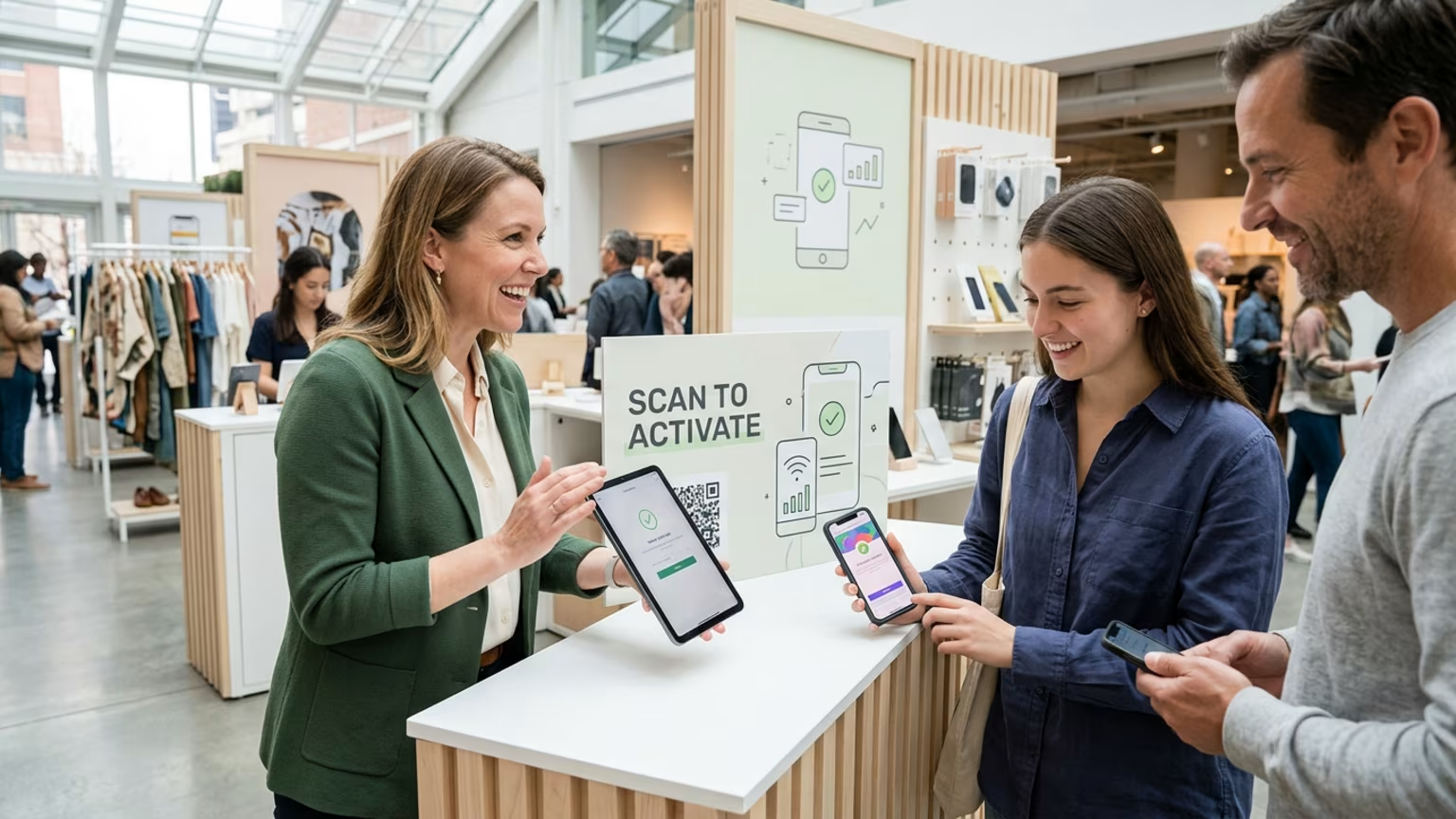
Permanent retail footprints are no longer the ultimate goal for consumer brands looking to drive product trial. Mobile pop-ups and temporary roadshows have evolved from scrappy experiments into sophisticated revenue engines. Marketing operators are now demanding the same operational rigor in a parking lot that they expect in a flagship store.
This piece outlines how modular technology is turning temporary mobile activations into measurable sales channels. Readers will learn how to deploy portable infrastructure that captures clean data and proves Return on Investment across national roadshows.
Field marketing teams often launch mobile tours with high energy and zero backend strategy. Staff hand out thousands of samples from a beautiful trailer while managers judge success by how many cups they poured. They collect no visitor data. The activation feels busy, but the CRM stays empty.
Without tracking infrastructure, even the most interactive pop-up becomes an unmeasured expense. A brand might invest heavily in a high traffic mall kiosk or a mobile trailer. The physical build looks perfect, but the actual transaction layer is completely missing. Marketing leaders cannot prove that these live interactions lift retail sales or build retailer confidence.
This disconnect leaves operators defending their budgets with anecdotes instead of solid evidence. Experiential activations without digital integration create massive blind spots for corporate reporting. Sales directors demand concrete proof that temporary retail directly influences shopper behavior. When teams cannot connect a free sample to a future purchase, mobile roadshows get unfairly labeled as mere brand theater.
The logistics of moving a physical asset across the country are already exhausting. Teams worry about fragmented execution, inconsistent staffing, and poor in-store presentation across multiple markets. Adding a poorly planned digital layer only multiplies these logistical headaches. Operators need simple systems that capture reliable data in loud, unpredictable environments.
Trade show floors and outdoor festivals present uniquely hostile environments for clean data collection. Wifi drops constantly, attendees are distracted, and field staff suffer from deep fatigue by mid afternoon. Expecting an ambassador to manually enter lead data under these conditions is a recipe for total failure. Without automated capture tools, you lose the exact audience you paid heavily to acquire.
The pressure on mid-level marketing managers to justify these activations has never been higher. Retailers demand proof that a parking lot roadshow will actually drive foot traffic inside their stores. When a brand cannot provide clean attribution data, retail buyers lose confidence in the overarching promotional strategy. This forces brands to rely on heavy discounting instead of premium experiential engagement to secure shelf space.
The solution requires treating every temporary activation as a fully functional data lab. Brands must build the tracking architecture before they print the first vinyl banner. Modular kiosks and mobile trailers now allow teams to deploy robust infrastructure quickly. This plug and play retail tech ensures every consumer touchpoint feeds directly into enterprise reporting systems.
According to Accio, the broader pop-up and smart vending retail sector is projected to reach USD 95 billion by 2026. This combined sector is expected to grow at a 10.6% CAGR through 2032. This financial momentum reflects a major shift in how brands view short term real estate. They use these portable formats to test markets and validate demand without signing long leases.
Since 1995, makai has been connecting brands with people through live experiences and national activations. Over three decades, we have seen that disciplined execution matters far more than flashy concepts. The most successful teams integrate payment gateways and data capture right into the physical design. They use clear strategies to turn foot traffic into documented leads.
Temporary retail allows agile companies to test new messaging before committing to a permanent footprint. You can deploy mobile infrastructure in regions that lack dedicated retail locations. This flexibility helps brands reconnect with lost customers and establish fresh territorial presence. By treating a parking lot activation like a flagship store, operators capture the exact data required to scale.
Integrating this technology requires a massive shift in how teams plan their logistics. You cannot treat the point of sale system as an afterthought to the creative design. The digital architecture must dictate the physical layout to ensure seamless consumer flow. This disciplined approach eliminates the friction that usually kills conversion rates at live events.
Product launch roadshows move from simple trial to deep consumer trust in ninety days when executed correctly. The consistent application of modular retail technology allows teams to replicate success across dozens of cities. Instead of starting from scratch at every stop, brands rely on proven, repeatable hardware configurations. This operator grade discipline turns chaotic regional tours into highly predictable revenue streams.
Executing a high performance mobile tour requires specific operational steps. You must wire the physical space for digital acquisition from day one. Do not wait until the event starts to figure out your tracking plan.
Zip recommends using in-app incentives and location based targeting to capture visitor paths and dwell time. This exact approach ensures that your short term campaign meets rigorous enterprise financial requirements. You must view the mobile footprint as a live content repository. Every interaction should leave a clean digital trace for your analysts to review.
Operators who skip these steps usually end up with fragmented data silos. A well integrated mobile retail roadshow prevents this by centralizing all data collection. Your technology stack should handle the heavy lifting while your ambassadors focus on human connection. The goal is to make the digital tracking completely invisible to the actual consumer.
When you plan product launch pop-ups, consistency is your most valuable asset. Every market stop must run the exact same digital protocols to ensure clean data sets. Do not let regional field teams modify the data capture process on their own. Centralized control guarantees that your final Return on Investment calculations remain accurate and defensible.
Physical logistics must seamlessly support your data collection strategy. Your storage and logistics partner must ensure that your tech enabled kiosks arrive undamaged and fully functional. A broken touch screen or a damaged smart vending machine instantly destroys your data acquisition plan. Meticulous freight management is just as important to your tracking strategy as the software itself.
Successful teams also implement structured debriefs for their floor staff at the end of every shift. While automated systems capture the quantitative metrics, your ambassadors hold the qualitative insights. They hear the direct objections, observe the micro expressions, and understand the real mood of the crowd. Combining this human intelligence with hard digital data creates a complete picture of market demand.
The days of guessing your Return on Investment are over. Wharton research, summarized by Rockbot, found that customers who visit experiential stores increase their monthly spending by around 30%. This increase is driven by a 16.7% higher purchase frequency and a 28.6% increase in items purchased. These numbers prove that well designed physical experiences drive quantifiable revenue.
To track this success, operators must monitor specific lead metrics during the live activation. Focus heavily on daily unique URL scans, in-app sign ups, and real time inventory velocity. These early indicators tell you if the mobile tour is actually capturing consumer attention. If these metrics fall behind target, your field team can adjust their approach immediately.
For lag metrics, look at the post event sales lift in nearby retail locations and total promo code redemptions. Moo reports that temporary retail and pop-up revenue in the U.S. reached approximately USD 15.6 billion in 2025. Their cited studies also show a single pop-up event can boost sales revenue by 35%. You cannot capture these impressive gains if you rely on fragmented reporting.
Consistent data collection bridges the gap between digital metrics and physical reality. When you tie a mobile tour directly to local retail performance, the financial narrative changes completely. You can easily prove to your executive team that retail sell-through pop-ups actually move product off shelves. This level of reporting transforms a marketing expense into a reliable capital investment.
Setting these benchmarks requires complete alignment with your broader corporate goals before the tour leaves the warehouse. If your primary objective is regional retail expansion, your lag metrics must focus purely on store level lift. If the goal is direct to consumer acquisition, you must track online conversion rates following the physical interaction. A generalized approach to measurement usually results in highly ambiguous performance reports that impress no one.
Tracking five distinct metrics can prove that mobile roadshows drive sales lift in competitive product launches. Beyond unique scans and inventory velocity, operators should measure the precise cost per qualified physical interaction. They must also track the time it takes for a captured lead to make their first verified retail purchase. This granular timeline helps finance teams understand exactly when the activation will reach the break even point.
In our experience managing activations for consumer brands, seven-day pop-up events generate 31% more revenue than three-day activations. You need adequate time in a specific market to build trust and capture meaningful behavioral data. A longer dwell time in a high traffic location allows the technology to gather deeper visitor insights. Short bursts of activity often fail to produce actionable pipeline or reliable consumer feedback.
Industry data supports this deliberate approach to physical placement. According to survey data cited by Moo, about 61% of consumers have visited a pop-up shop. More impressively, 59% say they would make a special trip to visit one. These motivated buyers are looking for specific experiential triggers that validate their trip. They expect a premium interaction that justifies their time and attention.
Rockbot cites research indicating that 80% of consumers value visually appealing interiors in experiential environments. Another 72% value sensory engagement through lighting and music, and 65% prioritize personalization technology. Our team uses these specific design principles when building trigger-proof roadshows for rebrands and market entry. The physical structure might be temporary, but the resulting data informs permanent business decisions.
When brands align their physical design with robust digital tracking, the outcomes speak for themselves. You can learn exactly how to build these reliable systems when you book a strategy call with our team. We help marketing leaders deploy mobile infrastructure that actually captures revenue. Clear methodology will always outperform unstructured enthusiasm on the trade show floor.
The integration of digital tracking into mobile environments is no longer an optional upgrade for premium brands. It is the baseline requirement for any company that wants to compete seriously in the physical world. Consumers have been trained by seamless digital commerce to expect the exact same convenience during live interactions. Brands that fail to provide this integrated experience look instantly outdated and hopelessly disconnected from modern shopper habits.
We have consistently seen that operator grade discipline turns fleeting interactions into long term brand loyalty. The magic happens when the physical design perfectly conceals the complex digital machinery operating quietly underneath. Your audience gets to enjoy a warm, highly engaging experience while your team collects critical operational data. This balance between high emotion and rigorous tracking is the defining characteristic of a successful modern roadshow.
The true value of a mobile activation does not come from a single weekend of massive crowds. It comes from the quiet hum of clean data flowing into a system long after the trailer drives away. Temporary retail teaches brands how to be remarkably present in a very noisy physical environment. The most memorable experiences are those that leave a lasting mark without overstaying their welcome.

30 Years Experiential & Retail Activation Partner for CPG & Beverage Brands | Multi-Market Demos, Roadshows & Costco/Club Programs That Actually Sell


