Robbie Thain
Founder, CEO

Discover how mobile retail roadshows turn passive shoppers into active buyers. Learn proven strategies to drive immediate sales lift and retail sell-through.
The weekend rush at a regional big-box retailer is a blur of shopping carts, distracted parents, and overwhelmed store employees. Shoppers walk past your premium product on aisle twelve without breaking their stride. You spent thousands on endcap displays, but they blend into the background noise of aggressive discounting and seasonal promotions. Field marketing teams often watch helplessly as expensive retail placements fail to generate actual sell-through.
When you rely entirely on passive signage to capture attention, your brand becomes invisible. Retail buyers demand proof of velocity before they commit to larger purchase orders. A beautiful cardboard display does not start conversations or answer consumer questions about ingredients. Brands need a proactive physical presence to break the standard shopping routine.
Retail buyers want brands that bring their own momentum to the store. If a new snack or beverage sits motionless on the shelf, the retailer will quickly replace it with a competitor. Marketing leaders carry the heavy burden of generating that initial momentum from scratch. They need an activation strategy that guarantees product trial and immediate point-of-sale conversion.
British outdoor brand Berghaus recently announced a custom retail roadshow across the DACH region to drive product trial right outside their key retail partners. This strategic move proves that bringing hands-on brand experiences directly to the point of purchase is an incredibly effective tactic. Field marketing operators know that intercepting shoppers in the parking lot changes the entire conversion dynamic. It turns a chaotic shopping trip into a focused brand interaction.
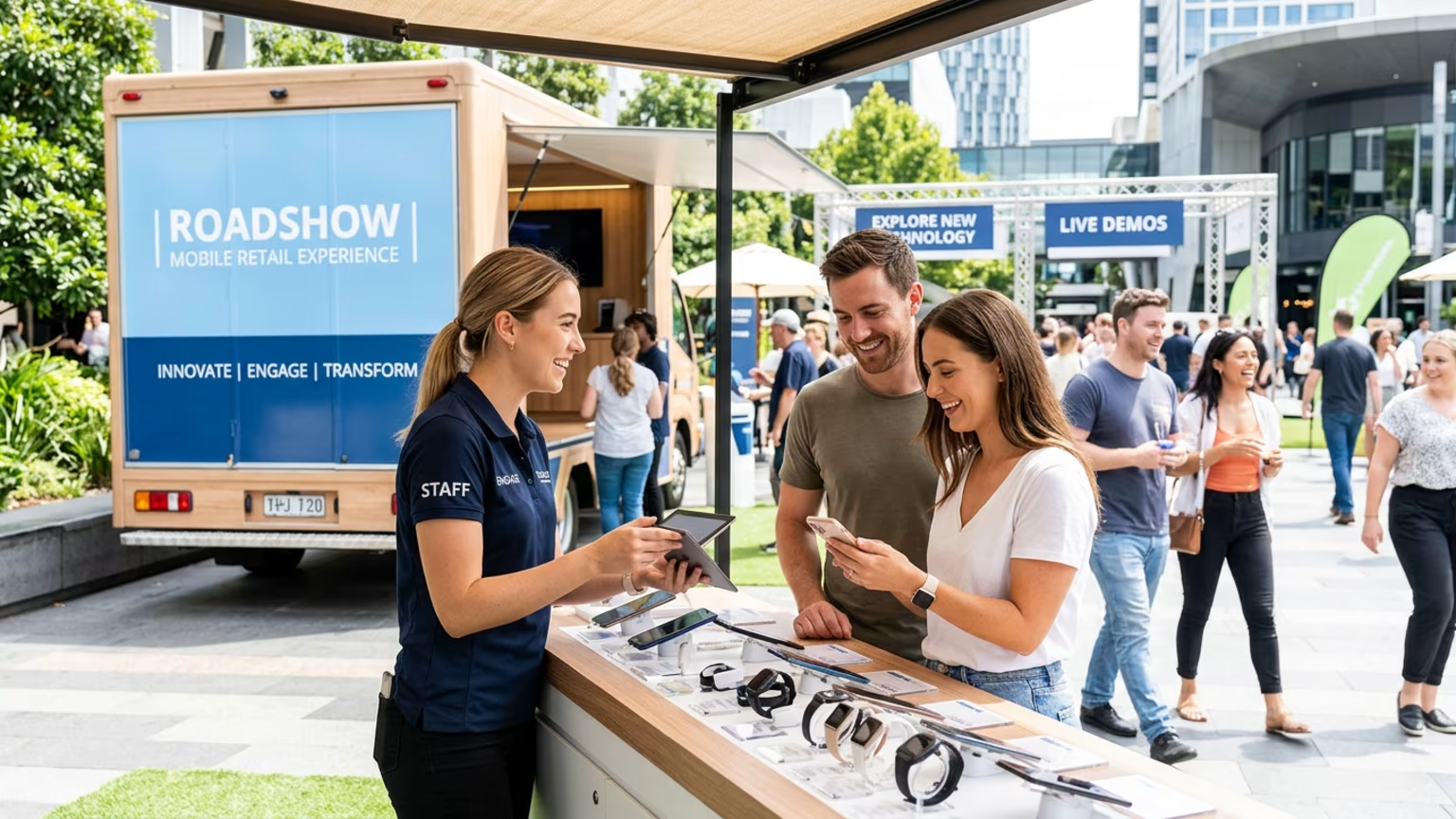
Relying on passive retail displays rarely converts skeptics into buyers. Brands need a strategic mechanism to intercept shoppers before they enter the store. A mobile activation hub serves as a traveling basecamp that physically disrupts the typical consumer path to purchase. This proactive approach forces a moment of genuine connection.
We see this exact strategy playing out internationally right now. According to Snow Industry News, Berghaus is rolling out a mobile activation vehicle across the DACH region. The brand designed this custom vehicle to park directly outside key retail partners. This setup lets them engage local outdoor communities with hands-on gear demonstrations just steps away from the cash register.
By controlling the physical environment, marketing leaders strip away the distractions of the retail aisle. You force a focused interaction where trained ambassadors guide the consumer through a genuine product experience. Brands that invest in regional field deployments see higher retailer confidence and stronger local sell-through. This focused engagement builds immediate trust between the buyer and the brand.
When shoppers can physically touch or taste a product, their purchasing hesitation drops significantly. The mobile hub becomes a dedicated stage for your brand narrative. Your field team can communicate product benefits clearly without competing against fifty other labels on a shelf. This operational shift moves your marketing from hopeful advertising to guaranteed physical engagement.
Retail environments are designed for efficiency. This sterile setup leaves very little room for brand storytelling. Shoppers arrive with a specific list, grab their necessities, and head to the checkout lanes. Interrupting this mission requires a pattern interrupt that feels rewarding rather than annoying.
Taking a brand on the road requires operator-grade discipline from day one. Beautiful vehicles mean nothing if the logistics fall apart in a crowded parking lot. You must follow a precise execution sequence to guarantee successful deployments. Missing a single operational step will ruin your activation metrics.
Managing a nationwide deployment means preparing for bad weather, broken generators, and last-minute permitting issues. Your operations team needs contingency plans for every possible failure point. A seasoned field manager knows exactly how to pivot when conditions change on the ground. This level of preparation protects your marketing budget from wasted activation days.
Permitting and municipal regulations can easily derail a poorly planned tour. You must secure the correct city permits, health department approvals, and retail property authorizations long before the truck arrives. Ignorance of local sampling laws will result in immediate shutdowns and wasted capital. Dedicated logistical support keeps the activation completely compliant across state lines.
Marketing operators must prove that live experiences generate measurable pipeline. Vanity metrics like total impressions or social media likes hold very little weight in the boardroom. You need concrete data to demonstrate your Return on Investment. We tell our clients to focus entirely on lead and lag metrics that connect directly to revenue.
Your primary lead metrics should track immediate physical engagement on the ground. You must measure total verified samples distributed, the number of deep interactions lasting over one minute, and total coupons handed out. These numbers tell you if the activation vehicle is actually capturing attention. If your on-site team distributes fewer samples than projected, you can adjust the physical footprint or ambassador scripting immediately.
Lag metrics require close coordination with your retail buyers over time. The most important figure is the direct sales lift at the specific retail location during the activation window. You should track the redemption rate of physical coupons over the following thirty days. Marketing directors who master calculating exact event returns can easily justify future budget requests.
Data collection must happen daily to keep the campaign on track. Field staff should log their interaction numbers into a centralized reporting dashboard at the end of every shift. This reporting rigor gives marketing executives the visibility they need to defend the strategy. True operational excellence means knowing exactly what every activation dollar produces.
Theoretical frameworks only matter if they survive contact with the real world. We have executed over 1000 campaigns across all 50 states, bringing brands to life in every major U.S. market. That experience reveals exactly what happens when a premium consumer packaged goods company commits to a targeted roadshow. Targeted field activations consistently outperform standard retail promotions.
Consider a rapidly growing energy drink company trying to break through a crowded beverage category. They struggled to gain traction using standard in-store endcaps. Their marketing leadership decided to launch a mobile sampling vehicle that parked exclusively at priority grocery locations. They used energy drink sampling tours to physically place ice-cold cans into the hands of targeted consumers.
The brand ambassadors engaged shoppers in the parking lot before they started their weekly grocery run. This interaction created an immediate psychological anchor for the consumer. Shoppers entered the store already refreshed, primed by a positive conversation, and actively looking for the product. The campaign drove massive localized sales lift and secured permanent shelf space expansions.
This approach works for snack brands, beverage startups, and established food companies alike. When you intercept the buyer with a premium experience, you bypass the crowded retail shelf entirely. The mobile roadshow becomes a dedicated sales channel that you completely control. It removes the guesswork from your retail expansion strategy.
Proving the model at a single retail location is only the first step. Marketing operators must eventually scale these mobile deployments across multiple geographic regions to support national distribution goals. Scaling a roadshow requires duplicate vehicles, synchronized field teams, and a centralized logistics hub. You cannot rely on fragmented regional agencies to maintain a consistent brand standard.
A fragmented approach leads to inconsistent consumer experiences and messy data reporting. National scalability demands a single operational partner who understands your exact conversion goals. That partner must manage the entire fleet, handle nationwide permitting, and enforce strict ambassador training protocols. Centralized control guarantees that a product sample in Texas tastes exactly the same as one in New York.
Marketing success in the physical world requires more than a shiny truck. It demands strategic alignment, rigorous field execution, and an absolute focus on measurable sales lift. If your team needs to turn passive shoppers into active buyers, it is time to build a system that works. Book a strategy call with our operations team to map out your next mobile deployment.

30 Years Experiential & Retail Activation Partner for CPG & Beverage Brands | Multi-Market Demos, Roadshows & Costco/Club Programs That Actually Sell