Robbie Thain
Founder, CEO

Learn how brands test new markets and drive retail sales using modular AV roadshows and short term experiential pop ups with clear ROI metrics.
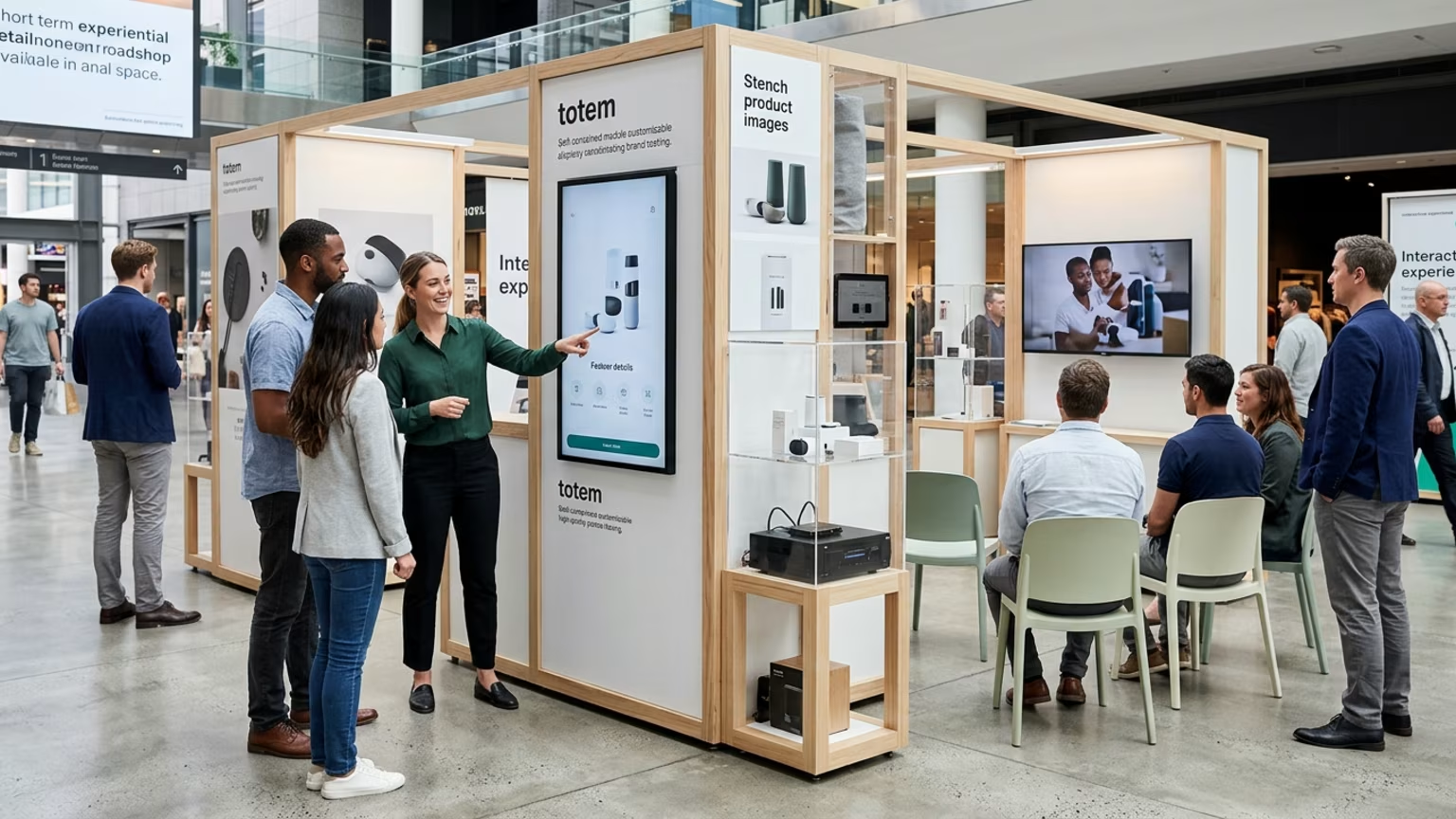
Short term experiential pop ups and modular mobile setups allow marketers to test new demographics without the financial weight of permanent leases. By layering interactive technology with clear measurement frameworks, teams can turn temporary brand environments into highly accurate engines for connecting live events to retail sell-through.
Analytics Insight reports that one Ulta Beauty expo sold out roughly 3000 tickets in about an hour. That rapid response proves that physical retail experiences are no longer secondary marketing channels. Brands are realizing that consumers will actively seek out high production value environments over standard sample tables. This shift forces marketing teams to look for brands rethinking experiential activations to be both unexpected and repeatable.
A marketing director secures budget to enter a new regional market. The traditional playbook demands signing a long commercial lease or settling for basic folding tables outside a grocery store. Both options usually create operational friction. Long leases lock capital into untested zip codes.
Conversely, basic sampling tables fail to hold consumer attention or generate sufficient product trial. Shoppers simply walk past uninspired marketing displays. Marketing operators find themselves trapped between financial risk and invisible brand presence. They need a scalable alternative to permanent stores that still looks professional.
Many teams try to force a compromise by booking temporary kiosks. These units often lack the visual impact needed to stop foot traffic. Without integrated audiovisual elements, the activation feels cheap. The brand message gets lost in the chaotic environment of a busy retail floor.
Many brands try to offset these costs by buying space at crowded trade shows. Competing against hundreds of other vendors dilutes the brand message. The resulting leads are often low quality. Field teams spend massive budgets on expo space without securing guaranteed consumer attention.
The solution requires combining high impact brand environments with temporary deployments. Unique Retail describes pop-up stores as market tests, product launch stages, and footfall drivers that help retailers avoid long term lease commitments. This strategic approach replaces heavy construction with agile staging. Brands can launch a fully branded experience in a parking lot over a single weekend.
Miller Zell argues that pop-ups and hybrid formats are strategic solutions to evolving shopper expectations and rising operational challenges. By deploying modular AV kits, brands can build immersive spaces that look permanent but pack up in hours. These portable setups integrate high definition screens, directional audio, and custom lighting. The resulting environment commands attention while remaining entirely mobile.
Rockbot explains that experiential retail combines design, technology, and sensory engagement to help customers make confident purchase decisions. This framework is particularly effective for products that require hands on evaluation. When consumers can touch and test a product within a curated space, their purchase intent increases. The activation becomes a powerful driver for supporting retail expansion.
FGPG defines experiential marketing as live brand experiences that invite audience participation, including interactive installations, themed environments, and pop-up shops. This holistic view shifts the focus from passive observation to active engagement. The consumer becomes an active participant in the brand narrative. Yellow House Events identifies pop-ups, immersive brand environments, roadshows, and trade show experiences as core experiential formats.
We run experiential and engagement programs coast to coast with local crews, smart logistics, and permit expertise. This national setup lets us launch fast and maintain quality consistency in every region. Our nationwide infrastructure enables us to activate brands wherever their audiences are located. Makai treats every mobile deployment as a precise operational mission.
Operators must treat temporary retail structures as rigorous data collection centers rather than mere branding exercises. The execution phase demands strict adherence to a tested methodology. A loose plan will result in wasted budget and unclear consumer insights. Here is how field teams can standardize their mobile deployments:
Return on Investment measurement does not happen by accident in physical environments. AnyRoad reports that many brands link experiential activations to retail purchases using unique promo codes, cashback rebates, SMS delivered offers, or dedicated landing pages. These digital tethers connect anonymous event attendees to verified sales data. Marketers can finally prove that their roadshow generated actual revenue.
The primary lead metrics track immediate consumer behavior during the activation itself. Field teams must monitor daily digital offer redemptions, sample distribution rates, and lead capture form completions. High engagement on site suggests that the modular AV setup is successfully capturing attention. These early indicators help operators adjust their pitch in real time.
The most critical lag metrics require patience and rigorous CRM alignment. AnyRoad notes that a 30 to 90 day post event window is critical for measuring impact. Purchase decisions influenced by experiential marketing often materialize weeks after the event. Evaluating sales lift over this extended period reveals the true value of the market test.
A structured business case ensures that every mobile activation defends its own budget. QR Code Ticket argues that temporary retail and event formats remain attractive to brands because they allow demand testing without long lease commitments. This financial flexibility empowers teams to take calculated risks in secondary markets. Teams can evaluate their lead metrics to determine what specific elements to repeat or change.
Leading consumer brands already utilize this agile testing methodology to enter new retail sectors. Trend Hunter notes that K beauty brands are using experiential pop-ups with skincare diagnostics, interactive product testing, personalized consultations, and curated installations. This format turns product evaluation into a highly targeted multisensory experience. The brands gather precise data on localized consumer preferences.
Other retail sectors deploy similar modular formats to bypass traditional brick and mortar limitations. MC&A Merchandising reports that floating pop-up shops are commonly used to test ideas and evaluate markets. These temporary units appear in locations that have never had a permanent store presence. The flexibility allows companies to validate demand before signing commercial leases.
Even established retail environments benefit from short term branded interventions. Trend Hunter highlights functional smoothie menus integrated into luxury lifestyle retail as evidence of growing demand. These wellness oriented hospitality extensions support brand affinity and premium positioning. The temporary menus act as live test beds for new product lines.
The rapid influx of 3000 ticket buyers at a single beauty expo shows what happens when brands treat physical interaction with respect. When operators trade static leases and basic tables for modular pop ups, they build experiences that command attention. Temporary retail environments are now precise instruments for testing demand and driving product trial.
Market testing no longer requires years of planning and massive capital commitments. By deploying targeted mobile activations, brands can gather hard data while creating memorable consumer moments. To turn your next field deployment into a measurable market test, book a strategy call with our team today.

30 Years Experiential & Retail Activation Partner for CPG & Beverage Brands | Multi-Market Demos, Roadshows & Costco/Club Programs That Actually Sell


