Robbie Thain
Founder, CEO

Learn how CPG brands balance unexpected experiential design with operator-grade repeatability to turn live events into scalable trial-driving engines.
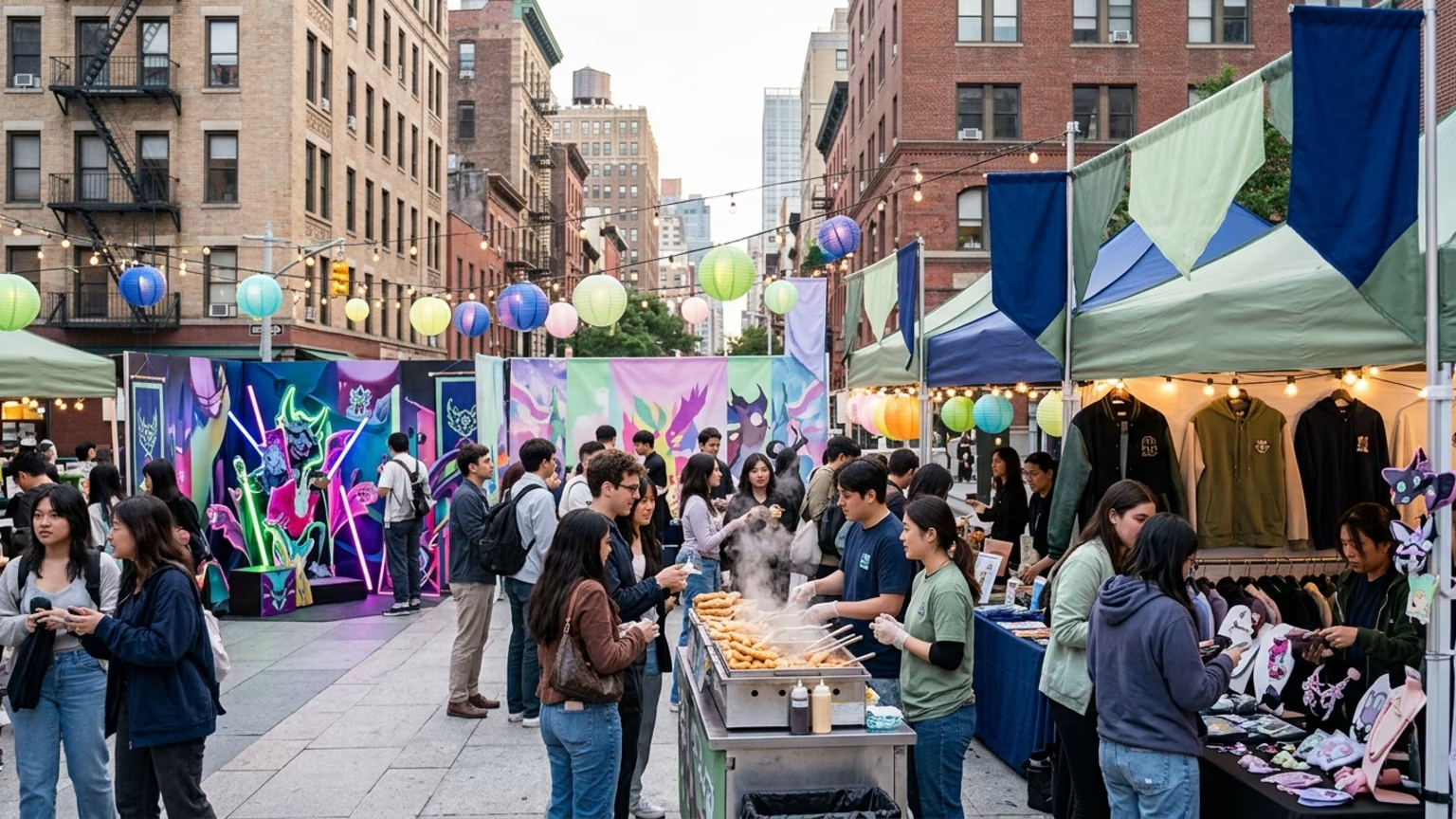
Memorability alone will not save your physical marketing strategy. Too many brands chase viral spectacles that burn budget and fail to scale across markets. The winning formula requires a rare balance of unconventional design and operator-grade repeatability. Marketing operators who master this balance transform isolated physical events into repeatable trial-driving engines.
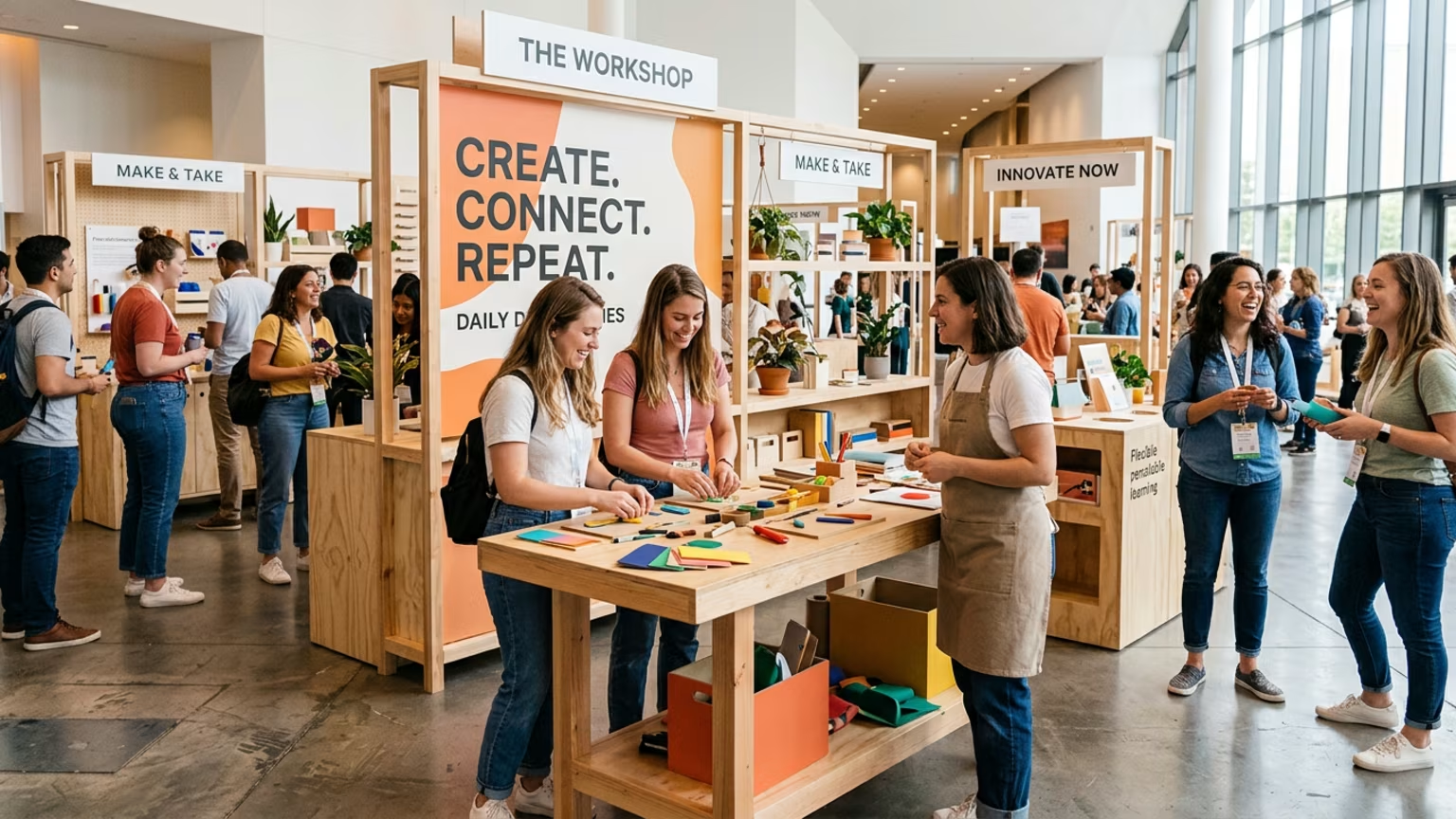
The average trade show floor is a masterclass in wasted budget. Marketing teams often set up expensive booths that look beautiful but function poorly when the doors open. Staffing inconsistencies, awkward sampling flows, and missing product messaging turn a high stakes activation into a logistical nightmare. Instead of generating clear leads, the team spends three days managing pure chaos.
This operational breakdown happens just as frequently in grocery aisles and retail parking lots. Field marketing managers deploy promotional teams to run basic sampling tables. The setup lacks any visual intrigue to pull shoppers out of their routine. The brand ambassador might hand out a few cups but fails to articulate the core brand value.
Shoppers consume the product mindlessly and keep walking. You see the same mistakes at national conventions and regional food expos. A premium snack brand will spend six figures on a custom booth build. They forget to train their brand ambassadors on the actual product narrative.
Attendees grab a free sample, nod politely, and walk away without ever learning the brand name. The activation looks busy to an outside observer. The reality behind the scenes is much darker for the marketing director. There is no system in place to capture qualified buyer information.
Sales reps end up with a stack of generic business cards and zero context for follow up. This fragmented approach destroys the potential Return on Investment before the event even ends. The brand is left with expensive invoices and zero pipeline. This broken model frustrates executive leadership and drains the overall marketing budget.
The CMO expects a fully integrated campaign that ties physical interactions to digital retargeting efforts. The reality is that the field team is too busy assembling broken tents to worry about data capture. The disconnect between executive expectations and field reality creates immense friction.
Many marketing departments fall into the trap of prioritizing raw aesthetic appeal over actual utility. They hire creative agencies to build massive structures that look incredible in a slide deck. These same structures become incredibly difficult to ship, assemble, and manage on a live event floor. The complexity of the physical build completely overshadows the actual product demonstration.
An unexpected concept is not automatically effective just by looking unique. A bizarre activation can generate social media buzz without improving product trial or retailer confidence. For serious marketing decision makers, the only question that matters is whether the creative concept drives measurable sales behavior. You cannot deposit social media likes into a bank account.
Building a massive brand world is financially irresponsible with a weak operating model. Without disciplined staffing and tight logistics, the activation simply becomes an exercise in expensive theater. The most publicized campaigns often get attention solely for being unusual. Smart marketers know better than to confuse media pickup with a reliable operating strategy.
The event industry is filled with vendors who want to sell you complicated technology. They will pitch augmented reality headsets and massive digital screens for a simple beverage launch. These tools often create a physical barrier between the consumer and the actual product trial. Your focus should remain squarely on human connection and clear product messaging.
In consumer goods categories, sampling efficiency will almost always outperform pure theatricality. The absolute best brand experience is often the one that removes friction completely. You must get the product into the hands of the consumer quickly and clearly. Let the flavor profile do the hard work instead of relying on flashing lights.
The solution requires a complete shift away from isolated event design. You must build a modular activation system that treats every physical space as a cohesive brand environment. According to insights from Blueprint Studios, the modern approach turns a venue into a cohesive brand world. This means blending lighting, scenic elements, and rentals into a unified physical environment.
This immersive environment must be built with a highly repeatable core. A strange activation might generate momentary buzz online. It only creates real business value by driving measurable behavior change across multiple retail locations. Marketing leaders need field execution that works just as well in a grocery store as it does at a major festival.
The core message must remain completely intact. We have been connecting brands with people through live experiences, retail programs, and national activations since 1995. Over three decades, we have built a track record of creating meaningful brand moments across the country. Our team knows that you must standardize your physical footprint and allow for local market adaptations.
A rigid system will feel corporate and cold to consumers. A system with zero rules will collapse under its own weight during a national rollout. Recent coverage of top campaigns highlights a clear industry pattern. Brands are finding success by combining viral concepts with execution that can be localized across multiple touchpoints.
They are using low budget pop-ups to stand out in a crowded attention economy. The goal is to build scalable mobile environments rather than hoping a single massive event goes viral. Operational predictability is the true secret weapon. When planning a scalable trial strategy, leaders must understand how CPG brands unify retail media and in-store experiential marketing.
Transitioning from a single stunt to a scalable field program requires tight operational discipline. You need a clear set of rules to keep your team aligned. Here is how our team executes this balanced model in live event settings:
An activation is only as good as the return it generates for the brand. You cannot prove value to your executive team with generic attendance numbers alone. You need precise lead and lag indicators to track real performance. Without these numbers, your physical marketing remains an unproven expense.
Lead metrics give you a real time pulse on the health of your activation. Track your daily sampling throughput, immediate lead capture volume, and average consumer dwell time in the booth. Monitor the ratio of total venue foot traffic to actual booth engagements. If your conversion rate drops, your field manager can make immediate adjustments on the floor.
Lag metrics tell the long term story of your campaign success. Measure post event retail sell through, regional sales lift, and increased retailer confidence over the following quarter. Salesforce notes that brand activation is a powerful customer engagement discipline. Tying these lag metrics to your field program proves it is a true sales tool rather than a fluffy side project.
Brands that invest in consistent event staffing precision see far more reliable data collection from the field. Experienced brand ambassadors know how to ask the right qualification questions naturally. They seamlessly guide a pleasant conversation toward a concrete data capture point. This process turns a fleeting moment into a measurable business asset.
Marketing operators who understand this data framework gain a distinct advantage. They can confidently request larger budgets by predicting the exact pipeline impact of their events. To truly capture this value, teams must fix experiential revenue leaks before launching their next national tour. Operational rigor always outperforms blind optimism.
Consider a national beverage brand launching a new premium sparkling water line. They initially planned a massive, single city launch party that would drain their quarterly budget. We helped them pivot to a highly unexpected, low budget pop-up model. This flexible unit could move easily between local music festivals and major grocery parking lots.
The unexpected hook was a retro styled cooler system that dispensed product based on a fun trivia interaction. This simple gamified element stopped foot traffic immediately. It created an organic photo opportunity without requiring expensive digital screens or massive set builds. The brand world felt complete, coherent, and incredibly approachable.
The repeatable core was the standardized field reporting and modular booth setup. Our operations team built a playbook that detailed exactly how to restock the coolers, pitch the product, and capture consumer feedback. This allowed the brand to run the exact same high converting experience in twenty different cities over three months. The supply chain remained completely stable.
The logistics for this program required an operator-grade mindset from the very beginning. We managed all the storage and routing to keep the activation moving efficiently. The mobile sampling tour bypassed all the standard headaches of traditional event permitting. The field team was able to load into a new venue and start serving product in under an hour.
Every single consumer interaction was logged through a simplified mobile app on the floor. This real time data pipeline allowed the brand managers to track inventory depletion across different regions. They could easily compare the performance of a Saturday grocery demo against a Sunday festival footprint. The centralized reporting proved the exact value of the campaign to their skeptical executive board.
The results validated the shift in strategy completely. The brand bypassed the trap of a single expensive spectacle. They built a reliable trial engine that generated direct retail lift in every target market. Good marketing makes people feel something, but great marketing drives revenue.
Finding the perfect balance between surprise and scale is the true test of field marketing. If your current programs feel like isolated exercises in logistics, it might be time to rethink your footprint. Book a strategy call with our team to map out your next move. The best physical activations simply remind us that people want to be moved, but businesses need to see the math.

30 Years Experiential & Retail Activation Partner for CPG & Beverage Brands | Multi-Market Demos, Roadshows & Costco/Club Programs That Actually Sell