Robbie Thain
Founder, CEO

Discover why brands use multi-city experiential roadshows as a scalable, measurable alternative to permanent retail stores for driving physical trial.
Marketing teams face mounting pressure to deliver physical brand experiences without the overhead of permanent retail stores. Configurable experiential roadshows provide a highly measurable alternative that scales trial and retail velocity across multiple cities.
A field marketing director stares at an empty retail storefront lease agreement. The rent is staggering. Building a single permanent flagship store consumes the entire annual activation budget. Meanwhile, retail buyers in ten different regions demand local support to keep product moving off their shelves.
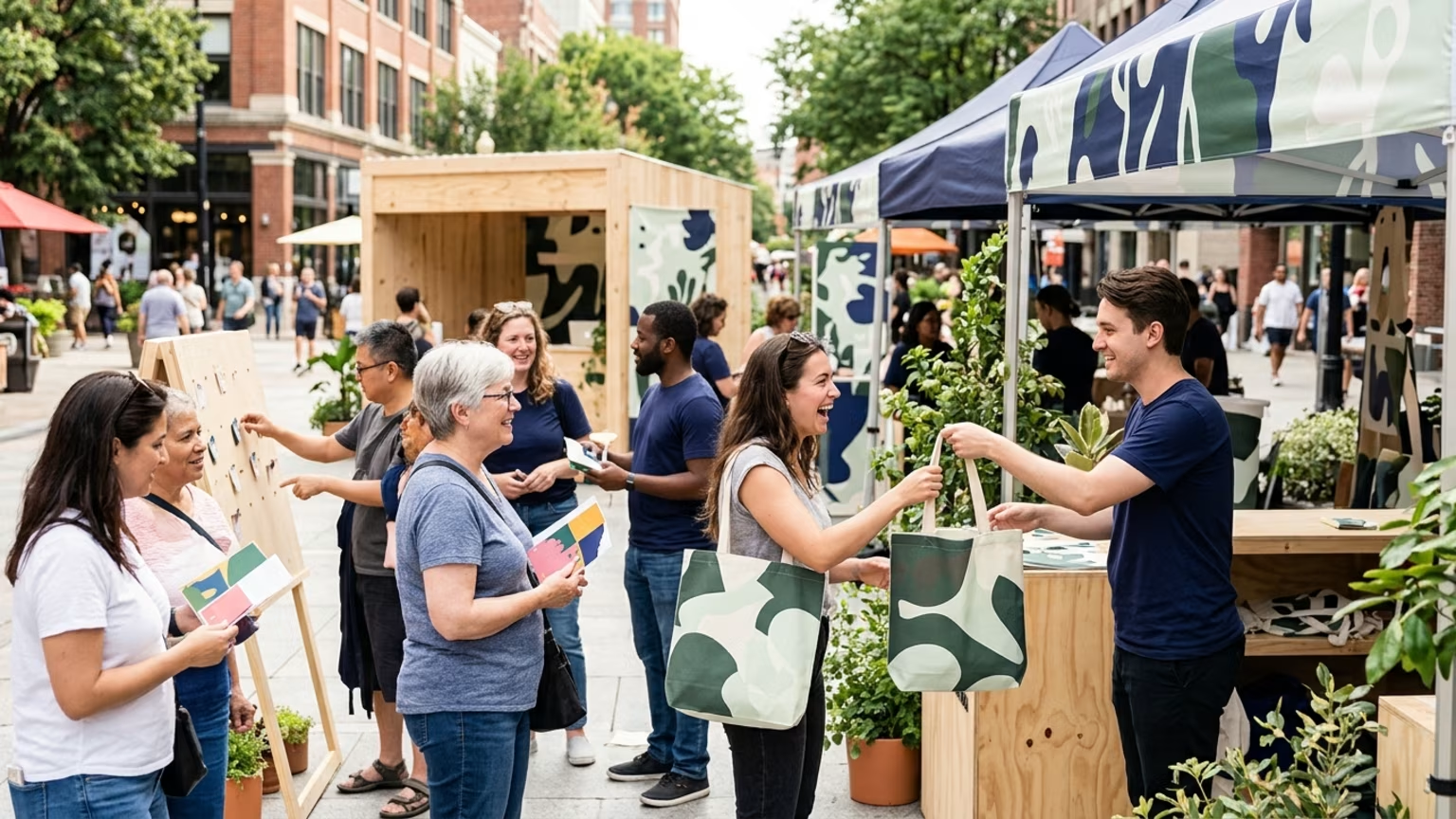
Relying on scattered local events fails to build real momentum. Opening dozens of permanent stores is completely out of reach for most consumer packaged goods companies. Brands need to connect with consumers through hands on activities that build loyalty. According to recent industry analysis from Pro Mobile Marketing, true experiential marketing creates engaging experiences that motivate people to join a brand story.
Static events simply cannot achieve this at scale. The pressure to show up physically remains high. Buyers want proof that people will actually taste, test, and buy the product. Marketing teams need an agile way to intercept shoppers and force immediate trial.
They need a system that feels permanent to the consumer but remains flexible for the operator. The modern retail environment demands proof of velocity. If a product does not move off the shelf quickly, it loses its authorization. Relying solely on digital ads creates a massive disconnect when the buyer finally reaches the store aisle.
The traditional approach to scaling physical presence is broken. Brands are turning to multi market mobile marketing tours as a better path forward. A well executed multi market tour is one of the most efficient tools in experiential marketing today. It builds a strong national presence without requiring a massive national media buy.
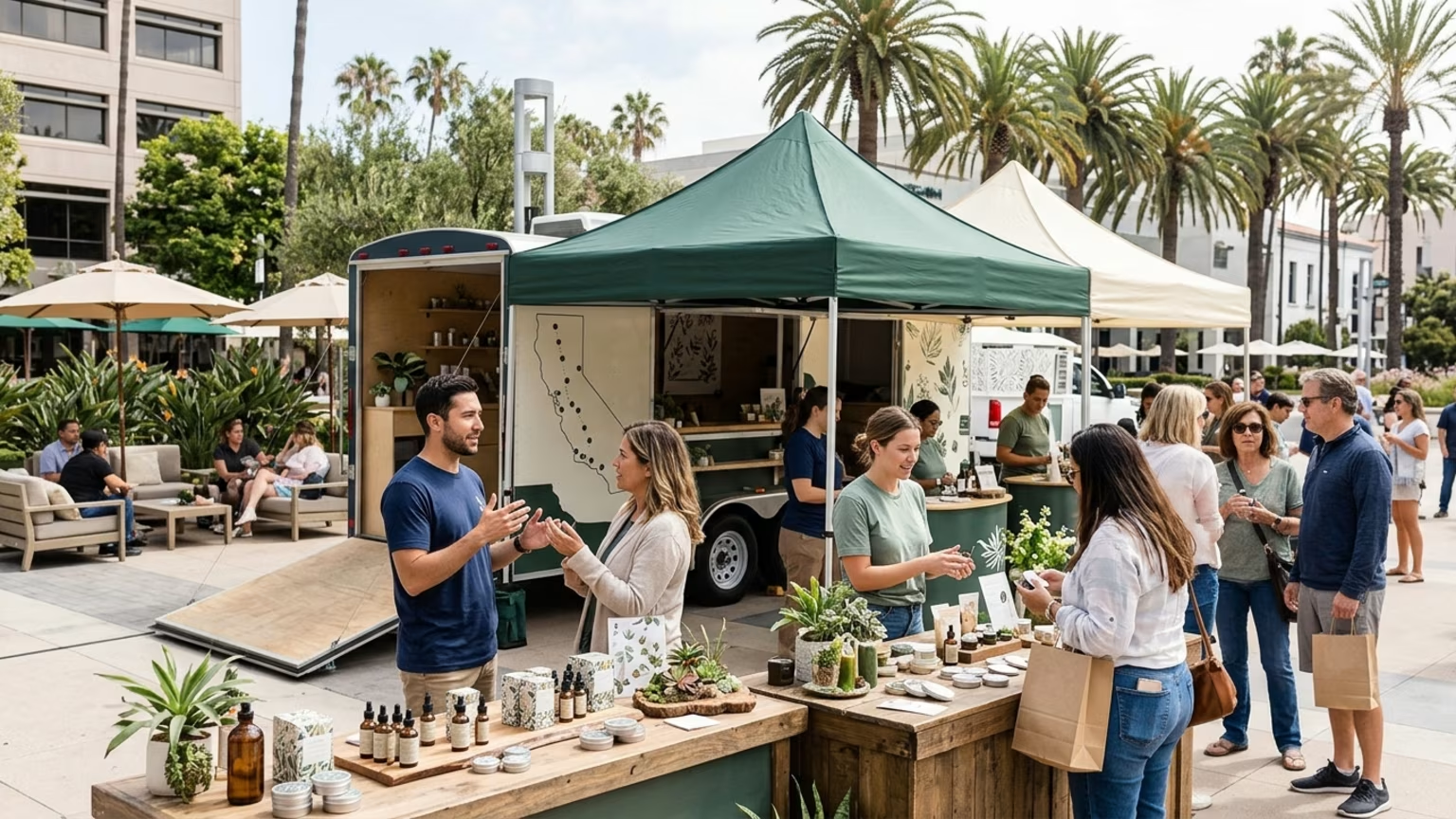
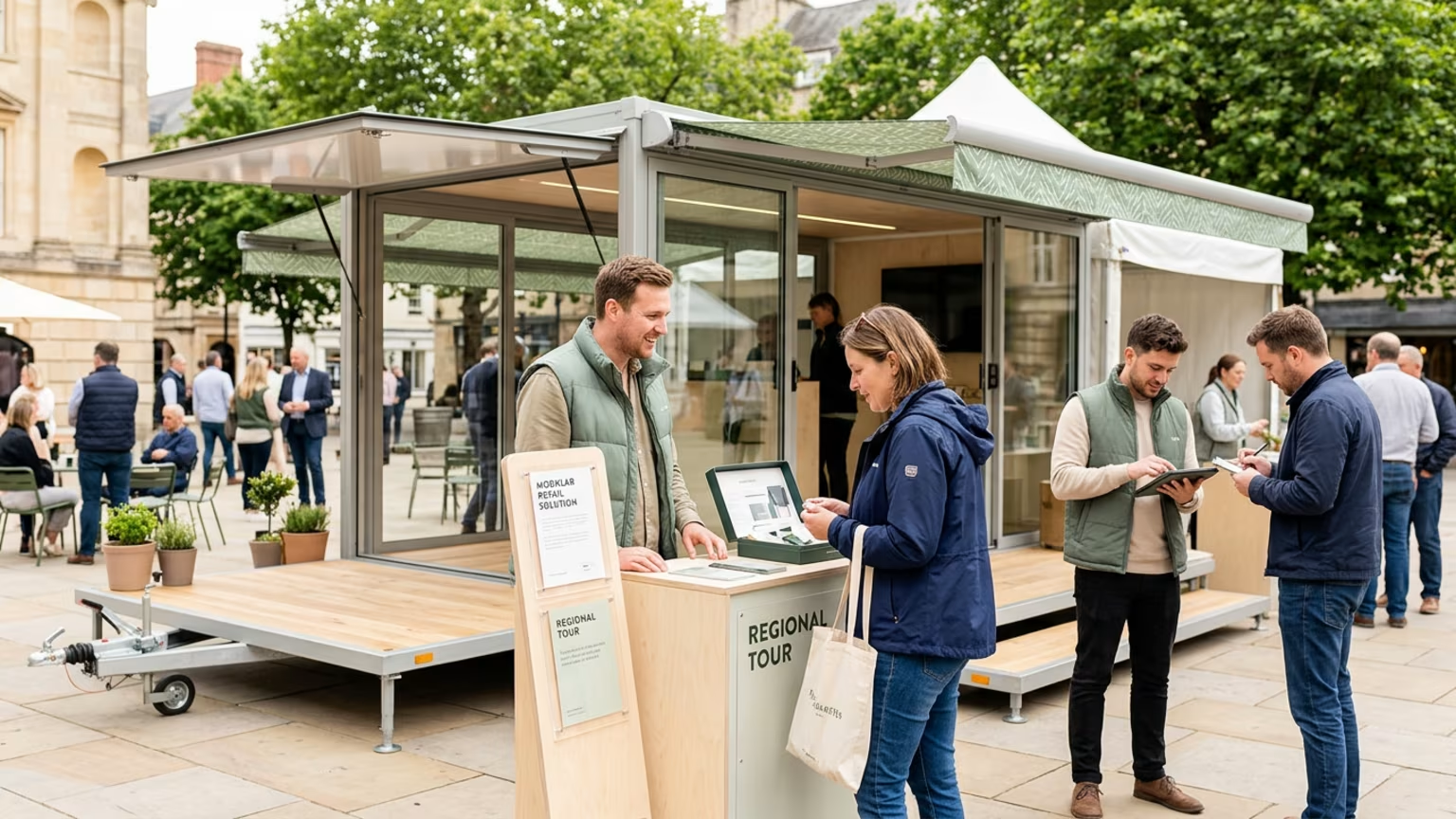
These mobile tours function like traveling flagship stores. They accumulate earned content stop by stop. They also prove to retail partners and the press that a brand has real consumer traction across diverse markets. Retailers want to see that consumers are excited about a product in their specific geographic region.
This approach demonstrates a deep category commitment. It is tangible proof that the brand is willing to show up city by city to win over consumers directly. We see this strategic shift constantly. Our team at makai has executed over 1000 campaigns across all 50 states.
We bring brands to life in every major U.S. market. From retail demos in Seattle to high volume roadshows in Miami, our teams activate wherever our clients have audiences. Physical interaction builds an emotional bridge that digital banners cannot match. A centralized roadshow strategy removes the chaos of disjointed local efforts.
It standardizes the brand presentation while keeping logistical control tight. This centralization is how cpg sampling strategy. How to choose between retail demos, roadshows, and tours. actually translates into retail success. You get the scale of a national campaign with the precision of a local pop up. Mobile flexibility allows a brand to test new markets before committing to permanent retail distribution.
Running a mobile tour requires extreme operational discipline. You cannot simply park a branded truck and expect a line to form. The logistics must be flawless. The consumer interactions must be highly calculated.
Here is the exact playbook to make it happen.
A common failure point for traveling campaigns is maintaining consistent quality. A multi market tour can quickly become a liability if it is not managed correctly. Fragmented staffing and inconsistent training lead to widely variable consumer experiences. One city might see record breaking engagement while the next city suffers from poor presentation and low energy.
This variability destroys brand trust. Retail buyers are highly observant. If they visit an activation in their territory and find disorganized staff or broken displays, they will lose confidence in the product. You cannot afford to let local execution errors jeopardize a national retail strategy.
To prevent this, marketing leaders must enforce strict operational guidelines. Every staff member must pass the same digital training modules before working a shift. Display materials must undergo regular maintenance checks between cities. The goal is to make the fiftieth stop look exactly as pristine as the first.
This level of discipline separates amateur event promotions from operator grade experiential marketing. By removing the logistical burden from your internal team, you ensure the campaign stays focused on driving measurable outcomes.
Measuring a roadshow requires far more than taking a headcount. Brands must track concrete numbers to justify their physical marketing investments. The goal is to build a trackable growth engine. First party data capture is non negotiable for modern marketing teams.
Consider the impact of unified measurement platforms like AnyRoad. Brands using AnyRoad's platform have achieved up to 36% higher revenue per visit. They also captured 69% more guest records. These programs even saw 16 point Net Promoter Score gains by replacing manual workflows with automated group capture and real time analytics.
This level of insight completely changes how executives view physical activations. Effective data capture must accommodate group dynamics. A single interaction often represents four to eight actual attendees. Configurable questions and group level collection ensure you capture the full scope of your audience.
Brands lose massive amounts of data when they ignore the group factor during registration. Lead indicators include the number of digital registrations and qualified conversations per hour. Lag indicators include post event offer redemptions and regional retail velocity lifts. By tracking these specific metrics, teams can prove their experiential marketing and regional market entry efforts are generating real pipeline.
Capturing accurate data in crowded environments is notoriously difficult. Many brands assume they are collecting enough leads until they audit their reporting. The reality is usually quite poor. Spreadsheets and fragmented agency reports lead to massive data loss across the entire program.
Industry data highlights this exact problem clearly. For instance, Proximo Spirits found it was missing contact information for more than 66% of its event guests before implementing a group data capture solution. This happens when a single person registers for a group of friends. The brand completely loses visibility on the other participants who also tasted the product.
By shifting to a unified system, teams can gather data from the entire party. They capture multiple phone numbers and email addresses from a single interaction. This approach instantly multiplies the size of the retargeting pool. It turns a brief tasting moment into a long term digital relationship that drives repeat purchases.
This digital relationship is the bridge between a temporary event and permanent brand loyalty. You must plan for this scale from the very beginning. If you want to stop guessing about event performance, our team at makai can help. Book a strategy call today to discuss your next multi market program.
Standardize your operations and start capturing data that actually impacts your bottom line. Stop treating multi city activations as a series of isolated parties. Start treating them like high precision retail channels.

30 Years Experiential & Retail Activation Partner for CPG & Beverage Brands | Multi-Market Demos, Roadshows & Costco/Club Programs That Actually Sell