Robbie Thain
Founder, CEO

Learn how to extend the lifespan of mobile roadshows by deploying student ambassador programs to build localized brand presence and drive continuous retail sales.
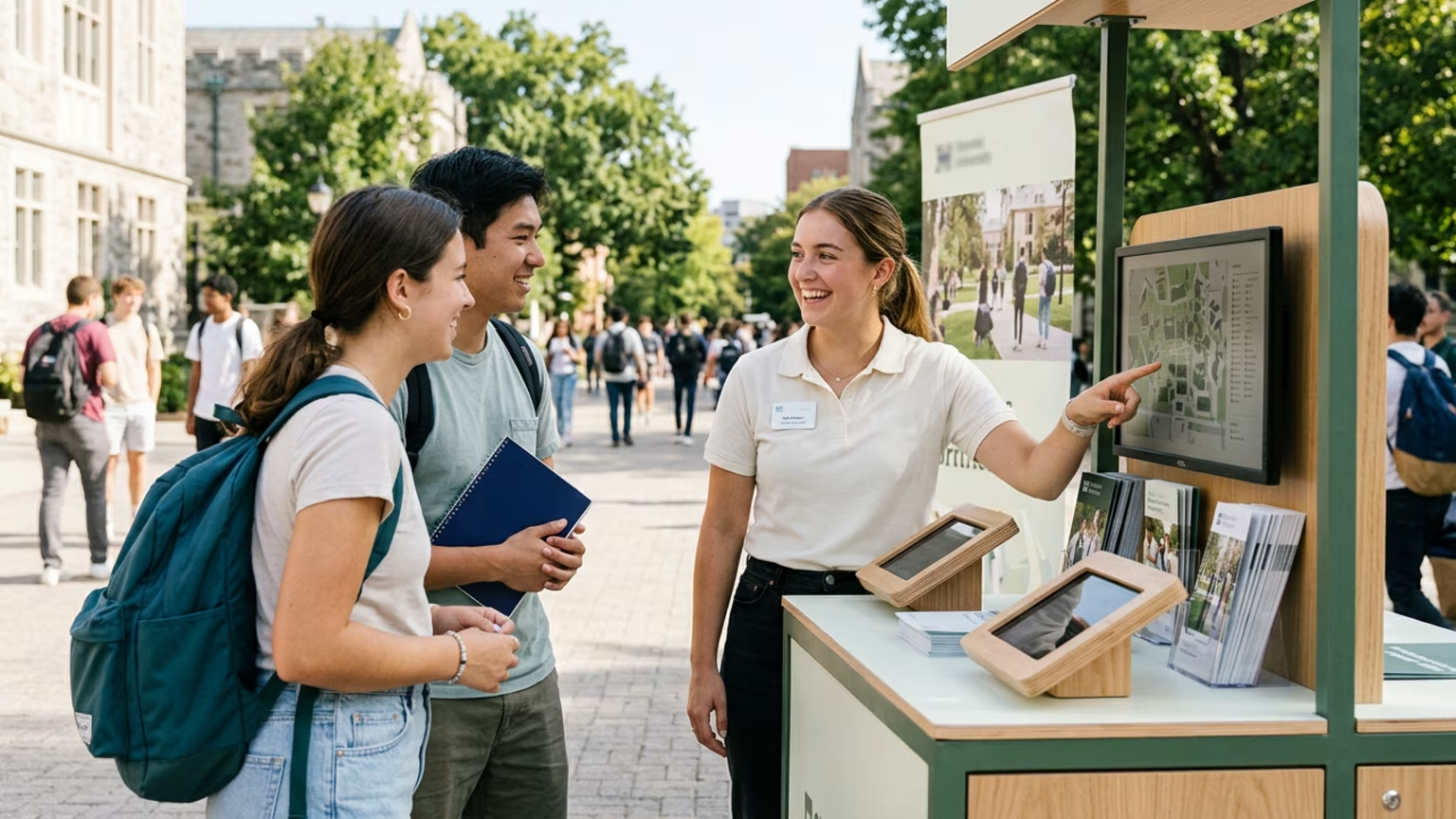
Dropping a massive experiential asset in a college town is often a complete waste of capital. A flashy trailer creates an afternoon of noise before rolling out of town. The local market is left exactly as quiet as it was before the trucks arrived.
This article details how deploying student ambassador programs extends the lifespan of mobile roadshows into a persistent field engine. By integrating campus layers with high energy tentpole events, brands create a cohesive execution model that continuously drives retail pipeline.
Think about the typical campus tour stop. The logistics team parks a custom sampling trailer right next to the student union. Brand ambassadors hand out thousands of units before packing everything up by sunset. The brand immediately loses all physical presence in that market.
This disjointed approach treats each market as a disposable transaction rather than a sustained retail operation. Field marketers watch their Return on Investment evaporate when there is no local force left behind. The initial trial rarely turns into repeat purchases without follow up. A massive gap forms between the big activation and the everyday store shelf.
Companies spend heavily on launching new beverage SKUs in local markets only to abandon the audience a day later. Without a localized connection, the expensive roadshow becomes a fleeting memory. The nearby retail managers see a tiny spike in sales followed by immediate stagnation. The initial investment fails to build lasting consumer loyalty.
Retail partners lose faith in the marketing support when the promised demand disappears instantly. This drop off creates a massive headache for trade marketing teams trying to prove long term value. They need sustained momentum to justify the upfront costs of a national tour.
The solution requires treating the mobile tour as a spark rather than the entire fire. Companies must build a student layer that maintains brand presence between major tour stops. This strategy connects the temporary scale of a roadshow with the continuous pressure of localized field marketing. The process starts long before the truck arrives.
According to Impact.com, you should define an ideal ambassador profile, establish clear key performance indicators, and map out a six to twelve month promotional calendar. The same source recommends giving the program nine to twelve months before making final judgments about its commercial viability. You are building localized field teams to sustain momentum over the long haul. Book a strategy call with the makai team to align your next campus roadshow with a sustainable ambassador network.
This requires treating student brand representatives as serious field staff rather than temporary promotional labor. They become the constant drumbeat that keeps the product top of mind. The roadshow supplies the massive awareness spike. The students supply the persistent retail follow through.
The field team acts as a localized distribution network for the brand message. They carry the energy from the main event into dorms, study halls, and off campus apartments. This localized layer protects the initial investment by turning one time trial into regular consumption.
Rolling this out requires operator grade discipline and clear timelines. You cannot wing a hybrid campus program and expect measurable retail sales.
Pick campuses using the same strict criteria you apply to roadshow markets. Prioritize locations where the brand already has audience density and a clear retail purchase pathway. Do not chase prestige schools if your product lacks distribution in the surrounding town. A highly engaged campus is useless if students cannot buy the item locally.
The best programs align directly with regional sales goals and established supply chains.
Move past basic sample distribution to create meaningful touchpoints. For inspiration, a TEAM Enterprises job posting for a portfolio brand ambassador in Honolulu lists compensation of $80,000 to $85,000. That role blends trade education, tastings, pairing dinners, and local relationship building. Student roles are scaled down.
They should still borrow these core relationship building functions to establish authentic trust.
Scrambling for talent ruins the quality of consumer interactions. Air Fresh Marketing recommends booking two to four weeks in advance for standard activations. For larger or peak season programs, four to eight weeks of notice is necessary to secure top talent. Timely hiring lets you properly vet candidates for brand fit and natural communication skills.
It gives the field team enough time to master the product details before facing the public.
Brief ambassadors with the same rigor used for broader field teams. Standardize the brand story, dress code, product knowledge, and key messages. The local team must speak the exact same language as the national roadshow crew. Consistency builds trust with both the consumers and the retail partners.
A unified message turns scattered interactions into a single recognizable brand voice.
A hybrid activation is useless without a shared measurement system. Campus activity must feed into the same reporting framework as the main roadshows. Track samples distributed, physical engagements, leads captured, and verified redemptions. If you use disconnected spreadsheets for students and advanced dashboards for the tour, you will fail to prove the combined impact.
A unified tracking model proves the exact value of the extended field presence.
Impact.com argues that brands should use technology to track incrementality and offline conversions rather than relying on basic spreadsheets. This unified data lets field marketing directors prove that a campus presence drives velocity at local grocery stores long after the tour bus leaves. By implementing advanced tracking software, you turn scattered campus interactions into concrete performance metrics.
A unified dashboard shows exactly how the major event lifts the baseline and how the students maintain it. It turns a fragmented budget into a cohesive growth engine. Executives can finally see the clear line connecting field marketing expenses to retail sell through data. The data reveals which campuses deserve deeper investments in the next fiscal quarter.
Many brands fall into the trap of measuring student programs purely through social media impressions. They count Instagram tags and TikTok views without verifying retail impact. True experiential marketing focuses on moving physical inventory off local shelves. Field operators must demand data on real world behavior rather than digital vanity metrics.
The goal is creating actual customers rather than temporary online buzz. Every student interaction should map clearly to a physical store location or a specific purchase pathway.
We apply this structure when helping premium beverage brands turn college markets into reliable revenue centers. A common scenario involves launching a new energy drink with a major campus tour. The activation trailer anchors the initial push, drawing massive crowds for three days of high energy sampling. Once the trailer departs, our trained student ambassadors take over the market.
They become the permanent face of the brand for the rest of the academic year. They run retail demonstrations at the local campus grocery stores and distribute targeted trial offers during exam weeks. Our team blends physical and digital experiences by integrating mobile technology and real world activations into a cohesive layer across retail and tour environments. This seamless handoff guarantees the initial trial translates directly into retail confidence.
The store managers see consistent product movement, which leads to better shelf placement. The ongoing presence keeps the audience engaged long after the initial hype fades. Real world marketing works best when it becomes a reliable habit rather than a rare spectacle. When the tour eventually returns the next semester, it hits a warm market that is already buying the product.
The local team primes the audience for the next massive brand moment.
The most powerful brand experiences do not end when the staging comes down. They simply change shape, trading the roar of the crowd for the quiet certainty of a daily habit.

30 Years Experiential & Retail Activation Partner for CPG & Beverage Brands | Multi-Market Demos, Roadshows & Costco/Club Programs That Actually Sell