Robbie Thain
Founder, CEO

Learn how top experiential agencies use advanced lead capture technology to turn unpredictable mobile tours into a measurable sales pipeline with clear ROI.
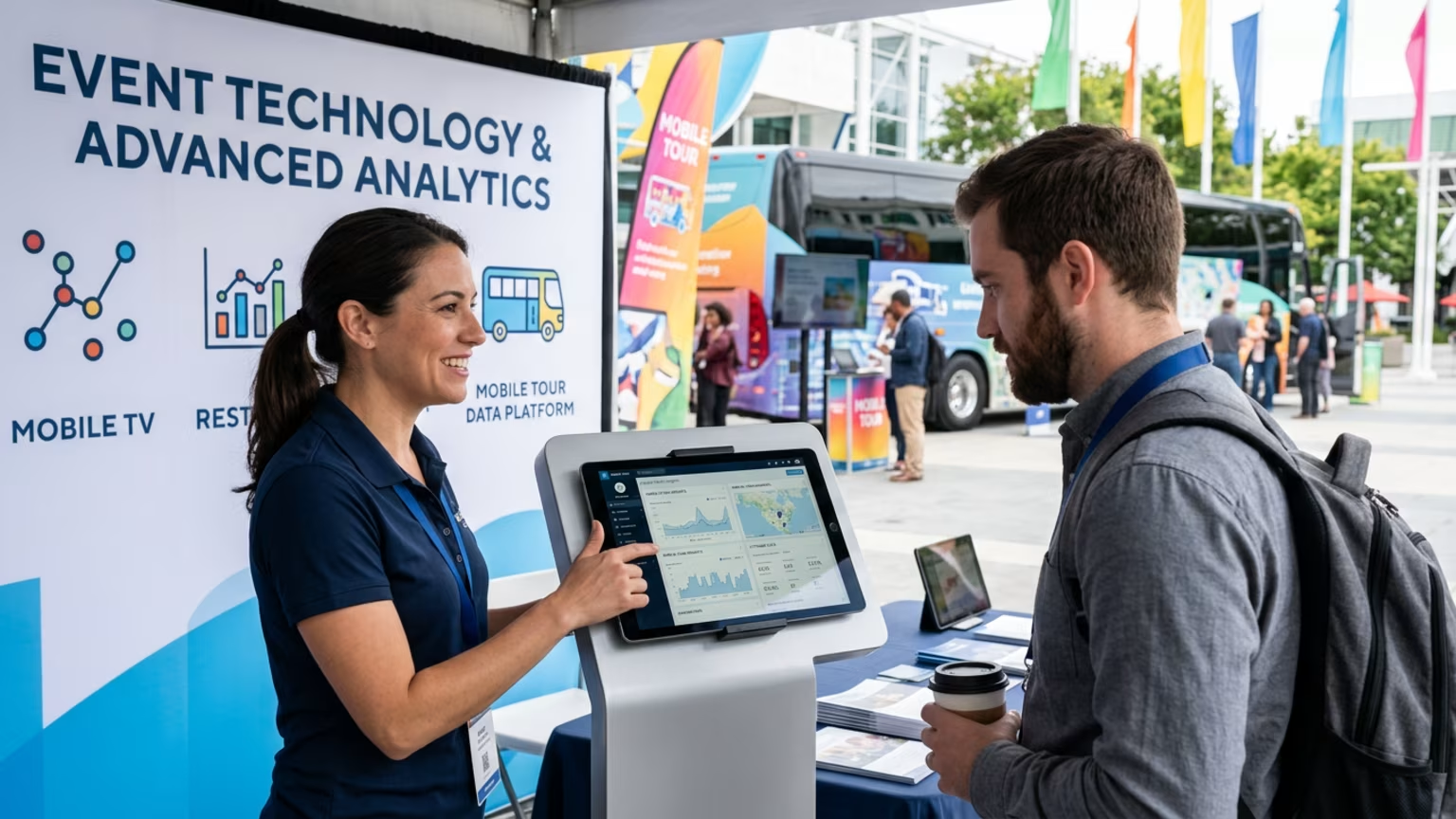
Recent industry research on mobile tour providers indicates top digital marketing companies now standardize advanced lead capture tools to track event performance at every single stop. This operational shift transforms unpredictable field events into a measurable sales pipeline with clear Return on Investment.
The mobile tour reaches its third major city by noon. Brand ambassadors hand out premium snacks to a massive crowd under the hot summer sun. People smile at the presentation, grab a cold sample, and quickly disappear into the busy parking lot. You end the day with empty inventory boxes and zero usable data about who actually interacted with the product.
Your executive team asks for conversion numbers the following morning. You only have a rough headcount from the site manager and a stack of leftover printed flyers. The field team reports a great vibe and enthusiastic crowds. A great vibe does not pay for the gas, the staff, or the permits.
The chaos multiplies when you run simultaneous activations across different time zones. A team in Chicago might run out of product by mid-afternoon, creating a massive missed opportunity for data collection. Meanwhile, the team in Dallas struggles to engage distracted festival attendees walking past the booth. Regional managers cannot adjust their strategy without real-time feedback from the ground.
Relying on end-of-week summaries creates an unacceptable lag in operational intelligence. Marketing operators spend entire weeks trying to connect vague field reports to any actual retail movement. The operation burns cash without leaving a clear trail of hard evidence. This disconnect frustrates trade marketing managers who need concrete proof of execution for their retail buyers.
Store managers want to see the exact impact of a parking lot event on their daily register totals. Vague promises of brand awareness do not secure premium shelf space. Brands with physical products need reliable ways to assess the outcome of their roadshows. Relying on gut feelings creates deep anxiety for leaders who must defend their experiential budgets.
Without strict data protocols, field teams default to manual counting methods that are notorious for severe inaccuracies. A distracted brand ambassador might guess how many samples they distributed during a massive rush of attendees. This flawed data then flows into executive reports and skews the entire financial analysis of the campaign. Poor reporting mechanics turn an objectively successful activation into a perceived failure simply because the numbers lack credibility.
They face intense pressure from retail partners to prove that local sampling actually drives people into the aisles. A lack of transparent reporting kills future budget approvals faster than any bad weather event.
The solution relies on treating event data capture as core operational infrastructure. Every physical touchpoint must pair with a reliable digital tracking mechanism. The first operational step involves replacing manual clipboards with automated mobile platforms. Field staff should scan codes or use tablet-based forms to log interactions instantly.
The strategic pivot demands a complete rejection of vanity metrics. Top digital marketing companies understand that a high body count means nothing without a corresponding data trail. A modern regional roadshow specialist builds these CRM systems into the early planning phases long before the first permit gets approved. They connect the on-site technology directly to the brand marketing automation platform.
This prevents valuable consumer data from sitting in isolated spreadsheets for weeks after the event ends. Implementing a unified technology stack removes the friction from field reporting. Field marketing directors can open a live dashboard and see exactly how many samples were distributed in the last hour. They can track the precise conversion rate of every brand ambassador on the payroll.
Integrating advanced analytics requires a major cultural shift for traditional experiential agencies. Older operators often view data collection as a chore that distracts from the pure consumer experience. Modern brand leaders must break this outdated mindset by proving that smart technology actually improves the live interaction. When a tablet instantly recognizes a returning customer, the brand ambassador can offer a personalized reward.
This level of granular visibility turns experiential marketing from a creative gamble into a predictable science. It allows leaders to reward top performers and retrain struggling staff immediately. We have executed over 1000 campaigns across all 50 states, bringing brands to life in every major U.S. market. From retail demos in Seattle to roadshows in Miami and events in Honolulu, our teams activate brands wherever our clients' audiences are located.
This deep geographic experience proves that rigorous digital frameworks separate profitable tours from pure theater. We know that data collection must happen seamlessly in the background to preserve the magic of the live interaction. If your brand needs a customized tracking blueprint, you can Book a strategy call with our logistics team. Proper planning eliminates the panic of trying to retroactively measure success.
Clear systems allow your field managers to focus on consumer interactions instead of fixing broken spreadsheets. Technology should empower the field staff, not create administrative burdens that slow down the line.
Implementing a robust tracking system requires deliberate staging and consistent discipline. Your team must follow a strict setup protocol for every new market on the route. Moving fast requires a solid foundation of standardized processes.
Brands must decide the right mix of tactics for their specific audience. A massive outdoor festival requires faster data capture methods than an intimate retail demonstration. The technology must adapt to the speed of the environment without frustrating the consumer. Slow systems kill the momentum of a live brand experience.
Managers should test the entire data flow with the actual hardware used in the field. Simulating a busy crowd helps identify awkward moments in the user interface. Refine the exact script your staff uses to ask for an email address or phone number. Small adjustments in phrasing can drastically change the final opt-in rate.
The execution phase demands intense attention to detail from every single operator. An amazing creative concept falls apart if the brand ambassadors cannot log the interactions correctly. Field marketing directors must prioritize technical rehearsals alongside product knowledge training. A well-trained team turns a simple sampling moment into a highly qualified sales lead.
Proving ROI requires highly specific data points that connect to broader business goals. You must measure both immediate field activities and eventual retail outcomes. Modern systems automate this reporting to give leaders total transparency.
Your immediate focus should be on the efficiency of the physical footprint. These numbers tell you if the location and the staffing models actually work. Collecting this data daily allows managers to pivot underperforming sites immediately.
True business impact takes time to materialize after the trucks leave town. Brands need hard numbers to defend their budgets and maintain internal support. A strong lag metric proves the initial interaction changed consumer behavior.
By combining these two distinct data sets, experiential leaders can present a complete financial narrative. You stop talking about impressions and start talking about pipeline velocity. This shift in vocabulary earns immense respect from the chief financial officer. It changes the perception of field marketing from a sunk cost into a strategic growth lever.
A national snack brand recently faced an intense measurement challenge during a regional summer sampling tour. The marketing operators deployed a standardized lead capture app across twelve distinct target markets. The field team offered a high-value product bundle giveaway via a fast tablet scan at every single stop. This operational shift allowed the home office to track engagement by specific location and individual staff member.
The resulting dashboard revealed which cities produced the highest immediate retail conversion. The management team noticed that smaller suburban markets actually yielded twice the opt-in rate of massive urban festivals. This exact insight allowed them to reroute the second half of the tour to maximize their remaining budget. The campaign generated a provable sales lift that easily justified expanding the roadshow into the busy fall season.
The home office used these newly collected geographic insights to negotiate better placement with regional retail chains. When local grocery buyers saw the exact opt-in metrics from their specific zip codes, they quickly agreed to expand the shelf space. Real consumer data holds infinitely more negotiating power than a glossy recap video of a smiling crowd. The brand effectively turned their mobile tour into a direct business-to-business sales tool.
Store managers in the activated markets reported a noticeable spike in category movement. The brand successfully converted casual parking lot interactions into sustained weekly grocery purchases. The integration of advanced tracking technology turned a simple sampling route into a highly profitable customer acquisition engine. The entire organization finally saw the undeniable link between physical presence and retail dominance.
The true power of live marketing lies in the quiet moments after the crowds disperse. When the tents come down and the trucks roll out, the data remains to tell the real story of human connection. The right technology simply gives those fleeting interactions a permanent voice.

30 Years Experiential & Retail Activation Partner for CPG & Beverage Brands | Multi-Market Demos, Roadshows & Costco/Club Programs That Actually Sell


