Robbie Thain
Founder, CEO

How CPG brands scale student ambassador programs nationwide using tech-first infrastructure to protect brand standards and drive measurable retail ROI.
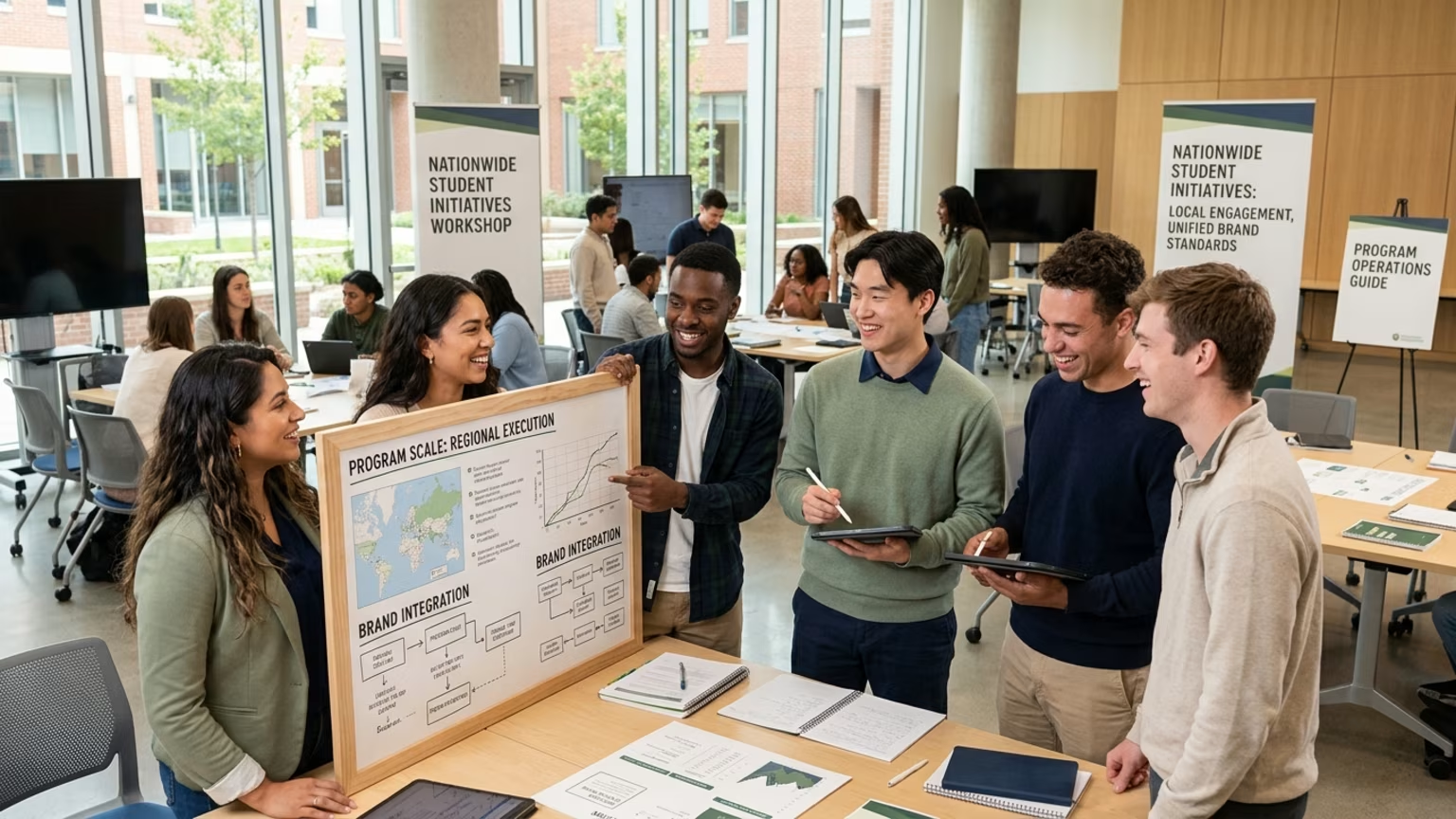
Relying on digital-only ad spend to win the collegiate demographic is a fast track to burned marketing budgets. According to MediaNug, ambassador-referred customers convert at rates two to three times higher than cold traffic. This reality makes their localized advocacy incredibly valuable for brands fighting for retail market share. Brands that scale these localized programs on manual spreadsheets usually end up with fragmented messaging.
They lose the organic connection that makes campus marketing work in the first place. You need strict infrastructure to protect your brand identity across dozens of universities simultaneously. When you centralize your digital assets, you give local teams the tools to execute flawlessly.
Recent campaign data proves that physical activations outpace standard digital channels in measurable engagement. Real world interactions drive stronger organic online reach because they are grounded in human experience. For example, student-led content for Barebells achieved a 4.13% average engagement rate during a recent campus push. This performance sits well above the standard 2.5% TikTok benchmark.
When you hand a physical product to a consumer, the resulting digital advocacy carries far more weight than a standard paid advertisement. These numbers highlight the sheer power of in-person product trials.
The conversion metrics also tell a highly compelling story about physical marketing efficiency. MediaNug confirms that ambassador-referred customers convert at rates two to three times higher than cold traffic. This massive gap in conversion rate is exactly why top tier operators are pulling funds from digital channels. They are reallocating those dollars into highly structured field programs.
A well trained student ambassador creates a level of trust that a sponsored social media post simply cannot replicate. The data clearly shows that targeted human interaction drives superior commercial outcomes.
A VP of Marketing often looks at a fragmented trade marketing budget and sees a lot of untrackable regional noise. When you deploy thousands of dollars across multiple universities, you need operational infrastructure to protect your Return on Investment. You cannot afford to have local teams guessing about logo placement, promotional offers, or core product talking points. Without centralized controls, local authenticity quickly turns into a brand standards disaster.
The data shows that structured field intelligence platforms protect both the brand and the bottom line. Marketing leaders must bridge the gap between strict corporate guidelines and the natural voice of a student ambassador. If the guidelines are too rigid, the ambassador sounds like a scripted corporate robot. If the guidelines are too loose, the brand identity fractures across different regions.
This operational tension is the exact reason why many consumer goods brands struggle to scale their field operations successfully. Finding the balance requires a clear operational framework.
Many teams try to solve this by hiring more middle managers to police the field staff. That approach only balloons the budget and slows down the execution timeline. When operators build out their field networks, they often ask about how to hire, train, and manage brand ambassadors without blowing up payroll. The answer lies in systematized onboarding portals, clear guidelines, and strict digital asset management.
Centralized systems keep the messaging tight while letting the local teams focus on relationship building. When you eliminate administrative guesswork, your field representatives can confidently promote your products.
This macro trend forces a massive change in how consumer goods brands execute mobile tours and retail demos. You can no longer rely on honor-system reporting, group text messages, or end-of-week email updates from the field. Teams must use strict technology guardrails like timestamped photo proof to verify every single activation. When a student ambassador runs a retail demo, headquarters needs instant confirmation that the physical booth looks perfect.
We recommend treating field intelligence software as a non-negotiable requirement for any localized consumer campaign. Accurate reporting is the only way to validate your field marketing investments.
At makai, our team runs experiential programs coast to coast with local crews. We use smart logistics and permit expertise to maintain quality consistency in every single region. This nationwide infrastructure enables us to activate brands wherever their audiences are located. We manage everything from major metropolitan universities to smaller regional college towns with the exact same rigor.
By controlling the logistics centrally, we ensure that every ambassador receives their product samples and display gear exactly on time. This leaves no room for local execution errors.
Brands with a scaled nationwide field network for multi-city roadshows understand this transition perfectly. They know that a successful program requires reliable storage, shipping, and tracking for all physical event materials. We store your sampling product and event gear centrally in our own facilities. We then ship, track, and coordinate delivery nationwide so every single activation stays on schedule.
This back-end discipline frees up the local field teams to actually engage with the consumers in front of them. It removes the friction from local event execution.
We also centralize training through digital brand kits so every student creator uses the correct visual identity. This eliminates the need for manual headquarters approval on every single local asset or social media post. A solid platform layer bridges the gap between strict corporate standards and a natural, highly relatable student voice. By locking down the logos and color hierarchies in a central portal, brands can safely give their field teams creative freedom.
Several major brands have successfully matched localized authenticity with rigorous operational discipline to drive massive scale. Over one semester, Barebells deployed 24 ambassadors to sample 25,000 products across 15 different campuses. This structured approach drove an 81% lift in brand awareness across the targeted student populations. Their post-campaign surveys revealed that 92% of participants are likely to buy the product again.
Even more impressively, 93% plan to buy the product in-store, proving that controlled product trial creates immediate retail intent.
Adobe Express showed similar operational discipline during a recent United Kingdom tour targeting the university demographic. Supported by 80 student brand ambassadors, the campaign delivered 42,000 verified account sign-ins. This rigorous execution resulted in a 98% year-on-year sign-in growth across 27 different university campuses. They achieved these massive adoption numbers by treating their student network as a highly managed, tightly controlled field sales team.
Chamberlain Coffee also focused heavily on precise product distribution to win over younger consumers in the beverage space. These ambassadors were entrusted with 7,200 cans to share with their college communities and build regional excitement. They used this targeted sampling strategy to build hype around a specific new product launch, rather than just handing out flyers. By turning their audiences into active participants, they created authentic word of mouth marketing at an impressive scale.
These campaigns succeed because they back up creative ideas with strict, precision-driven field logistics.
Operators must adjust their reporting dashboards this quarter to reflect actual retail outcomes instead of vanity metrics. A physical activation only matters if it generates measurable pipeline, documented account sign-ins, or proven retail sell-through. Stop grading your campus programs on the number of flyers handed out or casual smiles recorded at a booth. Those subjective numbers will not protect your trade marketing budget during the next quarterly financial review with the executive team.
Instead, track strict conversion rates, verified account sign-ins, and direct product trial volume at the unit level. Tie your field marketing efforts directly to your local grocery, convenience, or big box retail sales numbers. We know that connecting student ambassador programs with retail demos can significantly boost localized velocity for consumer packaged goods. Make sure your teams capture timestamped photo proof of every product display, sample handed out, and retail interaction.
When you support local authenticity with operator-grade discipline, your campus programs transform completely. They stop being a line item for fuzzy brand awareness and start acting like a scalable, predictable revenue channel. Demand strict reporting, build scalable centralized systems, and hold your field teams fully accountable to real numbers. That is exactly how you turn fleeting consumer interactions into qualified, highly profitable leads for premium consumer brands.

30 Years Experiential & Retail Activation Partner for CPG & Beverage Brands | Multi-Market Demos, Roadshows & Costco/Club Programs That Actually Sell


