Robbie Thain
Founder, CEO

Compare in-store demos, mobile tours, pop-ups, and event sampling by trial needs, audience fit, retail access, logistics, and measurable outcomes.

In-store demos put trial beside a purchase opportunity; out-of-store activations use mobile tours, pop-ups, and event sampling to reach people in other settings. The strategic choice is whether your CPG growth goal needs proximity to the shelf or a broader experience with its own operating footprint.
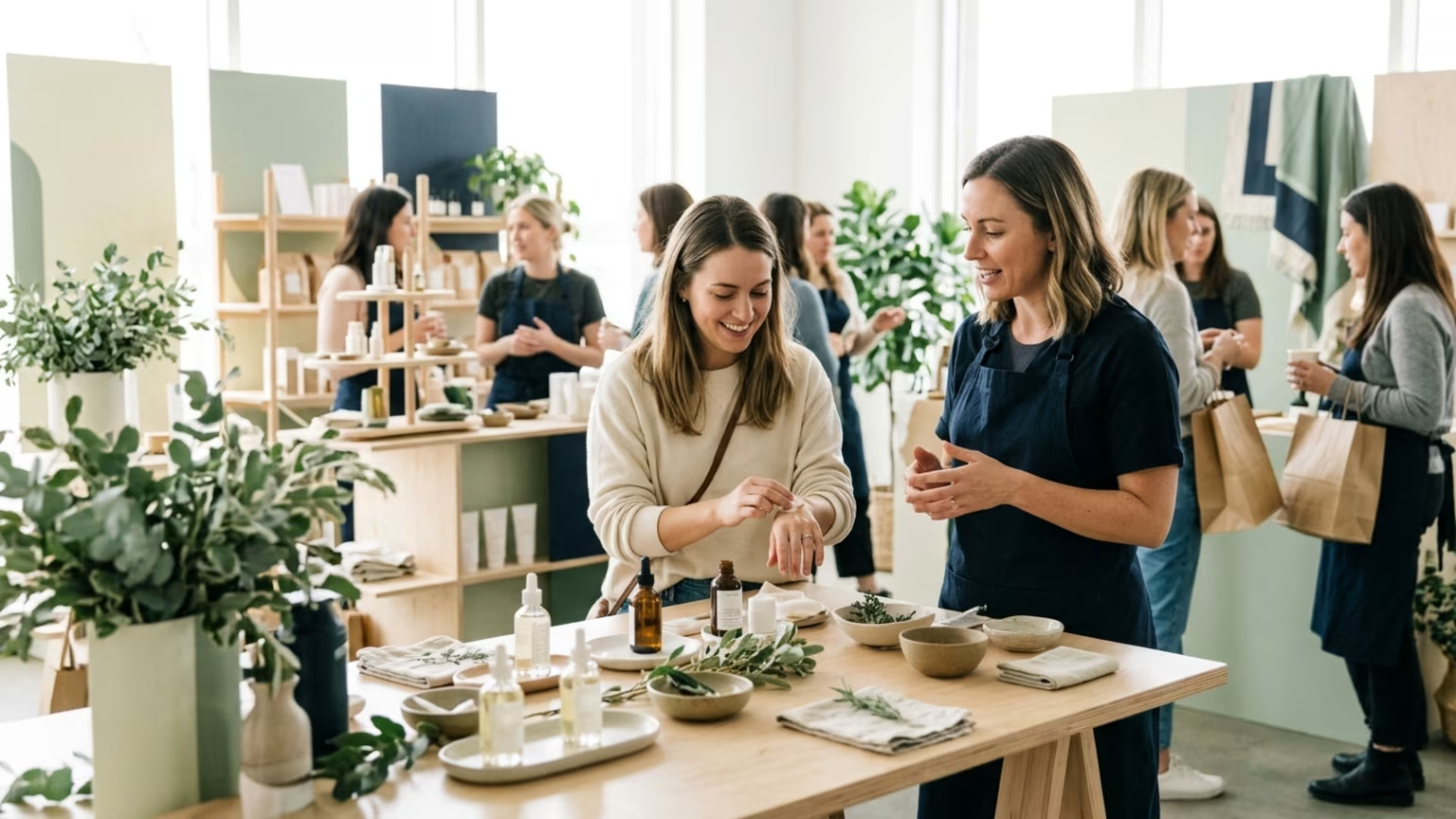
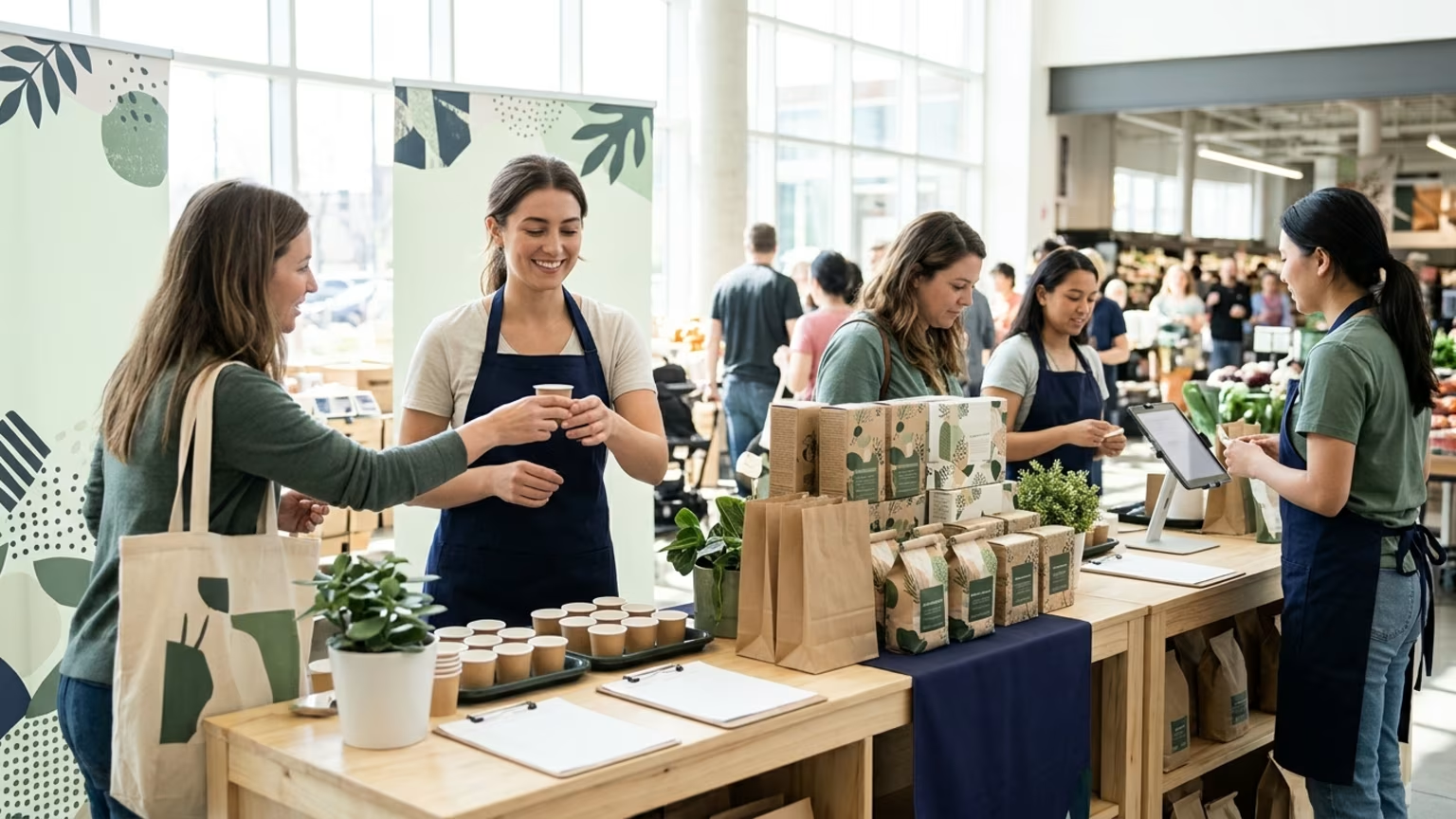
An in-store demonstration brings product trial and a brand conversation into a retail selling environment. Its central advantage is the connection between trying the product and finding it for purchase. The store is not simply a backdrop; it is part of the conversion opportunity.
We specialize in retail demos, product sampling programs, and roadshows that bring brands face to face with their audiences. These programs are designed to drive trial and build consumer relationships while supporting retail velocity across multiple locations. For a store-based brief, that purpose keeps the product and purchase opportunity at the center.
The primary constraints come from the setting. The experience must fit the available space and the product available for sale. Staffing and product logistics must support the demonstration rather than compete with it. A concept that requires a separate destination experience is asking the store format to do a different job.
Startup CPG reports that Grassroots Marketing analyzed 34,000 demos conducted since 2021 across more than 500 brands, 1,000 stores, and 19 states. That breadth makes the practitioner dataset relevant to questions about when and where to demonstrate a product.
The evidence does not establish a controlled ranking of all four formats. Reported purchase intent is not verified sales, and sampling followed by retail availability does not establish causation. The choices below are planning judgments rather than universal performance benchmarks.
Out-of-store activations organize the experience around a route, a temporary destination, or an existing gathering. Unlike a store demo, the experience does not necessarily end beside a stocked shelf. Its brief therefore needs an explicit next action rather than an assumed path to purchase.
A mobile tour takes a branded experience across locations. The operating center is the travelling program rather than an individual store. That makes product movement and equipment coordination part of the format decision from the start.
Our Little Debbie Share a Smile Tour was a 21-market mobile activation using a branded truck, trailer, and Cupcake Smart Cars. Across the tour, we distributed 224,534 cupcakes and captured 9,500 photos and 340 videos. The useful lesson here is the combination of objectives: one touring program carried both product distribution and content capture.
That combination also creates a different planning burden. The brand is choosing a repeatable travelling experience rather than simply adding more demonstration locations. Our guide to matching locations with growth goals provides a useful companion to that choice.
A pop-up creates a temporary destination around the brand. As a planning choice, it suits a brief that needs more room for explanation or participation than a straightforward product handoff.
The distinction is control over the experience. A pop-up concept can make the product part of a broader interaction rather than treating the sample as the entire encounter. The question is whether that additional experience performs a necessary role in the growth objective.
Event sampling places the product within an existing gathering. The audience is assembled around the event rather than around a shopping trip or a brand-owned destination.
The planning task is to connect that gathering with a relevant product experience. Crowd size alone does not define audience fit. The brief should explain why people in that setting would try the product and what action should follow the interaction.
We would favor in-store demos when the business problem sits close to the shelf. These are the clearest conditions for keeping the activation anchored in retail:
Measurement should follow that same logic. Define the SKU and participating stores alongside the activation dates and a baseline or comparison group. Those choices make the intended sales question explicit without treating every purchase during a demo as an incremental result.
The practical starting point is matching the physical setting to shopper intent. A large audience is not a substitute for a relevant buying context.
We would put tours, pop-ups, or event sampling ahead of a store-only plan when the objective requires access or participation beyond the retail interaction.
The ANA's public summary of Spiro's study says hands-on participation nearly doubled reported purchase intent in a study of 2,000 live-event attendees. Its summary also identifies staff readiness and memorable experience design as factors associated with stronger outcomes. The planning implication is to define what participants should do or learn rather than stopping at an attendance target.
New Hope offers a contextual sampling example. It reports that Crave arranged delivery of an energy drink to Princeton University eating clubs during midterms; two weeks later, the product appeared on shelves in a campus convenience store. For planning purposes, the useful question is how the sampling context connects with subsequent product availability.
We also connect physical experiences with QR codes and mobile technology across retail, event, and tour work. That capability is not a reason to choose a larger footprint by itself. It is a way to connect an appropriate live format with a defined digital action.
Before selecting the format, separate the activation objective from the tactic. Distribution counts answer a trial question. Retailer sales address sell-through. A clearly specified survey addresses awareness or intent. Keep those outcomes distinct in the brief and the report.
Over: In-store demos when purchase proximity is the job. Favor the retail setting when relevant shoppers and available product are already together. Back a tour, pop-up, or event when the objective requires a travelling experience or participation outside that setting.
Under: Bigger formats justified by bigger crowds alone. A larger footprint creates more to coordinate. It needs a reason grounded in audience access or the interaction the product requires.
The deciding question is not which format looks most impressive. It is which format creates the necessary consumer action and supports a credible measure of the intended outcome. Make that choice before the equipment becomes the strategy.
After the format decision comes the movement of sampling product and event gear; Makai manages storage plus shipping, tracking, and nationwide delivery coordination. For CPG marketers facing complex event logistics, permits and staffing, that operational support helps keep the materials behind multi-regional or national activations coordinated and on schedule.

30 Years Experiential & Retail Activation Partner for CPG & Beverage Brands | Multi-Market Demos, Roadshows & Costco/Club Programs That Actually Sell