Robbie Thain
Founder, CEO

Learn how to choose the right physical environment for your CPG activation. Align shopper intent with physical proximity to drive measurable product trial.
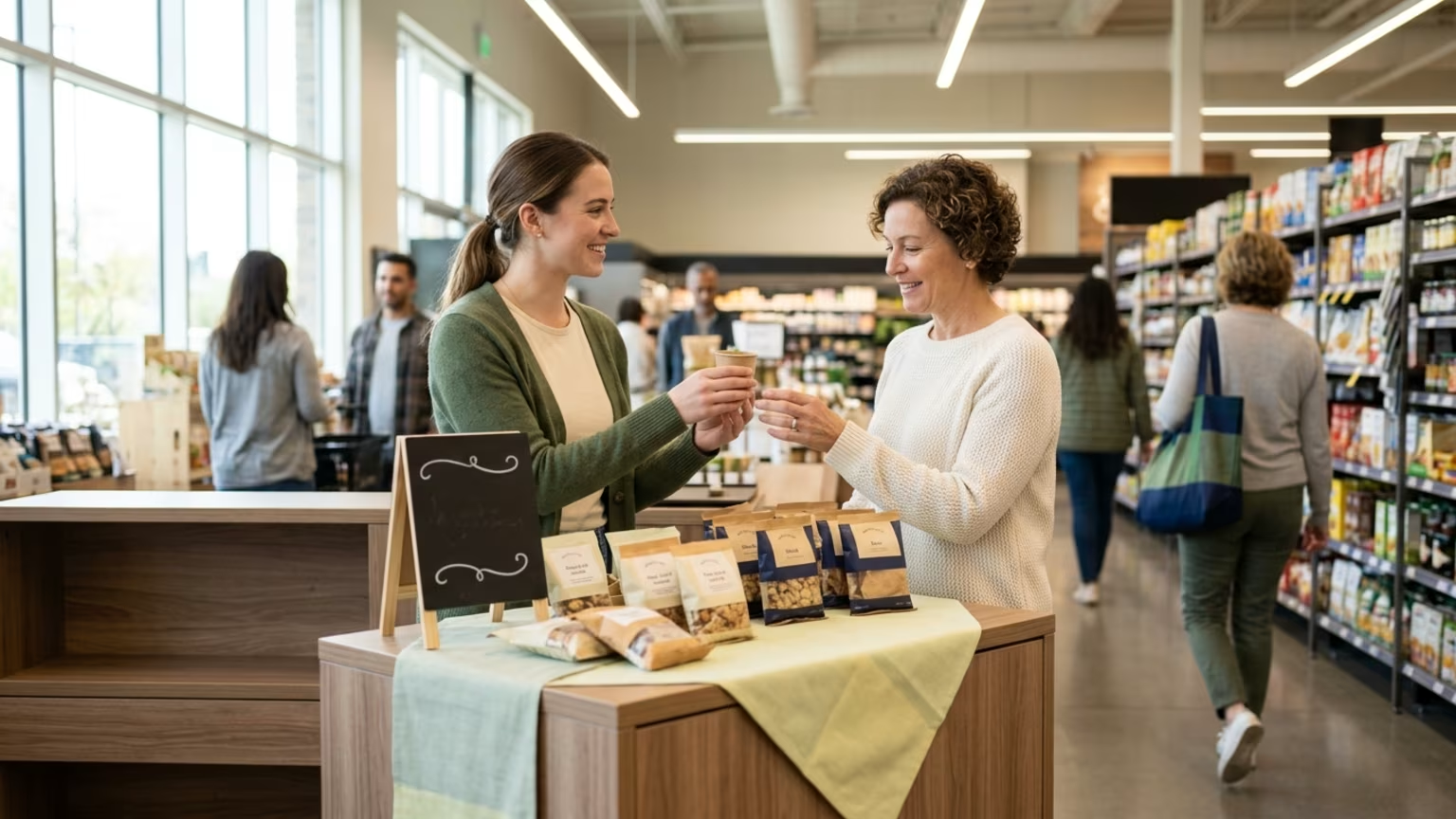
Retail sampling programs often get judged on empty cups rather than incremental pipeline. A field team books an expensive footprint and hands out thousands of units. They wait for a retail sales lift that never arrives. That operational mismatch is exactly why environment selection matters.
Environment selection is the strategic alignment of shopper intent with physical proximity to drive measurable product trial and verifiable retail sell-through. It is not about finding the biggest crowd or building vanity brand theater. It requires intercepting consumers in the exact context where they are prepared to engage and purchase your product. Brands that understand this distinction turn scattered field marketing into targeted conversion engines.
Choosing a location means evaluating the physical reality of how people shop. Research cited by Grocery TV found that 95% of grocery shoppers make at least half of their purchase decisions in-store. Furthermore, 62% of respondents said they had purchased a product after seeing it featured on an in-store screen. The grocery aisle offers high intent, but other environments serve entirely different operational needs. In-store media is becoming highly critical because it intercepts the consumer exactly when they are making a final choice.
Convenience stores operate on a completely different frequency. NACS data cited in recent reporting identifies thirst as a leading reason shoppers visit convenience stores. That same reporting notes that packaged beverage sales peak during weekday commuting hours between 7:00 a.m. and 8:00 a.m. If your product solves an immediate need, you must position it where speed matters most. You must choose the right location for a brand activation based on actual shopper behavior. A slow activation in a high-speed environment is structurally flawed.
Club retailers offer access to shoppers who have opted into a membership model. This creates a highly specific environment where consumers are actively seeking value and larger formats. Costco reported fiscal-2025 net sales of approximately $269.9 billion. They also reported membership-fee income of approximately $5.0 billion.
The club environment is excellent for multipacks, but it demands strict inventory compliance and unique pack architecture. You are not intercepting general traffic here; you are speaking to members evaluating household economics. A successful club strategy requires demonstrating immediate value alongside significant product volume.
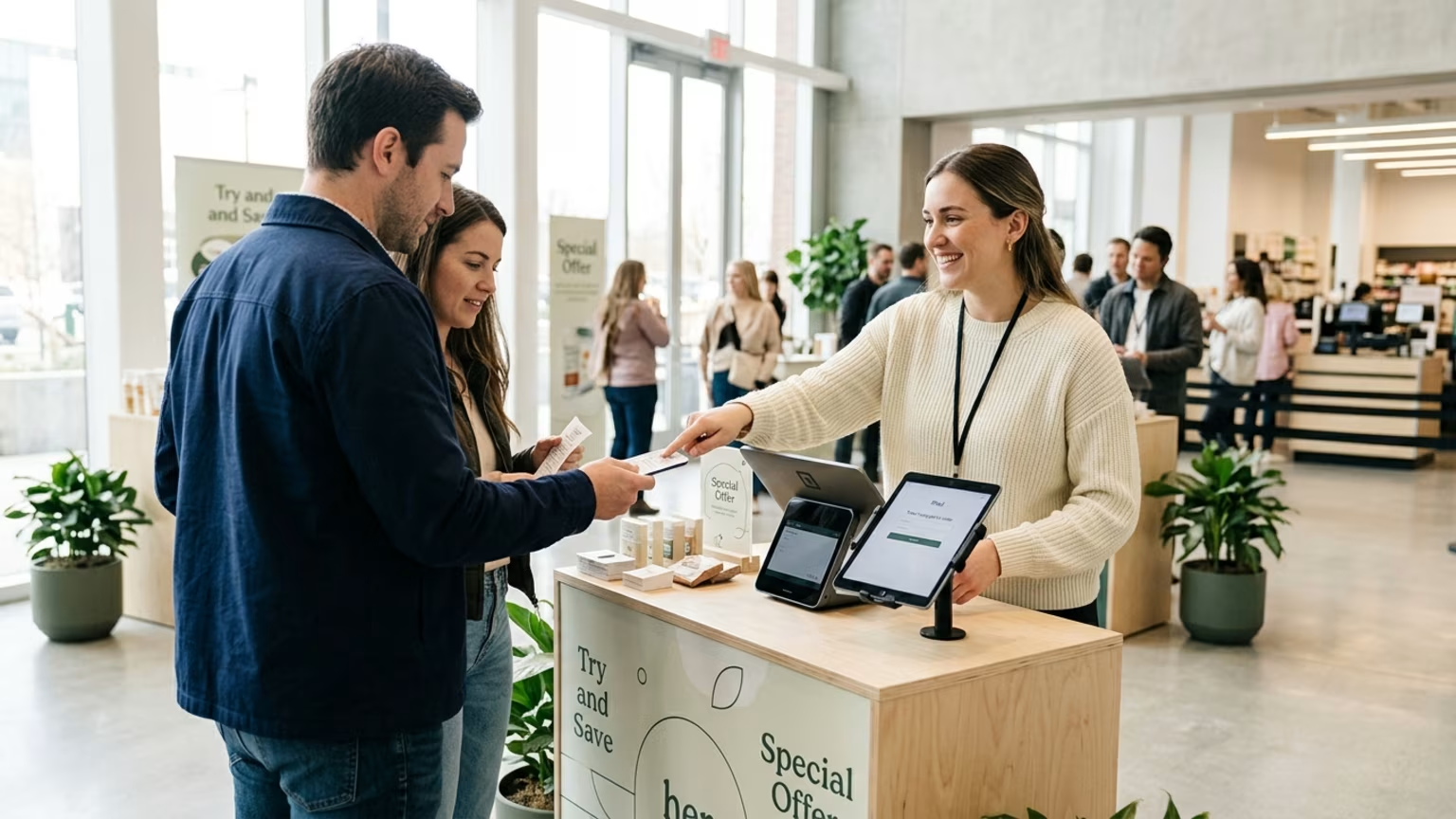
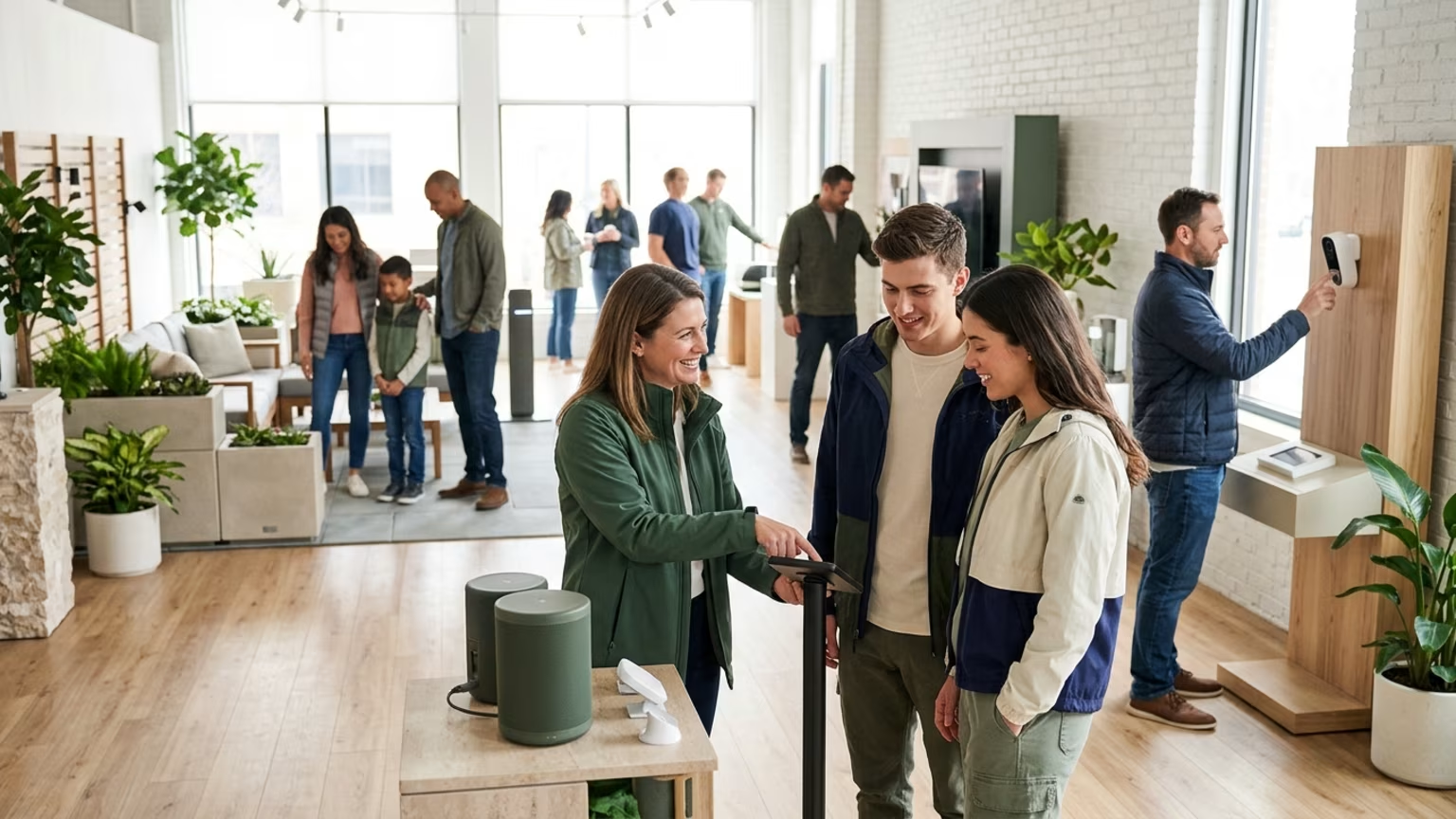
Specialty shops prioritize category relevance over pure foot traffic volume. A natural food store or beauty retailer offers a highly qualified audience. The shopper context is much stronger, which leads to better conversations and higher category conversion.
Brands should use specialty locations when product education and trust matter more than immediate mass scale. A technical product performs far better in an environment where staff and shoppers share category expertise. Quality interactions in these spaces often generate stronger repeat purchase rates than mass trial programs.
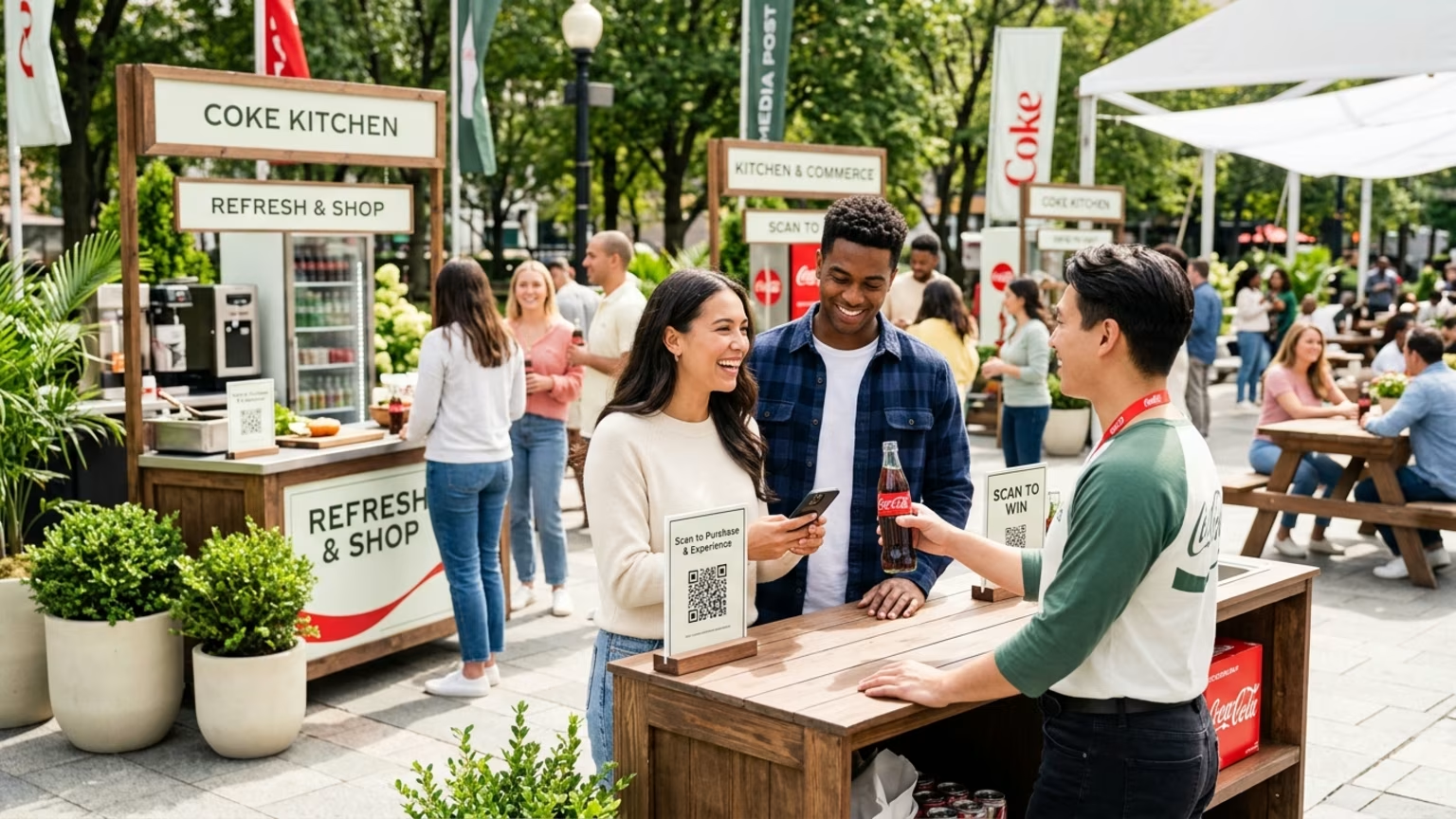
Festivals provide massive reach but separate the consumer from the immediate checkout counter. Eventbrite’s 2026 Social Study reported that 79% of 18-to-35-year-olds planned to attend more events during the year. That study also found that 89% valued community connection and 33% wanted more participatory experiences. Meanwhile, iHeartMedia reported that 82% of live-music attendees encounter new brands at events. You must give these audiences something to do, taste, or share rather than simply placing a logo on a banner.
Branded pop-ups offer maximum control but require serious capital and planning. One industry guide estimates that a single-market pop-up can cost $15,000 to $40,000 for a few days. A large multi-city tour may cost $500,000 to $2 million. Pop-ups allow you to build an immersive narrative, but you must justify the expense through superior data capture and deeper product education. They serve as an exceptional tool for product launches, rebrands, and premium storytelling.
Executing a successful campaign requires three fundamental pillars to manifest real results.
A physical footprint is useless without the right personnel operating it. Brand ambassadors must understand the product category, the primary selling points, and the environment they are working in. A grocery activation requires staff who can manage inventory, restock shelves, and guide a purchase. A specialty shop requires staff who can provide deep technical education and answer complex ingredient questions. Furthermore, convenience store staff must know how to engage shoppers rapidly without slowing down the checkout line.
Moving physical assets across the country demands absolute precision. Securing prime floor space requires navigating complex event logistics and permits. Teams must coordinate storage, manage timely transportation, and ensure strict compliance with venue rules. A breakdown in supply chain logistics guarantees a failed activation.
Pop-up structures demand robust construction planning, power management, and weather contingencies. You need an operational playbook that accounts for every physical variable.
Every physical footprint needs a strategy to capture attention and turn it into actionable data. You need a system to track interactions and route leads directly into your marketing infrastructure. This might involve a targeted digital coupon, an email capture form, or a QR code scan. The interaction must lead directly to a documented action.
We blend physical and digital experiences by integrating QR codes, mobile technology, and real-world activations into a cohesive layer across retail, event, and tour footprints. This connected strategy is an upgrade we apply to many types of experiential work to drive real results.
Field marketing requires rigorous tracking to prove field activation ROI beyond vanity metrics. One measurement guide recommends setting the attribution window in advance. This approach suggests tagging every digital touchpoint and capturing first-party data at the moment of engagement.
You must also separate direct sales from lower-confidence downstream conversions to maintain data integrity. Brands cannot rely solely on raw attendance numbers to justify their marketing budgets.
Experiential campaigns can generate powerful consumer confidence when measured correctly. Freeman-related research reported by the Wall Street Journal describes a belief gap between awareness and conviction. The study says that 90% of respondents viewed experiential marketing as an effective way to build trust. You can track this trust through controlled sales lifts, repeat purchases, and matched market comparisons. Defining these measurement parameters early prevents scrambling for data after the event ends.
Grocery and convenience environments offer the clearest path to direct sales data. Measurement priorities here include units sold during the activation window and overall transaction counts. Brands should also monitor coupon redemption rates, attach rates, and out-of-stock occurrences.
Comparing these metrics against a matched control store provides the most reliable proof of incrementality. Retail velocity provides the ultimate verdict on whether the location was chosen correctly.
Festivals and pop-ups are farther from the immediate transaction, so they require different evidence. The activation needs a deliberate bridge from attention to action to prove value. You should measure qualified reach, dwell time, and specific offer redemptions.
You must follow the customer from the initial exposure through to a documented purchase or CRM entry. A post-event retail lift study can also help attribute regional sales spikes to your festival presence.
Choosing the right physical environment transforms a random sampling event into a predictable engine for measurable retail growth, so write down your primary business outcome before booking a single square foot of floor space.
Routing offline consumer interactions directly into a qualified pipeline requires selecting the precise environment for your physical campaign. Makai eliminates the risk of inefficient post event follow up and CRM routing by deploying our Storage & Logistics capability. We store your sampling product and event gear, then ship, track, and coordinate delivery nationwide so every activation stays on schedule. Request a proposal

30 Years Experiential & Retail Activation Partner for CPG & Beverage Brands | Multi-Market Demos, Roadshows & Costco/Club Programs That Actually Sell