Robbie Thain
Founder, CEO

Discover how a sequenced run of show outperforms loose conceptual blueprints. Learn to build event handoffs, capture qualified data, and prove field ROI.
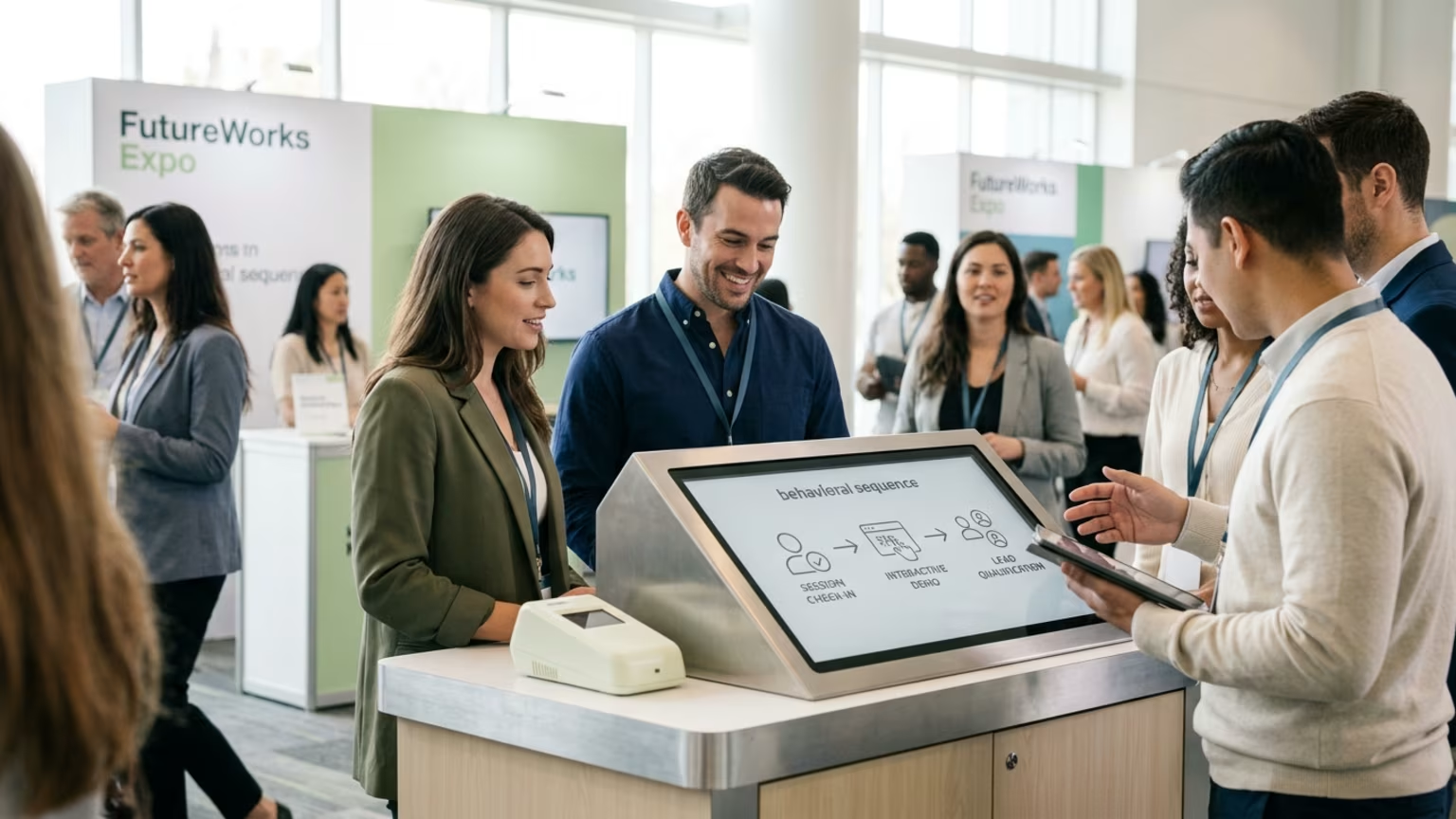
A perfect event rendering will never generate sales pipeline on its own. Execution determines the final commercial outcome. A folding table in aisle six can capture more qualified data than a massive pavilion if the team actually follows a blueprint. Brand teams must choose between treating activation day as a loose creative installation or a gated operational sequence.
The traditional conceptual blueprint treats an event as a static visual installation. The schedule focuses on vendor arrivals and basic staffing shifts. It assumes that once the physical space looks correct, consumer interactions will naturally follow. Logistical constraints appear quickly because the schedule lacks specific behavioral handoffs.
Teams using this approach often struggle with replenishment and issue escalation. A minor missing brochure or a low tablet battery becomes a distraction because no specific owner is assigned. The activation relies on whoever notices the problem first. This lack of structure makes it nearly impossible to build a field scorecard to track qualified interactions and trials.
The subjective model typically assumes that brand ambassadors can improvise conversations based on basic talking points. Because the schedule does not dictate specific interaction lengths, staff often spend too much time with unqualified visitors. This leads to crowded footprints where genuine buyers give up and leave. A loose plan simply tells the team to stay busy until their next scheduled break.
Lead capture in this framework is usually treated as an afterthought rather than a core metric. Brand ambassadors might place a digital tablet on a counter and hope attendees fill out the form. Without a designated data capture owner, the final list often contains fake emails and incomplete profiles. The operational failure happens because the run of show never made data collection a mandatory step.
The sequenced operational run of show treats the event footprint as a series of controlled behavioral gates. Every interaction moves the attendee from a qualification question to a product trial and finally to a defined next action. This execution model requires strict readiness checks before doors even open. The production lead must verify structural stability, power distribution, and safe egress paths.
Instead of passive waiting, the team uses the opening window to calibrate the guest journey. Shift changes become formal five minute briefings where incoming staff learn about current traffic levels. This model relies on bulletproof field logistics for street activations to maintain momentum. Data capture flows naturally from the experience because the exact fields are planned in advance.
The sequenced blueprint demands separate checks for production, product, people, and safety before the public arrives. The team tests every scanner, printer, microphone, and charging station at the exact operating location. Managers separate display stock from giveaway inventory to prevent mid shift confusion. This rigorous preparation prevents technical failures from halting the entire activation during peak traffic windows.
Issue escalation follows a strict three tier system to resolve problems without panic. Minor issues like a missing brochure are handled immediately by the station lead. Significant problems like a device failure or a venue dispute trigger an event lead decision. Serious safety hazards force an immediate stop to the activation until the venue provides official clearance.
The subjective run of show is the unarguable winner when pure brand presence is the only goal. When a retail sampling program places a cooler directly next to a grocery shelf, the aesthetic presence matters more than deep qualification. Budget constraints also force brands into this simpler model. When funds do not allow for complex digital capture tools, a basic setup keeps costs low.
This approach thrives when target audience density is extremely high and the conversion action requires zero friction. A pure sampling stunt at a massive music festival needs speed above all else. Staff only need to hand out product and smile. Adding a gated qualification process in these environments would block foot traffic and create unwanted congestion.
Guerilla marketing tactics also benefit heavily from a stripped down run of show. When an activation relies on surprise and rapid deployment, complex behavioral gates only slow the team down. The primary objective is visual impact and immediate brand recognition across a busy city block. A fluid schedule allows the team to relocate quickly if foot traffic suddenly drops.
A strict operational blueprint dominates when a brand launch requires verifiable Return on Investment. Massive crowd aggregation events demand this level of control to prevent safety hazards and ensure smooth replenishment cycles. When launching a complex new consumer device, subjective execution will fail. The sequenced model guarantees that technical assets reset perfectly between every single user demonstration.
Virality needs also dictate this rigorous approach. In our experience, we build festival zones, premieres, and pop ups that turn viewers into fans and fans into advocates. We design moments people want to share, using music tie ins, screenings, and live stunts to bring stories to life while our crews manage execution and track reach and response metrics. This discipline secures field marketing Return on Investment by turning chaotic crowds into organized lead generation engines.
Complex B2B trade shows absolutely require a sequenced operational blueprint to generate meaningful results. Enterprise sales teams cannot rely on loose conversations when selling multi year contracts. The staff must follow a precise script to ask one relevant qualification question before starting a demonstration. This structured approach guarantees that sales representatives only spend time with attendees who have genuine purchasing power.
The pressure to execute flawlessly aligns with the massive financial scale of the consumer experience industry. Talent Resources reports that U.S. B2C experiential spending reached $47.8 billion in 2025. With budgets this large, marketing leaders cannot afford to rely on attendance metrics alone to justify their investments. Every activation must prove its commercial worth through qualified pipeline and clear conversion actions.
The financial stakes demand that teams measure return on experience, return on emotion, and direct return on investment. The sequenced blueprint supports this deep measurement by tracking inventory consumption against exact foot traffic counts. Teams can calculate the exact cost per acquisition because the run of show dictates exactly how data is gathered. This operational clarity gives executives the exact figures they need to approve future campaign budgets.
The integration of new technology is also pushing costs higher and adding severe execution complexity. Mordor Intelligence projects the AR marketing services market to grow from $5.61 billion in 2025 to $12.95 billion by 2031. As brands deploy these complicated digital layers, the run of show must include manual fallbacks and rigorous technical checks. Investing in an advanced digital experience is wasted if the operational blueprint cannot keep the basic physical footprint running safely.
The final operator verdict leans heavily toward strict operational sequencing over loose aesthetic planning. A beautiful design might win initial attention, but controlled handoffs turn that attention into business value. Teams that plan for the busiest ten minutes of the day will always outperform those who just hope for good traffic. Discipline creates the space for authentic consumer connections to happen safely.
Adopting a rigorous blueprint protects the brand from the chaos of live event environments. Unpredictable crowds, venue changes, and temporary staffing challenges will always threaten an activation day. A structured sequence acts as an operational anchor that keeps the entire team focused on the business objective. Brands that respect the details of execution will consistently turn fleeting moments into measurable revenue.
Returning to that folding table in aisle six, the underlying truth becomes obvious. A modest setup managed by a team with a clear qualification blueprint will outwork a chaotic premium pavilion every time. The most valuable asset on activation day is not the temporary architecture. It relies entirely on aligning event labor to turn foot traffic into a sales pipeline before the doors finally open.
Choosing between a loose visual installation and a structured operational blueprint dictates whether an activation captures real pipeline. Makai solves the difficulty measuring real ROI from live events by deploying our Consumer Events capability. We design memorable live experiences that bring brands and people together through interaction, emotion, and engagement.

30 Years Experiential & Retail Activation Partner for CPG & Beverage Brands | Multi-Market Demos, Roadshows & Costco/Club Programs That Actually Sell