Robbie Thain
Founder, CEO

Simon Property Group launched a national experiential media network across 200 locations. Learn how field marketing teams can execute mall operations at scale.
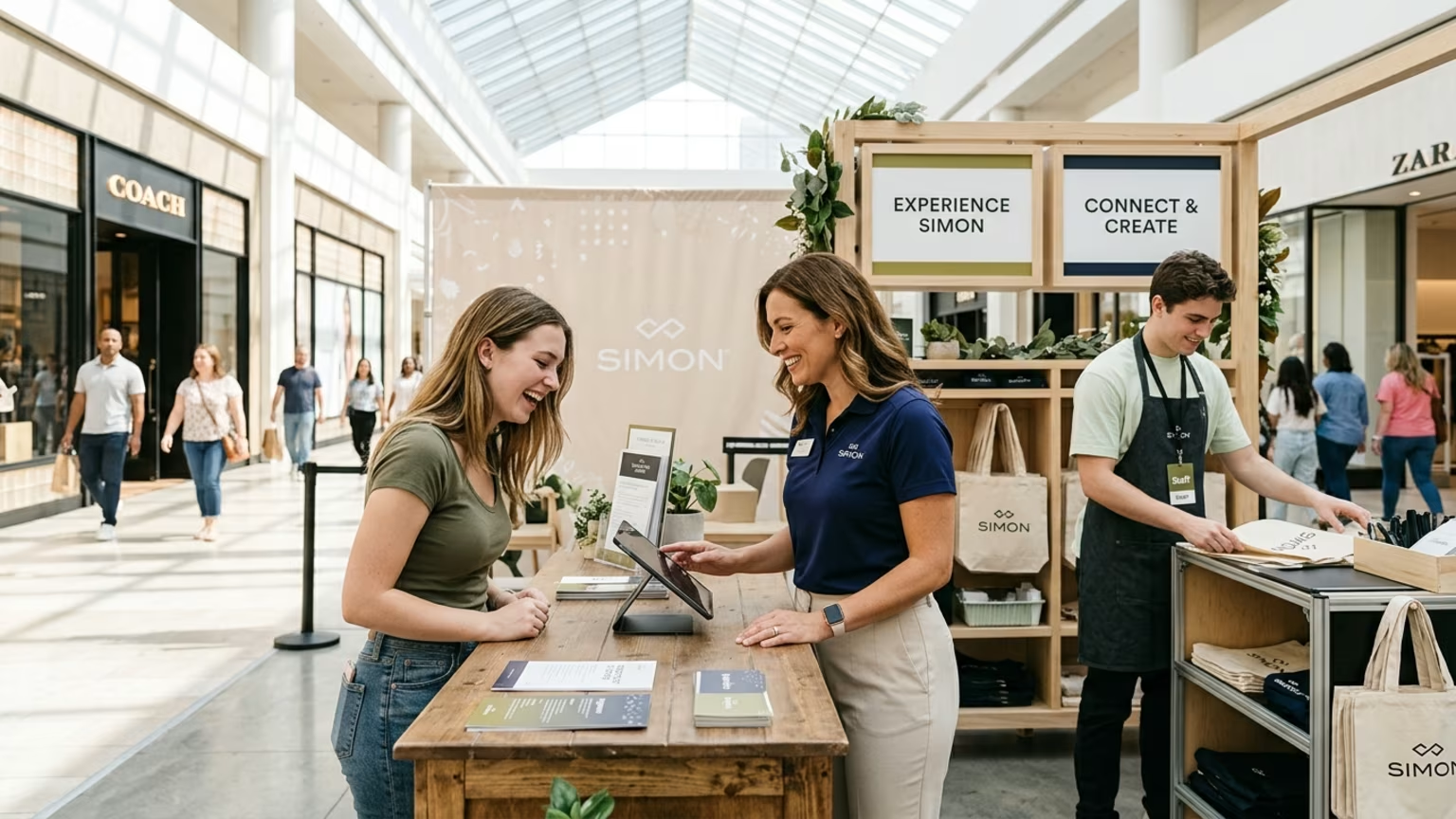
On September 15, 2026, Simon Property Group launched "It's a Simon Thing," a national brand platform unifying its Malls and Premium Outlets. The initiative officially shifts the company's focus toward integrated destinations centered on shared consumer experiences. This rollout introduces a coordinated system spanning mass media, on-center digital displays, and physical activations. The campaign represents a major physical retail shift that requires serious operational planning for brands.
The logistical shift stems directly from the newly established Simon Media Network. This infrastructure packages high-impact digital displays, experiential activations, and off-platform media environments into a single commercial footprint. The network covers more than 200 mixed-use destinations across North America and global markets. Simon also says its broader portfolio generates billions of annual visits and more than $100 billion in annual commerce.
The platform builds on the 2024 "Meet Me @themall" campaign that focused heavily on younger consumers. The new initiative expands that positioning across multiple generations rather than concentrating on a single demographic. The creative system uses a flexible expression format intended to provide consistent national brand language. This operational format allows individual properties to reflect their own local characteristics clearly.
For brand teams, the core change is how these campaigns operate on the ground. Simon says advertisers can activate campaigns nationally or tailor them to specific regional properties. This flexibility looks highly appealing on a national media plan. However, a national media buy now directly dictates local field execution schedules and staffing requirements across a regulated multi-tenant environment.
At Makai, our stance is that venue flexibility only matters if your physical execution scales flawlessly. Buying digital exposure across 200 locations takes just a few phone calls. Pouring a beverage sample or running a high-volume product trial introduces massive operational friction. Brands require activations that are repeatable across different states to maximize their field marketing investments.
We know from our own operations that combining digital reach with physical execution requires absolute precision. We blend physical and digital experiences by integrating QR codes, mobile technology, and real-world activations into a cohesive layer. This integration applies across retail, event, and tour experiences to drive connected results. But in a crowded mall, the brand must control setup compliance and daily guest flow completely.
A digital screen might capture attention quickly from passing shoppers. Trained brand ambassadors drive the actual real conversations and product trials that move retail inventory. CPG and beverage companies cannot treat these properties simply as traditional advertising channels. Shopper marketing teams must deploy dedicated field managers to handle the heavy lifting on site.
Scaling a national idea across local center schedules creates immediate downstream effects on field operations. Every property has unique tenant relationships, safety procedures, and permitted footprint layouts. While the creative system allows local adaptation, the burden of flawless field execution remains entirely on the brand. If your creative requires complex construction, you must manage installation and mid-day replenishment without disrupting neighboring stores.
Managing physical footprints across multiple markets simultaneously tests any logistics framework. We ran the Little Debbie Share a Smile Tour as a 21-market mobile activation using a branded truck, trailer, and Cupcake Smart Cars. Across the tour, we distributed 224,534 cupcakes and generated more than 2.4 million brand impressions. Coordinating multiple vehicles and sampling spaces in crowded locations demands total control over daily inventory tracking.
Executing activations inside high-traffic centers resembles the rigor needed for warehouse retail environments. We manage end to end Costco roadshows that bring brands to shoppers through live demos, real conversations, and measurable sales impact. Applying that same end to end management style to a 200-location mall network ensures brand consistency across every single state. Operational oversight prevents minor local issues from becoming massive national reporting failures.
Measurement introduces an entirely separate logistical hurdle for field teams. Simon says its first-party intelligence and closed-loop attribution connect campaigns with visitation, transactions, and engagement. However, Street Fight Magazine reports that while some coverage mentions control-group holdouts for campaign measurement, Simon's own public announcement lacks specific incrementality criteria. Marketers must secure transparent methodology rules before trusting exposure data entirely.
The broader event sector struggles heavily with this exact performance gap. Ei Advisory reports that 21% of surveyed B2B marketers can measure Return on Investment with confidence. Furthermore, 67% of those professionals cite ROI measurement as their biggest challenge. Similarly, IAB Australia reports that demonstrating return metrics is a major barrier to wider programmatic digital out-of-home adoption.
To fix this measurement gap, brands must establish strict data capture protocols on the ground. You cannot simply count foot traffic and assume success. Event measurement practitioner Joe Federbush recommends evaluating return on experience, return on emotion, and business actions alongside financial outcomes. We know that counting eligible visitors means nothing if you do not track completed experiences and qualified leads.
Collecting reliable consumer data requires disciplined field staff. Lead capture mechanisms fail frequently when brand ambassadors lack proper training or technical support. You must distinguish between delivery metrics like staffed hours and business metrics like actual coupon redemption. Without a clear plan, teams end up with a large volume of data but no defensible behavioral outcomes.
Designing the follow-up journey before the event ensures that captured leads actually matter. If an activation captures a loyalty enrollment, marketers must decide how consent is recorded before the tour starts. A pilot program in a smaller market can expose throughput problems before a massive national launch occurs. Retailers and finance teams demand post-campaign reports that connect the physical experience directly to business outcomes.
We have executed over 1000 campaigns across all 50 states for premium brands. We know that operating in highly regulated environments requires clear ownership of local tenant coordination. When we ran a four-week Dole Whip summer sampling program, we managed rigid permitting rules across four major coastal cities. The activations distributed more than 64,000 servings efficiently.
Building assets for long-term use simplifies future multi-city operations greatly. We built the creative assets for that Dole campaign so the concept could be reused in future programs. A well-planned asset strategy prevents unexpected budget overruns during immediate regional expansions. Measuring actual sales lift from foot traffic takes intense operational discipline from the very beginning.
The strategic intent behind this campaign highlights a change in physical retail perception. Simon's chief marketing officer, Lee Sterling, said the company needed a platform that could tell a broader story about Simon's properties. Sterling described these destinations as places where people find new products, connect with others, and create memories. This positioning aligns perfectly with modern engagement strategies.
Creating a memorable interaction moment requires an operating system that prevents stockouts completely. A beautiful digital display cannot save an activation if the sampling kiosk remains understaffed. Consumer attention spans are remarkably short inside large retail centers. Brands that understand this physical shift will easily dominate the new retail landscape.
As multi-tenant destinations evolve into integrated media and activation platforms, will your field operations team have the logistical command required to turn that digital exposure into measurable pipeline?
Field marketing directors managing national in-mall campaigns need rigid logistical command to turn passive digital exposure into active consumer participation. When low quality leads from crowded trade shows and chaotic retail footprints drain your budget, Makai delivers your brand directly to audiences through on the go experiences that drive trial and awareness.

30 Years Experiential & Retail Activation Partner for CPG & Beverage Brands | Multi-Market Demos, Roadshows & Costco/Club Programs That Actually Sell