Robbie Thain
Founder, CEO

Simon Property Group's new Simon Media Network connects mall foot traffic to retail media ROI. Learn how CPG brands should adapt their physical event strategies.
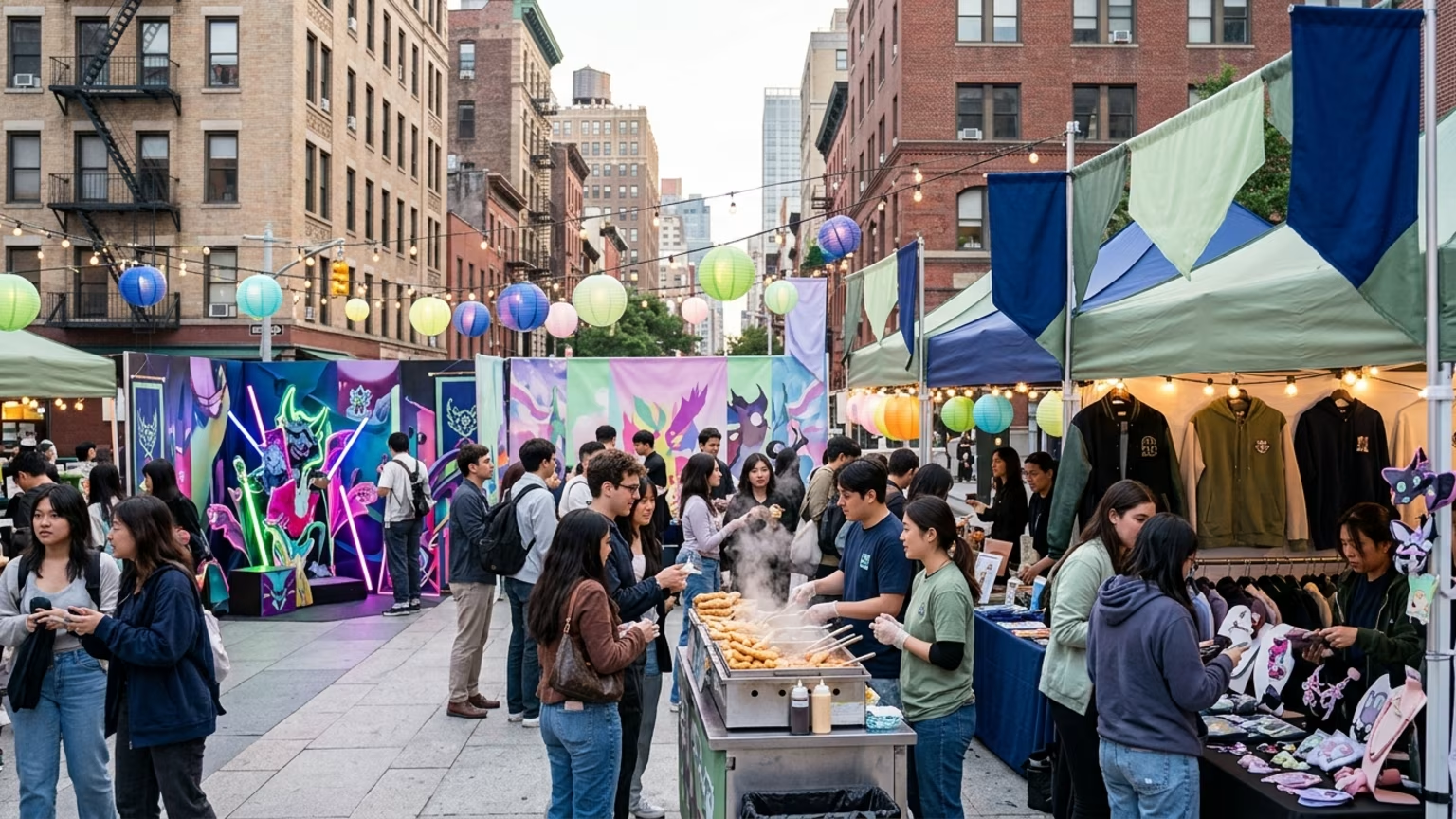
A field marketing manager stands in a crowded retail concourse, watching thousands of people walk past a premium sampling booth. The sheer volume of foot traffic looks impressive, but the digital dashboard back at headquarters cannot prove a single purchase. For decades, marketing teams have struggled to link physical brand encounters with definitive commercial outcomes. On August 27, 2026, Simon Property Group launched Simon Media Network to eliminate that exact reporting gap.
The launch signals a fundamental change in how consumer goods companies must evaluate their physical activations moving forward. The days of experiential marketing escaping strict financial accountability are over, and brands must now prove physical activations drive hard retail pipeline. Return on Investment is no longer optional for live events. The entire industry is moving toward a model where every real-world interaction must be as measurable as an online click.
The scale of this new platform represents a massive shift in how operators can track physical behavior. Simon Media Network covers a portfolio of more than 200 shopping, dining, entertainment, and mixed-use destinations. Simon reports these properties generate more than $100 billion in commerce annually and receive billions of visits worldwide. For marketers chasing physical reach, Adweek reported Simon’s claimed annual reach as approximately 2 billion global visitors.
These numbers outline a clear attempt to connect physical spaces with highly structured commerce-media networks. The underlying data foundation is not simply a single retailer transaction database. AdExchanger reported that Simon draws its data from the Simon+ loyalty program, opted-in location tracking like Wi-Fi sign-ins, and licensed third-party purchase data. This specific combination attempts to create a unified view of how modern shoppers move through large commercial environments.
However, the execution of this data strategy contains important structural nuances that brands must navigate. Individual retailers located within Simon properties may possess more direct purchase data than Simon itself. Because of this operational dynamic, the availability of granular purchase measurement might vary by property or specific retail category. Marketers must evaluate these macro numbers carefully to understand actual audience quality before committing resources.
A massive visitor count does not automatically guarantee target audience reach, meaningful attention, or direct product trial. Brand managers should require audience composition details, dwell time assumptions, and frequency controls before treating scale claims as factual forecasts. Independent measurement partners are necessary to validate these figures. The core challenge remains matching passive exposure to verified physical visits.
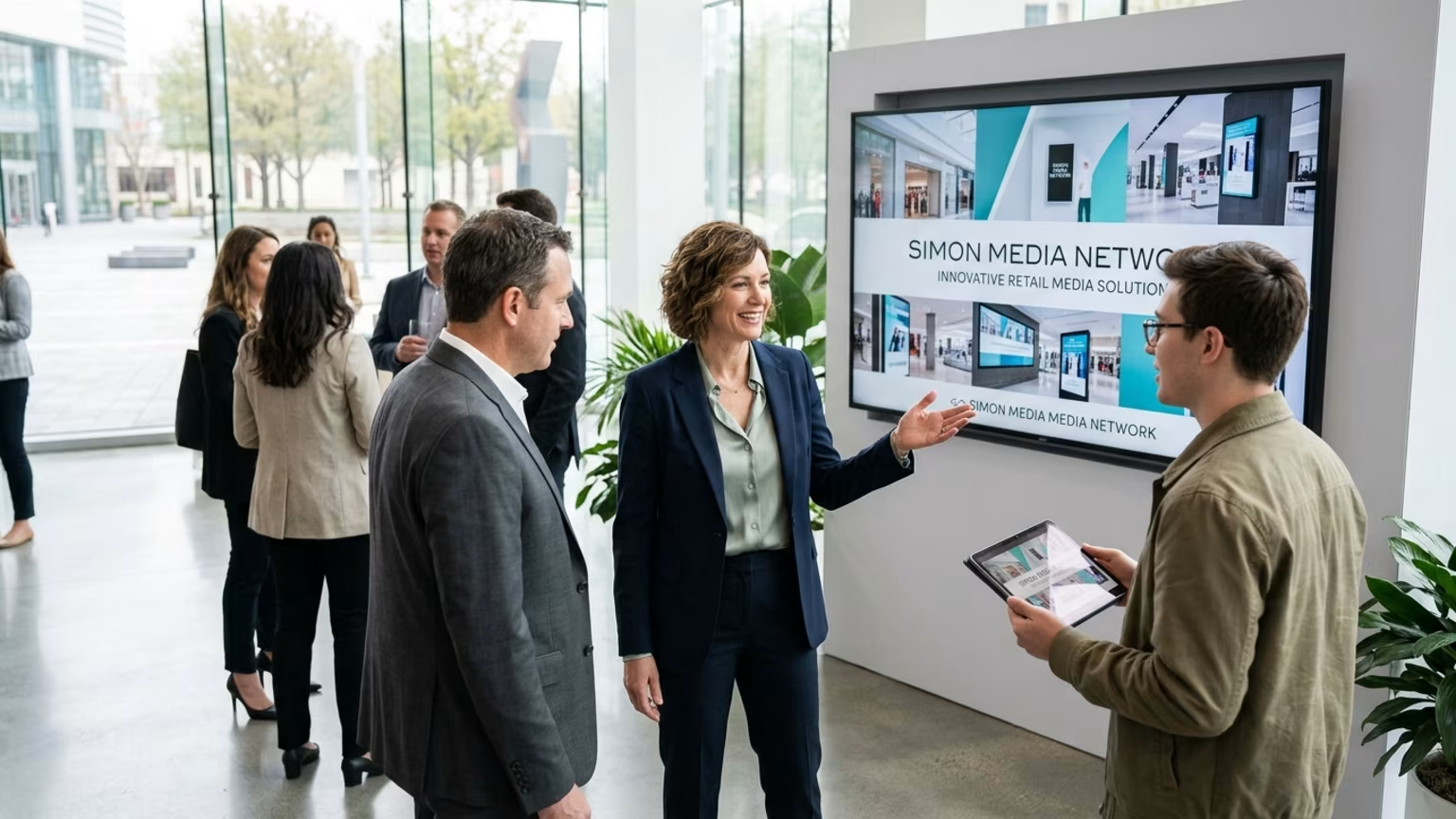
Marketing leaders can no longer accept isolated event exposure as a sufficient campaign outcome. Simon Media Network packages destination media, experiential activations, off-platform media, and owned digital channels into a single proposition. It also integrates ShopSimon.com and the Simon+ loyalty program to capture critical shopper activity across properties. Chief Marketing Officer Lee Sterling said the platform is intended to bring together brands, consumers, and experiences in places where real life happens.
For a premium snack or beverage brand, the strategic priority shifts from simply pouring samples to tracing the entire consumer journey. Chief Revenue Officer Jared Blechman framed the proposition around proving that a campaign moved someone to visit, engage, and buy rather than delivering impressions alone. Blechman also noted that Simon is looking for growth opportunities beyond its core leasing business. This operational pivot forces brand managers to align their field marketing teams with rigid programmatic buying strategies.
Advertisers can activate these new tools without completely overhauling their internal technology systems. AdExchanger reported that advertisers can work through a managed-service model or use self-service capabilities with their existing DSP or SSP stack. Marketers must build their strategic briefs around measurable retail media ROI to ensure field dollars convert into documented sales lift. A fragmented execution approach will fail when competitors are actively measuring localized footfall and accurate transaction volume.
Integrating these systems also demands rigorous attention to consumer privacy and transparent consent models. The reported use of opted-in location tracking means campaign planning must account for data retention, matching rules, and strict privacy compliance. Brands must ask how audience segments are constructed before committing massive budgets to new digital media environments. Without independent verification, high intent audience claims remain theoretical concepts rather than proven performance benchmarks.
The ability to target a localized audience does not guarantee flawless physical execution at the retail level. Simon says campaigns can be planned nationally, regionally, by market, or at individual properties. We run experiential and engagement programs coast to coast with local crews, smart logistics, and permit expertise that let us launch fast and maintain quality consistency in every region, from major metros to smaller markets. Our nationwide infrastructure enables us to activate brands wherever their audiences are located.
Brands launching into selected retailers must use this geographic flexibility strategically to test specific markets before scaling up. The promise of consistent measurement across digital channels is commercially attractive, but live events still require intense operational control. Staffing, physical product handling, and strict brand presentation remain critical factors that digital dashboards simply cannot manage. Connecting an experiential activation to a screen requires a synchronized media plan that dictates exact consumer flows.
Field managers must separate media delivery metrics from actual business outcomes to understand true campaign performance. Simon says the network is designed to report visitation, transactions, engagement, and incremental return on ad spend. However, brand teams should demand clear definitions for retail engagement before approving a physical booth design. Managing a premium product launch means asking whether the resulting data proves new customer acquisition or simply counts existing buyer habits.
Higher consideration categories must also adapt their floor strategies to take advantage of integrated commerce networks. For automotive, technology, or entertainment brands, the physical mall environment provides necessary room for complex product demonstrations. The specific combination of experiential activations and destination media allows field teams to guide prospects through prolonged interactive sessions. True execution success requires treating the mall concourse as a disciplined conversion environment rather than a passive billboard.
Measuring the impact of physical brand activations now requires closed-loop attribution models rather than generic foot traffic estimates. Simon Property Group provides a structural framework to combine mall media with direct consumer engagement. Marketing decision-makers must treat these physical environments as highly measurable commerce channels. Every future activation should test a specific consumer behavior against documented retail transaction data.
Operating a massive retail activation while struggling to capture usable transaction data creates serious blind spots for marketers. Makai eliminates inefficient post event follow up and CRM routing by establishing measurable pathways from the event floor to the register. We deploy our Consumer Events capability to design memorable live experiences that bring brands and people together through interaction, emotion, and engagement. Request a proposal

30 Years Experiential & Retail Activation Partner for CPG & Beverage Brands | Multi-Market Demos, Roadshows & Costco/Club Programs That Actually Sell