Robbie Thain
Founder, CEO

Learn why commerce media moves from Walmart, Michaels, and 7-Eleven demand that experiential marketers connect physical brand activations to measurable data.
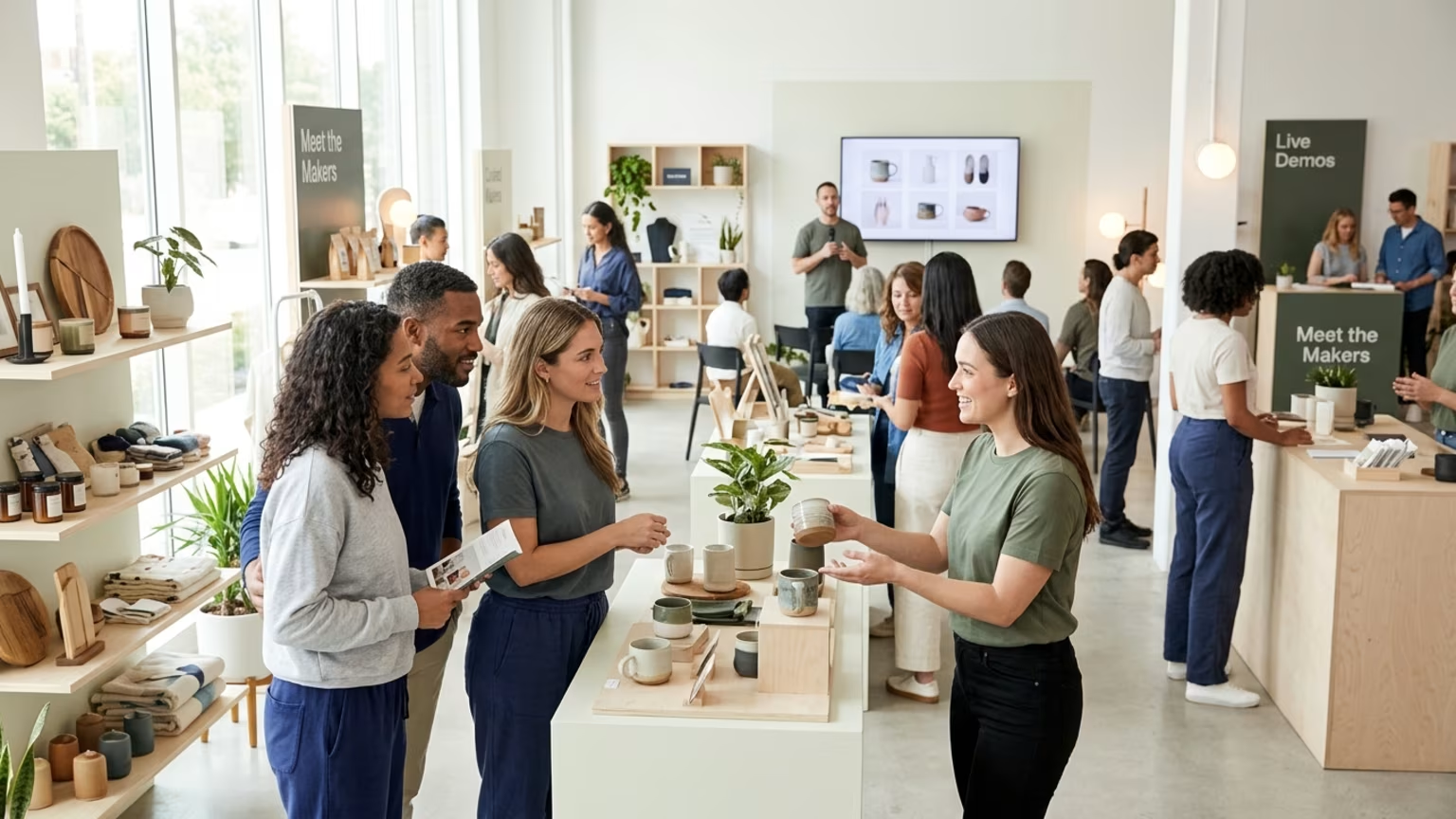
Michaels recently stated it intended to roll a new experiential store model out to more than 1,300 stores across North America. This massive physical footprint is not merely an updated retail aesthetic. It represents a broader shift toward treating stores as highly measurable interactive platforms. Your giant interactive virtual reality booth at the local expo is likely bleeding your budget dry. Adweek recently highlighted commerce media moves from Walmart, Michaels, and 7-Eleven that expose a harsh reality for brand leaders.
If your activation strategy still relies on loose foot traffic counts, you are actively losing ground. The traditional trade show mindset celebrates crowded aisles and empty sample bins. That outdated playbook produces great photos but generates absolutely zero qualified pipeline for the sales team. The most successful consumer brands are demanding a much higher standard for live engagements. They realize that a live event must function as a measurable sales channel.
Footprint expansions by major retailers prove that physical floor space is becoming a premium media asset. Marketers who ignore this reality will continue to waste their experiential budgets on vanity metrics. The industry is moving rapidly toward connected commerce environments that track every single interaction. Brands that refuse to adapt will watch their expensive physical activations fail to produce any verifiable retail momentum.
Experiential marketing often devolves into expensive brand theater. A CMO signs off on a massive budget for a premium roadshow or an immersive pop up. The field team builds an incredible physical environment with complex logistics and enthusiastic brand ambassadors. While the activation looks flawless on social media, it often lacks a clear conversion strategy.
When the finance team asks for the Return on Investment the following month, marketing can only provide a list of subjective metrics. Spending six figures to get zero qualified pipeline is a nightmare for marketing operators. They worry about inconsistent staffing and poor reporting that create a fog of data instead of hard evidence. Retail buyers care whether those physical interactions actually connect to driving measurable retail sell-through.
The mainstream approach fails because it prioritizes aesthetics over actual buyer behavior. Agency partners often present beautiful renderings of event spaces without defining the actual path to purchase. Brands spend months planning the perfect booth layout while completely ignoring how they will capture shopper data. This disconnect between design and retail execution destroys overall campaign profitability.
Many marketing departments still rely on post event surveys to justify their massive production budgets. These surveys often suffer from terrible response rates and heavily biased participant feedback. A customer might express joy about receiving a free product sample without ever intending to make a retail purchase. This massive gap between stated sentiment and actual buying behavior destroys the credibility of the entire field marketing department.
The makai approach requires a completely different operational mindset. We believe that genuine human connection must be paired with strict executional rigor. Authenticity draws the consumer into the brand story. Operational discipline ensures that every single interaction is captured, tracked, and directed toward a measurable business outcome.
We have executed over 1000 campaigns across all 50 states, bringing brands to life in every major U.S. market. From retail demos in Seattle to roadshows in Miami and events in Honolulu, our teams activate brands wherever our clients' audiences are located. That level of execution is required when brands try to scale highly engaging physical spaces. Michaels debuted its new format at a location in the Easton Town Center area of Columbus, Ohio.
Michaels has introduced an experiential store format focused on creativity and personalization. The retailer also designed the model around hands-on interaction, daily events and customer celebration. Michaels CEO Dave Boone described the initiative as part of a broader effort to transform the retailer into "a destination for creativity and celebration." Managing complex physical interactions at scale demands true field leadership and flawless operational support.
Our operator mentality views these interactive retail spaces as high stakes performance environments. Warm and human brand interactions only drive revenue when they are supported by a brutal focus on logistics. Every physical touchpoint must be deliberately mapped to a specific retail outcome. This operational discipline separates high impact activations from mere brand theater.
Our teams know exactly what it takes to turn abstract brand concepts into flawless physical realities. We obsess over the small details that most traditional marketing agencies completely overlook during the planning phase. Inventory tracking and queue management are just as critical as the graphic design on the activation footprint. This relentless focus on operational realities ensures that the brand message actually reaches the target consumer.
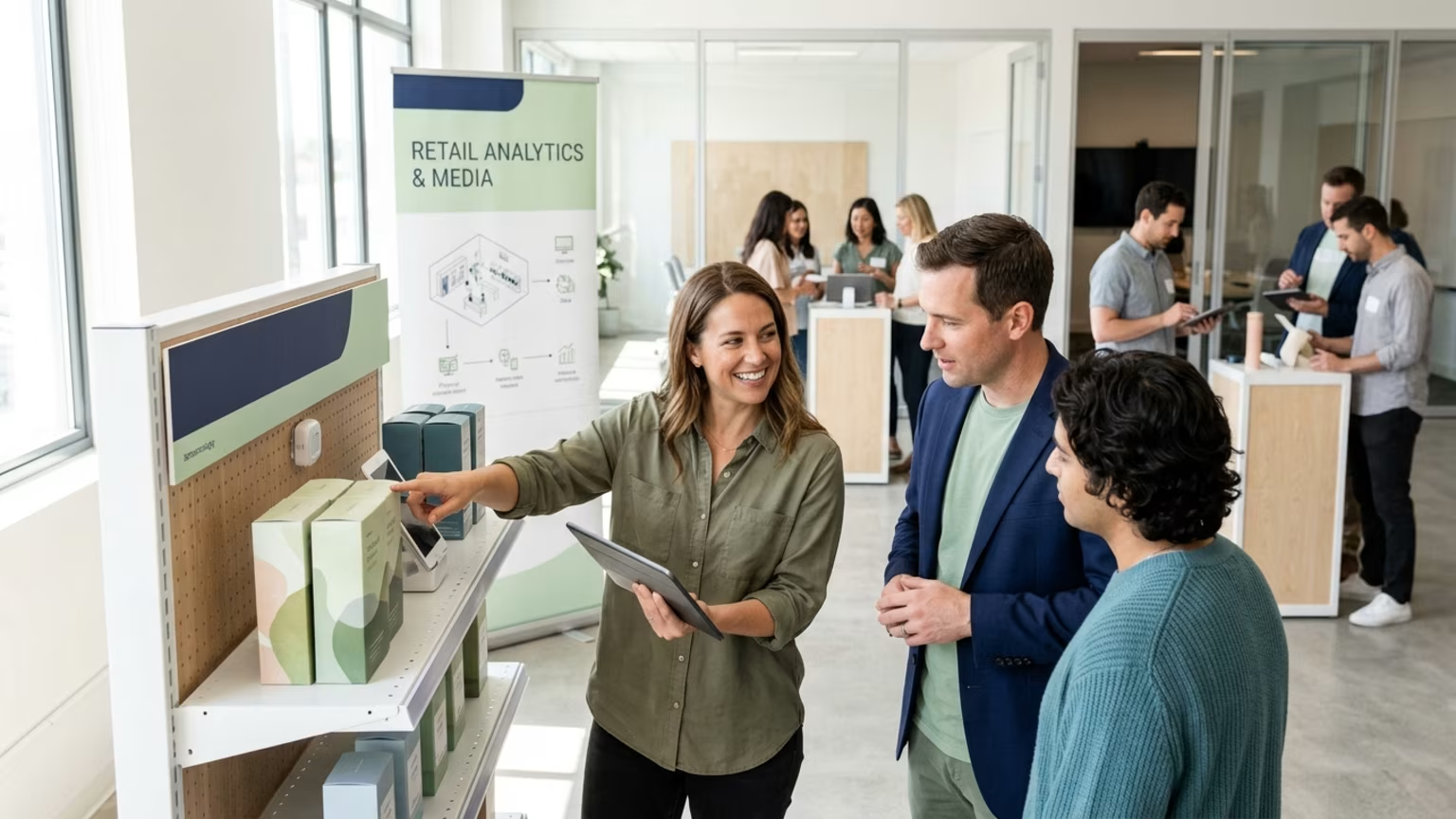
The goal is no longer collecting generic consumer impressions. Marketing leaders must shift their focus toward tracking tangible outcomes like retail meetings booked and verified samples distributed. Retailers are already building the infrastructure to measure these exact outcomes. 7-Eleven's Gulp Media Network is currently rolling out a "5-minute iROAS" methodology for measuring in-store Gulp Radio advertising.
This method is designed to examine sales occurring during the first five minutes after an ad plays. It compares those results with sales data from the same store and daypart when the ad did not run. This creates a store-level, time-based comparison for marketers. According to the company description reported by Mars United, this approach could allow campaigns to run across the broader 7-Eleven footprint without suppressing advertising in conventional test stores.
Digital ecosystems are capturing highly specific purchase behavior across global markets. A separate development involves making retail purchase data from approximately 28 million 7-Eleven app members available for activation. This data is available to advertisers through The Trade Desk in Japan. This kind of data integration sets a new baseline for demanding tangible pipeline from roadshows.
Physical retail is rapidly merging with digital media measurement. Walmart completed its acquisition of advertising technology company Vibe.co recently. This acquisition gave Walmart Connect an additional position in streaming media. Brands must adapt their experiential media strategy to align with these sophisticated retailer networks.
Retailers are adding complex digital tools directly into the shopper journey. Michaels has also announced an AI-powered shopping assistant called Ask Mike. According to industry coverage, this tool is built with Google Cloud's Gemini Enterprise for Customer Experience. If your field marketing strategy operates in a vacuum, you will fail to capture the available retail upside.
This shift toward integrated data collection requires specialized field teams. Retailers expect brands to show up with highly trained staff who understand these complex conversion goals. A standard event staffer simply cannot manage the operational nuances of a fully trackable commerce activation. Premium execution requires dedicated brand ambassadors who actively drive shoppers toward the digital endpoint.
These technology investments prove that physical stores are evolving into fully integrated media properties. Marketers must build live activations that seamlessly push consumers into these digital tracking ecosystems. A sample distributed in the store should trigger a specific digital follow up within the retailer app. This tight alignment ensures that marketing dollars actually generate verifiable retail momentum.
Demanding execution over aesthetics is the only way to survive the current commerce media environment. Brands can no longer afford to build beautiful activation spaces without a rigorous plan for data capture. Event managers must stop hiding behind vague awareness metrics and start owning the final retail conversion. True operational excellence means demanding that every live event produces hard evidence of buyer interest.
Whether a company is navigating a massive footprint of 1,300 stores or tracking a five minute response window, the objective remains exactly the same. Live brand experiences must function as highly measurable conversion engines that consistently produce verifiable retail growth. The era of unaccountable brand theater is officially over. The future belongs to operators who connect physical authenticity directly to digital outcomes.
The most successful marketing leaders are already auditing their physical activations for measurable retail impact. They are pulling funding away from vanity projects and redirecting those budgets toward highly trackable commerce integrations. A beautiful physical footprint only matters if it effectively drives the consumer toward a verified purchase event. The brands that master this intersection of physical engagement and digital measurement will easily dominate their respective categories.

30 Years Experiential & Retail Activation Partner for CPG & Beverage Brands | Multi-Market Demos, Roadshows & Costco/Club Programs That Actually Sell