Robbie Thain
Founder, CEO

New IGD research shows shopper loyalty shifting from points to physical experiences. Learn how CPG brands must adapt field execution to capture buyer intent.
On September 17, 2026, IGD analyst Bryan Roberts published the Loyalty to Live For report. The page displaying the findings also labels the research as July 2025. This publication argues that shopper loyalty is being redefined as consumers distribute their spending across more retailers and channels. The analysis outlines how loyalty programs must move beyond basic points and perks toward purpose, personalization, and emotional connection.
The IGD report identifies retail innovation and changing shopper behavior as central forces shaping the future of brand loyalty. Instead of defaulting to traditional discount tiers, retailers and consumer packaged goods companies must evaluate the actual relationship they are creating for their shoppers. The strategy relies on asking what meaningful value a program provides before deciding which points, tiers, or perks to add to the customer journey.
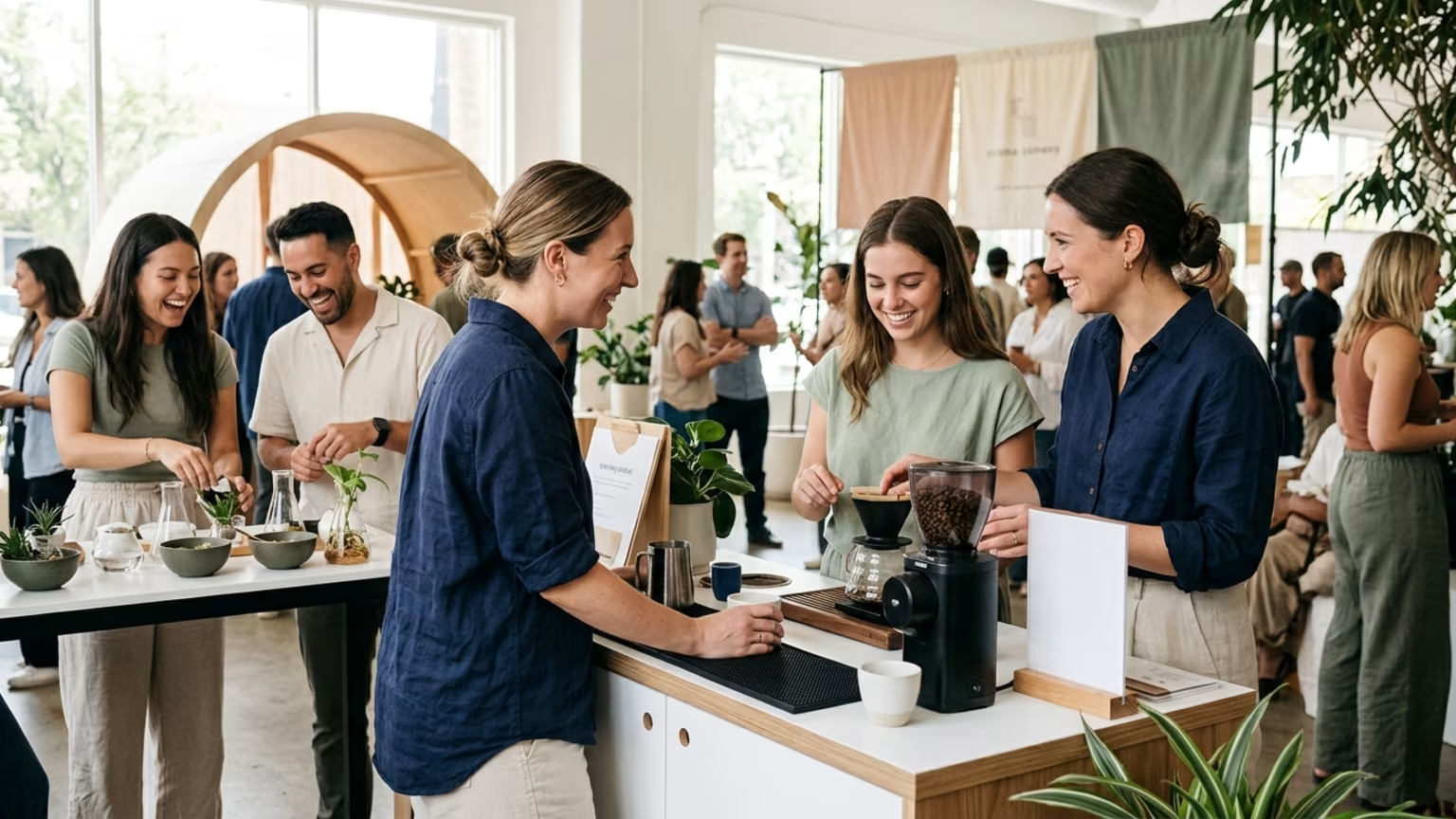
The IGD analysis focuses on retail strategies that build deeper customer relationships rather than relying exclusively on transactional rewards. The central shift is that physical environments remain important spaces to build loyalty. Brands are now expected to use live events, product sampling, and service-led interactions to make customer relationships tangible. The traditional mechanics of points systems face increasing pressure as shoppers prioritize meaningful engagement over minor, predictable discounts.
Supporting this shift, a 2026 Merkle Loyalty Barometer survey of 2,000 consumers across 10 industries evaluated what truly drives repeat purchasing behavior. This survey found that 62% ranked the first purchase experience among the top two factors shaping loyalty. Consultancy.eu reports that this first purchase experience was more than twice as influential as any other factor in the Merkle analysis. This proves that initial physical contact with a product holds tremendous weight for long-term retention.
Merkle's research also found that exclusive access and personalized recommendations were the fastest-growing loyalty factors year over year. These preferences increased by six to 10 percentage points. Consumers expect the quality of the relationship to matter just as much as the size of the reward. However, the data exposes a significant operational gap in delivering this personalized value across the modern retail landscape.
The same survey found that only 18% of respondents always felt recognized as the same customer across physical stores, digital websites, and customer service apps. Only 19% said a brand's website adjusted to their browsing behavior or greeted them by name. Meanwhile, a full 91% expected to be treated differently as loyalty members. This gap between expectation and execution provides a clear opening for brands that can integrate physical activations into their larger relationship strategies.
At Makai, our focus has always been on delivering carefully executed face-to-face marketing experiences designed to capture attention and generate measurable sales pipeline. We agree with the strategic direction that loyalty programs do not create customer loyalty on their own. Instead, they amplify an existing customer relationship or accelerate its decline. A visually impressive consumer event cannot compensate indefinitely for weak product quality, confusing redemption rules, or uncompetitive pricing.
Points and discounts still have a clear role in price-sensitive retail categories. However, we know that securing a measurable Return on Investment requires strict control over the physical activation footprint. Brands must treat live sampling, retail demonstrations, and store events as critical relationship-building moments rather than isolated promotions. We create experiential marketing programs built to connect emotion with action.
Our process blends creativity, strategy, and data to ensure every brand interaction drives measurable results. We craft experiences that engage all five senses. This helps people feel connected to brands while turning live interactions into meaningful business outcomes. When a brand brings its product directly to a shopper through an immersive trial, that single interaction can establish the emotional connection IGD describes.
This is exactly where our team steps in to ensure real-world marketing translates into qualified pipeline. We manage the end-to-end logistics required to place premium products directly into the hands of target consumers. The objective is to engineer a memorable brand introduction that naturally transitions the shopper into a long-term loyalty journey. Whether activating a nationwide product rollout or a regional expo, the physical touchpoint must validate the digital promise.
Integrating live experiences into the broader customer journey fundamentally changes how field teams must operate. Event staffing, product inventory management, and data capture systems must now align directly with retail workflows. When consumers expect differentiated treatment as loyalty members, generic field activations no longer meet the standard. Brands must connect their physical touchpoints to their digital tracking mechanisms to ensure consistent brand recognition.
For marketing leaders and trade show coordinators, personalization introduces distinct operational risks in physical settings. A campaign can feel invasive or disjointed if field staff lack accurate information or if customer eligibility rules are unclear. Brands that invest in structured experiential shopper marketing frameworks can better align their field footprint with overall retail strategy. Field teams must gather a limited number of meaningful audience signals, such as product preference or purchase occasion, without slowing down the activation flow.
Permits, venue clearances, and trade show footprint logistics also become more complex when data capture is the primary goal. You cannot simply hand out product samples and hope for digital loyalty enrollment. The physical space must be engineered to guide the visitor smoothly from initial curiosity to active product trial, and finally into a structured data exchange. This requires precise spatial planning to prevent bottlenecks and ensure every brand ambassador has the time to facilitate a real conversation.
Measurement must also evolve beyond basic foot traffic counting. Teams need to track qualified interactions, product trial rates, offer redemptions, and nearby retail store sales. A structured approach to next generation data reporting allows marketers to compare activated locations against matched control groups. Every physical activation should include a clear post-event path that guides the shopper back to a retail shelf or loyalty enrollment page.
Translating these loyalty shifts into a measurable physical footprint requires precise operational control. A Brand Manager in the CPG space shared: "Makai transformed our test-drive activation into an emotional brand journey. They connected technology, lifestyle, and experience seamlessly, and turned casual visitors into loyal fans." We successfully integrated multiple experience layers to convert casual participants into committed brand advocates.
This outcome highlights the importance of managing the transition from live event interactions to sustained retail habits. Our approach ensures that every consumer interaction feeds into a unified path to purchase. Brands that use physical activations to create product trial actively remove purchase hesitation for the shopper. By prioritizing data led experiential marketing, marketing teams can connect digital loyalty profiles directly to real-world purchase decisions.
We build festival zones, premieres, and pop-ups that turn viewers into fans and fans into advocates. We design moments people want to share, using music tie-ins, screenings, and live stunts to bring stories to life while our crews manage execution and track reach and response metrics. This full-funnel approach guarantees that the emotional high of a live event directly supports long-term customer retention.
Are your physical marketing touchpoints actually capturing the first-party data needed to recognize consumers across channels, or are they generating isolated retail noise?
After marketing leaders design loyalty frameworks that integrate physical consumer touchpoints, Makai builds the in-store execution models needed to capture that intent accurately. When inefficient post event follow up and CRM routing break the connection between trial and repeat purchase, our Experiential Marketing capability creates hands on brand moments that connect emotionally and turn customers into ambassadors. Request a proposal

30 Years Experiential & Retail Activation Partner for CPG & Beverage Brands | Multi-Market Demos, Roadshows & Costco/Club Programs That Actually Sell