Robbie Thain
Founder, CEO

Learn how to align experiential marketing, shopper marketing, and retail media to build a single measurable path to purchase and eliminate wasted trade spend.
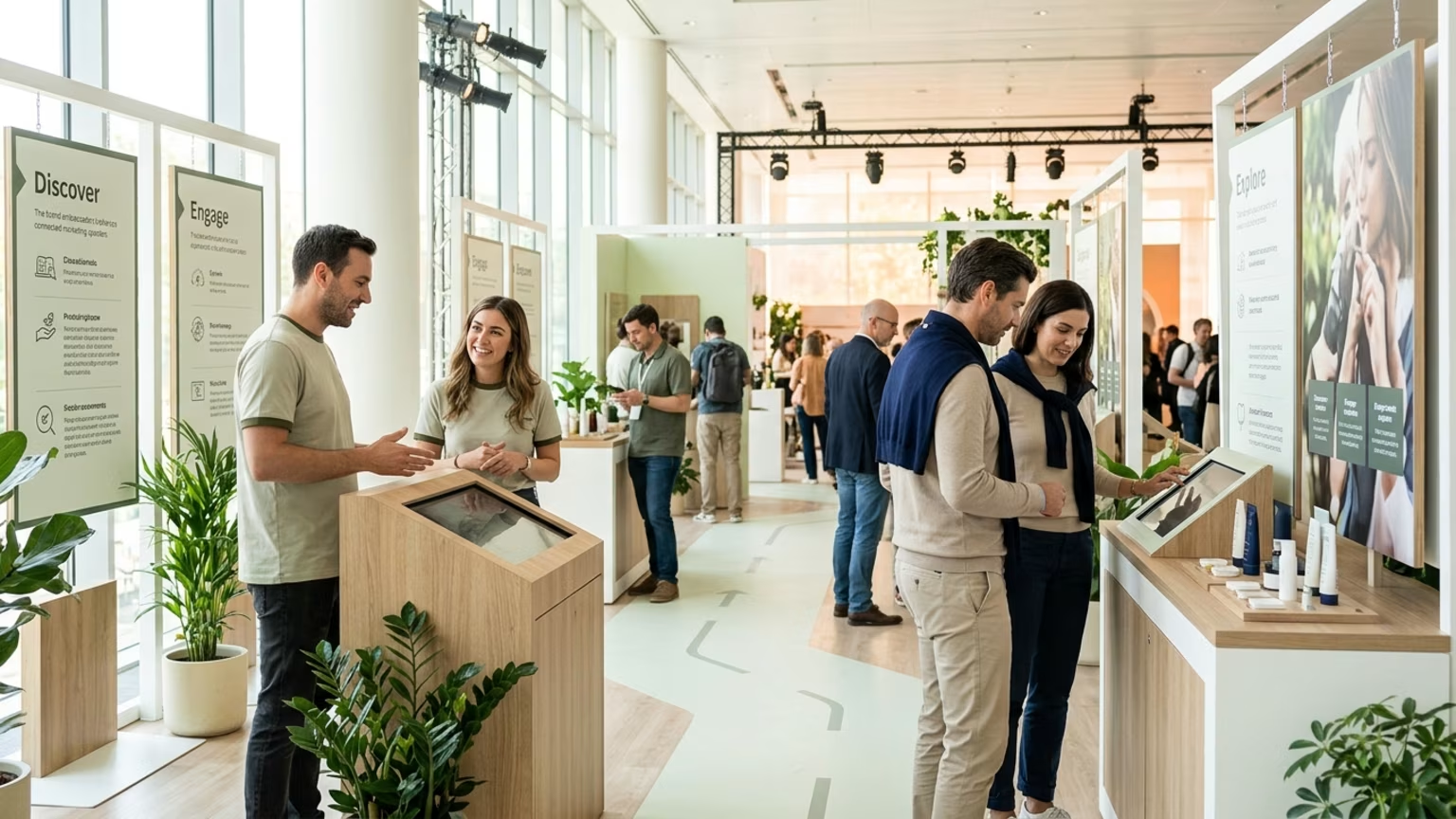
Treating event sampling and in-store promotions as isolated silos is the fastest way to burn a marketing budget. True conversion requires a single connected path from the street to the register. This reality forces operators to rethink how they map consumer journeys.
Before the first sampling tent is deployed, unglamorous preparation dictates the entire outcome of the campaign. A disconnected setup leads to wasted trade marketing spend and deeply confused consumers. Teams must coordinate calendars at the SKU and store level to align inventory delivery with field operations. You need a single commercial brief that outlines the business objective, priority retailer, and exact geographic footprint.
Permitting, CRM routing, and vehicle staging must be mapped out months in advance of any live event. If the product is not physically on the shelf when a pop-up happens, the consumer trial is entirely wasted. Operations managers must confirm display installation and store-level sampling schedules before approving the final budget. A consumer packaged goods brand cannot run a national campaign without locking down regional product availability first.
When a brand enters a new regional grocer or a mass retailer, the core priority is productive distribution. Experiential activity should be concentrated strictly where the product is available for immediate purchase. Retail media must be heavily geo-targeted to match the exact retail footprint of the campaign. A common logistical failure is generating national awareness paired with weak local availability, resulting in interest without fulfillment.
Seasonal activity benefits from tight coordination because timing, inventory, and consumer attention are all constrained. Trade promotions can secure the retailer calendar, and shopper marketing can make the occasion legible at the shelf. Experiential marketing can then create a memorable reason to choose the brand during a crowded shopping window. When these four elements lock together, brands maximize their return during critical sales peaks.
We know this level of precision requires intense discipline from every stakeholder involved. A VP of Marketing reflected on our partnership: "Robbie, it was a pleasure working with you and your team. You turned our launch into an experience that connected with shoppers and built lasting excitement for our brand. We're already looking forward to the next project together." Our team created a launch experience that resonated with retail shoppers and generated momentum for future collaborations.
Effective preparation also means configuring the technology required to capture and process leads efficiently. Establishing repeatable frameworks for field marketing ensures that data flows seamlessly from the physical activation to the sales team. Without these operational controls in place, even the most creative activation will fail to produce measurable commercial impact.
Connecting the purchase path requires a strict operational sequence on the ground. When executed correctly, this framework transitions a passive audience into active, loyal buyers.
For physical goods, common formats include pop-up environments, community activations, and sampling tours. Brands also utilize cultural-event integrations and mobile marketing programs. These methods place the consumer directly into the narrative of the product. When an operator connects a mobile sampling tour to a nearby retailer, they eliminate the friction of finding the product.
Product launches represent a natural integration point for these distinct channels to work together. The brand must establish awareness, explain the product, generate trial, and secure distribution simultaneously. A practical launch sequence starts with a trade promotion to secure display commitments and inventory timing. Next, the experiential team brings the product benefit to life through sampling or use-case demonstrations.
Shopper marketing answers a different question from experiential marketing altogether. It asks how we help consumers select and buy the product in a specific retail environment. To bridge this gap, field teams must rely on a connected shopper strategy that aligns messaging across every physical touchpoint. By unifying the creative promise with retail availability, operators ensure that awareness translates into revenue.
Trade promotions must also secure commercial conditions for sell-through before the experiential team arrives. Their role is to make the product commercially available and competitively supported on the floor. A promotion is strategically necessary when a brand needs to secure an endcap or participate in a retailer event. Proper coordination guarantees that consumer demand generated by live events can actually be fulfilled by the retailer.
Sponsorships provide another critical moment where cross-channel coordination proves vital. A sponsorship can create large-scale brand association, but the purchase path must be actively designed rather than assumed. The activation should clearly answer which retail destination will receive the generated consumer demand. By capturing data with appropriate consent, operators can successfully distinguish general exposure from measurable incremental sales.
Logistical mistakes routinely destroy the connection between brand awareness and retail sell-through. The most common error is losing field leads due to poor CRM routing or manual clipboard tracking. When event data does not flow into a centralized system, post-event follow-up becomes impossible. This single failure point can turn a highly attended event into a commercial zero.
Another frequent failure involves misunderstanding how a retail media network operates in the physical world. A retail media network is an advertising business operated by a retailer that sells brands access to shoppers on retailer properties and measures outcomes against the retailer’s purchase data. Amateurs often rely on these networks without questioning if the platform metrics reflect actual incremental sales. One retail-media overview distinguishes platform Return on Investment from units sold at the register and notes that platform-reported results may not be independently verifiable.
Another oversight is confusing channel shipments with genuine consumer demand. Trade programs can produce retailer shipments without generating equivalent consumer takeaway at the register. Sell-in data may therefore overstate the effect of a promotion when inventory is forward-bought by the retailer. The most defensible reporting combines shipment data with point-of-sale numbers, inventory tracking, and baseline estimates.
Teams also fail by underestimating crowd flow and ignoring physical retail constraints during busy seasonal occasions. They often run aggressive offsite campaigns while forgetting to secure in-store placements. These missed opportunities include screens, cooler doors, endcap panels, and physical retail surfaces. Building a center of excellence for field operations helps mitigate these frustrating bottlenecks before they occur.
Finally, there is currently no single industry-wide standard for in-store retail-media measurement, according to a review of the measurement landscape. Marketing leaders who blindly trust vendor reports without verifying the attribution window will struggle to prove actual performance. The review describes in-store metrics such as traffic, attention time, and product pickup. Other possible metrics include glances and passerby-to-onlooker conversion. However, the existence of these metrics does not guarantee consistent implementation across retailers or vendors.
After a campaign concludes, operations teams must rigorously analyze repeat purchase behaviors and shelf compliance. Capturing product feedback and evaluating whether the experience created a reason to buy again is mandatory. Do not end measurement at the first transaction. The true value of a connected campaign lies in understanding what will cause the second purchase.
Every activation should generate raw insights that feed into the next operational brief. A connected program is never truly finished because consumer habits and retailer environments constantly shift. The work of maintaining brand relevance relies on quiet persistence.
Aligning field events with retail promotions requires intense measurement discipline to prove actual commercial impact, which is where Makai assumes full operational command. We eliminate the difficulty measuring real ROI from live events by deploying our Promotional Campaigns capability. Our campaigns connect digital and real world touchpoints to boost visibility and spark brand conversations.

30 Years Experiential & Retail Activation Partner for CPG & Beverage Brands | Multi-Market Demos, Roadshows & Costco/Club Programs That Actually Sell


