Robbie Thain
Founder, CEO

Learn why successful CPG brands treat experiential activations and shopper marketing as one connected system to drive measurable retail sales and incrementality.
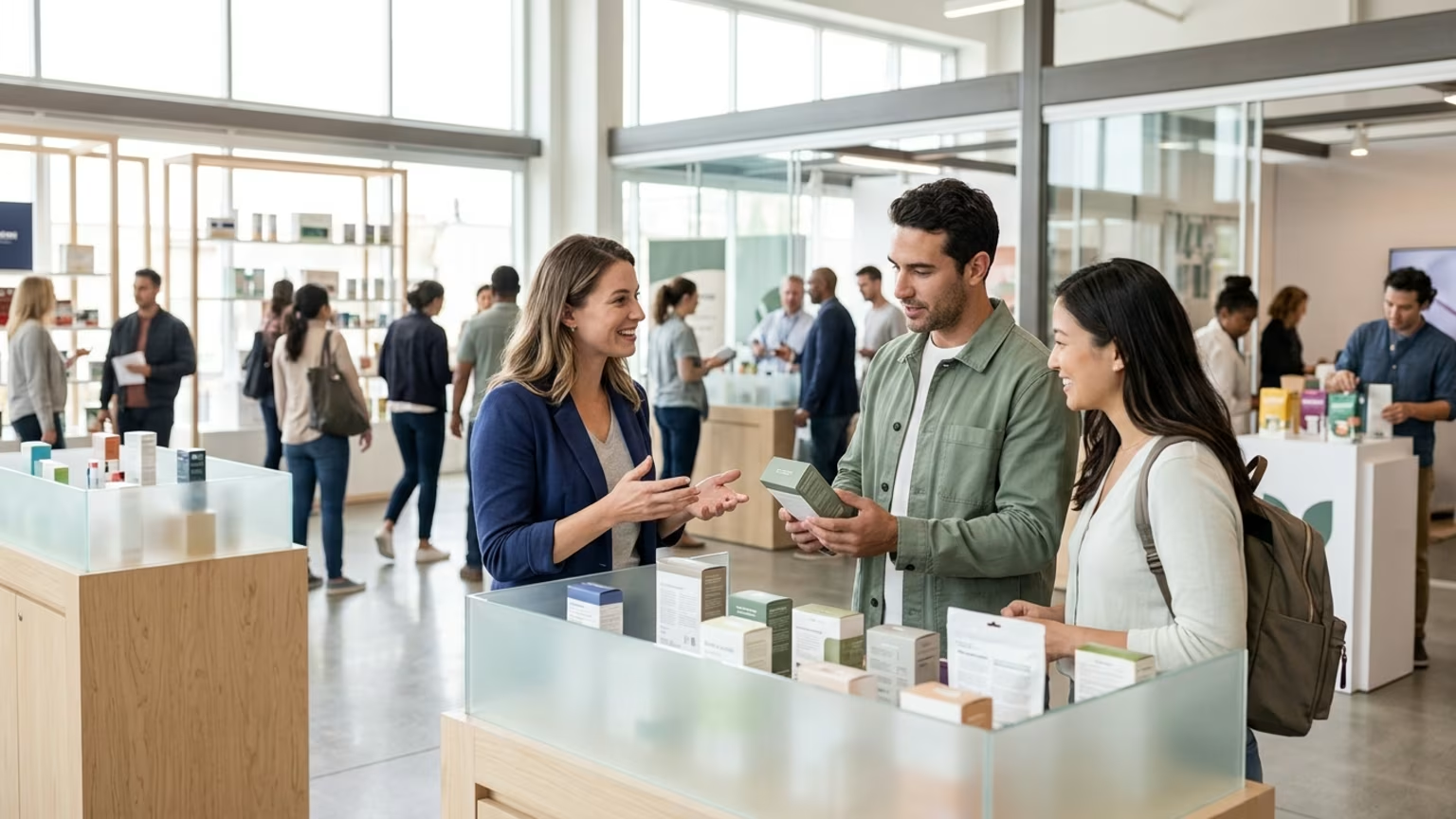
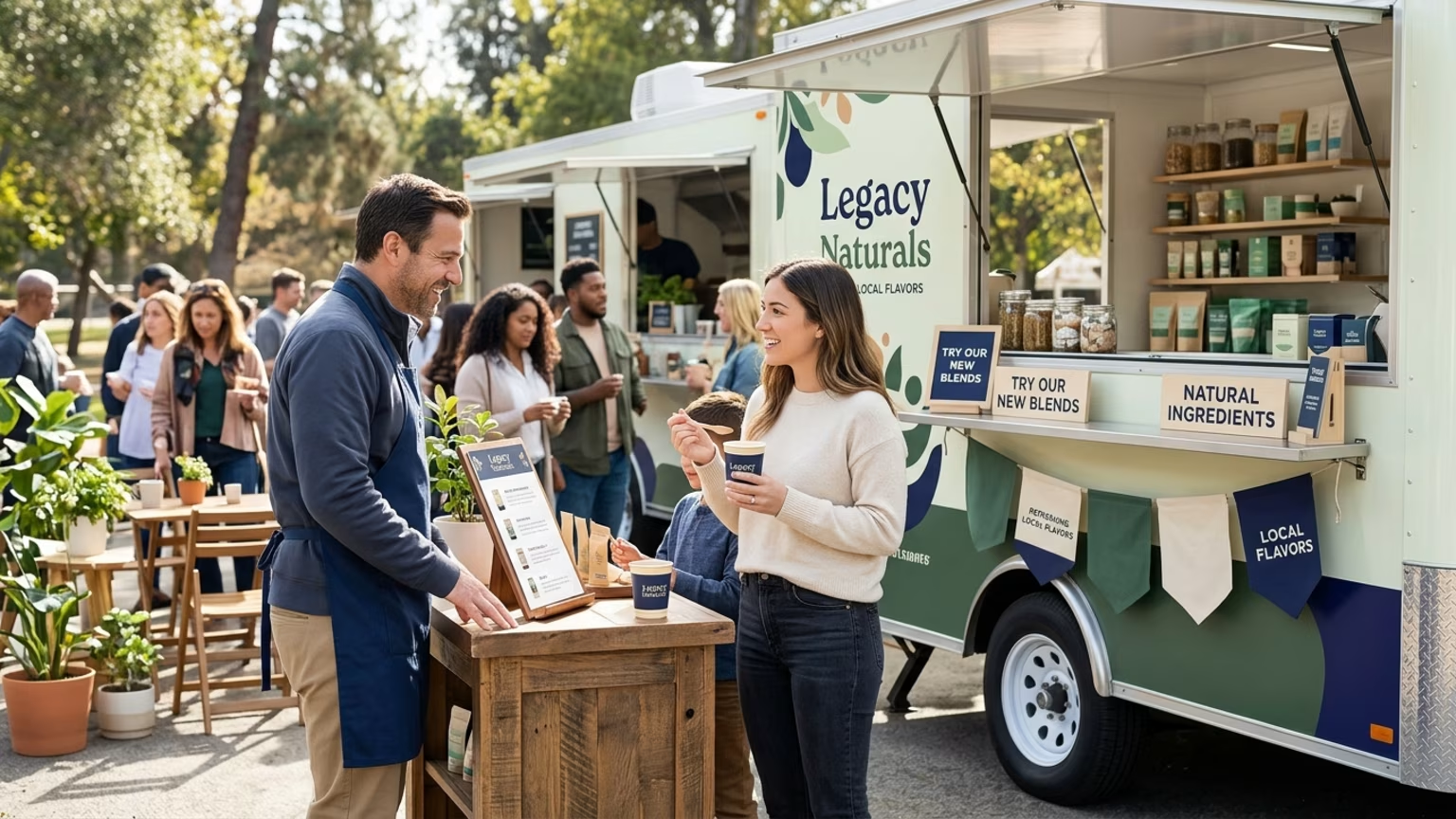
A field marketing director stands in a crowded convention center, watching hundreds of attendees grab free samples and walk away. The booth looks incredible, the staff is smiling, and inventory is flying off the tables. Yet, when the quarter ends, retail sell-through remains entirely flat. Your giant interactive booth is bleeding you dry because attendance does not equal conversion.
Event production teams often build isolated brand experiences. They prioritize aesthetics over measurable commerce. The result is a beautiful display that generates zero incremental purchases. The hard truth is that if your activation does not guide a consumer toward a specific retail action, you are just funding an expensive party.
Marketing leaders face immense pressure to justify physical brand activations. MarketingCharts, citing PQ Media, reported that global experiential marketing spending reached $138.94 billion in 2025. It was up 8.3% year over year, with spending forecast to grow another 10.3% in 2026. The United States accounted for approximately 46.4% of that global experiential spending. With that much capital in play, a CMO cannot afford to spend six figures just to get a high footfall count.
The disconnect happens when field teams report only on samples distributed or conversations held. This creates a beautiful dumpster fire. A crowded footprint demonstrates activity, but it offers zero proof of a qualified pipeline. If reporting cannot reveal whether those interactions moved product, the investment fails.
Attendance simply does not equal conversion in modern retail marketing. A high footfall count demonstrates that your booth attracted attention, but it fails to prove incremental purchase behavior. Surveys might show a temporary spike in purchase intent, but stated intent is not the same as confirmed sales data. When brands treat physical activations as standalone branding exercises, they surrender the opportunity to influence real shopper behavior.
A post-event sales increase does not automatically prove that the experiential campaign worked. Sales fluctuations frequently result from separate pricing changes, localized promotions, broad distribution gains, or completely unrelated media exposure. Without a rigorous control group, marketing leaders end up taking credit for sales that would have happened anyway. This lack of accountability creates severe friction with finance leaders who demand concrete Return on Investment.
At makai, we operate by a different standard. We pair warm, human authenticity with brutal operational discipline. A successful campaign requires more than friendly staff handing out free flyers. It requires a unified system where experiential marketing, shopper marketing, and field operations share a single commercial goal.
A Director of Brand Strategy in the CPG snack division shared: "The Makai team turned our product launch into a sensory event that shoppers still talk about. From creative storytelling to flawless in-store execution, they made snack time unforgettable. We couldn't have asked for a stronger partner." By integrating the live event with shopper strategy, our team created an experience that became a measurable brand moment.
PQ Media data reported by MarketingCharts estimated that consumer-facing activity represented approximately 70% of total experiential spending in 2025. Brands must capture that attention and turn it into tangible retail momentum. This means equipping field teams with strict playbooks for capturing opt-in data and distributing retailer-specific offers. This approach solves the attribution problem because brands can link their live physical engagements directly to retail velocity.
Field teams serve as the crucial operational link between marketing strategy and real-world reality. Their responsibilities should include delivering the approved message, recording product interactions, and verifying retail display compliance. They must also capture actionable opt-in data and rapidly document out-of-stock situations. This rigorous reporting confirms the activation accurately supports the core shopper strategy.
We must reframe the objective from tracking mere attendance to tracking verifiable commercial results. Gradient Experience says CPG brands increasingly expect experiential programs to produce retail-lift insights, sampling conversion data, leads, and first-party data. Every program should map out a clear path from product education to an identifiable action. AnyRoad recommends a layered measurement framework covering on-site conversions, first-party opt-ins, brand lift, and downstream commercial actions.
This focus on downstream actions requires robust measurement frameworks that go beyond basic foot traffic. NIQ defines incrementality as the sales that would not have happened without a specific dollar of spend. NIQ cautions that last-touch and multi-touch attribution describe how a purchase was assigned, not necessarily the causal reason it occurred. Brands need controlled testing to prove that their events actually caused an increase in retail velocity.
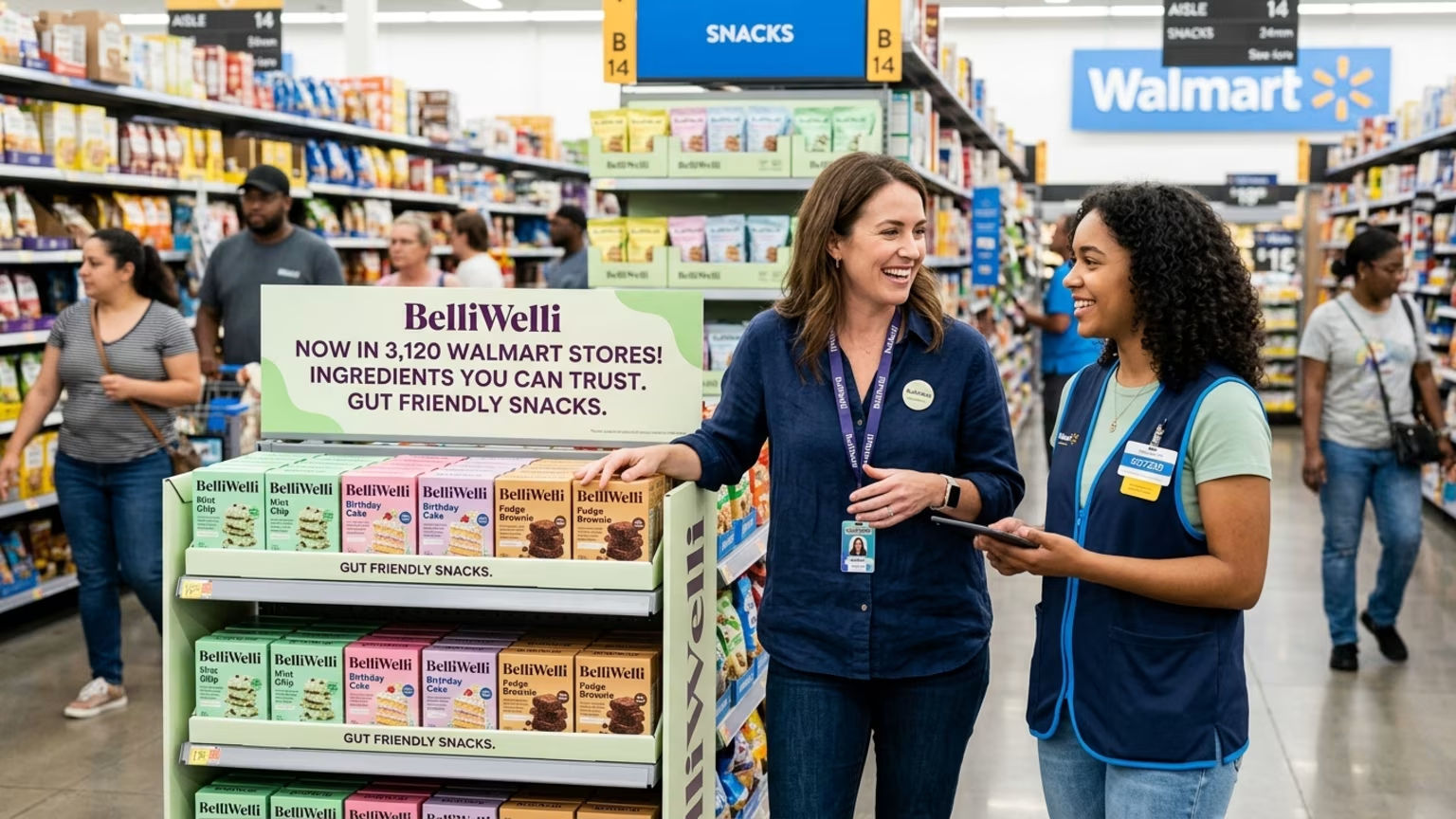
Retailer coordination is critical to proving this causal link. Adweek reported that retailers including Albertsons, Walmart, Amazon, and Instacart are expanding retail-media propositions toward creative services, branded entertainment, and upper-funnel budgets. Aligning your live event with these strategies creates a powerful loop. It connects physical sampling directly to teams that utilize data to shape retail engagements.
Success requires building one comprehensive commercial brief before production ever begins. The IAB recommends a pre-study measurement contract. This contract should define the hypothesis, primary KPI, meaningful-lift threshold, and study limitations. Brands should lock in this contract early to align the event team, shopper marketing team, and field personnel.
Consistent messaging across all these touchpoints guarantees maximum impact. Consumers might encounter the product through a live event, a QR code, or an email follow-up. The core promise, product education, and specific call to action must remain recognizable across every single environment. This consistency drives higher conversion rates when shoppers finally reach the store aisle.
Instead of starting with aesthetic questions about booth design, teams should start by identifying the retail destination. You must confirm product availability, promotional pricing, and retailer permissions before sending consumers to a store. A physical tasting might therefore include a retailer-specific offer, an availability check, and a digital coupon. This structured path ensures the consumer knows exactly what action to take.
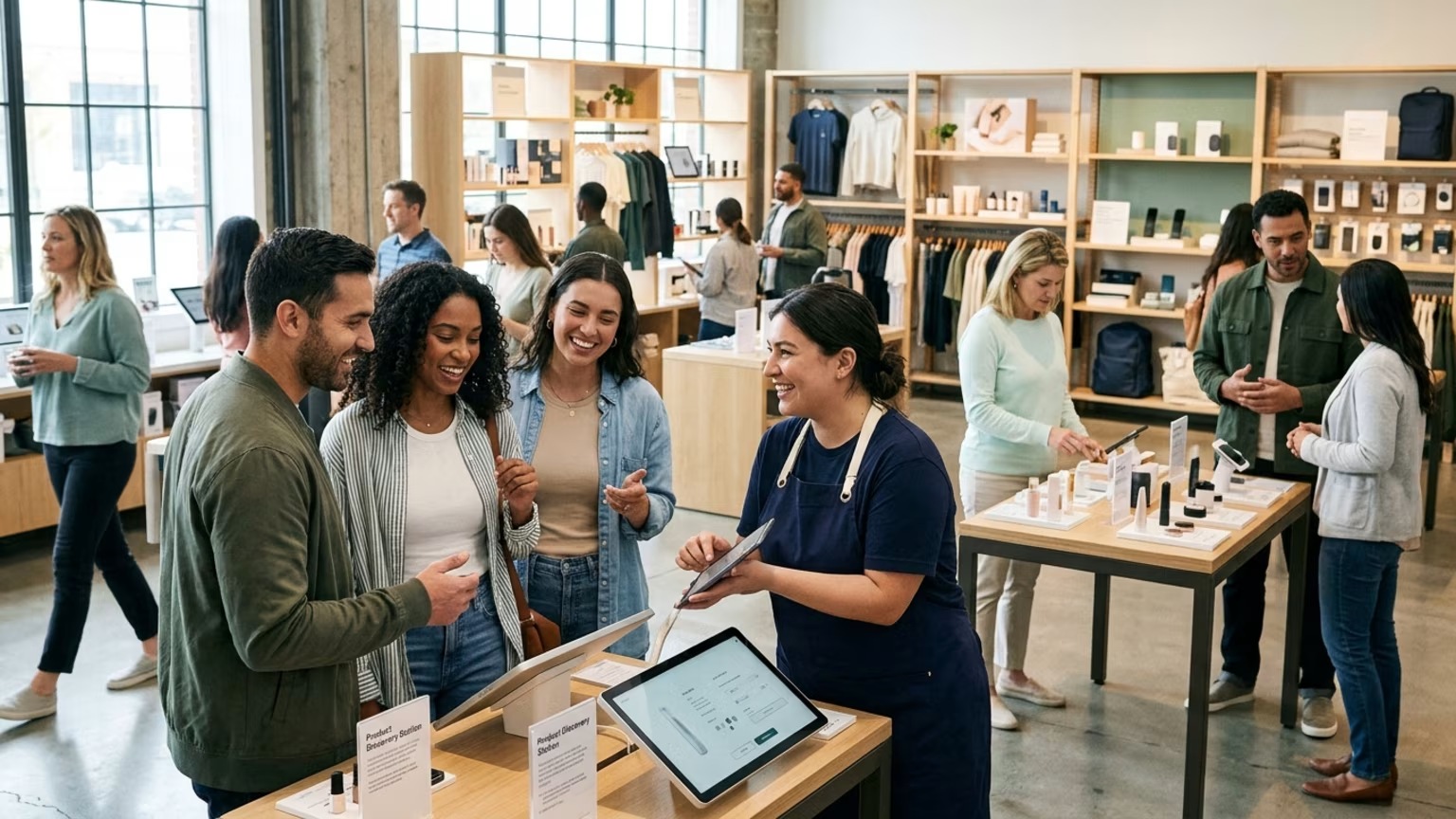
Ecommerce integrations play an equally important role in this unified strategy. Useful connections include unique QR codes leading to retailer product pages and event-specific landing pages. Teams can also build targeted retail media audiences from consented engagement data. Tracking delayed purchases helps marketers measure live activation impact beyond basic foot traffic across both physical and digital sales channels.
A national activation often requires different success criteria for different retail partners. One retailer might prioritize store traffic and immediate coupon redemption. Another partner might care more about ecommerce conversion, new product distribution, or repeat purchase rates. Establishing distinct goals allows brands to optimize the campaign while still rolling results into a unified framework.
Retailer data access can act as a significant constraint during this process. Retailers do not always support randomized controlled trials or advanced geo-lift tests. Consequently, brands often need to rely on a combination of designed experiments, econometric models, and naturally occurring comparisons. Partnering with the retailer early helps secure the necessary data-sharing agreements.
Every connected campaign should end with a pre-agreed decision rule. This prevents teams from declaring success based on whichever vanity metric looks strongest after the event concludes. For example, a brand might decide to scale the program only if exposed markets exceed the control group by a specific margin. If trial is high but conversion is low, the immediate decision must be to optimize the offer mechanics.
Distinguishing between operational metrics and investment metrics clarifies this decision process. Operational metrics like queue time, dwell rate, and display compliance help teams improve the live experience. Investment metrics like incremental units sold, retailer sell-through, and cost per incremental buyer dictate the overall strategy. Marketing leadership must focus primarily on these investment metrics to justify future experiential budgets.
The core takeaway is that a brilliant creative concept means nothing if it cannot drive quantifiable retail success. Brands must demand rigorous execution and clear pathways to purchase, rather than settling for isolated brand theater. By linking field operations directly to shopper strategy, marketing leaders can turn fleeting interactions into sustainable commercial growth. Start your next campaign brief by defining the required retail outcome first, then design the physical footprint backward from that exact point of purchase.

30 Years Experiential & Retail Activation Partner for CPG & Beverage Brands | Multi-Market Demos, Roadshows & Costco/Club Programs That Actually Sell