Robbie Thain
Founder, CEO

An analysis of New Hope Network's feature on treating retail as an interconnected ecosystem, and why selective field support drives measurable pipeline.
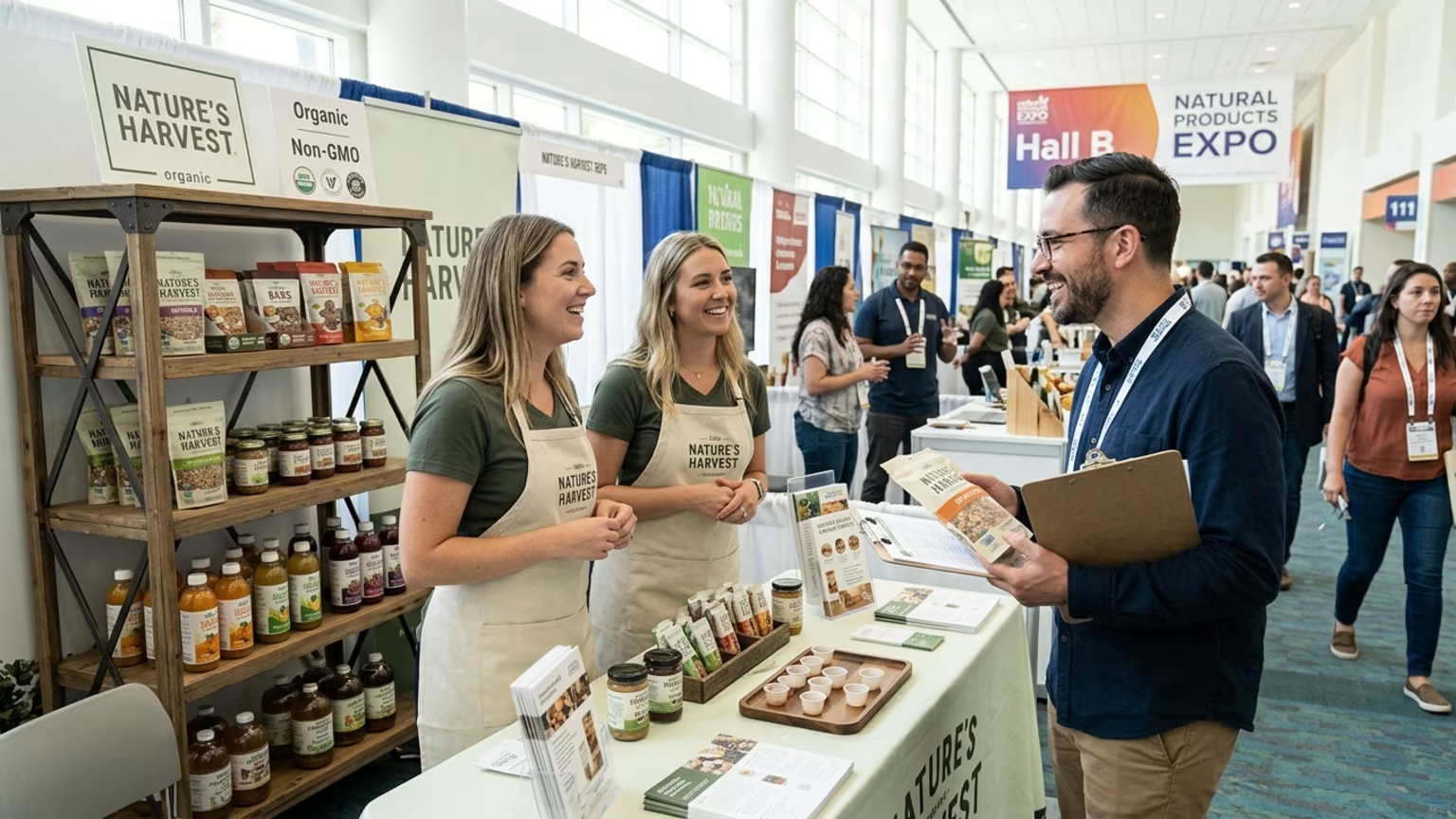
On September 23, 2026, New Hope Network published an interview detailing retail execution strategies for natural consumer packaged goods. The feature, recorded earlier in the year at the Natural Products Expo West Content Creation Studio in Anaheim, outlines a shifting perspective on store-level marketing. It argues that physical retail locations function as complex environments rather than simple transactional channels. The discussion frames retail operations as an integrated system requiring disciplined field support.
The New Hope article centers on a conversation between Front Page Retail founder Daniel Quinones and Adrienne Smith. Smith serves as the network's director of content. Front Page Retail assists brands with store-level merchandising, in-store demonstrations, and strategic retail support. According to the interview, brands must view their physical presence as an interconnected ecosystem.
Quinones advises marketing leaders to be highly selective when deploying field support. He cautions that not every retail opportunity justifies a financial investment. Knowing when to walk away from a potential store activation is a critical business decision. The agency has implemented this selective approach with emerging local companies and larger operations like Olipop and Organic Valley.
The source structures these practical recommendations across a recorded dialogue. The article's episode guide places the initial discussion of retail execution strategy at the 4:10 mark. Later in the recording at 11:40, Quinones provides targeted advice directed specifically at emerging brands navigating these decisions. Retail execution requires intentional, disciplined coordination rather than a scattered approach to field marketing.
Treating retail demonstrations as isolated events is a fast way to waste a marketing budget. In our experience, sampling programs only generate measurable sales pipeline when they connect directly to shelf visibility and retailer execution. When field marketing teams execute a product demonstration, the surrounding store environment must support the physical interaction. Stock levels, merchandising displays, and store manager alignment dictate the success of the entire activation.
Brands cannot simply place ambassadors in a grocery aisle and expect to measure Return on Investment from in-store activations without coordinating the surrounding logistics. We specialize in creating retail demos, product sampling programs, and roadshows that bring brands face to face with their audiences. Each program is designed to drive trial, build consumer relationships, and accelerate retail velocity across multiple locations.
We run experiential programs coast to coast with local crews and smart logistics. This nationwide infrastructure and permit expertise let us launch fast and maintain quality consistency in every region. If a retail location lacks the proper inventory depth or point-of-sale visibility, the field marketing investment falls flat. Walking away from a poorly aligned retail opportunity preserves capital for locations where the ecosystem is actually functioning.
The most successful marketing teams view their physical presence holistically. When a shopper encounters a brand ambassador, that interaction should feel like a natural extension of the aisle display. If the retailer has not stocked enough inventory to support a sudden spike in demand, the field team wastes their effort. Coordinating these elements before deployment separates profitable experiential programs from scattered promotional tactics.
This selective approach shifts the burden of proof entirely onto the operations team. Before launching a national sampling campaign, field managers must verify that target stores can handle the expected product velocity. If a brand limits its field support to highly qualified retail locations, regional staffing models must adapt immediately. Instead of blanketing a territory with part-time staff, marketing directors need trained brand ambassadors who can navigate specific store layouts.
The physical footprint of an activation always dictates the level of logistical planning needed. We designed and managed a 40 by 20 foot trade show environment for Glanbia at Natural Products Expo West 2025. This coordinated space brought together think!, Isopure, Optimum Nutrition, and Amazing Grass. Our team handled the concept, operations, staffing, and breakdown phases.
We recorded more than 14,000 product samples distributed across the activation stations. Whether coordinating a multi-brand expo booth or a single retail demonstration, operational failure in the field damages the consumer relationship. Brands that integrate trade show booths for product trials with downstream retail support see clearer business outcomes.
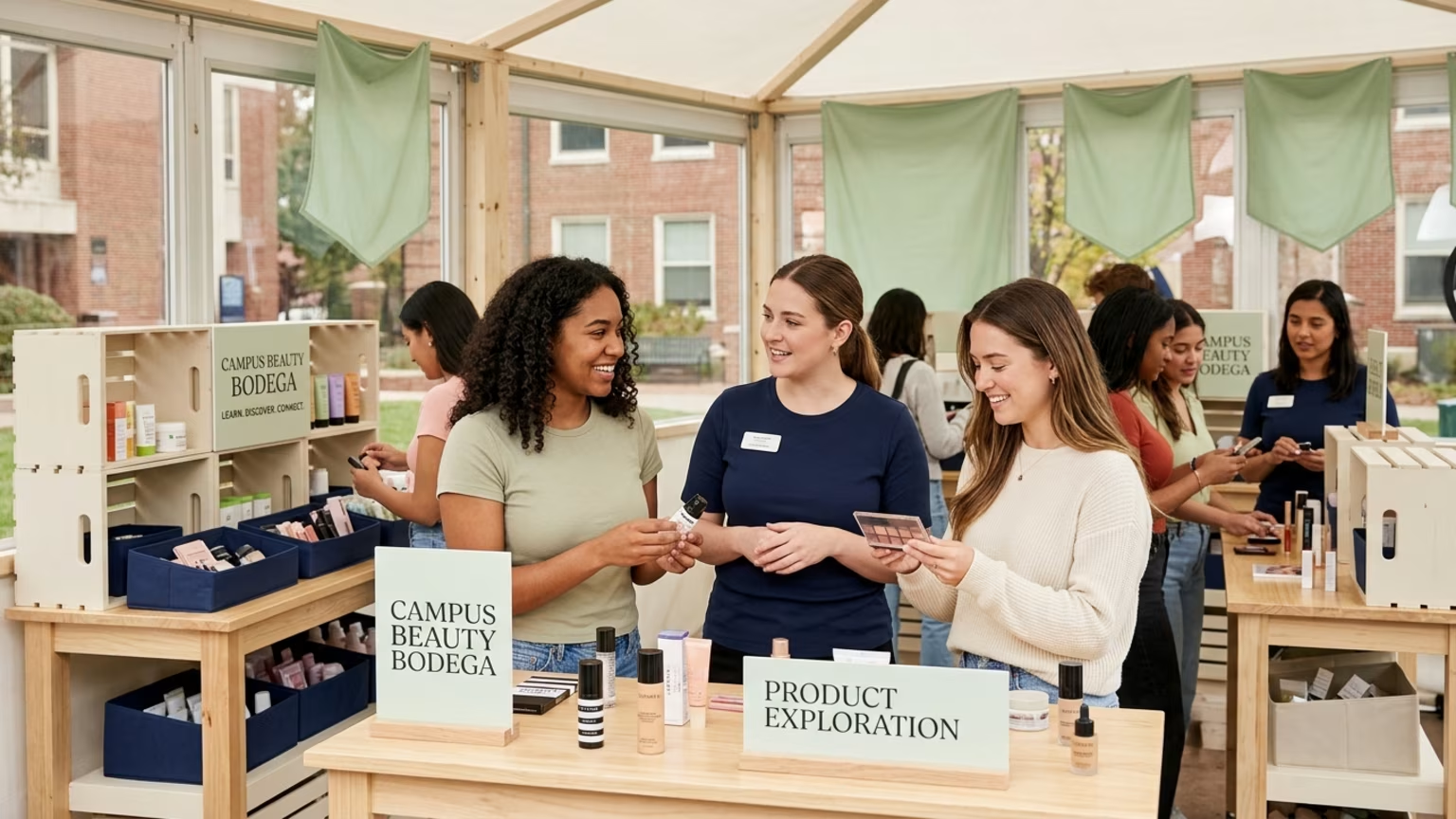
The requirement for strict logistical control extends beyond traditional grocery aisles to alternative physical environments. New Hope reports on Crave, a campus pop-up company that connects consumer brands with college students. Their first large event at the University of Pennsylvania included more than 50 brands and attracted hundreds of student attendees. According to New Hope's account, participating companies provide at least 150 product units and point-of-sale materials while paying a participation fee ranging from $300 to $1,000.
While these figures represent just one company's specific model, they highlight the operational baseline required for live interactions. Brands targeting student ambassadors and campus pop-ups must build systems to track inventory, ship materials, and manage setup requirements. Moving physical goods into a live activation space, whether a university lawn or a warehouse club, demands constant oversight. We manage end to end Costco roadshows that bring brands to shoppers through live demos, real conversations, and measurable sales impact.
Every physical touchpoint demands strict inventory tracking and precise routing. When field managers ship collateral to a warehouse club, they must verify receipt before the weekend traffic begins. A missing pallet of samples completely derails a scheduled activation. Operations teams must build redundancies into their supply chain to prevent these localized failures from impacting national campaign data.
Connecting with shoppers requires more than just handing over a product sample at a folding table. During the New Hope interview, both Smith and Quinones advocated for authentic storytelling as a primary method to engage consumers in person. The episode guide notes that Smith specifically advises brands to lean into their story around the 11:11 mark. Translating that advice to the retail floor means training field staff to communicate core brand values during brief physical interactions.
A disciplined brand ambassador uses those seconds to deliver a narrative that anchors the product experience in the consumer's memory. We have seen firsthand how this translates to retail success when operational precision meets creative execution.
A Director of Brand Strategy in the CPG snack division shared: "The Makai team turned our product launch into a sensory event that shoppers still talk about. From creative storytelling to flawless in-store execution, they made snack time unforgettable. We couldn't have asked for a stronger partner." Our team created an in-store experience that left a lasting impression on consumers and became a memorable brand moment.
This emphasis on authentic communication highlights a major gap in standard promotional staffing. Many organizations hire temporary workers who lack the necessary background to represent natural product lines. A premium food or beverage company cannot afford to have a disengaged worker reciting a scripted pitch. Authentic storytelling demands extensive training, deep product knowledge, and a genuine passion for the category.
Are your retail demonstrations functioning as integrated parts of your store ecosystem, or just isolated moments fading into the background?
When marketing leaders commit to treating retail locations as interconnected ecosystems, deploying targeted in-store support requires flawless logistical execution. To solve the difficulty measuring real ROI from live events, Makai steps in to manage the physical rollout. Through our Brand Activations capability, we create high energy activations that turn awareness into participation and drive measurable consumer response.

30 Years Experiential & Retail Activation Partner for CPG & Beverage Brands | Multi-Market Demos, Roadshows & Costco/Club Programs That Actually Sell