Robbie Thain
Founder, CEO

Compare retail demos and event-led sampling by sales objective, audience, footprint, and measurement to choose the right format for your program.

Retail demos put product trial beside a purchase opportunity, while event-led sampling builds participation around a broader brand experience. The strategic choice is whether the program needs to convert existing shopper traffic or create a separate occasion for engagement.
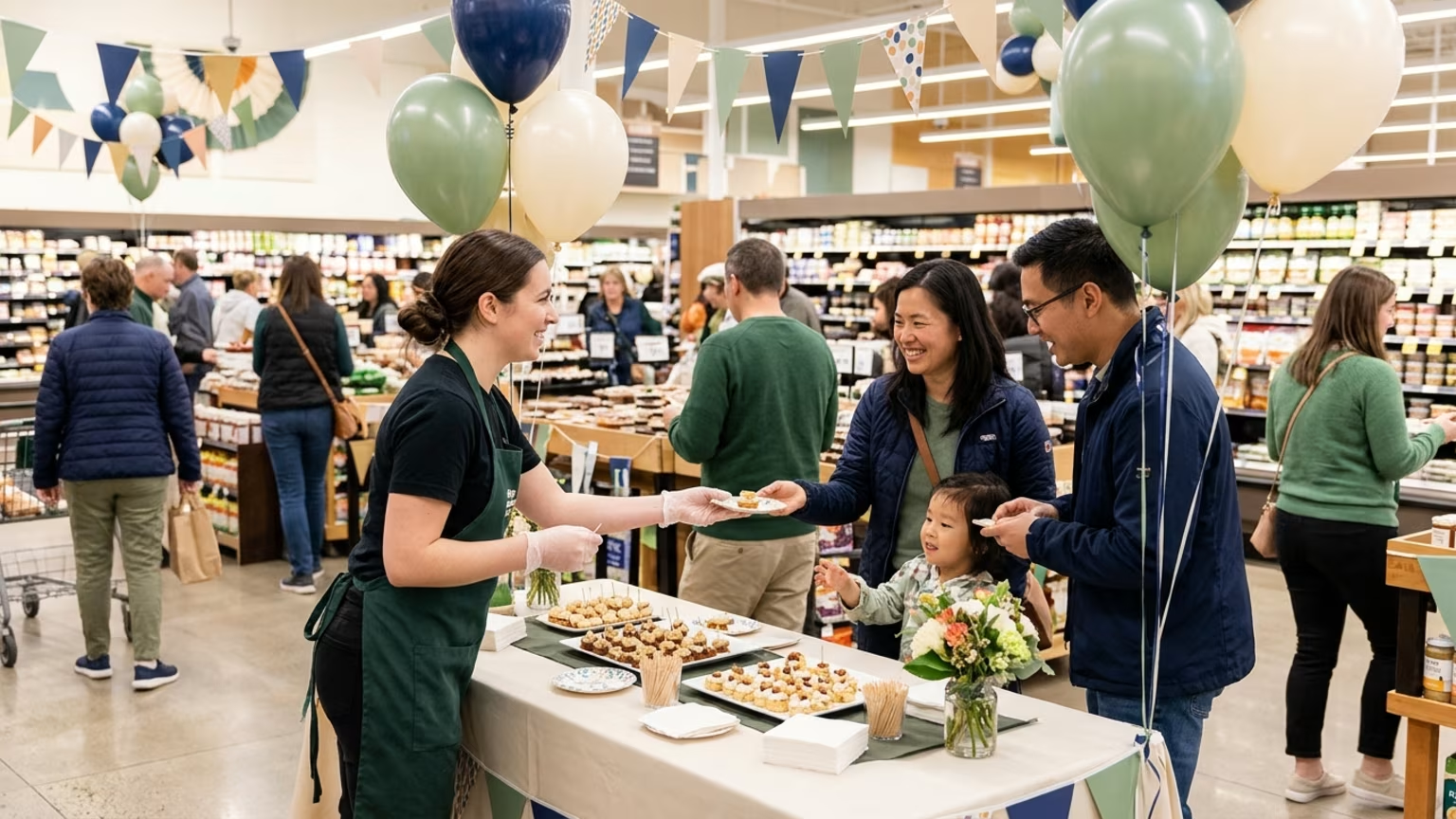
A retail demo is a staffed product experience inside a selling environment. Its commercial advantage is proximity: shoppers can try the product and then buy it at the same location.
Our team specializes in retail demos, product sampling programs, and roadshows designed to drive trial and support retail velocity across multiple locations. For a sales-led brief, we view the demo as a connection between product conversation and purchase opportunity rather than a table with a distribution target.
The logistical question is whether the location and timing put the intended shoppers in front of a staffed experience with product available to purchase. Audience fit matters alongside store selection. Staffing matters because the experience includes a conversation rather than just a handoff.
Product availability is part of that same commercial logic. A successful tasting cannot produce an immediate purchase if the shopper cannot find the item for sale. Planning the path from trial to purchase keeps the brief centered on that connection.
We managed a four-week, multi-market Costco sampling program for Pulmuone's PlantSpired line. The program delivered more than 65,000 samples and recorded an 18 percent sold-to-sale rate. This gives us a concrete example of structured retail sampling connecting trial with purchase.
For this format, the core planning question is narrow: what should happen after the shopper tastes the product? The answer determines whether the primary measure should describe trial or a recorded sale.
Event-led sampling organizes trial around a branded environment or audience gathering. The footprint is a destination within an event rather than a demo positioned within a shopper's existing store visit.
That changes the execution brief. The experience must give people a reason to participate and make the product's role clear. When purchase happens elsewhere, the plan also needs to identify the next commercial step.
We designed and managed a 40 by 20 foot trade show environment for Glanbia at Natural Products Expo West 2025. It brought think!, Isopure, Optimum Nutrition, and Amazing Grass into one coordinated space. Our team handled concept, operations, staffing, and breakdown. More than 14,000 recorded product samples were distributed across the activation stations.
The relevant distinction is the environment: several brands shared a coordinated experience with multiple activation stations. That is a different assignment from helping a shopper evaluate one product beside its purchase location.
Event planning therefore includes the experience footprint and the participant's route through it. Permits and staffing sit alongside product supply as operational concerns. The commercial brief must also explain whether participation should lead toward retail purchase or a qualified lead.
For brands using both formats, connecting event participation with retail availability gives each setting a defined role. The event introduces the experience. Retail provides a place to continue the purchase journey.
Our decision rule is to favor retail when the business question concerns shoppers who can purchase the product in the activation location. These conditions make the choice especially clear:
These are selection criteria rather than universal performance rankings. A secondary summary of sampling research describes short- and longer-term sales effects and stronger effects in stores with smaller assortments. A separate secondary account describes vendor-commissioned sampling research that included a repeat-purchase figure. Neither account provides a direct comparison between these two tactics, and the vendor study's underlying data are not supplied.
The practical response is to treat store context as part of the test. A sampling result should answer a defined business question rather than become a general promise about what another location will deliver.
For a trial objective, sample distribution records participation. For a sell-through objective, the reporting needs a sales measure and a defined period. Stated purchase likelihood records intent rather than a transaction.
That distinction is the foundation of separating activation activity from commercial impact. A busy demo can supply useful engagement evidence without answering every sales question.
Event-led sampling earns the assignment when the required experience cannot be delivered within the proposed retail setting. The reason should be explicit in the brief rather than implied by a larger production footprint.
A launch does not automatically demand an event. If the actual job is to help shoppers try a newly stocked item and buy it immediately, retail may still be the better assignment. The deciding factor is the required behavior rather than the launch label.
Large crowds deserve the same discipline. Audience volume matters only after the brief establishes that those people are relevant to the product and the intended outcome. Crowd aggregation is a location advantage, not a substitute for audience fit.
The measures should follow the event's job. If the objective is trial, report trial. If the objective is qualified leads, report the commercial contacts the activation was designed to generate. If the objective is retail sales, participation alone does not close the reporting loop.
That makes product availability relevant even when sampling happens away from the shelf. The program still needs a credible destination for the next purchase. Otherwise, the experience and the sales goal remain separate assignments.
Over: Put more weight on purchase proximity when the goal is store-level sell-through. Retail demos are the stronger strategic fit when the intended shoppers and available product are already together. Give event-led sampling the assignment when the brief requires a dedicated participatory environment or access to an audience gathered elsewhere.
Under: Put less weight on sample totals and crowd size as evidence of sales. Those measures describe activity. Their business meaning comes from the objective they were selected to answer.
The operator's verdict is straightforward: define the commercial job before choosing the footprint. Then align the audience and location with the timing, staffing, and product availability needed for that job. Judge the result against the same objective that justified the activation.
Shelf-level sales goals can get lost when the sampling format and its logistics pull in different directions. Makai helps CPG marketers navigate permits and staffing through retail demonstrations led by trained ambassadors, with product conversations and trials focused on in-store sales and logistics services that coordinate sampling product and event gear across markets.

30 Years Experiential & Retail Activation Partner for CPG & Beverage Brands | Multi-Market Demos, Roadshows & Costco/Club Programs That Actually Sell