An integrated sampling program unifies live event experiences and retail demonstrations into a single, measurable engine that guides consumers from initial product trial directly to verified store purchase. By aligning message hierarchies, physical logistics, and retail inventory across every touchpoint, brands eliminate the drop-off between trial and long-term shelf velocity.
Most consumer packaged goods brands treat physical sampling as a fragmented collection of disconnected events. Marketing teams hire one agency to hand out energy bars at a 10K race. Meanwhile, the sales team books isolated supermarket demos three months later, and trade marketing manages an expo booth with a completely different look and script. The result is a chaotic drain on capital where thousands of products are consumed, but almost none translate into measurable retail sell-through.
When you bridge live activations with retail shelves, sampling stops being an unmeasured operational cost. It becomes a repeatable customer acquisition channel.
Diagnose the Disconnection Between Field Activations and Retail Shelves
Handing out free products is easy. Converting free trial into profitable repeat volume is exceptionally difficult. A classic 1992 study published in the Journal of Consumer Marketing revealed that while sampling generates high immediate trial rates, actual product conversion remains low unless consumers actively use the sample and face minimal friction when buying the full product. The researchers also found that indiscriminate distribution fails because samples rarely reach high-probability buyers when teams focus solely on volume.
When activations operate in silos, three points of failure emerge:
The Purchase Gap
A consumer tastes a beverage at a music festival on Saturday afternoon. They love the flavor profile and understand the ingredient benefits. However, the brand provides no immediate mechanism to locate the product in their neighborhood supermarket. By Tuesday morning, the brand memory has faded, and the consumer reverts to their established purchasing habits.
Inconsistent Value Propositions
A brand ambassador at a fitness expo pitches a protein bar around clean sports performance. Two weeks later, a retail demonstrator in a club store pitches that same bar as a low-sugar meal replacement for busy parents. This conflicting messaging dilutes brand equity. Consumers need a unified narrative across every physical interaction to build lasting brand recall.
Operational Stockouts
Field marketing teams schedule high-energy mobile tours in specific metropolitan markets without alerting regional retail buyers or distributors. The activation generates immediate foot traffic to local grocery stores. Consumers arrive at the shelf only to encounter empty pegs and out-of-stock tags. The marketing dollars are spent, but the retailer gains zero commercial benefit.
To avoid these traps, teams must build an integrated strategy. You can review the complete guide to retail product sampling programs to examine how structured field programs solve these store-level disconnects.
Architect a Connected Consumer Journey Across Six Critical Stages
An integrated sampling program moves consumers through a structured, six-stage operational pipeline. Every physical event must fulfill a specific functional role within this journey.
- Discover Engage Experience Purchase Repeat Advocacy
Stage 1: Discover
The discovery stage creates initial visual recognition in high-traffic environments. Whether through branded sampling vehicles, trade show structures, or retail endcaps, your footprint must stop foot traffic. Success at this stage is measured by qualified audience impressions, foot traffic volume, and brand recall lift.
Stage 2: Engage
Discovery must immediately convert into active participation. Consumers should not grab a product and run. Field staff must draw them into a structured interaction lasting between forty-five and ninety seconds. This includes answering a targeted lifestyle question, watching a rapid preparation demo, or scanning an interactive digital display. Tracking dwell time, conversation counts, and permissioned data captures confirms that your footprint is attracting genuine category buyers rather than passive giveaway collectors.
Stage 3: Experience
Experience is the moment of controlled trial. Handing someone a sealed package that gets buried in a backpack produces almost zero commercial value. In our experience managing multi-market demo tours, immediate on-site consumption delivers significantly higher conversion than passive take-home distribution. Field staff must guide the trial, explain sensory notes, and verify that the consumer consumes the sample correctly. Key metrics include completed on-site trials, trial quality scores, and immediate sensory feedback.
Stage 4: Purchase
The purchase stage closes the distance between trial and commercial transaction. If you activate directly inside a grocery store, the shelf is twenty feet away. If you activate at an outdoor festival, you must provide a digital bridge. Use geo-targeted store locators, digital wallet coupons, or retailer-specific redemption mechanics. By connecting live events to retail sell-through, brands capture exact store-level attribution rather than relying on loose estimates.
Stage 5: Repeat
Consumable brands thrive on velocity, not one-time transactions. Research from Knowledge Networks-PDI, reported by Progressive Grocer, demonstrated that households participating in store sampling drove an average 475% sales lift on the day of the event. Crucially, the same study revealed that sampled shoppers were 11% more likely to purchase the item again over the subsequent 20 weeks. The research also showed a 6% increase in purchasing other items across the broader brand portfolio. Retaining these buyers requires targeted follow-up messaging, digital receipt validation programs, and retail loyalty integrations.
Stage 6: Advocacy
When a consumer has a positive physical experience, they become open to brand advocacy. Build seamless mechanisms for consumers to leave verified retail reviews, tag local retail locations on social platforms, and recommend products to their networks. Advocacy must be tracked using hard data points such as user-generated content volume, verified online reviews, and referral code redemptions.
Build a Balanced Touchpoint Portfolio Across Hero, Support, and Conversion Channels
No single event format can accomplish every commercial objective. High-impact festivals deliver massive reach but lower conversion rates. In-store retail demos deliver high conversion rates but limited cultural buzz. Operators must deploy a portfolio model that categorizes activations into hero, support, and conversion channels.
Hero Touchpoints: Cultural Scale and Brand Attention
Hero touchpoints include major lifestyle festivals, industry trade shows, high-profile sports sponsorships, and immersive urban pop-ups.
- Primary Objective: Broad category reach, media capture, high-impact brand positioning, and trade relationships.
- Operational Execution: High-production interactive footprints, professional brand ambassadors, live preparation stations, and media capture zones.
- Conversion Bridge: Direct attendees to regional retail partners using digital show specials, exclusive geographic retail offers, and VIP access incentives.
Support Touchpoints: Local Relevance and Community Trust
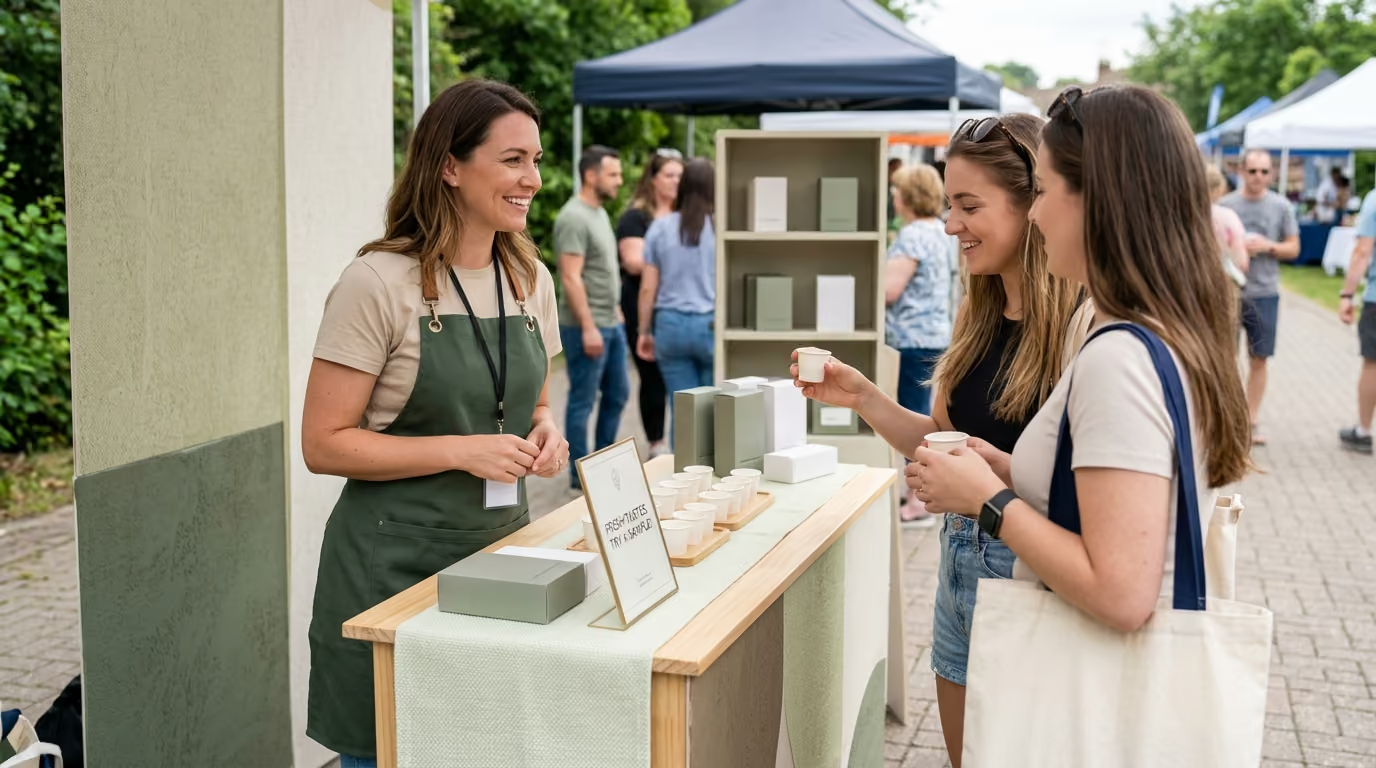
Support touchpoints encompass community 5K runs, local farmers markets, campus activations, charity galas, and regional wellness workshops.
- Primary Objective: Authentic neighborhood penetration, highly targeted demographic trial, and community trust.
- Operational Execution: Agile pop-up kits, local brand ambassadors, high-touch educational dialogues, and localized partnership signage.
- Conversion Bridge: Point consumers directly to nearby independent grocers or specific regional supermarket chains within a three-mile radius.
Conversion Touchpoints: Immediate Shelf Velocity
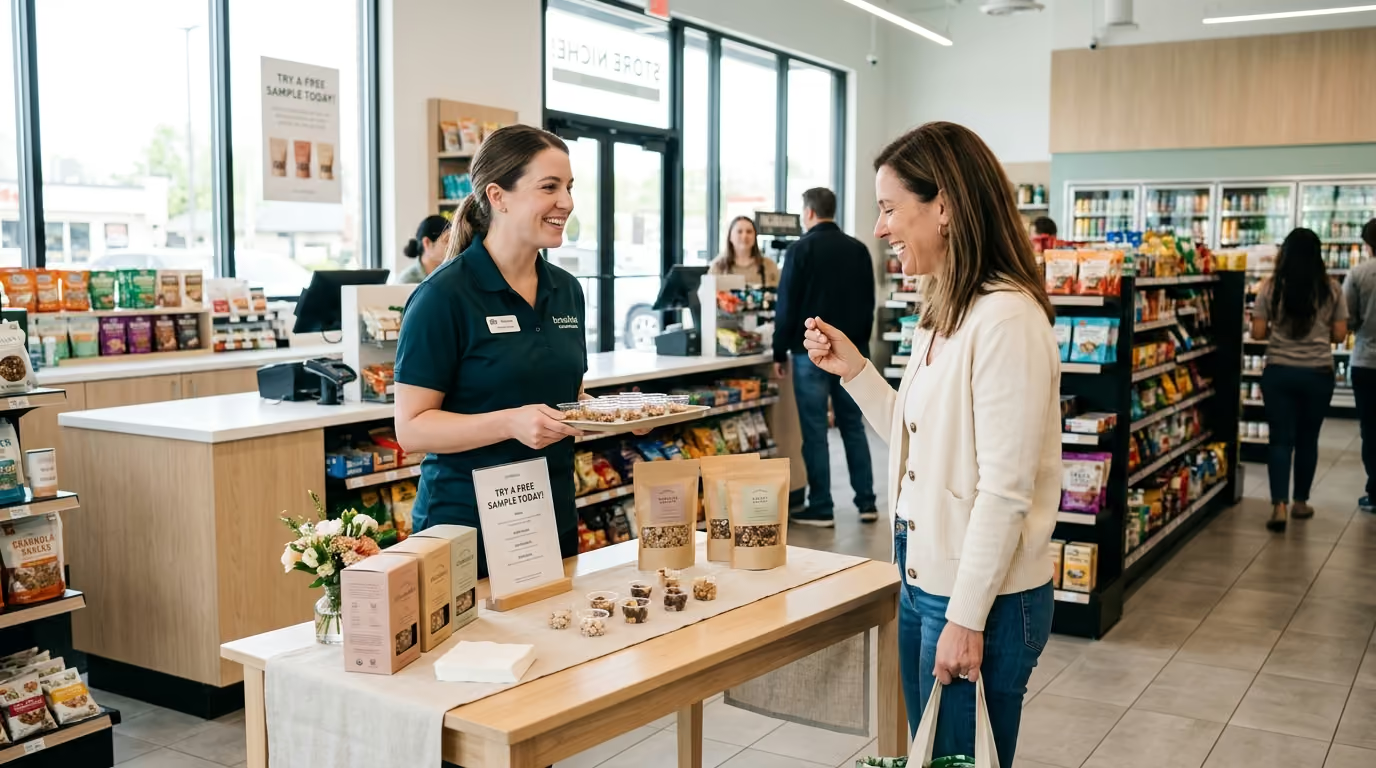
Conversion touchpoints are located directly at the point of sale. These include supermarket tasting tables, wholesale club roadshows, and specialty retail endcap demos.
- Primary Objective: Direct purchase conversion, instant sales velocity, inventory depletion, and strengthening buyer relationships.
- Operational Execution: Clean demo carts, strict adherence to sanitation, branded call-to-action signage, and active cart-loading techniques.
- Conversion Bridge: Point straight to the shelf location, offer day-of price promotions, and secure secondary product placement near the checkout lanes.
Evaluating touchpoints requires matching retail sampling locations with shopper intent so field spend aligns with actual consumer foot traffic patterns.
- HERO ACTIVATIONS (Festivals, Trade Shows, Tours)
- Drives massive awareness and emotional connection
- SUPPORT ACTIVATIONS (Community Events, Campuses, Local Sports)
- Deepens localized trust and category education
- CONVERSION ACTIVATIONS (Retail Demos, Club Roadshows)
- Closes the sale directly at the store shelf
Align Your Product Message Hierarchy for Every Channel
Field staff must never improvise the brand narrative. A twenty-year-old student working a festival booth will describe your product differently than a retail demonstrator inside a natural food store unless you give them a structured message hierarchy.
Every field interaction should follow a standardized five-level narrative architecture:
Level 1: Brand Promise
This is your primary emotional or functional anchor. It answers why the brand exists in one memorable sentence.
- Example: Clean, sustained energy derived entirely from organic, plant-based whole foods.
Level 2: Product Proposition
This defines the specific functional reason to select this individual stock-keeping unit today.
- Example: A cold-pressed wellness shot engineered to support daily digestive mobility with zero added sugars.
Level 3: Hard Proof Points
These are factual, indisputable attributes that substantiate your claims.
- Example: Certified USDA Organic, Non-GMO Project Verified, 10 billion CFU live probiotics, and third-party laboratory tested.
Level 4: Clear Usage Instruction
Tell the consumer exactly when, how, and why to consume the product for optimal results.
- Example: Drink one chilled bottle every morning on an empty stomach, or take it immediately following a heavy meal.
Level 5: Direct Purchase Instruction
Tell the consumer where to find the product right now and what commercial promotion is active.
- Example: Pick up a four-pack today in Aisle 4 right next to the refrigerated functional juices for two dollars off.
Adapting Narratives Across Different Physical Environments
While the core narrative logic remains identical, ambassadors must adjust their focus depending on the environment:
In-Store Grocery Demos
Emphasize immediate sensory taste, package price, shelf location, and active store discounts. Shoppers are in a transactional mindset and need concise, friction-free reasons to drop the item into their physical cart.
Industry Trade Shows
Pivot the conversation toward wholesale profit margins, case pack sizes, distributor availability, guaranteed marketing spend, and proven retail velocity data. Trade buyers care about category growth and inventory turns, not consumer lifestyle banter.
Consumer Festivals and Sporting Events
Focus on immediate refreshment, functional benefits, and lifestyle alignment. Keep product explanations under thirty seconds and direct consumers to scan a digital code for regional retail savings.
Community and Campus Activations
Prioritize educational depth, ingredient transparency, local sourcing, and community missions. Audiences in these environments value authenticity, ethical manufacturing, and direct human connection.
Master the Logistics and Regulatory Requirements of Multi-Touchpoint Operations
A brilliant creative concept will collapse if your cold chain breaks, your inventory arrives forty-eight hours late, or local health inspectors shut down your footprint. Field operations demand military-grade precision.
Cold Chain and Product Storage Protocols
Food, beverage, and perishable beauty brands must protect product integrity across every transition point.
- Dedicated Temperature Monitoring: Use digital data-logging thermometers inside all transport coolers, mobile trailers, and temporary holding units. Maintain continuous logs for refrigerated items below 41 degrees Fahrenheit and frozen items below 0 degrees Fahrenheit.
- Staged Product Staging: Never stage full pallets of temperature-sensitive inventory in unconditioned event spaces. Break down shipments into smaller, insulated batches that can be brought to the demonstration floor as needed.
- Sanitary Product Preparation: Designate strict clean zones within your event footprint for unboxing, slicing, portioning, and pouring. Maintain separate storage containers for raw stock, prepared samples, and operational trash.
Food Safety and Health Department Permitting
The Food and Drug Administration Food Code outlines specific mandates for temporary food establishments operating up to 14 consecutive days at a single event. Local municipal health jurisdictions enforce these standards rigorously.
- Temporary Food Permits: Secure municipal health permits at least thirty to forty-five days before any live public sampling event. Requirements vary widely between adjacent counties.
- Handwashing and Sanitation Stations: Equip every outdoor or festival footprint with a self-contained, gravity-fed warm water handwashing station. Include liquid hand soap, single-use paper towels, and a dedicated wastewater collection bucket.
- Allergen Isolation Procedures: Clearly identify the major food allergens on all front-facing event signage. Train every field specialist to handle cross-contamination risks and provide printed ingredient decks upon request.
- Inventory Shipment Climate Storage Batch Temp Check Sanitary Prep Controlled Trial
Federal Trade Commission Compliance for Field Staff
Brand ambassadors, product demonstrators, and sponsored event hosts are subject to Federal Trade Commission advertising disclosure standards. When live staff make product claims or share personal testimonials, consumers must understand their material connection to the brand.
- Clear Disclosures: Ensure all field ambassadors wear branded uniforms, name tags, or badges that clearly identify them as company representatives.
- Truthful, Substantiated Claims: Ambassadors must only use pre-approved product claims from your legal claim library. Prohibit staff from claiming that a food, supplement, or cosmetic product can diagnose, treat, cure, or prevent specific medical conditions.
- Transparent Endorsement Policies: If partnering with athletes, fitness instructors, or social creators at live events, require explicit verbal or visual disclosures of their commercial relationship.
To protect your brand from costly regulatory penalties, review our guide on FTC-compliant brand ambassador training before deploying field teams.
Execute the Field Playbook from Planning to Post-Event Follow-Up
Executing a multi-touchpoint sampling tour requires a disciplined operational timeline. Use this 90-day step-by-step framework to launch an integrated campaign across festivals, trade shows, and retail stores.
- Days 1-30: Architecture & Retail Buy-in
- Select target markets, align retail buyers, lock permits, build message hierarchy.
- Days 31-60: Production, Logistics & Staffing
- Build event assets, stage national inventory, configure attribution tech, train field teams.
- Days 61-75: Pilot Testing & Calibration
- Execute pilot activations, test demo flow, check store stock, refine ambassador scripts.
- Days 76-90: Multi-Channel Scale & Attribution
- Roll out national waves, run daily field audits, capture retail sell-through, analyze ROI.
Phase 1: Strategic Architecture and Retailer Buy-In (Days 1 to 30)
- Set Clear Commercial Targets: Define exact volume targets, target retail velocity metrics, and priority store lists by market.
- Align Retail Buyers and Category Managers: Present your event activation calendar directly to regional retail buyers. Secure agreements for off-shelf secondary displays, promotional feature pricing, and mandatory inventory build-ups.
- Select Touchpoints and Secure Permits: Finalize contracts for target festivals, lifestyle sponsorships, community venues, and in-store demonstration dates. Submit all municipal health and fire safety permit applications.
- Develop the Master Message Architecture: Draft and legally vet the five-level product message hierarchy, customer objection scripts, and allergen documentation.
- Build the Measurement and Attribution Model: Set up unique, retailer-specific digital landing pages, localized promotional codes, and baseline scanner data capture schedules.
Phase 2: Production, Logistics, and Field Staffing (Days 31 to 60)
- Produce Physical Activation Assets: Build durable, weather-resistant demonstration footprints, custom sampling carts, queue management stanchions, and clear visual signage.
- Stage Product and Shipping Logistics: Distribute bulk product inventory to regional temperature-controlled storage hubs. Confirm precise shipment schedules for retail demo supplies and promotional materials.
- Recruit and Screen Field Ambassadors: Source brand educators and field specialists who match your target consumer profile. Avoid using general staffing pools without category experience.
- Conduct Rigorous Training Sessions: Run mandatory interactive training workshops covering brand history, active demonstration mechanics, food safety rules, and rapid customer engagement.
- Configure Digital Attribution Tools: Test mobile point-of-sale systems, QR tracking codes, geo-targeted store locator links, and customer SMS opt-in workflows.
Phase 3: Pilot Testing and Operational Calibration (Days 61 to 75)
- Execute Controlled Pilot Activations: Run a small cluster of retail demos and one community event in a single pilot market.
- Audit On-Site Friction Points: Measure average dwell time, queue bottlenecks, cold holding stability, and sample distribution speed.
- Verify Retail Shelf Alignment: Audit target retail stores within five miles of pilot activations to confirm that products are fully stocked, correctly priced, and positioned on shelf.
- Refine Scripts and Ambassador Coaching: Collect qualitative feedback from field staff to identify consumer objections. Update your response guides based on live interactions.
Phase 4: Multi-Channel Scale and National Execution (Days 76 to 90)
- Roll Out National Activation Waves: Deploy concurrent hero festival footprints, community pop-ups, and in-store retail demo programs across target regions.
- Enforce Daily Field Reporting: Require field team leads to submit daily logs covering units sampled, conversations held, digital captures completed, and local retail inventory levels.
- Manage Real-Time Inventory Replenishment: Monitor product depletion rates daily. Reallocate stock between central warehouses and local retail stores to prevent stockouts.
- Synthesize Attribution Data: Cross-reference event distribution data with daily retail scanner sales reports to calculate verified incremental sales lift.
Measure the Full Funnel with Lead and Lag Attribution Metrics
Tracking basic headcounts or handed-out samples tells you almost nothing about commercial performance. High-performing brands evaluate sampling through a structured four-tiered metrics architecture. Review these metrics to prove retail sampling return on investment to establish executive-level reporting standards.
- TIER 1: DELIVERY METRICS (Operational Output)
- Events completed, staff hours worked, units shipped, store displays installed.
- TIER 2: EXPERIENCE METRICS (Consumer Interaction)
- Foot traffic stops, dwell time, completed tastings, digital opt-ins.
- TIER 3: BEHAVIORAL METRICS (Short-Term Action)
- Same-day purchases, digital coupon redemptions, store locator searches.
- TIER 4: BUSINESS METRICS (Economic Return)
- Incremental sales lift, new-to-brand acquisition, 20-week repeat rate, ROI.
Essential Return on Investment Formulas
Operators should use standardized mathematical formulas to quantify campaign performance:
Trial Rate
- Trial Rate (Completed On-Site Product Trials / Total Qualified Engagements) 100
This metric proves how effectively your field staff converts passing foot traffic into active product experiences.
Immediate Conversion Rate
- Conversion Rate (Attributed Store Purchasers / Completed Product Trials) 100
This formula tracks the percentage of consumers who made a verified purchase immediately following trial.
Cost Per Completed Trial
- Cost Per Trial Total Campaign Operating Cost / Total Completed Trials
This calculation isolates the true operational cost of delivering a finished product experience, excluding passive giveaways.
Cost Per New-to-Brand Buyer
- Cost Per New Buyer Total Campaign Operating Cost / Total Verified First-Time Purchasers
This metric establishes your true physical customer acquisition cost across live event channels.
Incremental Sales Lift Percentage
- Sales Lift % ((Sales in Activated Target Market - Baseline Expected Sales) / Baseline Expected Sales) 100
Following the retail media measurement framework defined by the Interactive Advertising Bureau and Media Rating Council, true incrementality isolates the sales lift generated directly by the activation versus natural baseline sales.
Using Matched-Market Control Groups
To verify that sampling caused the observed sales increase, establish matched control groups:
- Select Comparable Store Pairs: Pair each activated retail store with a non-activated control store sharing similar historical sales velocity, demographic profiles, and footprint size.
- Track Baseline Pre-Event Trends: Measure sales velocity across both groups for eight weeks prior to the campaign.
- Measure Post-Campaign Velocity: Monitor store-level scanner data for twelve to twenty weeks following the activation wave. The difference in sales performance between the test and control groups represents your verified incremental lift.
Study Real-World Integrations That Closed the Shelf-to-Stage Gap
Examining structured field programs illustrates how connecting event access, retail incentives, and live education drives commercial performance.
The Shelf-to-Stage Feedback Loop: Youtheory and Country Thunder
Health and wellness brand Youtheory created an integrated program connecting festival sponsorships with natural grocery retail sales. The campaign aligned festival footprints at Country Thunder with regional retail demos inside Sprouts Farmers Market stores.
- The In-Store Incentive: Shoppers who purchased Youtheory wellness products inside participating Sprouts locations received complimentary tickets to the Country Thunder music festival.
- The Live Event Footprint: At the festival, Youtheory built an experiential relaxation lounge. Attendees received targeted product education, custom hair-braiding services, and cold beverage tastings.
- The Result: The campaign closed the loop between retail purchase, live event hospitality, and multi-touchpoint sampling. By requiring retail purchase for event access, the brand secured immediate off-shelf velocity while expanding its customer base.
- SPROUTS FARMERS MARKET COUNTRY THUNDER FESTIVAL
- Shopper purchases Attendee enters branded
- Youtheory product. Unlocks lounge for services and
- Receives festival pass. Access structured sampling.
- Drives Repeat Sales
Multi-Location Retail Demo Tours
In our experience running high-volume roadshows across national wholesale clubs and specialty grocery networks, isolated store demos underperform compared to coordinated market waves. When field teams activate five to ten retail locations simultaneously within a single metropolitan area, backed by regional event sponsorships, brand velocity increases across the entire territory.
By aligning delivery routes, regional warehouse storage, and synchronized store schedules, brands achieve lower operational costs per demo while giving retail category managers measurable proof of market-wide sales lift.
Navigate Edge Cases and Complex Product Categories
Certain consumer categories carry operational, physiological, or regulatory friction that requires tailored sampling mechanics.
Products with Delayed or Cumulative Benefits
Supplements, functional adaptogens, premium skincare, and digestive wellness products do not provide instant gratification. Tasting a greens powder once will not prove its long-term health benefits to a skeptical consumer.
- The Strategy: Provide a two-stage sampling kit. Combine an immediate sensory taste test on-site with a branded, sealed five-day trial pack to take home.
- Digital Nurture Sequence: Capture the consumer's mobile number or email at the booth. Trigger an automated five-day SMS sequence providing daily usage instructions, recipe ideas, and a digital retail coupon timed for day six.
High-Ticket Premium and Durable Consumer Goods
When a product costs more than fifty dollars, sampling cannot rely on impulsive, same-day purchases.
- The Strategy: Shift the conversion objective from immediate purchase to a scheduled demonstration, showroom appointment, or high-intent retail consultation.
- Experiential Trial: Create a VIP lounge environment where consumers test the product under realistic conditions. Equip field staff with appointment-booking software to schedule qualified retail consultations before the consumer leaves your footprint.
Multi-Variant Product Portfolios
Brands with twenty distinct flavor profiles or color cosmetics frequently overwhelm consumers with excessive choices, leading to analysis paralysis.
- The Strategy: Enforce a hero-plus-one sampling strategy. Feature your number-one selling core product as the primary demonstration for eighty percent of foot traffic. Use secondary variants exclusively for consumers who express explicit dietary, flavor, or lifestyle objections to the core product.
- Incoming Footprint Traffic
- Primary Tasting: Core Hero SKU (80% of volume)
- Consumer Objection?
- No Direct to Shelf Purchase
- Yes Secondary Targeted Variant Demo
Regulated and Age-Restricted Categories
Alcohol, energy drinks, and age-gated consumer products require strict operational compliance.
- The Strategy: Build secured sampling perimeters with dedicated entry and exit checkpoints. Deploy physical, electronic age-verification scanners rather than relying on visual approximations. Maintain strict portion-control pouring mechanisms to comply with state beverage control regulations.
Avoid the Common Traps That Derail Multi-Channel Sampling Programs
Even well-funded physical marketing programs fail when operators fall into common execution traps.
Trap 1: Focusing Exclusively on Distributed Unit Volume
Tracking total units distributed measures logistical throughput, not commercial success. A team handing out 20,000 snack bags at a subway terminal often creates zero brand equity. Most recipients grab the package without reading the label or understanding why the product is unique. Shift your operational key performance indicators to completed, educational interactions.
Trap 2: Neglecting Store-Level Inventory Verification
Never launch an experiential field activation or mobile tour without auditing regional distributor inventory levels first. If your event drives five hundred shoppers into a nearby supermarket that only holds twelve units on the shelf, your campaign wastes capital and frustrates retail partners. Coordinate inventory replenishment with store managers at least three weeks before live activations.
Trap 3: Deploying Unvetted Product Claims
Ambassadors eager to make a connection often exaggerate product benefits. They may claim a beverage cures inflammation or that a snack assists in rapid weight loss. These unauthorized statements violate federal advertising standards and expose your brand to severe regulatory liability. Enforce mandatory script audits and mystery-shopper evaluations to maintain strict compliance.
Trap 4: Treating Food Safety as an Operational Afterthought
Improper storage temperatures, missing handwashing stations, or poor allergen handling will result in immediate regulatory shutdowns by local health departments. Treat health compliance with the same rigor as your creative design. Maintain continuous temperature logs, provide food safety training for all staff, and audit every field kit before public doors open.
Key Takeaways
- Connect Every Event to the Shelf: Never deploy an isolated physical activation without building a direct, frictionless path to nearby retail purchase locations.
- Optimize for Completed Experiences, Not Handouts: Focus field operations on guided, educational trials where consumers taste or experience the product under staff supervision rather than collecting unopened giveaways.
- Deploy a Structured Touchpoint Portfolio: Balance hero lifestyle festivals for broad reach, community pop-ups for local trust, and in-store retail demos for direct purchase conversion.
- Enforce a Single Message Architecture: Train all field specialists, trade booth staff, and retail demonstrators using an approved five-level message hierarchy to maintain brand consistency nationwide.
- Verify True Incremental Lift: Measure program performance using matched-market control store scanner data and strict cost-per-acquisition formulas rather than vanity attendance headcounts.
- Audit Operations and Regulatory Compliance Daily: Protect your brand equity by enforcing strict food safety protocols, temperature logging, and explicit advertising disclosures across every physical footprint.
When you treat sampling as a unified, data-driven operational system across live events and retail stores, physical trial turns into your most reliable driver of long-term shelf velocity.
Sources
- ftc.gov
- ftc.gov
- ftc.gov