Robbie Thain
Founder, CEO

Define a retail demo’s job before choosing its format, then align shopper conversations and measurement with purchase, education, trial or feedback.

Your retail demo does not need more theater. It needs a job worth paying for.
An elaborate sampling counter can be the wrong investment if nobody has decided what the shopper should do next. A crowd is not a substitute for that decision. Neither is a gallery of smiling people holding your product.
At Makai, we believe creative work should serve the commercial brief rather than hide its absence. The first question is not whether the activation needs a screen or a larger footprint. It is whether the experience should support an immediate purchase, explain the product, generate trial or gather feedback.
Those goals can coexist. But treating them as interchangeable leaves the team without a clear basis for choosing the interaction or judging the result.
The CMO's nightmare is spending six figures and having no qualified pipeline to defend. Photos show an attractive space. A report shows samples distributed. Neither answers the question leadership actually asked: what did the investment accomplish?
The planning failure starts when the brief specifies the experience before it specifies the intended action. The team gets a format to deliver but no clear commercial priority. A purchase opportunity and a product explanation then compete for attention without anyone deciding which matters most.
Cvent organizes experiential measurement around reach, response and result: who attended, what they did during the experience and what happened afterward. That distinction gives marketers a useful way to challenge an attractive but incomplete report.
Attendance describes reach. Participation describes behavior during the experience. Purchases or qualified leads answer a different question about what followed.
Our position is straightforward: calling all of that “engagement” is too generous. A demo deserves a more specific assignment than keeping people near a branded counter. The brief should explain what success means before the production plan makes that decision by default.
The Makai alternative is not cold efficiency. It is aloha-style approachability paired with hard operational accountability.
We believe shoppers deserve a real conversation rather than a rushed product pitch. We also believe a warm interaction needs a commercial purpose. Friendliness and discipline belong together when the aim is meaningful trial and a credible path toward purchase.
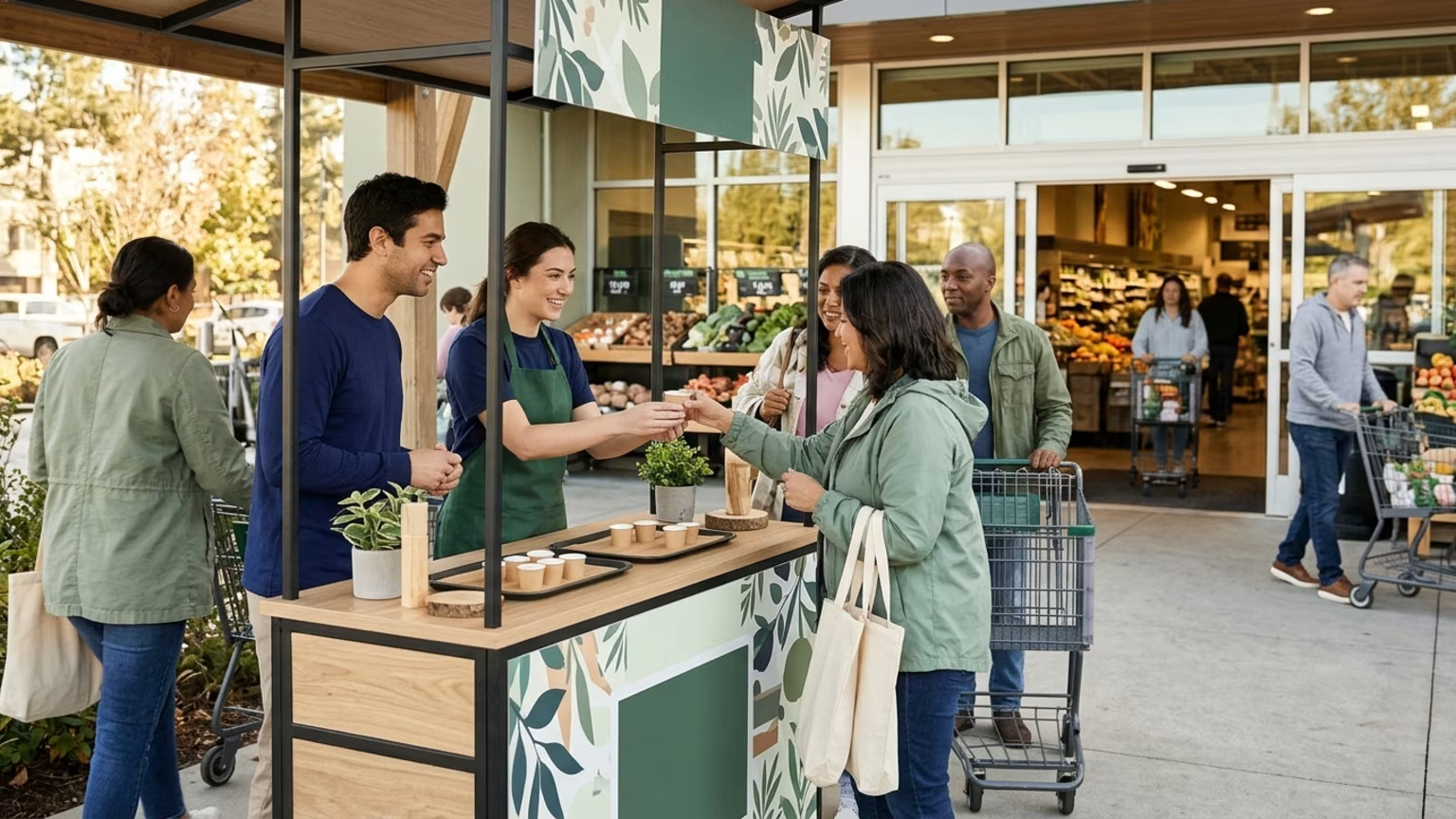
We specialize in retail demos, product sampling programs and roadshows that bring brands face to face with their audiences. Our mobile activations and roadshows are designed to support consumer trial and retail velocity during 90-day product launch windows. Makai's services also span permitting, staffing, logistics and CRM reporting.
That combination matters because the human moment and the delivery system are parts of the same experience. For us, neither should become an excuse to neglect the other.
We managed a four-week, multi-market Costco sampling program for Pulmuone's PlantSpired line. It delivered more than 65,000 samples and recorded an 18 percent sold-to-sale rate. The useful lesson here is that delivery volume and a purchase-related measure belong in the same commercial discussion.
Nor is this an argument against ambitious design. For Glanbia at Natural Products Expo West 2025, we designed and managed a 40 by 20 foot trade show environment. Our team handled concept, operations, staffing and breakdown. More than 14,000 recorded product samples were distributed across the activation stations.
Those examples put execution in the foreground. A large footprint still needs coordinated delivery. A high-volume sampling program still needs a stated business purpose. Good creative work earns its place by serving that purpose rather than becoming the purpose itself.
Experiential measurement guidance recommends defining the intended action before launch. Its possible objectives include product trials, purchases, customer education and market feedback.
We favor giving the demo one primary job while naming any supporting goals. That is a planning preference, not a claim that every activation needs the same hierarchy. It gives the audience choice, shopper conversation and reporting a shared point of reference.
For a purchase-led demo, the audience question is whether the interaction reaches shoppers with a relevant buying opportunity. The conversation should help them evaluate the product and understand the purchase action. The format follows that assignment.
The cited measurement guidance lists purchases and coupon redemptions among possible indicators. It also suggests trial-to-purchase conversion for sampling and demonstration campaigns. Later conversions can matter when the purchase happens after the encounter.
A useful brief therefore names the buying action rather than stopping at “drive engagement.” Our discussion of connecting sampling activity with a purchase measure develops that distinction further.
An education-led demo starts with what shoppers need to understand. Audience planning should identify whose product questions the experience is intended to address. The interaction should make room for explanation and questions rather than treating every pause as lost sampling volume.
Cvent's guide connects education goals with demo participation, questions and product interest. Those measures give the team something more relevant to examine than the number of people who passed the display.
The planning question is specific: what should shoppers understand after participating? That answer should shape the conversation and the evidence collected. A purchase can remain a supporting outcome without becoming the only way the educational interaction is judged.
For a trial-led program, define the product experience the campaign is meant to create. Audience selection should follow whose trial matters to the brief. The interaction should give that audience an opportunity to experience the product.
The measurement guidance includes product trials and samples among possible measures. Keep the definitions distinct: “distributed” should describe distribution, while “tried” should describe the trial the team has actually defined and recorded. The report should preserve those labels.
Then identify whether the program will also track purchases or redemptions afterward. Our article on distinguishing demo activity from commercial results explains why those categories deserve separate attention.
A feedback-led demo needs a question worth answering. The audience decision becomes whose response would inform that question. The interaction should give those shoppers room to respond rather than treating feedback as an incidental comment at the end of a pitch.
Participation and genuine feedback are relevant measures for a learning objective. Cvent specifically recommends those measures when testing a new workshop format. For retail planning, the useful principle is to make the learning objective explicit and choose corresponding measures.
The brief should state what the team wants to learn and what will count as usable feedback. Otherwise, “people liked it” risks becoming the entire finding. Sales observations can sit alongside that feedback without replacing the learning question.
Across these jobs, define an interaction and a conversion before execution. Use those definitions consistently. A sample distributed should not quietly become a completed trial when the results reach a presentation deck.
The same discipline applies when an activation serves retail buyers rather than shoppers. Cvent lists leads and meetings among possible measures. Samples distributed to target buyers and retail meetings booked can be separate reporting categories, not interchangeable versions of foot traffic.
The evidence has a clear boundary: these sources provide practitioner guidance rather than controlled proof that one format consistently wins. Our program figures describe those engagements rather than a forecast for another brand. Activity counts and sales comparisons alone do not establish incremental impact.
For sales evaluation, sampling measurement guidance recommends a relevant baseline and attention to concurrent promotions or price changes. It also advises looking beyond demo day when measuring repeat purchase. That is the practical next step before using observed sales performance to justify expansion.
Core takeaway: Demand a clear shopper action before approving the spectacle. Then judge the audience choice, human interaction and reporting against that assignment. Aesthetics can support a strong demo, but they cannot supply its missing purpose. The better brief gives a warm conversation a business reason to happen and gives the marketing team a concrete result to evaluate. That is the standard worth defending when the photos look excellent and leadership asks what the budget achieved.
Trade show coordinators and CPG marketers carry the daily pressure of proving event value; with Makai managing the experience, qualified leads become the focus. For teams facing low-quality trade show leads, Makai combines that commercial focus with retail demonstrations where trained brand ambassadors support in-store sales through real conversations and product trials.

30 Years Experiential & Retail Activation Partner for CPG & Beverage Brands | Multi-Market Demos, Roadshows & Costco/Club Programs That Actually Sell