Robbie Thain
Founder, CEO

Compare retail demos and beyond-store sampling by purchase context, audience, staffing, product availability, and the evidence each format should produce.

In-store demos and sampling beyond the store address different priorities: product trial beside the shelf versus engagement in a setting built around the audience. The strategic choice is the purchase context; a single-store activation or a multi-market program determines how widely that choice gets executed.
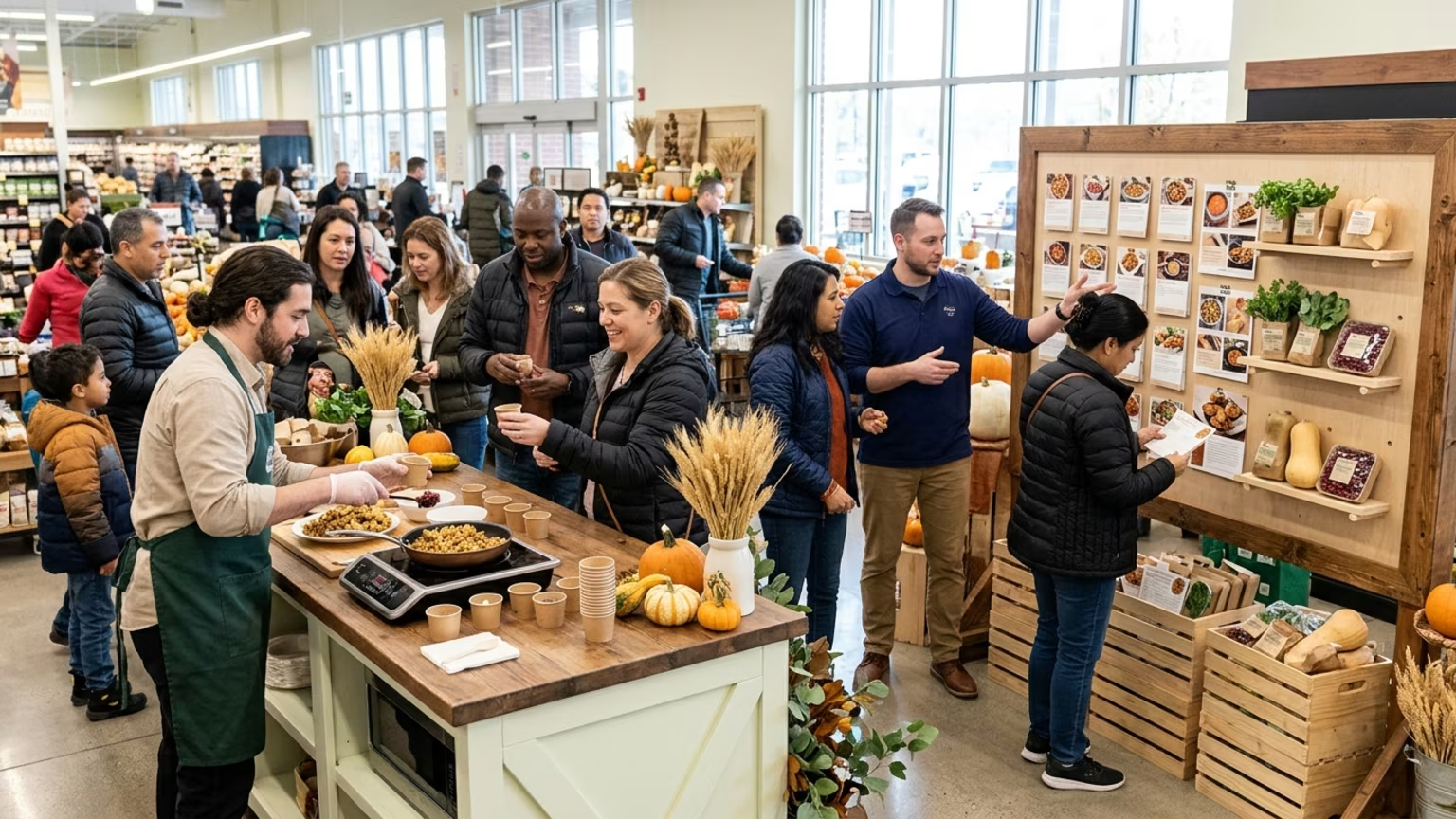
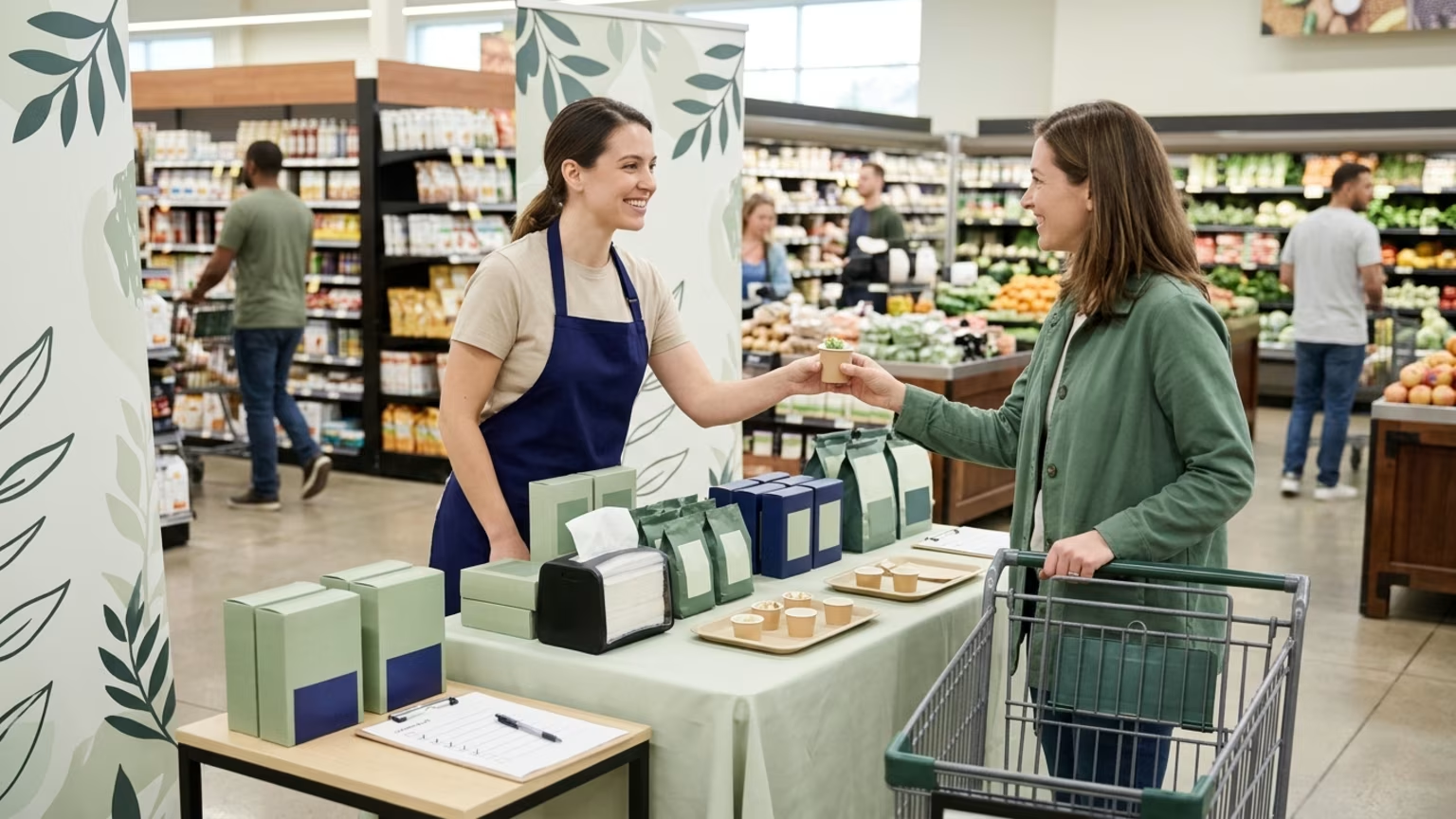
An in-store demo brings product trial and shopper education into the location where the product is sold. Our retail demonstrations use trained brand ambassadors to support that interaction through product conversations. The defining feature is the retail setting, not the number of stores involved.
The logistical questions start with product availability and the permitted activation space. Store schedules and ambassador coverage also belong in the operating plan. Product supply and location-level reporting need clear ownership before the program expands.
Those constraints make availability a strategic question. A demo designed around an immediate purchase needs a clear connection between the sampled product and the product shoppers can buy.
A single-store demo confines execution to one location. A multi-location retail program repeats the format across stores or markets. These are different operating footprints within the same purchase context, not opposing sampling tactics.
We managed a four-week, multi-market Costco sampling program for Pulmuone's PlantSpired line. The program delivered more than 65,000 samples and recorded an 18 percent sold-to-sale rate. It provides a concrete example of multi-market sampling happening inside retail rather than outside it.
The lesson for format selection is straightforward: separate location count from consumer context. A broader retail footprint still requires a store-level plan for product availability and shopper interaction.
For teams taking retail trial across multiple markets, the decision is about extending a retail program without losing clarity at each location.
Beyond-store sampling places the interaction in a mobile activation or event environment rather than making the retail shelf its organizing point. The experience can center on participation or a coordinated brand presentation. Immediate retail purchase does not have to be the primary response.
Our mobile sampling tours bring products directly to audiences through on-the-go experiences designed for trial and awareness. Our consumer events center on interaction and engagement. Those capabilities serve a different brief from a demo whose immediate job is helping a shopper evaluate an available product.
The operating footprint changes with that brief. The plan must address the activation environment and audience access alongside staffing and product delivery. Permitting and event logistics become part of the format decision rather than details to resolve after creative approval.
For Glanbia at Natural Products Expo West 2025, we designed and managed a 40 by 20 foot trade show environment. Our team handled concept, operations, staffing and breakdown. More than 14,000 recorded product samples were distributed across the activation stations.
That engagement illustrates a coordinated event environment as the planning unit. For mobile programs, matching the vehicle and experience to the objective serves the same strategic purpose: the format should support the interaction the brief requires.
Food Trade News cautions that survey responses about sampling and purchase are self-reported, not guaranteed conversion rates. The available public examples also do not establish a controlled winner across these formats or comparable staffing and cost benchmarks. The judgments below concern strategic fit, not forecasts of sales lift or Return on Investment (ROI).
Retail demos are the stronger fit when the assignment centers on a shopper evaluating a product that is available to buy.
The measurement plan should distinguish samples delivered from purchases recorded. An added-sales claim needs a stated baseline or comparison design. That distinction belongs in the brief for connecting live trial with shelf demand, not in a retrospective attempt to make sample volume stand in for sales evidence.
Staffing should follow the actual interaction. The useful vendor discussion concerns coverage and training alongside reporting responsibilities. A location count alone is not a staffing plan.
Beyond-store sampling earns its place when the intended interaction requires a setting or audience opportunity that the retail demo does not provide.
A launch alone does not settle the decision. A new product whose immediate assignment is trial beside available inventory still belongs on the retail side of the comparison. What matters is the work the experience must perform.
Before choosing a footprint, connect the intended response to evidence that answers the business question. Delivery counts describe distribution. Recorded feedback describes audience reactions. Purchases belong in a separate measure with a defined observation period.
Over: Give broader sampling the nod when a launch requires a coordinated environment or access to a relevant gathering beyond normal retail traffic. The case for the format should name the experience and the consumer response it serves.
Under: Keep the format focused when the job is shopper education and product trial where purchase can happen. Start with the retail assignment rather than assuming a larger audience experience is the more ambitious business decision.
A multi-market retail rollout belongs on the retail side of that choice. Expanding across locations changes the execution burden, but it does not turn a shelf-focused program into a different consumer tactic.
The strongest brief names the audience and purchase context. It also states product availability and the evidence required. Choose the format that answers that brief rather than rewriting the brief to justify the format.
Retail trial with a sales objective gives format selection a measurable purpose; Makai supports that objective through ambassador-led demonstrations and product conversations inside stores. For CPG marketers frustrated by weak leads at crowded trade shows, Makai's retail demonstration service focuses on shopper engagement and in-store selling.

30 Years Experiential & Retail Activation Partner for CPG & Beverage Brands | Multi-Market Demos, Roadshows & Costco/Club Programs That Actually Sell