Robbie Thain
Founder, CEO

Evaluate retail demo sales against a baseline and comparable stores while keeping sample counts, promotions and stock conditions in their proper place.

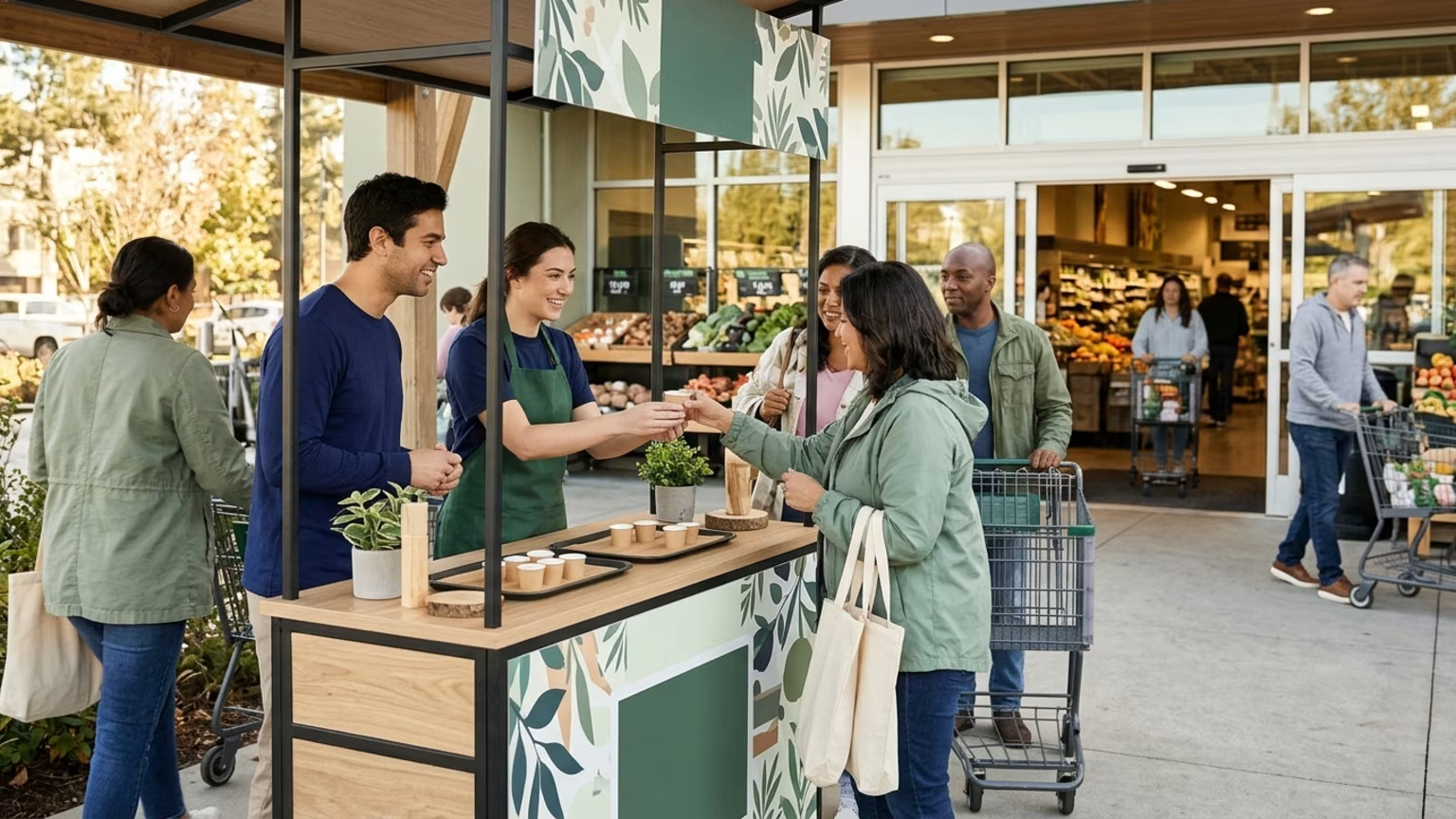
Stop treating a packed tasting table as proof that your retail demo deserves its next budget. An attractive setup and a steady stream of shoppers do not answer the commercial question: what changed in sales?
That is not an argument against good design. It is an argument against asking design to do the work of evidence.
The standard should be tougher. A demo needs to create a welcoming product experience and produce information that helps a marketing leader decide what to repeat. If the report only proves that the team stayed busy, it has not finished that job.
At Makai, our view is simple: make the interaction warm and make the operating standard demanding. Neither should excuse weakness in the other.
The CMO’s nightmare is spending six figures and ending up with no qualified pipeline or defensible sales story. A polished recap does not resolve that anxiety when its strongest evidence is a sample total and photographs of a crowd.
The failure starts when unlike measures get bundled into one success claim. A practitioner’s sampling guide separates distribution, participation, observable response and sales. It cautions that a recorded response is not proof of purchase or causation.
That distinction belongs in the brief, not just the final presentation. Otherwise the report can answer how much happened without addressing whether the activity supported a commercial outcome. Calling every interaction a conversion only makes the language less useful.
A separate in-store sampling guide distinguishes sample counts from shopper engagement and units sold. It also treats lift versus baseline as a separate measure. The guide warns that engagement tallies are subjective unless the program defines them.
Our position: creative work should make the product easier to experience. It should not provide cover for undefined metrics or a sales claim that the available evidence cannot support.
The Makai alternative is not a colder or more scripted demo. We believe warmth and operational discipline belong together. Aloha-style approachability means treating the person across the table like a person rather than a tally mark.
The discipline gives that interaction a business purpose. Product trial should have room for genuine conversation while the program remains accountable for execution and results. Warmth is not permission to be vague about what happened afterward.
We specialize in retail demos, product sampling programs and roadshows that bring brands face to face with their audiences. Each program is designed to drive trial and build consumer relationships while supporting retail velocity across multiple locations.
We managed a four-week, multi-market Costco sampling program for Pulmuone’s PlantSpired line. The program delivered more than 65,000 samples. From an operator’s perspective, that count documents delivery across the program; it belongs on the execution side of the report rather than standing in for incremental sales.
The lesson is about keeping claims in their proper lanes. A substantial sample total deserves accurate reporting. So does the separate question of what shoppers purchased and how those sales compare with a credible reference period.
We provide reporting on reach, trials, leads and sales to guide campaign optimization. Our view is that useful reporting makes these distinctions visible instead of compressing them into one flattering number. That is also why consistent execution across locations matters alongside the creative concept.
For a retail demo, the reporting goal should move beyond impressions toward defined trials and observed purchases. Then it should assess sales against an agreed comparison. Those are connected questions, but they require separate answers.
The practitioner guides support keeping these measures on distinct lines:
None of these lines needs to disappear. The problem is promoting one into another without supporting evidence. A sample count describes distribution; a sales count describes purchases within the reporting window.
Conversion also needs a definition. State the numerator and denominator along with the measurement window. A ratio between units sold and samples distributed answers a different question from whether sales exceeded a credible comparison.
The guides do not establish one universal conversion definition for retail demos. Pick language that matches the calculation rather than expecting the word conversion to explain it. This is the distinction behind separating sampling activity from business impact.
Start with the featured SKU and the sales source. Agree on the baseline window and event window before reviewing the result. The sampling guide also recommends setting any follow-up window in advance.
The in-store guide recommends comparing demo-day sales with that store’s average for the same weekday over the prior four to eight weeks. This is a practical baseline recommendation, not a mandatory window for every program. The comparison requires access to store or retailer sales data.
The operational point is to agree on the question before the answer arrives. Do not choose the reference period because it makes the event look strongest. A baseline should be a declared comparison rather than a presentation choice made after the sales spike appears.
Where data access permits, both guides recommend comparable non-demo stores. The sampling guide suggests pairing similar stores and assigning one to activation and the other to comparison where feasible. Examine their pre-event sales patterns and product availability as part of assessing comparability.
These are practitioner recommendations rather than a universal lift forecast. Even paired stores and preset windows can leave a noisy result, and a sales increase alone does not establish causation. Describe observed change or estimated lift unless the comparison supports a stronger claim.
Promotions belong beside the sales result. The in-store guide advises recording overlapping price promotions because they can move sales independently of the demo. Report the overlap instead of assigning the entire change to the sampling team.
The sampling guide recommends logging price and competing promotions. It also calls for recording displays and operating hours. These conditions help frame what the comparison actually represents.
Availability deserves the same attention. The sampling guide recommends checking product availability and logging stock changes. It notes that strong participation alongside frequent stockouts may point toward a distribution problem.
Do not turn a shelf-count estimate into a clean sales result without examining replenishment. The in-store guide warns that restocking can distort those estimates. Use retailer sales data when available and identify the sales source clearly.
This is not administrative clutter. Our view is that a report stripped of operating conditions is less useful for deciding what to change. The team reviewing performance needs to distinguish the shopper interaction from the conditions surrounding the purchase opportunity.
The final report should support a decision rather than merely deliver a verdict. Was execution strong enough to repeat? Is the sales comparison informative enough to justify a broader test? Does availability need attention before another activation?
Keep the answer tied to the evidence available. A high sample count supports a statement about distribution. Sales above the agreed baseline support a statement about observed sales change. Documented promotion overlap belongs in the interpretation rather than in an appendix that nobody reads.
The sampling guide recommends using a small test to learn whether a larger test is worthwhile. That is a more useful investment mindset than demanding that one weekend settle the entire business case. The next commitment should reflect what the test established and what still needs examination.
Before expanding, review whether the sales evidence supports scaling. A result that points toward a stock correction can still guide action. So can a result that justifies a better-designed comparison rather than an immediate national rollout.
Core takeaway: A beautiful retail demo earns attention. A well-executed program also produces a usable account of activity and sales. Demand defined metrics and an agreed baseline, with operating conditions kept visible throughout the interpretation. Warm human interaction remains central to the experience, but aesthetics should never substitute for commercial evidence. The strongest budget discussion is not about how impressive the activation looked. It is about what the team can responsibly conclude and what that conclusion justifies doing next.
Retail demo budgets need more than a busy tasting table, and Makai supports the purchase opportunity through face-to-face product experiences. Makai’s trained brand ambassadors conduct in-store demonstrations built around real conversations and product trials for CPG marketers and food and beverage brand managers.

30 Years Experiential & Retail Activation Partner for CPG & Beverage Brands | Multi-Market Demos, Roadshows & Costco/Club Programs That Actually Sell