Robbie Thain
Founder, CEO

Build a mobile-tour scorecard before booking the route. Separate delivery, trial, qualified leads and commercial outcomes to judge what the tour achieved.
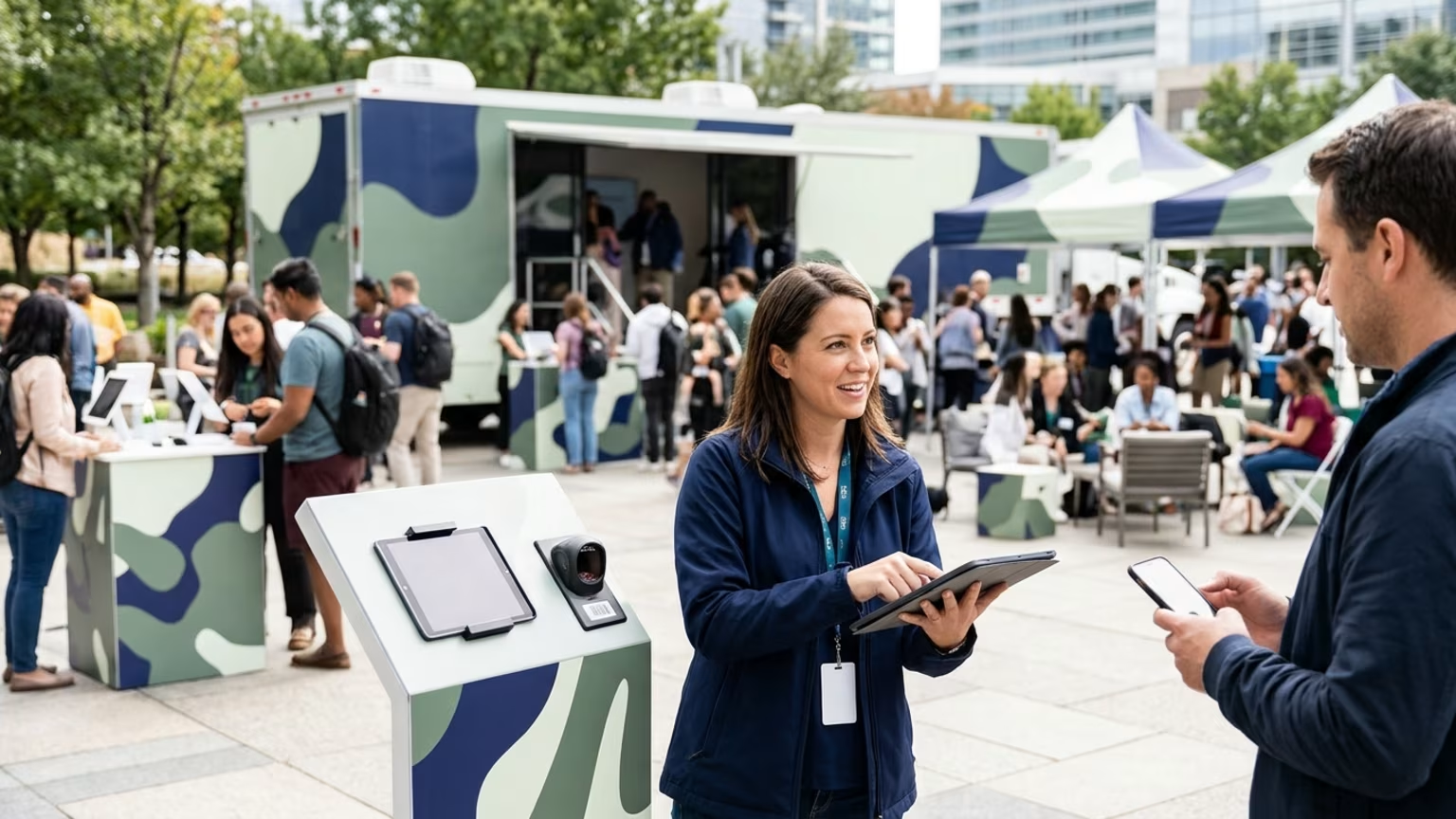
Your mobile tour does not earn its budget by drawing a crowd. A custom truck and a mountain of empty sample cases might make a convincing recap. They do not answer the question a CMO needs to defend: What business outcome did this investment support?
That is not an argument against creativity. It is an argument against letting the most photogenic part of the program define success.
Before booking the route, decide what the tour must accomplish and what evidence would support that claim. Then build the experience around that job. If the objective remains vague while the vehicle design moves forward, the planning priorities are backward.
Our position is simple: the scorecard deserves approval before the route does. Otherwise, the team risks delivering exactly what was purchased without learning whether it mattered.
The mainstream mistake is treating visible activity as commercial progress. Attendance becomes engagement. A sample becomes trial. A contact record becomes qualified pipeline.
Those substitutions make a presentation easier to build. They also leave a marketing leader exposed when finance or sales asks what happened next.
Cvent recommends separating reach, response and result. Reach describes who attended. Response covers what people did during the experience. Result captures what followed, including meetings or qualified demand.
That distinction should shape the brief rather than appear as a cleanup exercise after the tour.
For a CMO defending a major activation investment, the anxiety is not whether the recap will contain enough photographs. It is whether the organization spent heavily to collect names that sales cannot use. A busy activation offers little comfort when nobody agreed on the audience or the intended next step.
The operational version of this problem is equally frustrating. A team can complete the route and distribute the product while still lacking the evidence needed to judge the business objective.
The answer is not to dismiss delivery metrics. It is to separate a busy stop from a business result. Delivery deserves its own assessment rather than being promoted into a sales claim.
At Makai, we believe human warmth and operational discipline belong together. A friendly conversation gives the product encounter a human purpose. Careful execution gives that encounter a practical chance to happen as intended.
Aloha is not a substitute for a shipping plan. A shipping plan is not a substitute for a genuine conversation.
Our work includes retail demonstrations, product sampling programs and roadshows across multiple locations. Our storage and logistics services cover product and event gear, including shipping and delivery coordination nationwide. These capabilities support the face-to-face experiences at the center of our work.
We believe this combination gives trial and conversion a stronger foundation than spectacle alone. The goal is not a smaller creative ambition. It is creative ambition with a clear operational job.
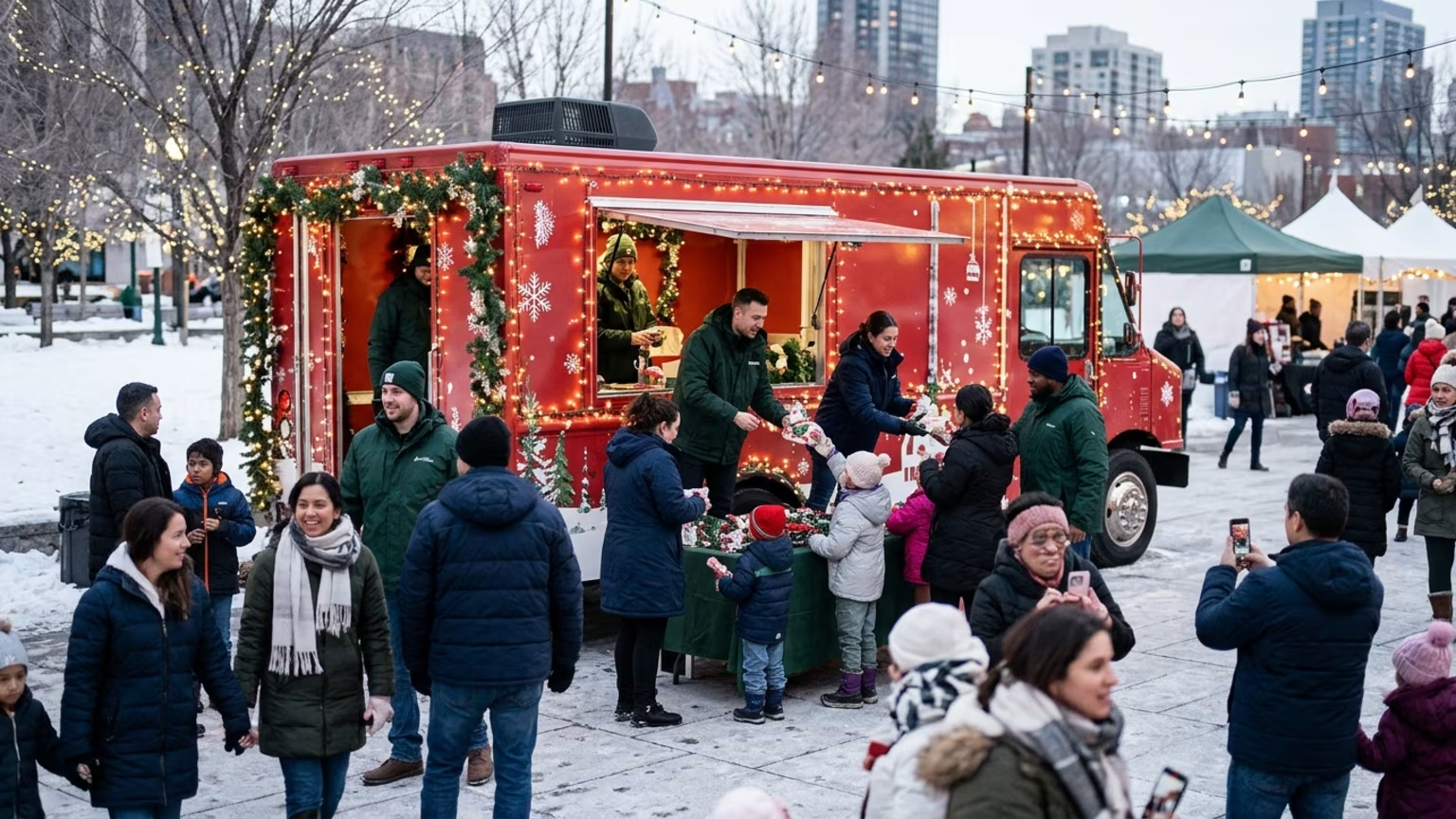
Our Little Debbie Share a Smile Tour shows why a recap should preserve different kinds of achievement. We ran the activation across 21 markets using a branded truck, trailer and Cupcake Smart Cars. Across the tour, we distributed 224,534 cupcakes and generated more than 2.4 million brand impressions.
We also captured 9,500 photos and 340 videos. The program earned coverage from three local television stations. Those results describe distribution, visibility and content creation. Each deserves recognition under its own heading.
Our four-week, multi-market Costco sampling program for Pulmuone’s PlantSpired line provides a different reporting perspective. We delivered more than 65,000 samples and recorded an 18 percent sold-to-sale rate. Keeping those measures distinct gives the reader both delivery scale and a recorded purchase-related measure without collapsing them into one headline.
We also design mobile activations around 90-day product launch windows to support consumer trial, trust and retail velocity. That planning horizon gives the work a commercial purpose. The scorecard should then identify which parts of that purpose the available evidence will assess.
The operator mentality is straightforward: respect the person receiving the product, then apply equal care to how the program gets delivered and evaluated.
The first planning question should not be how many stops fit the budget. It should be which business decision the tour needs to support.
Cvent recommends starting with that decision and agreeing on consistent definitions. Event Marketer reports that the Event Marketing Measurement Association’s Core Event Metrics and Survey Standards organizes measurement around audience value, anticipated behavioral change and brand-perception shift.
These frameworks give marketers a useful distinction: reaching an audience, changing a reported attitude and generating a commercial next step are different objectives. The proposed scorecard should keep them visible rather than compressing them into a single success label.
Choose one primary objective before route planning. Product trial calls for evidence of the product experience. Retail development calls for relevant buyer conversations and meetings. A sales objective calls for purchase or pipeline evidence that can be connected to the activation.
Secondary objectives can remain on the scorecard. They should not replace the primary objective when the results arrive.
This is why teams should set the measurement brief before the first stop. The intended outcome should help shape the route rather than being chosen to flatter it afterward.
Write down the baseline or comparison period before execution. Identify the measure being compared and when the review will happen. That makes the eventual claim clearer: a change against a stated reference rather than an isolated number.
Separate immediate reporting from later commercial review. Delivery and on-site response can be assessed before follow-up meetings or closed business are available. Cvent distinguishes these reporting stages in its guidance on event outcomes.
Choose the later observation window to match the business objective and buying cycle. A consumer purchase and a retail buyer’s commercial decision should not inherit the same deadline merely because they occurred around the same tour.
Building on Cvent’s reach, response and result framework, a mobile-tour scorecard should retain these categories:
These fields make it easier to keep field reporting focused on qualified interactions. They also preserve useful delivery information without asking it to prove the entire business case.
The evidence boundary belongs in one clear place. Distribution is not confirmation of consumption, while reported intent belongs apart from recorded purchase. Our campaign results are program-specific rather than promised benchmarks. Cvent also cautions against crediting a single event with every later sale, so state what the activation clearly influenced and where the evidence ends.
From there, use direct language. Report samples distributed to target buyers when that audience evidence exists. Report retail meetings booked when meetings are the observed outcome. Describe a sales change against its stated comparison without automatically assigning the entire change to the tour.
A scorecard should help determine the next investment, not merely decorate the last one. Cvent recommends including cost, audience quality and engagement in a Return on Investment review. It also includes next-step actions and subsequent sales or customer outcomes.
Use that combination to assess the next route. The planning question becomes whether a location supported the intended audience and outcome, not simply whether it produced the largest crowd. Creative choices can then be judged against their assigned purpose.
A mobile tour should be memorable, but its business case needs more than a memorable appearance. Define the objective before booking the route. Keep delivery, response and commercial outcomes distinct. Then demand execution that gives the human interaction and the measurement plan equal respect. Aesthetics can earn attention; disciplined delivery and credible evidence are what make that attention useful to a marketing decision-maker.
A crowded stop is not the same as a qualified opportunity, and Makai’s mobile sampling tours bring products directly to audiences for trial and awareness. Its experiential campaigns and trade show activations address the low-quality lead problem facing CPG marketers who need qualified opportunities rather than badge-scan totals.

30 Years Experiential & Retail Activation Partner for CPG & Beverage Brands | Multi-Market Demos, Roadshows & Costco/Club Programs That Actually Sell