Robbie Thain
Founder, CEO

Separate event contacts from qualified leads, meetings and customers. Match qualification to trade shows, sponsorships and consumer activations.

A packed booth is not a commercial win. Stop calling every captured contact a lead.
A line of visitors looks good in a recap. So do product samples and a polished branded environment. But none of those things answers the question a marketing leader eventually faces: did the experience move the right people toward a meaningful business outcome?
Our view is simple: keep the creativity. Retire the accounting tricks that make activity look like demand.
The beautiful dumpster fire starts when different outcomes get stuffed into the same reporting bucket. A captured identity becomes a lead. A calendar invitation becomes a meeting. An open opportunity becomes a return.
Practitioner trade-show measurement guidance distinguishes contact capture from evidence of fit and buyer intent. It also recommends separating pipeline progression from realized financial return. Those distinctions belong in the brief before anyone starts celebrating the recap.
For a CMO, the anxiety is not simply that the activation costs too much. It is that an expensive production can return a substantial contact file and no defensible qualified pipeline. Without clear definitions, the report cannot explain whether the problem was audience fit or what happened after the conversation.
That is an execution problem disguised as a measurement problem. If staff do not know what counts as progress, a beautiful environment cannot supply the missing evidence. This is why consistent field execution belongs in the creative conversation rather than being treated as cleanup after the concept is approved.
At Makai, we believe warmth and operational discipline belong in the same brief. Aloha means making the human encounter welcoming. The discipline means giving that encounter a clear purpose and supporting it with careful execution.
Those ideas are not opposites. A product trial can feel personal without becoming an improvised performance. A brand environment can be memorable without leaving the commercial objective somewhere behind the scenery.
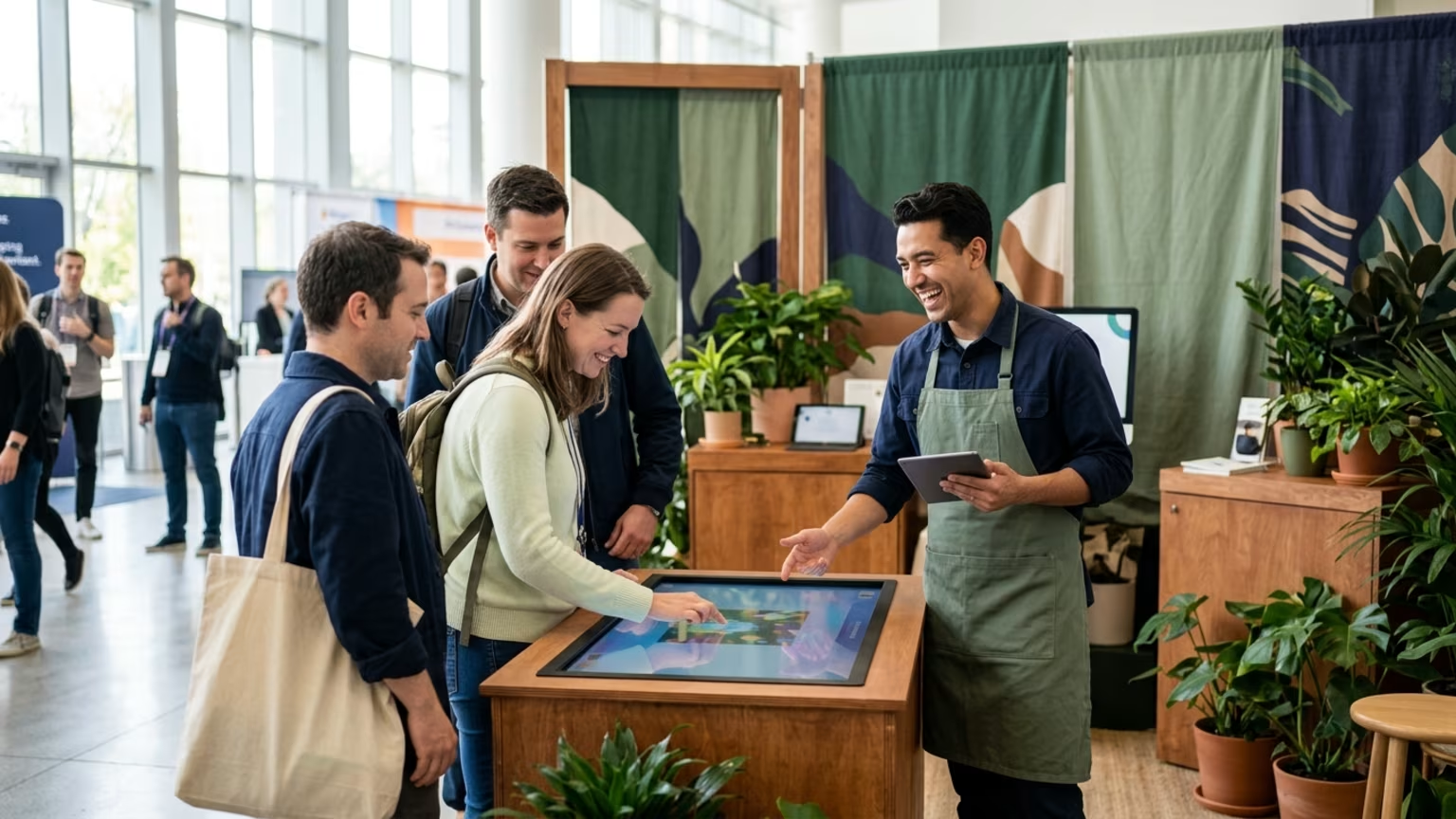
We design consumer events around interaction, emotion and engagement. Our retail demonstrations use trained brand ambassadors for real conversations and product trials. The aim is a human experience with a commercial purpose, not a choice between hospitality and conversion.
We turned Kona Brewing's sponsorship at Santa Monica Pier 360 into a beach-themed branded environment. Product and giveaways sat alongside leis and a place for attendees to spend time with the brand. Our team handled on-site execution from setup through teardown. The lesson we draw is that the welcoming space and the operational responsibility belong together.
At Natural Products Expo West 2025, we designed and managed a 40 by 20 foot trade show environment for Glanbia. It brought think!, Isopure, Optimum Nutrition and Amazing Grass into one coordinated space. Our scope covered concept and operations as well as staffing and breakdown. More than 14,000 recorded product samples were distributed across the activation stations.
That recorded total establishes distribution volume. It does not establish buyer qualification or sales. The useful operational lesson is that a coordinated environment can support a concrete delivery measure without pretending that measure answers every commercial question.
For us, demanding that distinction does not diminish the experience. It gives the experience an honest account of what it accomplished and what still needs to happen.
The alternative to impression-led reporting is not a larger dashboard. It is a smaller set of clearly defined outcomes tied to the event's purpose.
Vendor-authored event-measurement guidance recommends choosing the business goal first, then connecting the measures and capture system to that goal. The qualification guidance here is practitioner advice rather than a universally validated scoring model. Use it to define observable evidence, not to manufacture precision.
A useful commercial report keeps these stages separate:
Each stage answers a different question. How much contact activity occurred? Who met the qualification rules? What progressed? What business outcome followed?
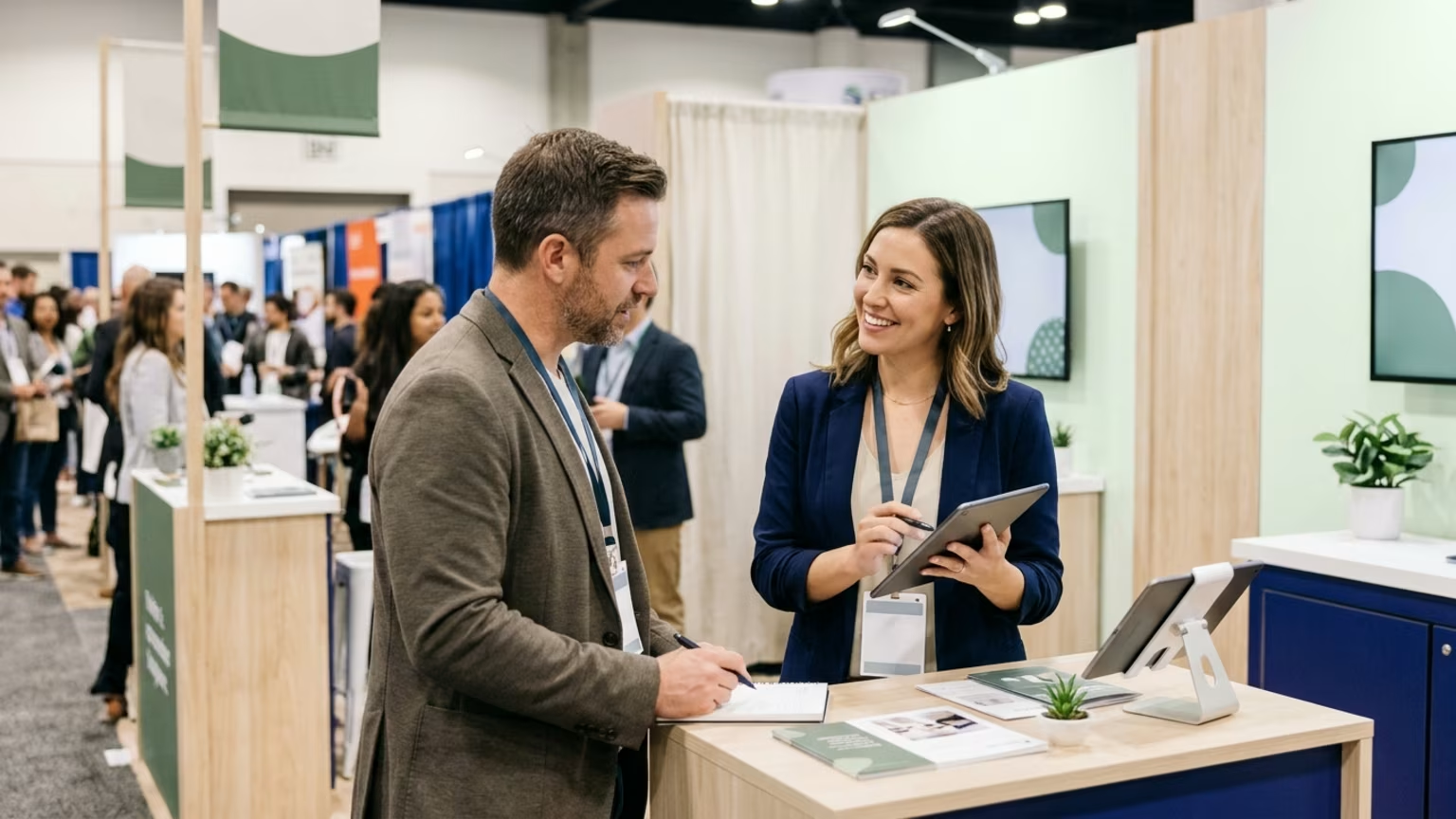
For trade shows and B2B sponsorships, qualification needs to describe the buying situation. The trade-show guidance above recommends factors such as fit and need alongside buying role and timing. It also calls for a buyer-agreed next step.
A practical capture brief can organize the conversation around these questions:
Keep unknown information visible rather than guessing. A friendly conversation does not supply an unanswered buying-role field. Nor does enthusiasm establish purchasing timing.
For retail-facing trade show programs, report buyer meetings booked separately from buyer meetings held. Preserve the context needed for continuation: the need discussed and the next action agreed. That gives the follow-up a purpose beyond acknowledging that someone visited the booth.
The point is not to turn a conversation into an interrogation. It is to capture enough relevant context to support the next conversation.
A consumer sampling program needs a different definition of progress. The person trying a snack does not need to resemble a wholesale buyer for the interaction to matter.
The vendor measurement guidance suggests choosing consumer measures according to the intended behavior. Depending on the objective, those measures can include:
These are distinct outcomes. Report the behavior the activation was designed to move, then connect it to transaction data where feasible. An opt-in answers a different question from a purchase.
For retail programs, judging demonstrations by commercial response keeps the purchase opportunity in view. Distribution remains useful operational evidence rather than being asked to stand in for the entire customer journey.
Sponsorships need room for audience and brand outcomes alongside commercial behavior.
Event Marketer reports that the Event Marketing Measurement Association's Core Event Metrics and Survey Standards cover B2B and B2C external events and activations. The core measures are value to the audience, anticipated behavioral change, and brand perception shift.
Those measures give the experience a broader lens. They can sit beside observable actions such as tracked redemptions or purchases rather than being forced into a B2B lead category.
The distinction between intent and action matters here. Reporting on AEG's 2026 survey says 74% of respondents reported making a purchase decision after a brand interaction at a live event. That finding is self-reported. The public summary does not establish how many decisions became completed transactions or provide campaign-level conversion rates.
For sponsorship reporting, keep perception and intent measures alongside behavioral evidence. Each has a job. Neither needs a more impressive label to be useful.
A qualification rate needs a visible denominator. Qualified leads divided by contacts captured answers one question. Meetings held divided by qualified leads answers another. State the population and the qualification definition whenever the rate appears.
The trade-show measurement guide also recommends tracking event costs and buyer-agreed next steps separately from financial return. Revisit attributed financial outcomes over a period suited to the sales cycle. Keep the event source and observation window visible in the measurement system.
This is where a field-level measurement structure earns its place. The report should help a team see where progress stopped, not simply produce a flattering total.
Did the activation reach the intended people? Did relevant conversations produce commitments? Did those commitments become commercial outcomes? Those questions make the next operational decision clearer.
Demand execution before applause. A strong live experience needs a welcoming human encounter and an honest definition of progress. Contacts measure capture; qualified leads establish relevance; later stages show whether the relationship advanced. Beautiful environments still matter, but they should support the work rather than conceal its gaps. The standard is not how impressive the activation looked. It is what the evidence supports saying happened.
Once success criteria are set, the work moves to consumer events that Makai designs around interaction, emotion and engagement. For premium CPG teams dealing with low-quality trade show leads, Makai builds experiential campaigns to turn brief in-person encounters into qualified prospects.

30 Years Experiential & Retail Activation Partner for CPG & Beverage Brands | Multi-Market Demos, Roadshows & Costco/Club Programs That Actually Sell