Robbie Thain
Founder, CEO

Store formats, field staffing, inventory and compliance all shape trial rates, and the economics decide when to scale a sampling program or pivot.
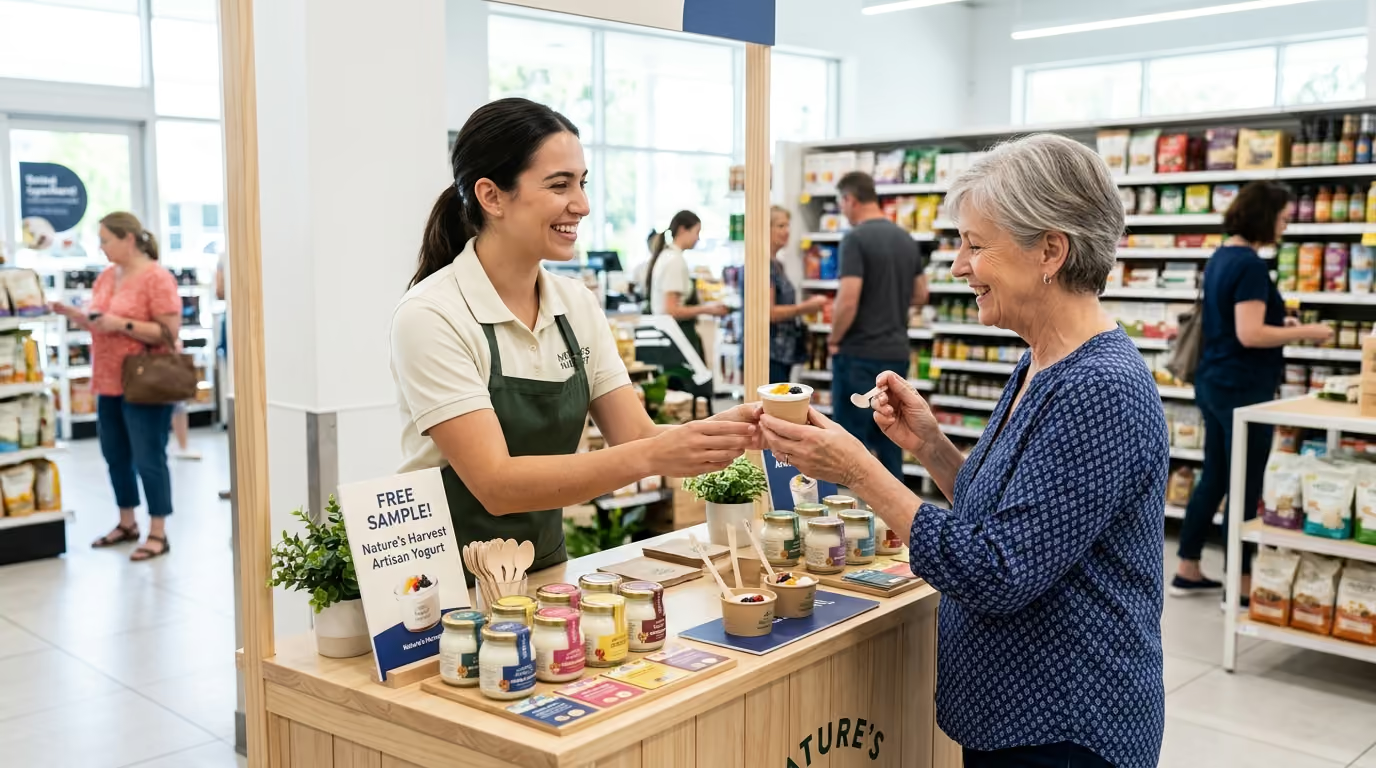
This comprehensive guide establishes an operational standard for planning, staffing, executing, and measuring product sampling campaigns across diverse retail channels. Brand leaders will acquire a systematic framework to eliminate execution waste, comply with strict safety mandates, and prove incremental sales lift at the shelf.
Saturday afternoon at two o'clock presents a familiar scene in grocery and club stores. A brand ambassador stands behind a folding table covered with melted ice, torn napkins, and open sample cups. Shoppers push carts past the display while the representative looks down at a phone or shouts generic greetings into the crowded aisle. Nearby, the retail shelf holding the actual product sits empty because nobody checked stock levels before the shift began.
This breakdown happens when companies treat sampling as a passive transaction instead of an operational discipline. Brand teams often spend months perfecting formulations, packaging, and retail distribution agreements. Yet they routinely hand off the critical moment of customer trial to untrained third-party staff with no clear conversion strategy. When foot traffic increases, inventory runs dry, queues create safety hazards, and store managers become frustrated by the clutter.
The consequences extend beyond immediate lost sales. A disorganized sampling activation creates brand liability, annoys retail partners, and wastes trade marketing budgets. Without clear qualification standards, staff members distribute free goods to shoppers who have no intention of buying the product. Meanwhile, leadership receives an end-of-month report listing only the raw number of units handed out. That vanity metric obscures whether the activation generated real financial value or merely subsidized regular grocery shopping trips.
In our experience, successful sampling requires the precision of a supply chain operation paired with disciplined sales execution. We specialize in creating retail demos, product sampling programs, and roadshows that bring brands face to face with their audiences. Each program is designed to drive trial, build consumer relationships, and accelerate retail velocity across multiple locations. Turning physical trial into sustainable revenue requires a repeatable management system across every location.
Retail sampling functions as an integrated commercial system rather than an isolated promotional tactic. The most effective campaigns evaluate six core dimensions before booking a single store date: Product, Shopper, Retailer, Occasion, Execution, and Measurement.
Sampling delivers the highest Return on Investment when physical trial solves a specific consumer hesitation. Products with distinct sensory profiles, innovative preparation methods, or premium price points benefit most from live demonstrations. If a shopper cannot taste, feel, or witness a noticeable difference within fifteen seconds, sampling is rarely the most cost-effective lever.
Certain products carry operational friction that requires careful planning. Highly perishable items, frozen foods requiring extended cook times, and products with complex portioning needs require specialized equipment and strict sanitation protocols. If portioning a product ruins its visual appeal or creates unacceptable food safety risks, the format must be redesigned before entering the field.
A successful program defines the exact shopper segment it intends to reach on the retail floor. Academic research published in the British Food Journal indicates that in-store sampling affects planned category shoppers differently than unplanned shoppers. For consumers already browsing the category, sampling triggers brand switching by proving superior taste or value. For consumers outside the category, trial acts as an acquisition mechanism that pulls them into an unplanned purchase.
Field teams must adjust their approach based on these behavioral differences. A shopper running a rapid replenishment trip requires a fast interaction and an immediate directional prompt to the shelf. A weekend family shopper browsing the perimeter displays may welcome a deeper discussion about ingredients, allergen safety, and recipe ideas.
Every retail banner operates with distinct operational constraints, physical layouts, and traffic flows. Academic research in the Journal of Retailing proves that store characteristics significantly moderate sampling effectiveness. A high-density supermarket aisle requires a compact footprint, while a wide club warehouse concourse demands high-capacity preparation setups.
Aligning with retailer merchandising calendars maximizes the commercial impact of every event. Sampling yields higher returns when coordinated with endcap placements, temporary price reductions, or circular features. Understanding how to troubleshoot sampling programs helps brand teams resolve friction with store operations before launch.
Context shapes consumer perception during product trial. Connecting a sample to an immediate usage occasion helps shoppers visualize how the product fits into their daily routines. Morning sampling windows favor breakfast items, functional coffee, and grab-and-go nutrition. Afternoon and early evening hours convert better for dinner solutions, meal starters, and premium beverages.
Seasonality also influences conversion velocity. Cold-weather activations favor warm comfort foods, soups, and hot beverages, while summer periods accelerate trial for hydration, grilling items, and portable snacks. Structuring the demo around an active calendar moment gives the brand ambassador an organic conversational hook.
Execution encompasses everything the shopper sees, hears, and experiences during the interaction. This includes table presentation, brand assets, staff uniforms, hygiene standards, and precise verbal messaging. If one store uses branded tablecloths while another uses bare plastic tables, brand equity erodes.
Standardization must not eliminate local adaptability. Operating teams should provide field ambassadors with structured talk tracks that allow for natural conversation. Clear operational protocols ensure that every product portion is prepared at the correct temperature and presented cleanly.
Measurement parameters must be established before field teams deploy. Defining baseline sales, selecting matched control stores, and setting clear attribution windows ensures that reporting reflects true commercial incrementality.
Tracking both lead operational metrics and lag financial metrics prevents misleading conclusions. Lead metrics measure field compliance, throughput, and engagement efficiency. Lag metrics confirm whether the program generated incremental unit volume, retail velocity, and positive gross margin contributions.
Operating parameters vary widely across retail channels. A playbook that succeeds in a regional supermarket chain will fail in a high-speed convenience store or a club warehouse.
Supermarkets represent the standard environment for packaged food and beverage sampling. Shoppers enter the store with planned shopping lists but remain open to perimeter discovery and dinner inspiration. Demonstrations positioned near the home shelf or along the produce and deli perimeters generate high conversion rates.
Grocery operations require tight alignment with store department managers. Brand ambassadors must confirm that shelf inventory is fully stocked before setting up the demo station. Establishing a clear replenishment pathway prevents the common failure mode where a customer tries a sample but finds an empty shelf.
Club environments operate at massive scale with wide aisles, high foot traffic, and multi-serve packaging. Members visit warehouse clubs expecting product discovery and live demonstrations. The primary challenge is converting a small bite or sip into the purchase of a high-ticket bulk pack.
Staff must actively communicate value per serving, storage options, and versatility. Because the product pallet may sit fifty yards away from the demo station, clear directional cues are necessary. Teams executing high-volume warehouse club roadshows must manage high queue volumes while maintaining sanitation standards.
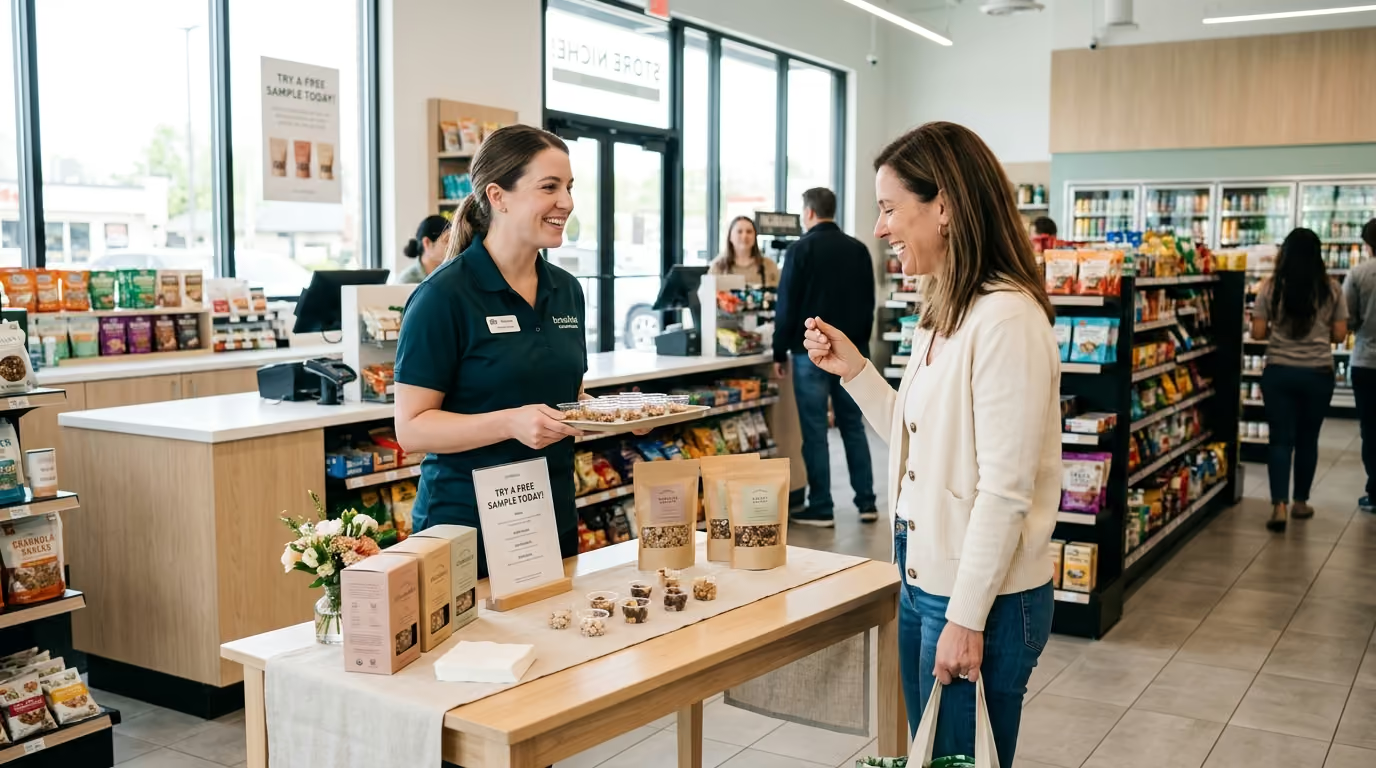
Convenience retail is defined by speed, limited square footage, and immediate consumption missions. The average customer spends less than four minutes inside the store from entrance to checkout. Demonstrations must be compact, self-contained, and lightning fast.
Ambassadors in convenience stores focus on single-serve beverages, energy products, and immediate snacks. The verbal interaction must deliver one distinct benefit within five seconds. Stations must never obstruct narrow aisles, cold vault doors, or the checkout line.
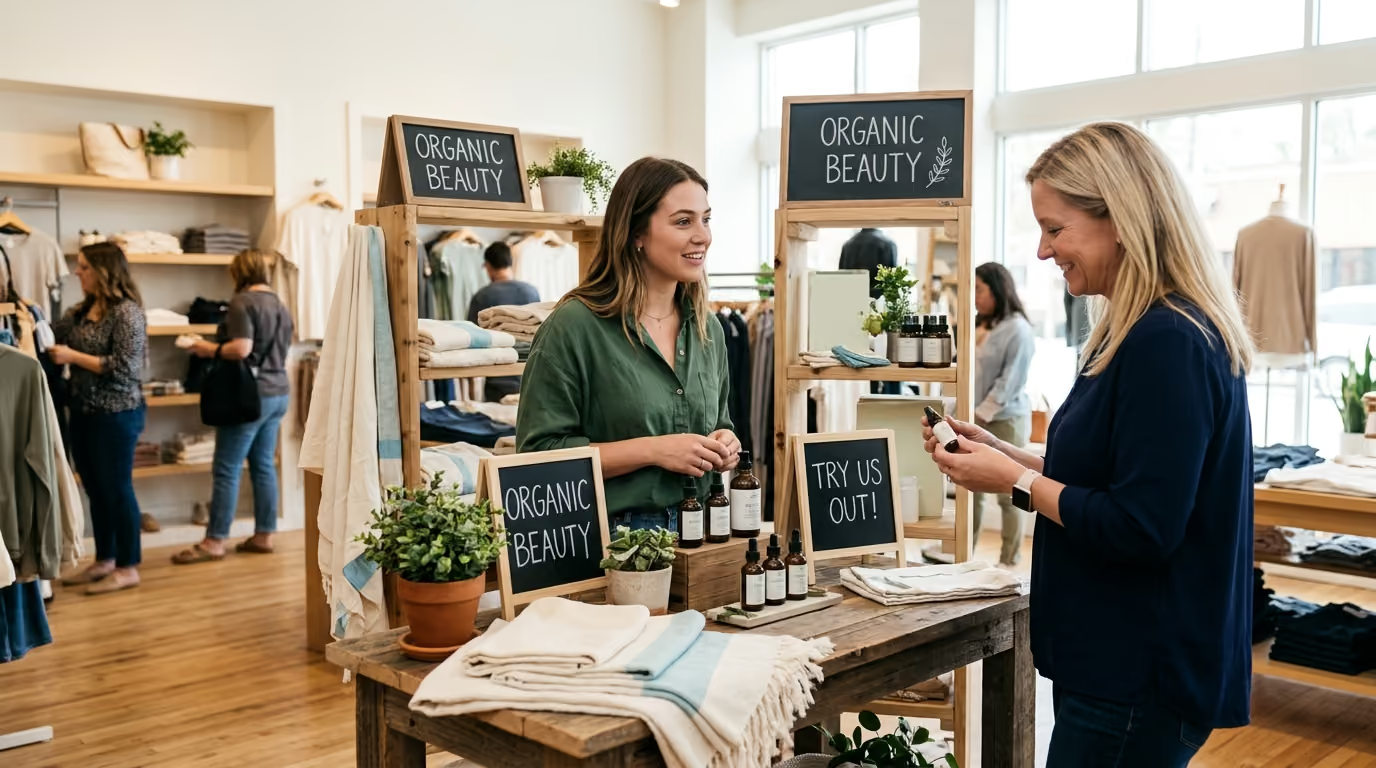
Natural grocers, gourmet markets, and specialty beauty retailers attract highly informed shoppers. These consumers read ingredient lists, care about sourcing ethics, and ask detailed technical questions. A basic transactional demo will not succeed in this channel.
Staffing in specialty retail requires subject matter experts who understand certifications, agricultural sourcing, and complex nutritional profiles. Sampling stations often incorporate educational collateral, certifications, and guided tasting flights. The goal is building long-term brand equity and customer loyalty through consultative education.
Mass retailers combine high foot traffic with broad shopper demographics across diverse product categories. Managing sampling across national mass retail networks requires rigorous centralized governance. Field teams must follow strict guidelines regarding vendor badges, approved fixture footprints, and designated demo zones.
Because store sizes vary significantly across suburban and urban formats, modular kits are required. National managers should track operational compliance through digital reporting tools to maintain consistency across hundreds of simultaneous weekend activations.
A sampling campaign is only as effective as the human representative standing on the retail floor. Managing field teams requires operational discipline across recruitment, training, food safety, and regulatory compliance.
Staffing models should match the operational complexity of the product and the target retail format. Low-complexity, shelf-stable items can be managed by a single skilled brand ambassador. That individual handles setup, customer engagement, sample distribution, data capture, and sanitation.
High-volume food activations and cooking demos require a two-person team structure. One specialist focuses entirely on active customer engagement, storytelling, and conversion. The second utility support person handles continuous food prep, temperature logging, inventory staging, and station cleanliness. This division ensures continuous throughput without compromising safety or customer engagement.
Field staff must complete rigorous training before representing a brand on the retail floor. Training programs should cover product knowledge, approved claims, store etiquette, and structured communication frameworks.
Ambassadors should master a simple, three-part conversational structure:
Staff must also receive a clear list of prohibited statements. Inexperienced ambassadors often make unauthorized health or performance claims when answering shopper questions. Training must give staff simple, approved phrasing to address ingredient inquiries safely.
Food safety represents an absolute operational priority during retail sampling. The 2022 Food Code published by the Food and Drug Administration serves as the foundational model for retail food protection. Local municipal health jurisdictions enforce these standards through regional health codes and operational permits.
Temperature-sensitive items must maintain strict cold-chain compliance at or below 41 degrees Fahrenheit (5 degrees Celsius) throughout transport, storage, and presentation. Hot food demonstrations must maintain holding temperatures at or above 135 degrees Fahrenheit (57 degrees Celsius) using commercial warming equipment. Field ambassadors must record calibrated digital thermometer readings every two hours in a formal compliance log.
Cross-contamination protocols must be enforced at all times. Staff must set up dedicated cutting boards, use separate utensils for raw and cooked items, and wear fresh food-grade gloves. Disposable barriers must be replaced whenever an ambassador touches personal items, handles trash, or steps away from the demo station.
Food allergies represent a severe health risk for consumers and a massive liability for brands. The Food Safety and Inspection Service of the United States Department of Agriculture provides clear guidelines regarding the declaration and control of ingredients and allergens. Field teams must display accurate, full ingredient statements directly on the sampling table for consumer review.
Ambassadors must never guess or improvise when asked about product ingredients or manufacturing facilities. If a shopper asks whether a product contains traces of tree nuts, gluten, dairy, or soy, the ambassador must present the official manufacturer ingredient sheet. If the documentation does not explicitly answer the shopper's question, the ambassador must advise the shopper not to consume the sample.
Sampling beer, wine, or distilled spirits requires specialized legal and operational workflows. The Alcohol and Tobacco Tax and Trade Bureau establishes federal standards for retail beverage alcohol operations. Brands must recognize that federal guidelines operate alongside state and local municipal liquor control board regulations.
Retail locations must hold appropriate commercial licensing to permit beverage alcohol consumption on premise. Furthermore, field ambassadors pouring alcohol samples must hold valid responsible beverage server certifications required by state law. Pour sizes must adhere strictly to statutory maximums, typically half an ounce for spirits, two ounces for wine, and three ounces for beer.
Underage consumption prevention requires absolute operational vigilance. Ambassadors must verify government-issued photo identification for any shopper who appears to be under thirty years of age before pouring a sample. Pouring stations must be situated away from main store entrances to prevent unmonitored self-service by minors.
Flawless field execution requires meticulous inventory planning and robust equipment staging. A brilliant sales pitch cannot generate revenue if the demo runs out of product halfway through the peak afternoon rush.
Calculating required product volume involves balancing sample portion targets with retail shelf stock requirements. Program managers must account for usable yield loss caused by preparation trimmings, spillage, packaging damage, and mandatory quality checks.
If an activation targets 400 finished samples, with each retail package yielding 8 sample portions at an 85 percent usable yield rate, the operational calculation is:
Saleable inventory modeling is equally critical. The retail shelf and adjacent display shippers must hold at least three times the expected event sales volume. Running out of sellable inventory on the shelf destroys the financial model of the activation.
Field teams must arrive on site with durable, commercial-grade equipment designed for high-traffic retail environments. Equipment bags should be standardized across the entire organization to simplify training and field auditing.
A standard professional field kit must include:
Maintaining equipment cleanliness preserves retail partner relationships. Station fixtures should be sanitized before setup and thoroughly cleaned before packing into vehicles at the end of the shift.
Field teams must follow a disciplined, sequential execution playbook to maximize conversion and maintain operational control.
Proving the financial value of sampling requires moving past vanity metrics. Brand leaders must measure field throughput, customer conversion efficiency, and true economic incrementality.
Lead metrics provide immediate visibility into field execution quality and staff productivity. Tracking these metrics across stores highlights operational anomalies and training gaps before they ruin a broader campaign.
Lag metrics evaluate the broader financial and commercial return generated by the sampling program. Understanding how retail sampling campaigns drive velocity requires evaluating point-of-sale data long after the event team packs up.
Raw sales volume during an event day does not equal incremental volume. Store traffic, weekly circulars, temporary price reductions, and seasonal weather patterns all influence daily sales. Calculating true incrementality requires comparing performance against matched control stores.
By comparing test locations against non-demonstration stores with similar historical sales velocities, brands isolate the true causal impact of the sampling intervention. Understanding how to track measuring sampling event performance metrics protects marketing teams from paying for baseline sales that would have happened anyway.
The ultimate financial test of a sampling program is whether it generates positive contribution margin after fully accounting for all direct and indirect expenses. Calculating Return on Investment requires deducting all variable costs from the gross profit generated by incremental volume.
Fully loaded program expenses must incorporate ambassador labor, travel expenses, kit shipping, storage fees, sampled product at cost, spoiled product, printed point-of-sale collateral, agency management fees, and retailer demo access charges. When evaluating budget benchmarks for sampling activations, finance teams must ensure that short-term promotional spending produces measurable long-term customer lifetime value.
Examining real-world execution profiles illustrates how operating models adapt across different product categories and retail channels.
A fast-growing plant-based yogurt brand secured placement across 180 stores within a premium regional grocery banner. The primary consumer barrier was taste skepticism, as shoppers feared plant-based dairy would have a chalky texture. The brand deployed a multi-week grocery sampling program designed to prove sensory equivalence to traditional dairy.
Field ambassadors set up compact stations adjacent to the specialty dairy refrigerated vault. Staff served single-spoon tastings paired with a small pump of organic berry compote to demonstrate culinary versatility. Ambassadors delivered a concise script emphasizing creamy texture, live probiotics, and low sugar content.
The brand used a difference-in-differences measurement model across 90 test stores and 90 matched control stores. The program delivered an immediate 340 percent unit lift on demonstration days. More importantly, post-event velocity across test stores remained 28 percent above pre-event baselines eight weeks after the campaign ended, proving sustained category trial and adoption.
An emerging clean-energy beverage brand faced intense competition in the convenience channel. The brand needed to generate immediate shelf pull and convince independent convenience operators to expand cold vault facings from one SKU to three SKUs.
The company executed rapid, two-hour sampling bursts during the morning commute window from 6:30 AM to 8:30 AM across 250 high-traffic urban convenience stores. Single brand ambassadors served two-ounce chilled pours directly from branded backpack coolers positioned near the front entrance. The conversational hook focused strictly on zero sugar and sustained mental focus.
The high-velocity activation averaged 85 completed samples per labor hour. Stores participating in the morning sampling blitz experienced a 62 percent increase in daily unit sales of the featured energy line. This clear velocity surge gave the sales team the data needed to secure expanded permanent distribution across the entire convenience distributor network.
Executing hundreds of retail demonstrations across diverse markets inevitably introduces operational friction. Experienced field directors anticipate these common failure modes and build contingency plans to protect campaign performance.
Deciding whether to expand, modify, or terminate a retail sampling program requires objective performance thresholds. Marketing directors must evaluate pilot results using clear commercial criteria rather than emotional attachment to a campaign.
Review this guide whenever launching a new retail SKU, entering a new retail channel, auditing agency execution quality, or renegotiating annual trade marketing agreements.
Mastering in-store sampling transforms a chaotic field activity into an operational engine that consistently drives trial, builds retail partnerships, and fuels sustainable brand growth.
#

30 Years Experiential & Retail Activation Partner for CPG & Beverage Brands | Multi-Market Demos, Roadshows & Costco/Club Programs That Actually Sell