Robbie Thain
Founder, CEO

Traditional supermarket demonstration tables fail in convenience stores, but compact sampling protocols convert fast-moving foot traffic into immediate product sales at the register.
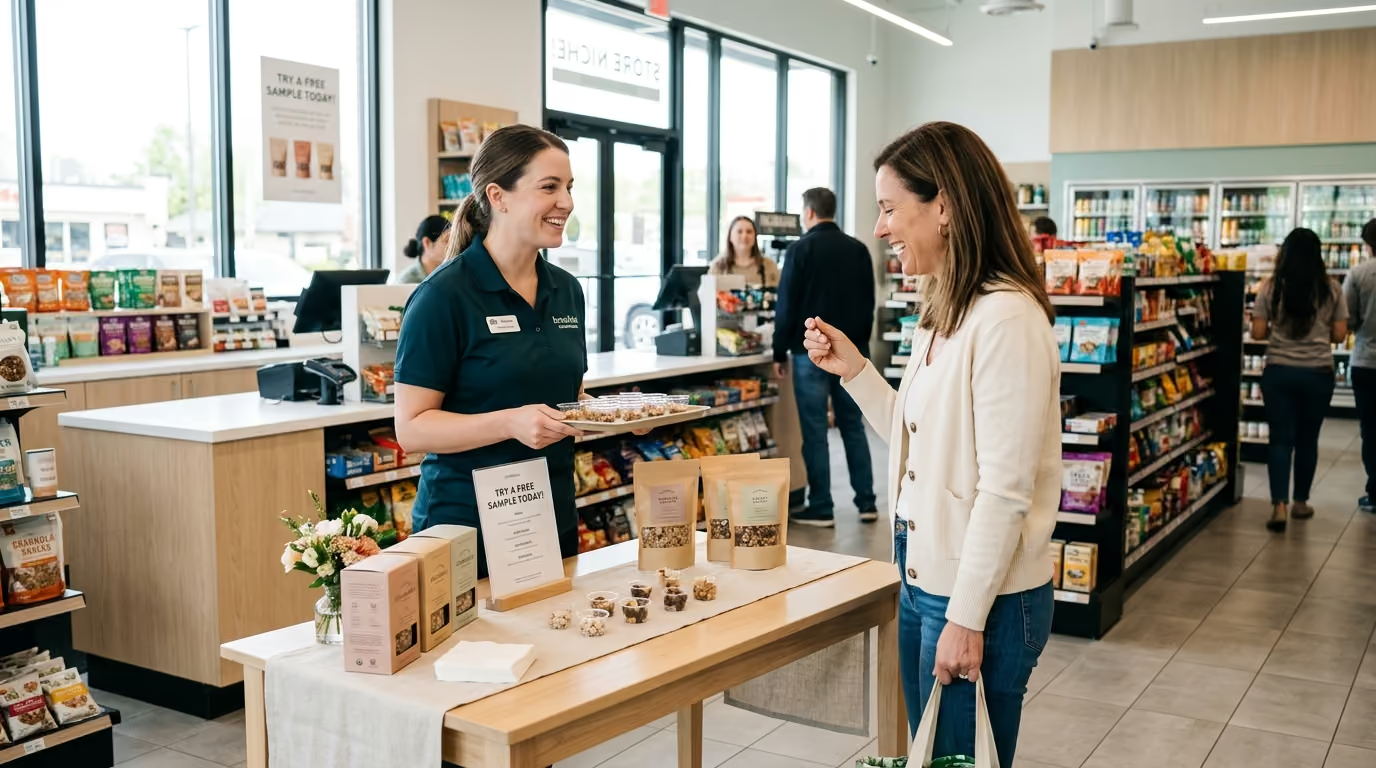
Convenience store product sampling requires a specialized micro-interruption model engineered for rapid decisions, high-velocity missions, and immediate consumption rather than standard grocery demonstration tactics. This operational playbook provides consumer packaged goods leaders with the frameworks, execution protocols, and measurement models needed to convert brief real-world retail foot traffic into verified sales velocity and sustainable brand equity.
Brand marketers regularly ask how to drive predictable product trial in small-format stores without disrupting tight floor plans or wasting capital on passive foot traffic. The reality of the convenience retail floor is intense, transactional, and fast. The average convenience trip lasts only a few minutes. Shoppers enter with a distinct objective, whether that means grabbing a cold beverage, paying for fuel, picking up coffee, or securing a quick meal.
When experiential teams drop standard supermarket demonstration tables into these compressed spaces, the activation fails immediately. Large display booths obstruct narrow aisles, block access to refrigerated beverage vaults, and irritate store operators who depend on frictionless foot traffic. Rushed consumers actively avoid anything that looks like a high-friction sales pitch or a lengthy conversation.
The economic stakes are substantial. According to NACS industry data, United States convenience stores generated $341.2 billion in in-store sales in 2025. Foodservice accounted for 28.5% of those in-store sales and 38.9% of gross-profit dollars. Packaged beverages represented 18.7% of total in-store sales. In our experience executing retail activations since 1995, brands that treat convenience retail as a distinct physical environment capture immediate basket conversion, while brands that simply copy big-box supermarket tactics create friction, frustrate retail partners, and burn marketing capital.
To win in convenience, teams must discard the traditional long-form product presentation. Operators must deploy compact, precision-timed tasting protocols designed for the three-second consumer evaluation window. When executed with operational discipline, convenience sampling converts passing foot traffic into immediate register volume while building measurable baseline lift across target retail regions.
Before allocating field marketing resources to convenience chains, brand leaders must evaluate their product against the five core requirements of high-velocity physical retail. If an activation violates any single component of this framework, field execution breaks down and trial rates collapse. Selecting the right retail strategy requires matching retail sampling locations with shopper intent to avoid misallocating field budgets.
Mission fit evaluates whether the product addresses a primary consumer job that already exists inside the store. Convenience shoppers rarely browse for hypothetical future pantry needs. They want solutions for immediate hunger, immediate thirst, afternoon fatigue, or quick household replenishment.
Energy drinks, functional waters, single-serve meat snacks, ready-to-eat baked goods, and hot prepared foods possess natural mission fit. Products that require complex multi-ingredient home cooking or bulk household storage struggle in this channel. The product must represent an immediate solution that makes intuitive sense within a three-minute shopping trip.
Moment fit matches the sampling interaction to the customer's immediate biological and situational context. A premium chilled cold brew sample converts at high rates between 6:30 AM and 9:00 AM when commuters seek functional morning caffeine. That identical sample generates negligible interest at 8:00 PM when entering shoppers want evening relaxation, quick snacks, or fuel transactions.
Operators must align physical product presentation with specific temporal drivers. Hot breakfast sandwiches, savory lunch items, afternoon functional pick-me-ups, and evening indulgence items require strict daypart scheduling. When field staff activate outside the relevant consumption moment, sample acceptance rates plummet and cost per acquired consumer surges.
Spatial fit defines the physical integration of the activation within the retailer's operational floor plan. Convenience stores have zero tolerance for physical congestion near the primary ingress, fuel-payment paths, foodservice pick-up counters, and checkout queues. The entire footprint must function as a micro-interruption that occupies minimal floor area.
Field staff must operate within compact footprints using mobile handheld service trays or ultra-narrow perimeter stands. Every layout must preserve Americans with Disabilities Act clearance, clear line-of-sight to the main register bank, and open access to beverage vault doors. If an activation causes a customer to detour or wait, store managers will shut down the program.
Operational fit assesses the complexity required to store, prepare, execute, and replenish the sampling activation. Convenience stores feature limited backroom storage, minimal refrigeration reserve space, and lean in-store staffing. Activations requiring complex on-site preparation, hot water baths, or extensive clean-up strain the retailer relationship.
Brand operators must design turnkey protocols that require zero operational support from store employees. Field teams must bring their own self-contained sanitation, temperature control, waste management, and inventory stock. Programs that operate smoothly are self-reliant, clean, and invisible to the store's baseline operating overhead.
Economic fit determines whether the incremental gross margin generated by the activation justifies the fully loaded cost of labor, materials, inventory, and management. Supermarket demonstrations often subsidize higher event costs through larger multi-pack basket rings. Convenience sampling relies on single-unit purchase velocity and sustained repeat trial.
Brands must evaluate total Return on Investment through immediate conversion, sustained post-event baseline lift, and retail partner margin expansion. A high-margin foodservice item or a premium beverage can support a higher cost per interaction than a low-margin commodity candy item. Program economic models must account for waste, field travel, promotional pricing, and recurring purchase cycles over a multi-week observation window.
Convenience retail shoppers are not a single demographic group. They represent distinct, fast-moving shopper missions that shift throughout the operational operating day. Brands must tailor their field posture, conversational script, and physical presentation to the exact mission profile of the passing consumer. When establishing your channel mix, understanding how to choose between retail demos roadshows and tours ensures your activation matches consumer velocity.
Fuel-and-go shoppers represent consumers who initially stopped only to fill their vehicle fuel tank. These shoppers enter the physical store solely to pay cash, purchase a receipt, grab a fast coffee, or use the restroom. Their attention is divided and their urgency is extreme.
The sampling approach for this mission must be instantaneous and friction-free. Field ambassadors should position themselves along the primary transit line between the front door and the payment counter using a clean, mobile service tray. The sensory prompt must be concise: "Fresh cold brew on tap today, straight ahead in cooler door three." Avoid complex storytelling or multi-question qualification filters during these interactions.
Packaged beverages represent the backbone of immediate refreshment in convenience retail. According to NACS research, packaged beverages account for 18.7% of total in-store sales volume. Consumers visiting the store for a beverage mission are actively seeking temperature, flavor, functional energy, or hydration.
Field teams should deploy tasting stations directly adjacent to the refrigerated beverage vault rather than isolated near the store entrance. Offering a chilled two-ounce portion while the consumer has their hand on the cooler door handle drastically shortens the conversion funnel. The field staff member should immediately point to the dedicated shelf placement displaying the promotional retail price.
Snack-to-go missions occur during mid-morning breaks, afternoon energy dips, and late-night travel windows. Convenience shoppers seeking snacks prioritize portable texture, immediate satiety, high protein, or sweet indulgence. A research study published in the Journal of Advertising Research demonstrated that in-store sampling induces brand switching among consumers already shopping the category while also pulling non-planners into category purchase.
Snack sampling must communicate clear portion size and single-serve packaging formats. The sample serving should mirror the exact flavor profile, crunch, and mouthfeel of the retail unit sitting on the adjacent gondola shelf. Displaying the unopened full-size package directly behind the sample tray ensures the customer instantly recognizes the product during their walk to checkout.
Prepared food is the most profitable and rapidly expanding segment of modern convenience retail. NACS data reveals that prepared food represents approximately 74% of all convenience foodservice sales. Convenience retailers are actively transforming their store footprints to compete directly with quick-service restaurant chains.
Foodservice sampling programs must validate freshness, heat integrity, and culinary quality. Serving warm pizza slices, hot breakfast wraps, or fresh chicken tenders directly at the foodservice ordering counter reassures consumers about product taste and preparation standards. The conversion path must lead directly to the hot holding case or the digital order touchscreen.
Top-up missions represent deliberate visits to fill immediate household needs without navigating the sprawling footprint of a conventional supermarket. Industry analyses from NACS indicate that fill-in grocery categories, including packaged bakery, dairy, and meal components, account for significant high-margin convenience transactions.
Sampling activations targeting the top-up mission should highlight multi-serve utility or meal-pairing solutions. A refrigerated pasta sauce brand might sample a warm single-bite taste paired with a store-supplied breadstick, positioning the product as an effortless dinner solution. The messaging pivots from immediate snacking to immediate family convenience for the evening ahead.
Executing a successful sampling campaign requires adapting product preparation, portion size, and presentation to the physical constraints of the convenience store environment. Different food and beverage categories demand specific operational configurations.
Chilled beverages require rigorous cold-chain management to maintain peak consumer appeal. Ambient or lukewarm samples permanently destroy trial conversion for functional beverages, sparkling waters, and ready-to-drink coffees.
Field teams must utilize insulated, commercial-grade transport coolers packed with food-safe ice packs rather than loose melting ice cubes that degrade product labeling. Portions should range between two and three fluid ounces, served in recyclable, clear, branded cups. When scaling these formats nationally, learning how mobile tours turn energy drink sampling into retail pipeline provides a repeatable template for brand field teams.
Packaged snack items, including meat sticks, protein bars, potato chips, and specialty nuts, require sanitary single-bite execution. Field ambassadors must never open large multi-serving bags and allow consumers to reach inside with bare hands.
Staff must portion snacks into individual food-grade paper soufflé cups using sanitized metal tongs while wearing disposable food-handling gloves. The tasting station must feature a dedicated, covered waste receptacle so discarded sample cups do not litter the checkout area. Maintain a visual display of the commercial packaging directly beside the tasting tray to connect taste to brand identity.
Hot food sampling requires strict adherence to commercial food-holding standards and local public health ordinances. Hot holding equipment must maintain core product temperatures at or above 135 degrees Fahrenheit throughout the activation duration.
Field teams must utilize compact, commercial-grade electric warming trays with clear sneeze guards that fit safely on perimeter counters without blocking traffic. Portions must be cut into bite-sized, toothpicked segments using dedicated cutting boards and food-grade stainless steel utensils. Every hot food protocol requires a certified food handler on-site to monitor holding temperatures and enforce strict batch discard timelines.
Frozen items present significant operational challenges due to rapid thermal degradation in ambient retail air. Samples must transition from deep freeze to consumer consumption within seconds to prevent melting, separation, or sticky packaging.
Field teams should coordinate with store managers to secure dedicated short-term holding space within store commercial freezers whenever possible. If using portable dry-ice transport coolers, staff must monitor storage temperatures continuously to avoid freezer burn or dangerous surface freezing. Distribute mini single-serve portions directly from insulated containers in small, rapidly consumed batches during warm afternoon dayparts.
Functional wellness products, such as adaptogenic tonics, vitamin gummies, and hydration powders, require clear, compliant consumer communication. Field ambassadors must operate within strictly approved messaging frameworks and avoid making unauthorized medical, disease-prevention, or therapeutic claims.
The on-site communication must focus on sensory pleasure, clean ingredient profiles, and immediate hydration or sustained daily energy. Provide clearly printed ingredient and allergen reference sheets directly on the mobile activation tray. Field ambassadors should explain flavor notes and usage occasions while allowing the official packaging to communicate formal nutritional panels.
A standardized scheduling strategy applied uniformly across an entire retail chain will produce inconsistent sales lift. High-performing convenience sampling campaigns align field staffing schedules with specific store archetypes and traffic dayparts. Understanding store-level shopper flow is critical when refining retail demo and sampling strategies to prove ROI in-store.
Urban convenience locations experience rapid pedestrian traffic peaks linked directly to morning mass-transit commutes and evening return rushes. Aisle space is extremely narrow, register queues form quickly, and customers possess virtually zero patience for physical delays.
Activations in urban walk-up stores must utilize mobile, handheld tray formats with single-staff deployments. Staff should focus on rapid, two-sentence engagements situated within five feet of the exit or checkout queue. Target morning commute hours between 7:00 AM and 9:30 AM for breakfast and functional caffeine items, and evening windows between 4:30 PM and 7:00 PM for packaged refreshments.
Suburban travel plazas serve a broad demographic mix comprising trade workers, residential commuters, families, and errand runners. These locations offer larger footprints, expanded parking, high-volume beverage fountains, and extensive proprietary foodservice programs.
Field teams can deploy compact, stationary two-foot tasting tables near the intersection of the cold beverage vault and the prepared food counter. Staffing models can expand to two-person teams during peak midday windows between 11:30 AM and 2:00 PM. Suburban stores provide the ideal environment for co-sampling programs that pair packaged snacks with store-made sandwiches.
Highway travel centers cater to long-haul commercial drivers, road-trip travelers, and regional motorists. Basket sizes are substantially larger than urban stores, and shoppers exhibit slightly longer dwell times as they stretch, use amenities, and select road provisions.
Sampling programs in travel plazas should highlight premium meat snacks, larger-format beverages, multipack confections, and high-satiety meal options. Large display cases and bulk product endcaps should be co-located with the sampling station. Schedule highway activations during heavy Friday afternoon and Sunday midday leisure travel windows to maximize consumer foot traffic volume.
Convenience stores located adjacent to major collegiate campuses exhibit pronounced afternoon and late-night foot traffic surges. College consumers demonstrate high receptivity to functional beverages, novel international snack flavors, plant-based items, and better-for-you indulgences.
Schedule campus store activations between 2:00 PM and 8:00 PM to capture students transitioning between academic lectures, library sessions, and evening social activities. Utilize high-energy field ambassadors who match the demographic profile and can communicate authentic brand stories. Ensure point-of-sale displays clearly accept university meal-card payment systems where applicable.
Operational discipline separates profitable sampling campaigns from messy marketing disruptions. Convenience store operators will swiftly expel field marketing teams that violate cleanliness, safety, or store layout standards. Field marketing leadership must institutionalize strict operational protocols before dispatching brand ambassadors to store locations. Building a system of high-converting retail demos requires comprehensive operational prep.
Field managers must execute a mandatory retail audit 48 hours prior to any live activation. Staff must verify physical on-shelf product availability, backroom inventory depth, promotional shelf-tag accuracy, and store manager alignment.
Food safety is non-negotiable in retail sampling. The model FDA Food Code provides clear regulatory baselines for food temperature management, hygiene, and allergen handling across retail establishments. State and local regulatory bodies adopt and enforce these standards across retail operations.
Refrigerated time and temperature control for safety foods must remain at or below 41 degrees Fahrenheit (5 degrees Celsius) during storage and service. Hot prepared foods must be held at or above 135 degrees Fahrenheit (57 degrees Celsius). Field ambassadors must maintain continuous temperature monitoring logs using calibrated digital stem thermometers, recording readings every 30 minutes.
Field staff must adhere to strict personal hygiene standards. Ambassadors must wear clean aprons, hair restraints, and disposable non-latex gloves, washing hands at a dedicated handwashing sink prior to glove donning and after any operational interruption. Maintain clean and sanitized contact surfaces using EPA-registered sanitizing solutions at proper parts-per-million concentrations.
The Food Code defines major food allergens including milk, eggs, fish, crustacean shellfish, tree nuts, wheat, peanuts, and soybeans. Field teams must display clear, legible allergen notices directly at the tasting station. Ambassadors must never guess about ingredient contents or cross-contamination risks when answering customer inquiries.
Ambassadors must execute a structured, respectful three-step verbal engagement model. The entire customer interaction should take no more than 15 to 20 seconds.
Step one is the permission-based taste offer: "Good morning, would you like to try a quick ice-cold sample of our crisp citrus sparkling energy?" If the consumer declines, the ambassador steps back immediately without lingering.
Step two is the core benefit delivery: "Zero sugar, clean natural caffeine, and it just hit cooler door two today." The ambassador delivers this line while handing the two-ounce cup to the shopper.
Step three is the frictionless conversion cue: "Grab an ice-cold can in door two for two dollars today, right on your way to checkout." The ambassador gestures directly to the visible cooler door.
If a sudden register rush occurs and checkout lines back up into the sampling zone, the ambassador must pause distribution. Staff should step aside, assist with clear customer navigation, and resume only when aisle circulation returns to normal. Maintaining total store operational flow is always prioritized over hourly sample distribution counts.
Marketing leadership cannot evaluate convenience sampling success through vanity metrics such as gross samples distributed. A large sample count often hides wasteful distribution to repeat browsers or non-purchasers. Teams must implement rigorous funnel measurement tracking lead activities, lag sales outcomes, and net incremental contribution. A complete measurement framework requires analyzing 5 key metrics to prove retail sampling ROI beyond headcount.
Every convenience sampling program must track conversion efficiency across the complete physical path to purchase:
Field teams track qualified interactions and immediate basket placements in real-time reporting applications. Measuring each stage exposes the exact drop-off point in the activation funnel. High trial coupled with low basket conversion indicates pricing resistance, weak shelf adjacency, or poor flavor appeal. Low trial with high traffic indicates poor ambassador positioning, cluttered presentation, or ineffective verbal scripting.
To isolate the true causal impact of a sampling activation, brand analysts must calculate incremental unit lift against a modeled baseline. The calculation must account for historical volume, day-of-week trends, and matched control store performance:
$$\text{Incremental Unit Lift} = \text{Actual Promoted Units Sold} - \text{Expected Baseline Units}$$
$$\text{Percentage Sales Lift} = \left( \frac{\text{Actual Units Sold} - \text{Expected Baseline Units}}{\text{Expected Baseline Units}} \right) \times 100$$
The expected baseline should represent the median unit movement across the preceding four non-promoted weeks for the identical daypart and day-of-week. Whenever feasible, compare activated stores against non-activated matched control stores within the same retail market. This methodology strips out broader macroeconomic effects, regional fuel price fluctuations, weather patterns, and concurrent chain-wide promotions.
Academic research published across multi-store retail scanner datasets indicates that product sampling produces both immediate sales spikes and sustained baseline lift over extended periods. Longitudinal studies tracking packaged goods demonstrate that sampling programs generate sustained repeat purchasing patterns over 20-week post-event observation windows, with sample-product cumulative sales lift averaging 74% across analyzed categories.
Furthermore, econometric analyses show that repeating sampling activations in the same retail doors generates a multiplicative increase in long-term sales velocity rather than diminishing returns. The first activation establishes initial sensory awareness, while subsequent activations convert hesitant category buyers and reinforce brand habituation.
Brands must evaluate total campaign profitability using comprehensive Return on Investment models:
$$\text{Net Contribution} = (\text{Incremental Units Sold} \times \text{Unit Gross Margin}) - \text{Total Fully Loaded Activation Cost}$$
$$\text{Customer Acquisition Cost} = \frac{\text{Total Fully Loaded Activation Cost}}{\text{Verified Incremental First-Time Purchasers}}$$
Evaluate post-event scanner data at one-week, four-week, and eight-week intervals to quantify lasting baseline improvements. When sampling expands the total category rather than merely cannibalizing adjacent competitor SKUs, retail category managers reward the brand with improved shelf placement, expanded facings, and sustained promotional support.
To understand how these principles function in live operational settings, we can examine three distinct CPG category scenarios executed within convenience retail environments.
A fast-growing ready-to-drink energy and hydration beverage brand launched across a national 600-door convenience chain. The brand faced low on-shelf brand awareness and strong entrenched competition from legacy beverage giants commanding primary eye-level cooler positioning.
The brand deployed single-ambassador mobile tasting teams operating during morning commute windows (6:30 AM to 9:30 AM) and afternoon fatigue windows (1:30 PM to 4:00 PM) on Thursdays and Fridays. Ambassadors operated within three feet of the cold beverage vault, distributing two-ounce ice-cold samples in clear branded cups. The verbal hook focused entirely on clean plant-based energy and crisp flavor.
The results demonstrated high micro-conversion efficiency:
A premium artisanal beef and turkey stick brand secured new chain-wide distribution within a regional convenience operator. The brand carried a retail price point 35% above conventional mass-market meat sticks, generating initial consumer price hesitation and slow inventory turnover.
Field teams scheduled stationary tasting stations across suburban travel plazas and highway locations between 11:00 AM and 3:00 PM on weekends. Staff pre-portioned bite-sized meat stick cuts into branded paper cups, displaying the whole retail package alongside an obvious "2 for $5" multi-buy promotional tag. The messaging highlighted 100% grass-fed beef, low sugar content, and bold pepper seasoning.
The operational focus delivered substantial category growth:
A specialty hot sauce and condiment manufacturer partnered with a convenience chain known for its proprietary fresh fried chicken and breakfast tender program. The objective was to drive consumer trial of a newly introduced signature spicy dipping sauce while increasing overall foodservice meal attachment.
Field ambassadors integrated directly behind the foodservice order counter, working alongside store culinary personnel during the peak lunch daypart (11:30 AM to 1:30 PM). Staff offered customers ordering chicken tenders or sandwiches a fresh, warm nugget dipped in the signature specialty sauce. Signage on the digital menu board displayed the co-branded flavor partnership.
The program generated rapid foodservice sales acceleration:
Brand managers and field directors can apply these tactical steps immediately to refine and upgrade convenience retail sampling execution.

30 Years Experiential & Retail Activation Partner for CPG & Beverage Brands | Multi-Market Demos, Roadshows & Costco/Club Programs That Actually Sell