Robbie Thain
Founder, CEO

Product sampling succeeds through targeted risk reduction rather than mass distribution when brands align their trial format with specific shopper doubts.
Selecting the correct product trial method requires identifying the primary barrier standing between a shopper and a confident buying decision. By aligning your physical trial format with specific consumer uncertainties, retail constraints, and time horizons, your brand can turn field activations into predictable revenue drivers.
A busy Saturday afternoon in a retail grocery aisle illustrates the problem clearly. Brand representatives stand behind folding tables offering generic portions of snacks, cold beverages, or surface cleaners to passing shoppers. Most consumers grab a sample cup without making eye contact, chew quickly, and keep moving down the central aisle toward their planned grocery items. The brand team records five hundred units distributed by the end of the shift. The sales register, however, shows almost zero lift in baseline inventory turnover. This breakdown happens when marketing teams treat sampling as a high-volume distribution task rather than a strategic exercise in uncertainty reduction.
The central planning question for any experiential campaign is straightforward. What must the shopper experience, observe, compare, or do before they can make a confident purchase decision? When you answer that question precisely, you can determine whether your product requires a prepared serving, a testable application, a comparison, a demonstration, or a take-home trial.
A product trial is not a scaled-down marketing campaign. It is an evidentiary interaction designed to eliminate hesitation. Shoppers avoid unfamiliar products because purchasing involves financial, practical, or personal risk. Effective sampling programs isolate the specific risk holding the consumer back and resolve it through direct physical interaction.
Sensory uncertainty occurs when shoppers cannot predict whether they will enjoy a product through their senses. This barrier dominates food, beverage, personal care, and fragrance categories. Consumers want to know how a snack crunches, how a functional beverage tastes, or how a fragrance settles on the skin.
A prepared-serving trial is the classic solution for sensory doubt. Research from Ipsos shows that sampling effectiveness depends heavily on perceived product quality. Programs for products perceived as high quality performed at 150 percent of the average effectiveness benchmark. Programs for products perceived as low quality performed at roughly 60 percent of average effectiveness. Sampling exposes the true sensory attributes of a product. If the taste profile or mouthfeel is unappealing, distributing samples will accelerate rejection rather than drive adoption.
Performance uncertainty centers on functional efficacy. The shopper wonders whether a premium stain remover will lift tough grease, whether an ergonomic tool feels comfortable during extended use, or whether a cosmetic primer prevents shine.
In these situations, a simple taste or passive view does not resolve the doubt. The consumer requires a testable application or an active demonstration. The trial must deliver measurable proof that the product solves an operational problem under realistic conditions.
Comparative uncertainty arises when shoppers recognize that a product works, but do not see why it is superior to their current routine. This challenge is common in mature retail categories dominated by entrenched legacy brands.
A comparison trial addresses this doubt directly. By structuring a side-by-side evaluation, a before-and-after sequence, or a blind taste test, the brand highlights a decisive difference. This approach shifts the shopper from general category awareness to specific brand preference.
Certain products feature unique mechanisms, multi-step preparation routines, or novel ingredient technologies that packaging copy cannot explain. If a shopper cannot quickly understand how a product operates, they will default to a simpler alternative.
Demonstrations resolve comprehension gaps by making an unfamiliar process visible and repeatable. Research on in-store retail demonstrations shows that physical demonstrations strengthen brand value perceptions and purchase intent. Showing the sequence of actions demystifies the product and builds consumer confidence.
Not every product reveals its value in sixty seconds. Skincare regimens, dietary supplements, pet foods, and extended-release household items require repeated applications or specific domestic contexts.
A take-home trial bridges the gap between the retail shelf and the consumer home. Distributing a multi-day supply or a structured starter kit allows the shopper to test the product within their daily routine. The trade-off is a loss of immediate retail conversion control. Brands must build structured follow-up paths to verify that the consumer actually uses the sample as directed.
Choosing the appropriate execution model requires analyzing how each trial method operates in live retail environments. Each approach carries distinct operational demands, staffing requirements, and behavioral outcomes.
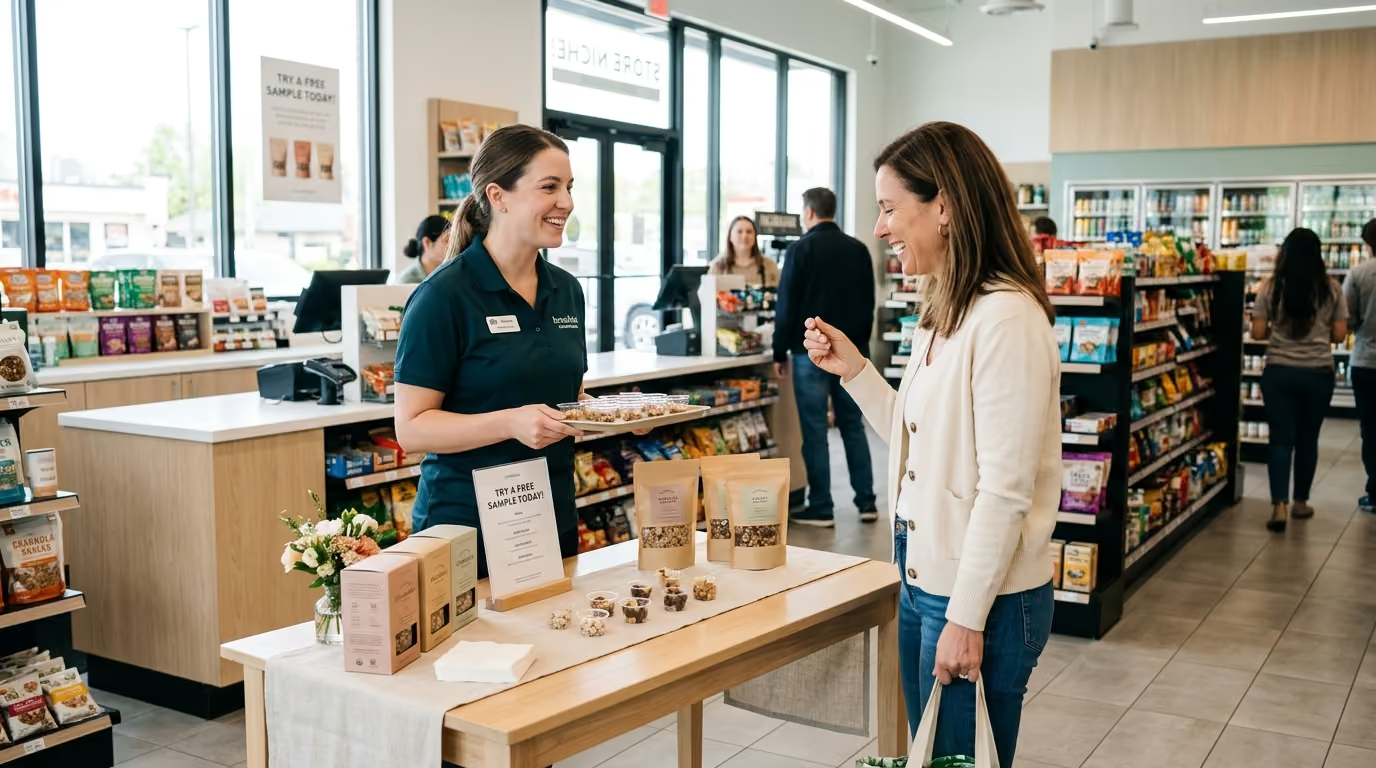
A prepared-serving trial delivers a finished, ready-to-consume portion of a product directly to the shopper. Common examples include chilled functional drinks, warmed plant-based proteins, freshly brewed coffee, or portioned dips on crackers.
This method works best when the primary purchase driver is immediate sensory pleasure and the shopper can reach a clear verdict within moments. Research on in-store food sampling demonstrates that free prepared samples stimulate trial and prompt brand switching among consumers who already plan to purchase within the category. Prepared servings can also draw shoppers who had no initial category purchase plans into buying the product.
Operational precision dictates the success of a prepared serving. Serving temperatures must remain strictly within food safety guidelines and culinary standards. A sparkling beverage served lukewarm or a hot snack served cold creates a negative sensory impression that defeats the entire campaign. Furthermore, portion sizing must be substantial enough for the consumer to evaluate texture and flavor notes, but small enough to manage product loss.
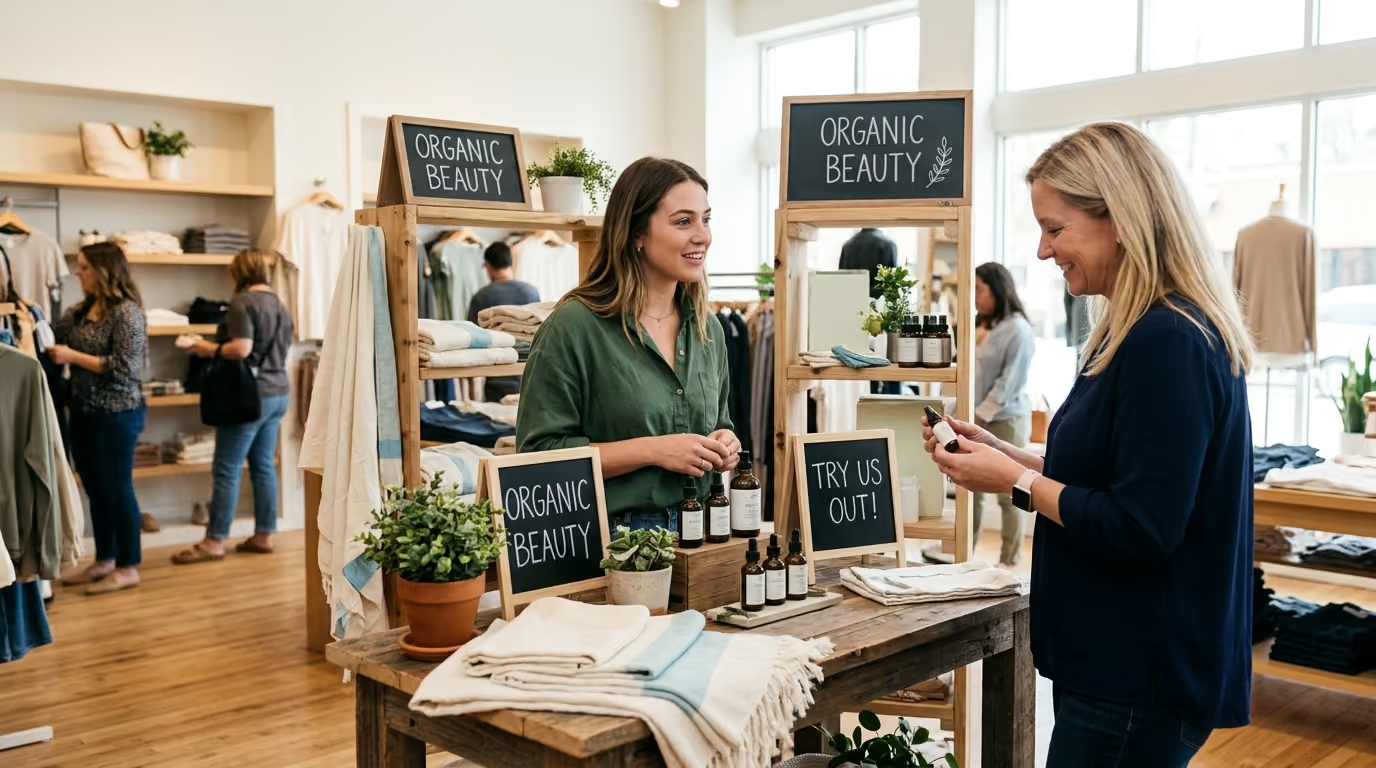
A testable application invites the shopper to use the product directly on their own skin, hair, clothing, or sample testing surfaces. Examples include applying a hand cream, operating a handheld vacuum on messy debris, testing a writing instrument, or running a styling tool through hair swatches.
This method is ideal when tactile ergonomics, absorption rates, scent development, and immediate physical control drive the buying decision. Research on product sampling indicates that perceived diagnosticity positively affects purchase intention. Reciprocity, such as feeling grateful for a free gift, can raise brand favorability ratings without translating into sales. Diagnosticity measures whether the trial provided practical evidence that the product fits the consumer specific needs.
Testable applications require strict sanitary protocols. Brand ambassadors must provide single-use applicators, clean testing surfaces between interactions, and offer disposal bins. When shoppers see clean, well-organized testing stations, their willingness to participate rises.
A comparison trial presents two distinct conditions to showcase a clear performance gap. Formats include blind taste tests against a market leader, split-surface cleaning tests, or before-and-after visual demonstrations.
Comparison trials excel in crowded categories where brand parity is high and consumers express skepticism toward conventional advertising claims. By placing the product alongside an alternative, you force an active evaluation.
Execution must remain objective and credible to protect brand integrity. If a cleaning brand compares its product against a competitor using uneven pressure or rigged surfaces, skeptical shoppers will spot the bias. Keep variables identical across both testing conditions. Track whether the consumer can correctly identify your brand and whether the observed performance gap justifies a premium price tag.
A controlled demonstration shows how a product functions through a structured performance by a trained specialist. The shopper observes the setup, the active mechanism, and the finished result. Examples include kitchen appliances preparing a recipe, power tools cutting dense wood, or beauty devices delivering a defined finish.
Demonstrations are appropriate when products carry high price points, require technical safety controls, or involve multi-stage processes. The objective is to make complex engineering or multi-step methods look effortless.
The primary risk in retail demonstrations is prioritizing theatrical flair over practical proof. A demonstrator who juggles kitchen tools may entertain a crowd without teaching them how to use the machine at home. The demonstration must conclude by connecting the observed benefit directly to the packaged inventory on the retail shelf.
A take-home trial provides the consumer with a trial-size package, multi-use sachet, or starter kit for evaluation outside the retail environment. This approach is standard for laundry detergents, overnight skincare serums, pet nutrition, and premium haircare lines.
Take-home trials allow consumers to observe how products perform in real-world settings over extended periods. A pet owner can check if their dog accepts a new kibble blend without buying an expensive twenty-pound bag.
However, take-home programs introduce severe drop-off risks. A landmark study on grocery shoppers receiving take-home samples of household goods revealed that sample acceptance is high, but actual usage and subsequent retail conversion are often much lower than field teams assume. If a consumer tosses a sachet into a drawer and forgets it, the trial fails. Successful take-home programs incorporate digital onboarding, usage instructions, and time-sensitive retail redemption incentives.
Selecting the right trial method requires evaluating consumer psychology, operational logistics, and financial realities. Follow this seven-step decision process to select the optimal model for your next field activation.
Begin by asking what single piece of missing evidence prevents an interested consumer from buying your product right now.
If the obstacle is flavor or mouthfeel, deploy a prepared serving. If the hesitation concerns physical fit, ease of handling, or skin finish, choose a testable application. When consumers believe all brands in your space are identical, set up a comparison trial. When the product looks too complicated, stage a live demonstration. If results require three consecutive days of use, design a take-home trial package.
Determine how long a consumer must engage with the product before experiencing its core value proposition.
Classify your product into one of four time categories:
Instant and short-task items belong on the live retail floor. Extended-routine and delayed-outcome items require take-home trials or multi-stage sample distributions.
Evaluate whether the consumer needs to hold and operate the product personally or if watching an expert is sufficient.
Participatory experiences build confidence in categories where personal dexterity and physical comfort dictate satisfaction. If you are promoting a lightweight cordless vacuum, handing the machine to the shopper proves its balanced weight distribution far better than a rep demonstrating it alone. If the product poses safety concerns or demands complex preparation, keep the demonstration under the control of trained staff.
Decide whether your product succeeds on its own merits or relies on beating an established incumbent.
If your product offers a standalone novelty, like a rare exotic fruit juice blend, a simple prepared serving allows consumers to discover the taste. If you are launching a cleaner that claims to cut grease twice as fast as the market leader, an isolated demonstration provides little context. You must build a direct side-by-side comparison to make the performance difference unquestionable.
Match your ideal trial design against the physical and regulatory realities of your target retail locations.
Review these operational parameters before finalizing your program:
A prepared hot-food trial may be strategically ideal, but lack of on-site prep sinks or power outlets can make it unviable. In our experience managing complex brand activations nationwide, choosing a slightly simpler format executed with flawless hygiene beats an overcomplicated setup that strains store operations.
Establish whether your primary campaign objective is immediate register scan lift or extended customer acquisition.
If your team must move inventory off retail endcaps during an introductory promotional window, in-store prepared servings and live applications offer the highest immediate conversion. If your objective is establishing subscription trial or driving qualified leads into a CRM database, take-home trials with digital registration pathways represent a more suitable long-term investment.
Complex value propositions often benefit from combining two trial formats into a single, cohesive customer journey.
High-impact hybrid structures include:
Limit hybrid formats to two clear stages. Adding too many steps confuses the shopper and creates bottlenecks in high-traffic retail aisles. To align these operational choices with your broader field strategy, review our guide on choosing the right physical environment for CPG activations.
Executing a product trial program on the retail floor demands strict operational discipline. Use this step-by-step playbook to train brand ambassadors, manage inventory, and guide shoppers toward the register.
Evaluating a trial campaign requires looking past superficial foot traffic and raw sample distribution counts. A brand can hand out ten thousand samples without generating enough sales to achieve a positive Return on Investment (ROI). True program evaluation requires separating delivery metrics from behavioral conversion outcomes across the complete trial funnel.
Track your activation across five clear operational stages:
Lead metrics measure the operational quality and engagement efficiency of the activation team during the event:
Lag metrics quantify the direct commercial return delivered by the campaign:
Many field teams rely on post-sample survey questions asking shoppers if they plan to buy the product. Ipsos analyzed a database of ten thousand new product launches and fifty-five thousand established brands to evaluate the accuracy of purchase intent metrics. Their researchers discovered that product relevance predicts actual market success far better than stated purchase intent. Products with high consumer relevance achieved an 81 percent success rate, whereas products with high stated purchase intent alone reached only a 70 percent success rate. When relevance was low, product success plummeted to 22 percent.
Field programs must evaluate whether the trial proves personal relevance and solves a daily problem. Relying on stated purchase intent will inflate performance projections and hide underlying product-market mismatches. For deeper insights on building accurate operational reporting dashboards, explore our breakdown on building a field scorecard to track qualified interactions and trials.
Field marketing campaigns frequently stumble over common strategic and operational mistakes. Recognizing these errors early protects your capital and improves retail performance.
Brand managers often default to prepared sample trays because they are familiar and easy to set up. However, handing out a cosmetic cream, a high-end floor cleaner, or an ergonomic kitchen tool as a passive handout fails to demonstrate value.
Isolate the specific performance claim of your product first. If the benefit involves structural durability, grease cutting, or long-term hydration, build a hands-on application or comparison station that provides concrete proof.
Field agencies often celebrate distributing thousands of sample sachets at transit hubs or sporting events. However, distributing a sample is not the same as having a consumer use it. A study on consumer packaged goods sampling in New Zealand confirmed that high sample distribution rates rarely produce retail conversions unless recipients actually use the sample and evaluate the product.
Focus your budget on targeted environments where shoppers possess high category intent. Track usage rates through follow-up surveys, digital engagement triggers, and retailer loyalty data rather than relying on raw distribution counts.
A demonstration performed under artificial laboratory conditions generates skepticism rather than trust. If a demonstrator uses specialized lighting, non-standard tools, or extreme chemical concentrations to show a stain lifting, shoppers realize they cannot replicate the result at home.
Run demonstrations using identical tools, standard tap water, and typical household surfaces. When consumers see that a product works under everyday conditions, their confidence translates into retail purchases.
A trial experience that fails to connect with the physical store shelf wastes consumer attention. If a shopper loves a sample but cannot find the item down the aisle, the trial produces zero revenue.
Place activation tables within fifty feet of the product primary shelf space or secure a dedicated promotional endcap right beside your booth. Ensure brand ambassadors know the exact aisle number, retail price, and available package sizes so they can point shoppers straight to the inventory.
A single three-hour sampling event can generate an immediate sales spike, but that lift often fades if the brand disappears from the store entirely. Academic research examining scanner data across retail grocery categories proves that in-store sampling generates both immediate and sustained sales effects. Crucially, repeating sampling activations in the same store creates a multiplicative increase in long-term sales velocity.
Schedule multi-week sampling flights across high-performing stores rather than executing isolated, single-day events. Consistent physical presence reinforces memory structures and transforms first-time trial users into habitual repeat buyers. Learn more about sustained retail strategies in our analysis of the science of better product sampling to turn trial into repeat purchase.
Reviewing real-world applications shows how these principles operate across diverse consumer packaged goods categories.
A emerging functional beverage brand secured regional distribution in a major warehouse club chain. The brand faced two primary obstacles: shoppers were unfamiliar with the natural sweetener profile and the premium multi-pack price demanded justification.
The team deployed a chilled prepared-serving program positioned at the end of the beverage aisle. Brand ambassadors poured two-ounce portions chilled to thirty-eight degrees Fahrenheit in front of shoppers. Staff highlighted the clean ingredient list and explained the digestive benefits of the formula during the tasting.
The program converted thirty-four percent of sampled shoppers into immediate cart placements. The direct sensory experience removed taste skepticism instantly. The shelf proximity allowed club members to pick up a twelve-pack case without breaking their shopping flow.
A plant-based food company launched a line of frozen skillet meals across specialty grocery retailers. Consumers worried the texture of the plant protein would feel rubbery compared to conventional meat.
We specialize in creating retail demos, product sampling programs, and roadshows that bring brands face to face with their audiences. Each program is designed to drive trial, build consumer relationships, and accelerate retail velocity across multiple locations. For this campaign, our team deployed mobile cooking stations equipped with induction burners to prepare hot, aromatic servings right in the center aisle.
The aroma of sizzling garlic and herbs attracted shoppers from surrounding aisles. Tasting the hot meal proved the texture was tender and rich, eliminating consumer hesitation on the spot. Weekend sales volume increased by 280 percent across activated store locations during the campaign.
A challenger laundry brand introduced concentrated detergent sheets designed to replace heavy plastic jugs. The core barrier was comparative skepticism. Shoppers doubted that a thin, dissolvable sheet could clean stained athletic wear as effectively as standard liquid detergents.
The brand designed a mobile comparison and testable application station. Brand ambassadors placed identical swatches of fabric stained with coffee into two clear water cylinders. One cylinder contained conventional liquid detergent, while the other contained the detergent sheet. Shoppers were invited to agitate both cylinders by hand.
The demonstration proved that the sheet dissolved completely in cold water and lifted the stain just as quickly as the liquid incumbent. Staff then handed each participant a two-load take-home trial pack sealed with a high-contrast QR code linking to a retail store locator. The combination of immediate visual proof and home trial drove strong repeat sales in nearby grocery stores.
Use this structured scoring model to evaluate which trial format aligns best with your product attributes and marketing goals. Rate your product from 1 (Low) to 5 (High) across each of the following six diagnostic dimensions.
Apply these operational routing rules based on your cumulative scores:
To understand how to map these operational formats across regional store footprints, consult our guide on how to choose the right stores for a sampling campaign.
Different retail channels impose unique operational constraints that influence which trial method can succeed. Matching your trial format to the retail format prevents logistical bottlenecks on site.
Warehouse clubs feature high foot traffic, wide concrete aisles, and shoppers equipped with large shopping carts. Consumers in this environment are accustomed to grazing and actively looking for lunch-hour samples.
Prepared servings and high-energy live cooking demonstrations perform exceptionally well in club environments. The core challenge is handling extreme throughput while maintaining sanitary standards. Sampling carts must be built for rapid volume output, with robust trash management to handle high cup volume. Direct shoppers straight to pallet positions located directly behind the demo cart.
Supermarket aisles are narrower, and shoppers are often focused on completing a planned grocery list quickly. Congestion can frustrate store managers and disrupt shopper flow.
Compact prepared servings and targeted grab-and-go sampling stations work best in grocery stores. Keep your activation footprint small and self-contained. Position tables near department perimeters, such as the produce or deli sections, where floor space is wider and dwell time is naturally longer.
Specialty retail shoppers expect consultative, personalized service and higher aesthetic presentation standards. They are rarely in a rush and are willing to invest time to find products that match their specific skin or hair needs.
Testable applications paired with one-on-one consultations represent the gold standard here. Brand ambassadors should be trained as category experts capable of evaluating consumer skin types and recommending customized regimens. Provide premium take-home starter kits to shoppers who complete a skin consultation.
Outdoor environments present severe weather variability, lack of utility hookups, and fast-moving crowds. Shoppers are generally traveling between destinations and do not have time for a five-minute demonstration.
Sealed take-home trial units, ready-to-drink cans, or packaged snack bars are ideal for outdoor street teams. Ensure packaging features prominent branding, clear usage instructions, and an easy digital gateway, such as a QR code offering a retail rebate. For planning long-term mobile campaigns, read our strategic analysis on product launch roadshows from trial to trust in 90 days.
Revisit this framework whenever you launch an unfamiliar product format, enter a new retail channel, or observe declining conversion rates on active field campaigns. Reassessing the core purchase barrier will help you adjust your execution model and protect your activation Return on Investment.
The right trial format turns a momentary encounter into a permanent customer relationship by providing the exact physical proof your shopper needs.

30 Years Experiential & Retail Activation Partner for CPG & Beverage Brands | Multi-Market Demos, Roadshows & Costco/Club Programs That Actually Sell