Robbie Thain
Founder, CEO

Turn product sampling into measurable repeat purchases using operator discipline, targeted audiences, and structured retail conversion events.
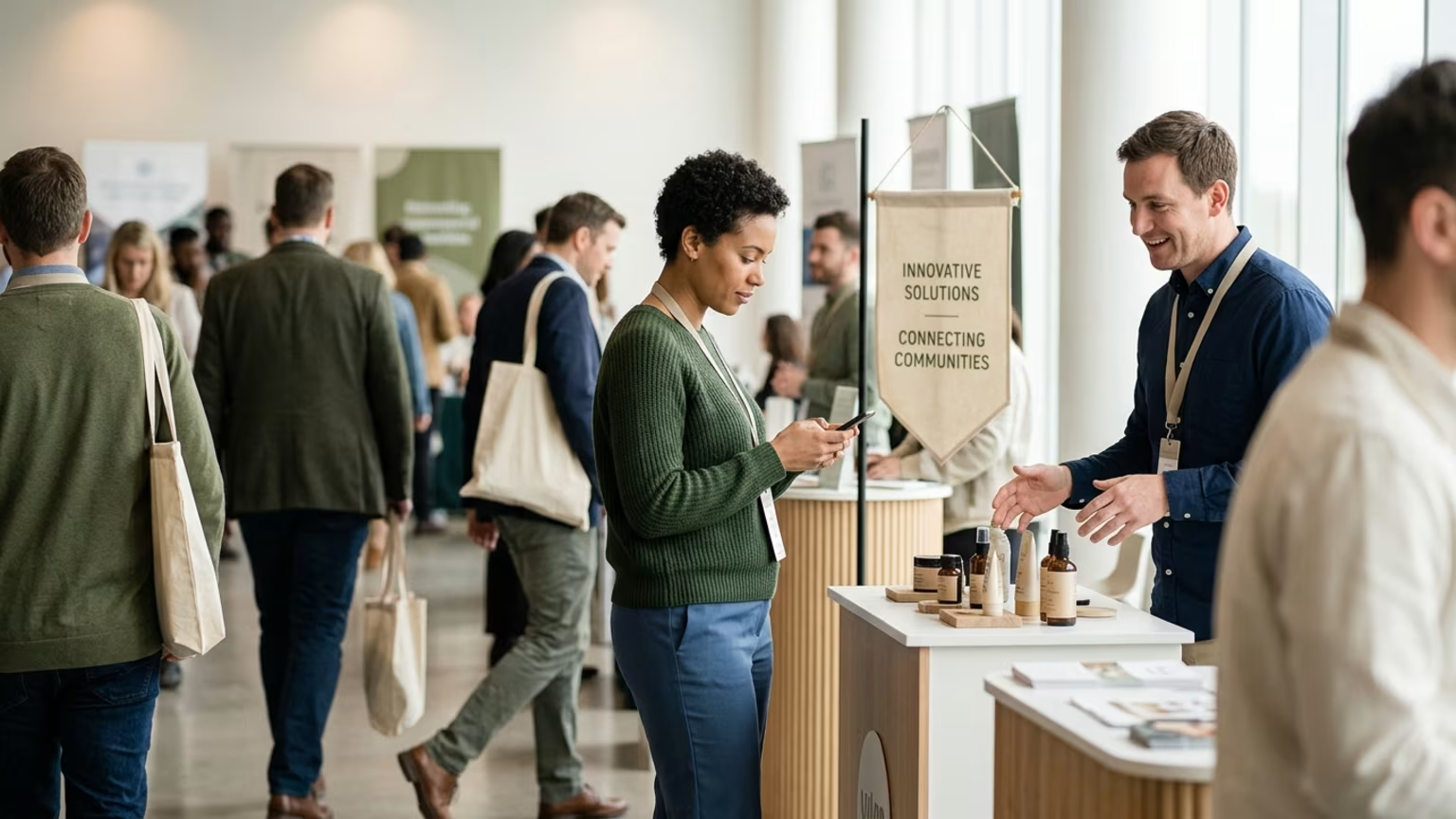
A field marketing team sets up a beautiful sampling station at a popular regional festival. Thousands of product miniatures leave the booth over a single weekend. The team celebrates the massive interaction count on Monday morning. Yet, scanner data shows absolutely zero retail lift in the surrounding area thirty days later.
Your high-volume sampling program is bleeding your marketing budget dry. Retail demo programs get judged on cups poured rather than on incremental pipeline. The industry treats free distribution as a marketing strategy. We see brands spend six figures on massive footprint activations just to give away free snacks.
Most of those free snacks go to people who will never buy the product. The objective is not simply to create exposure for your brand. A high-volume location is not necessarily a high-quality sampling location. The only metric that actually matters is whether that one-time taste becomes a repeat purchase.
Mainstream sampling approaches fail because they optimize for foot traffic instead of context. A Chief Marketing Officer signs off on an expensive campaign to drive trial for a new product. The agency secures a crowded venue and hires temporary staff. These temporary workers hand out product samples as quickly as possible.
This approach generates a beautiful dumpster fire of scattered attention and poor booth flow. The brand gets zero qualified pipeline because the trial is completely detached from the purchase decision. A sample detached from its usage context might generate a polite taste reaction. However, it completely fails to explain why the customer should buy the product.
Science backs up this operational reality. A 2026 study published through Vrije Universiteit Amsterdam examined how customer experience across multiple channels affects FMCG repurchase intention. It found that customer engagement was the strongest predictor of repurchase intention. Customer loyalty followed closely as the second strongest predictor.
Simply handing a cup to a passing shopper creates exposure without engagement. A one-time purchase can reflect curiosity or a convenient discount. Repeat purchase is a stronger indication that the product delivered sufficient value. The product must become part of the consumer's daily routine.
Environment plays a huge role in creating this necessary engagement. A 2026 study of Generation Z consumers at a coffee and eatery found a positive relationship between brand experience and repurchase intention. Store atmosphere also showed a positive relationship and mediating role. The study used a purposive sample of 139 respondents.
While sample sizes vary across categories, the underlying truth remains clear. People need to feel a connection to the environment to remember the product. If your activation relies on blind foot traffic, you are running a charity event. You must shift your focus toward structured consumer engagement.
We believe that warm authenticity paired with brutal operational discipline yields better trial and conversion. An effective sampling station should make the product easy to notice. It must also make the product easy to understand and remember. Execution matters far more than having the most expensive booth design.
Research summarized by ScienceDaily from the Journal of Consumer Research found a clear link between attention and behavior. It found that directing attention toward a product can increase the likelihood of future purchase. On the flip side, ignoring a product can reduce that likelihood. A trained ambassador creates that necessary attention through genuine conversation and structured product education.
You must match the sampling moment to the product's relevant usage occasion. A University of Missouri-hosted overview of Costco’s sampling model identifies several distinct sampling contexts with different objectives. These include aisle ends and entry queues. It also highlights prepared-food areas and front-end displays. Finally, health-and-wellness sections serve as specific environments for targeted trial.
You do not place a complex wellness supplement in a rushed entry queue. High-traffic zones near popular departments can increase the likelihood that a sampled product moves into the shopping basket. We design product launch roadshows that accelerate consumer trial and build trust. Our structured approach transforms initial product trial into sustained consumer confidence and retail performance.
Education must be an integrated part of the activation rather than an optional feature. A trained representative adds value by explaining product features and usage occasions. The interaction should be short enough for the environment. It must also be specific enough to reduce consumer uncertainty.
A loyalty-marketing guide recommends sending education immediately after a sample is received. This education can use a recipe, quick tip, or short demonstration video. It then recommends collecting feedback several days later. Brands should present a full-size purchase incentive after that interaction.
This structured approach turns a fleeting taste into a measurable business outcome. A Demo Wizard article argues that an in-store demonstration should be treated as a “conversion event” rather than merely a product giveaway. It recommends tracking trial-to-purchase conversion and cost per converted shopper. Brands must also track average basket size and ambassador productivity.
Finally, Demo Wizard recommends measuring repeat purchase within 30 days. When you treat sampling as a conversion event, your field team becomes a sales engine. You stop counting the number of cups poured. You start calculating the exact cost of acquiring a loyal customer.
You have to stop tracking vanity impressions and start tracking tangible outcomes. The goal is to move from sample distribution to retail sell-through. A solid beverage sampling strategy requires linking physical interactions to clear purchase mechanisms. Sampling creates a moment of receptivity, but receptivity is not availability.
The consumer should be told exactly what to do next. The next purchase opportunity should be immediate and highly specific. Some brands use a shelf placement immediately adjacent to the sampling station. Others use a unique QR code linking to a retailer product page.
Innovative models are shifting the financial structure of sampling entirely. Field Agent Canada describes Buy & Try as a model that turns trial into a full-size retail purchase while collecting feedback. This model is strategically relevant because it combines real purchase behavior with product feedback. Shoppers purchase the full-size product from a retail shelf first.
To prove that a physical activation drives incremental retail sales, you need a baseline. A raw sales total on an activation day cannot establish incremental impact by itself. Sales might be elevated because of regular weekend traffic, promotions, or store events. You need a rigorous measurement framework to prove your real Return on Investment.
A Pygmalios guide recommends comparing exposed shoppers or test stores with control groups. This helps estimate incremental sales lift and distinguish causal impact from normal buying behavior. You must isolate the true return from regular seasonal spikes. It suggests comparing loyalty-program members who received a promotion with similar members who did not.
Brands must track trial at the individual or cohort level. At a minimum, your team needs to record samples distributed and interactions completed. You also need to measure the sample acceptance rate and the specific product variant tested. Your event managers should document the exact location and time of every major interaction.
This level of data capture prevents high interaction counts from masking weak commercial performance. A practical dashboard should have three distinct levels of measurement. Operational metrics include samples delivered, staffing hours, stockouts, and cost per sample. Behavioral metrics cover education completion, product understanding, QR scans, and coupon redemption.
Financial metrics are the ultimate test of your campaign. These include incremental units, incremental revenue, gross margin, and customer acquisition cost. When you separate these three layers, you get a clear picture of your actual field performance.
A defensible follow-up structure requires careful timing. Immediately after the trial, you must provide usage guidance and purchase locations. Within several days, your team should collect feedback and identify any lingering consumer questions. Within the normal purchase window, you must present a relevant purchase reminder or offer.
After the expected replenishment cycle, you can finally measure repeat purchase accurately. After the entire campaign concludes, compare your exposed and control cohorts. This sequence ensures you capture both immediate conversions and delayed retail velocity. A loyalty guide defines “repeat purchase velocity” as the average time it takes a converted sampler to make a second and third full-price purchase.
Scaling a proven trial program to national retail locations requires flawless execution. Before expanding nationally, run controlled pilots across different location types and audience segments. Scale the combination that produces the strongest balance of qualified trial and incremental purchase. Do not simply scale the format with the greatest number of samples distributed. A well-planned grocery store sampling format will always prioritize quality over sheer volume.
A sampling program should not be evaluated solely by how many people received a product. Demanding execution over aesthetics separates profitable field marketing from expensive brand theater. Brands that pair disciplined targeting with structured retail conversion events will always outperform those relying on blind foot traffic. Operational consistency matters far more than a flashy booth design.
Your field staff must understand how to navigate complex event logistics and product education. A creative concept cannot compensate for an empty shelf or an ambassador who cannot explain the product. Real commercial success requires a seamless connection between the physical trial and the retail register. When you demand operational excellence, your live activations will generate predictable pipeline.
Stop paying for empty brand exposure at crowded trade shows. Start demanding measurable retail outcomes from every physical interaction. Great field execution is a science, not a guessing game.
Scaling a proven trial program to national retail locations requires flawless in-store execution, which is exactly where Makai takes ownership of your physical campaigns. We eliminate the risk of low quality leads from crowded trade shows by deploying our flagship Retail Demonstrations capability. Our trained brand ambassadors drive in store sales through real conversations and product trials, ensuring your field investment produces measurable pipeline.

30 Years Experiential & Retail Activation Partner for CPG & Beverage Brands | Multi-Market Demos, Roadshows & Costco/Club Programs That Actually Sell