Robbie Thain
Founder, CEO

IGD reports seasonal shoppers are heavily mission-focused. Learn how CPG brands can align their physical retail activations to match specific consumer needs.

On October 1, 2026, IGD published its latest retail analysis titled “Christmas retail trends: last-minute considerations.” Authored by Annie McGoff, the report draws heavily on IGD’s ShopperVista research. It is described specifically as its Opportunities for events 2026 insight and Christmas shopper research. The core data indicates that stated Christmas participation intent rose from 86 percent in 2025 to 89 percent in 2026. This reported increase provides context for why IGD views the season as an important retail event.
The IGD article details specific shifts in how consumers plan to approach seasonal hosting. Among shoppers hosting Christmas, a significant 81 percent plan to cook from scratch. Furthermore, 43 percent of these shoppers plan to try new recipes for their gatherings. The analysis also reports that 73 percent of Christmas hosts intend to buy party food. IGD identifies this high intent as an opportunity for trade-up innovation and premiumisation in party-food categories.
While home-based hosting remains dominant, external celebrations are also seeing a documented increase. IGD reports that 26 percent of shoppers planned to eat out at a bar or restaurant in 2026. This compares with 22 percent the previous year. The analysis specifically notes that more affluent shoppers primarily drove this increase in dining out.
To address these evolving behaviors, IGD’s central activation recommendation is explicit and highly practical. Because shoppers have different needs during seasonal events, activations “must be mission-oriented and clearly signposted” to make the shopper journey easier. This operational approach reduces friction and clarifies the purchasing decision on the store floor.
The report makes this recommendation concrete by contrasting two distinct shopper missions. Party hosts are expected to seek volume-led value to accommodate larger groups. Meanwhile, shoppers celebrating more intimate occasions may look for clear premium cues at an affordable price. The article also notes a challenging economic backdrop and a fragile state of consumer confidence.
Therefore, seasonal interest should not be treated as evidence that shoppers are entirely unconstrained in their spending. The evidence is based on a single IGD article that does not provide the survey dates or margin of error. U.S. brand leaders should view the percentages as directional planning tools rather than definitive domestic benchmarks. CPG leaders should treat IGD’s recommendations as strategic guidance to test in their own retail environments.
At Makai, we deliver carefully executed face-to-face marketing experiences designed to capture attention and generate measurable sales pipeline. The strategic guidance from IGD validates a fundamental principle of effective experiential marketing. Generic seasonal promotions consistently fail to convert because they ignore the consumer's immediate logistical context. Consumer packaged goods brands must align their physical engagements with the explicit intent of the retail visitor.
A shopper navigating a crowded grocery store days before a major event is actively hunting for practical solutions. If a retail activation ignores their volume-driven mission, the interaction becomes an operational failure. Shoppers will simply bypass a display that does not solve their immediate hosting problem. Conversely, a shopper preparing a small holiday meal requires a highly curated approach to product trial.
Brands must present clear premium cues that seamlessly match the intimate nature of their planned gathering. This reality demands a highly disciplined approach to field execution and engagement marketing. Marketing directors often struggle to fix retail fragmentation during peak seasonal retail periods. Placing a standard promotional pop-up in a high-traffic aisle is an inefficient use of the marketing budget.
The physical trial experience must speak directly to the shopper's immediate logistical goal. We specialize in creating retail demos, product sampling programs, and roadshows that bring brands face to face with their audiences. Each program is designed to drive trial, build consumer relationships, and accelerate retail velocity across multiple locations. When brand activations are explicitly mission-oriented, they stop acting as temporary visual interruptions on the store floor.
They transform into integrated retail solutions that confidently guide the consumer toward a verified purchase. This level of strategic alignment builds deep confidence with major retail partners. It also proves that live consumer events can deliver measurable Return on Investment. The goal is always to turn fleeting interactions into documented sales outcomes.
Historically, brands have struggled to measure real ROI from live retail events during busy seasons. Teams often evaluate success based on how many product samples were handed out rather than verifiable sales lift. This outdated model fails to account for the actual shopping intent of the consumer in the aisle. When field teams align their footprint with the shopper's active mission, they capture qualified pipeline rather than passing foot traffic.
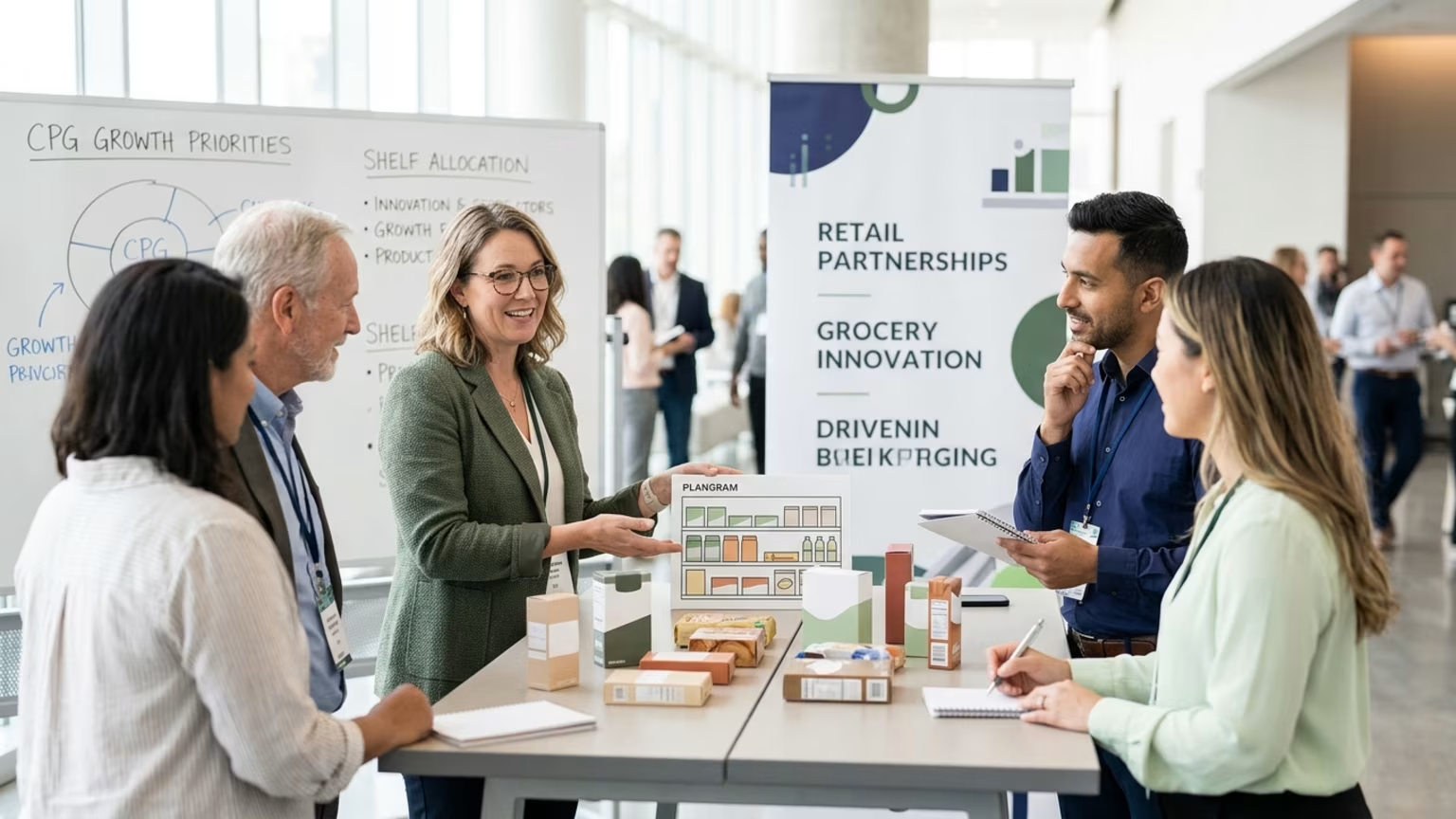
The push for mission-driven seasonal activations creates immediate downstream effects on field operations and trade show footprints. Marketing teams must rethink their fundamental approach to store layouts, product flow, and brand ambassador training. For store execution, IGD recommends organizing event sections strictly around specific shopper missions. Store execution teams must use clear signage and intuitive layouts to effectively guide the consumer.
Placing retail media near these specific zones becomes a critical operational requirement for brand visibility. IGD also recommends using prominent aisle-end activations and relevant, familiar products to help with overall store navigation. These logistical shifts impact how brands plan and execute their multi-region promotional campaigns. Brands cannot simply rely on deploying a single uniform display across all available retail environments.
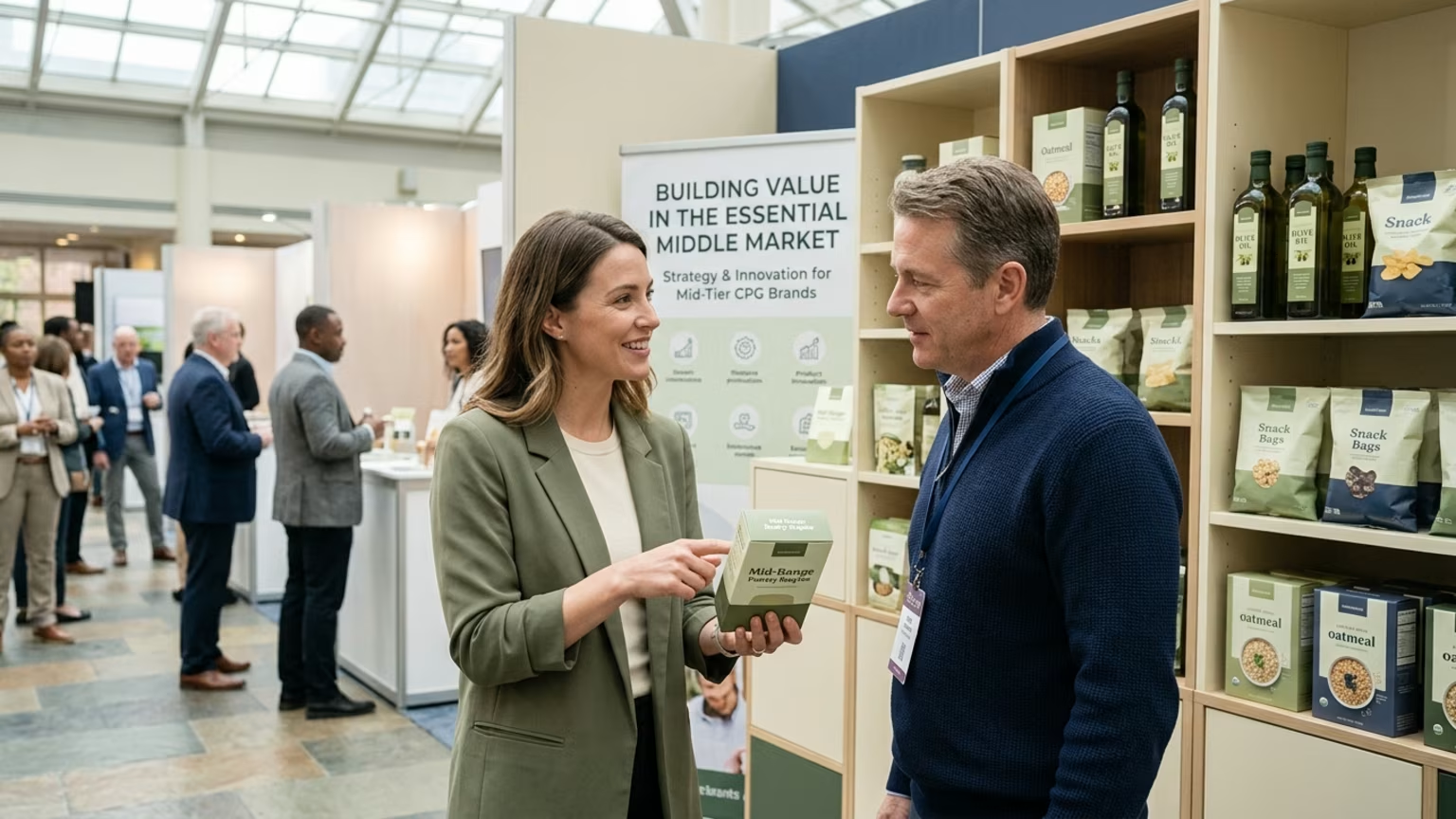
They must carefully tailor their physical footprint to match the dominant shopper mission of each specific venue. This might require deploying high-volume demo stations for large club stores or Costco roadshows. At the same time, brands might need smaller tasting environments for premium grocery partners. Marketers who understand the seasonal shopping timing advantage know that precise logistical execution is an absolute mandate.
Managing these localized campaigns requires a high level of logistical precision across multiple retail partners simultaneously. Field marketing directors must navigate complex event logistics, varying retailer guidelines, and strict permitting requirements for in-store activations. Each store environment presents unique rules regarding where aisle-end activations or promotional displays can be legally placed. Failing to secure the proper clearances will prevent the brand from executing the mission-oriented strategy that IGD recommends.
Integrating recipe-led promotions adds another significant layer of complexity to seasonal field execution. Shoppers are increasingly researching recipe ideas online before they ever arrive at a physical store environment. To effectively capture this intent, IGD suggests connecting digital inspiration directly to physical retail action. IGD recommends that brands use websites and trackable activation links to support these recipe-led promotions.
Retailers should also utilize recipe-developer partnerships alongside in-store ingredient combinations. Finally, deploying recipe QR codes helps influence shoppers who are researching what to cook. Connecting this digital research to a physical purchase requires flawless supply chain management and footprint coordination. Brands must combine the relevant ingredients in-store to make the shopper's purchasing decision entirely effortless.
If a QR code promotes a specific holiday appetizer, the featured items must be fully stocked nearby. A failure in basic inventory logistics will instantly sever the connection between online inspiration and physical purchase. Brands that successfully bridge the gap between street activations and retail velocity prioritize this exact type of operational footprint control. Field staff must also be rigorously trained to actively support these specific shopper journeys.
Brand ambassadors cannot simply hand out product samples and recite a generic, uninspired script. They must quickly identify the underlying mission of the retail shopper they are actively engaging. If a consumer is sampling a new party food, the ambassador must focus on ease of preparation. If the product is a premium beverage, the conversation must quickly shift toward quality ingredients and taste profile.
Constant operational oversight ensures that brand ambassadors are not operating blindly on the retail floor. Supervisors must track engagement metrics to verify that the field staff is correctly interpreting the local shopper missions. If a specific store traffic pattern shifts, the field team must adjust their physical positioning to remain highly visible. By maintaining strict discipline over the entire activation space, brands can maximize their chances of generating measurable consumer response.
As you finalize your upcoming retail programs, are your seasonal field activations explicitly designed to solve specific shopper missions or are they simply adding visual clutter to the store aisle?
When marketers deploy generic seasonal promotions that ignore specific shopper missions, failing to adapt causes difficulty measuring real ROI from live events. Makai solves this disconnect by ensuring every physical footprint operates flawlessly. With Storage & Logistics we store your sampling product and event gear, then ship, track, and coordinate delivery nationwide so every activation stays on schedule. Request a proposal

30 Years Experiential & Retail Activation Partner for CPG & Beverage Brands | Multi-Market Demos, Roadshows & Costco/Club Programs That Actually Sell