Robbie Thain
Founder, CEO

Learn how CPG brands sync street activations with real-time local inventory to drive measurable retail sell-through and avoid empty brand theater.
Myth: You can run a street activation purely for consumer awareness and expect retail sales to naturally follow.
Truth: Disconnected street sampling will burn your marketing budget without moving a single unit of local inventory.
Smart field marketing leaders fall into this trap for very logical reasons. They face immense pressure from executive teams to show high engagement numbers. Traditional experiential agencies often promise a massive halo effect from high foot traffic. The optics of a crowded sidewalk look fantastic on a post-event wrap report.
It is easy to believe that if people taste a great product on the street, they will automatically hunt it down at their local grocery store. Teams look at the thousands of physical impressions and assume a percentage will inevitably convert into retail velocity. Budgets get approved quickly because the cost per engagement appears incredibly low. The strategy sounds completely foolproof when presented in a corporate boardroom.
The problem begins when marketing departments operate in total isolation from the sales and supply chain teams. Planners assume that the local retail partners are fully stocked and ready to absorb this new consumer demand. They trust that a memorable brand interaction will override the friction of finding the product later. When consumers leave the activation space, the immediate desire to purchase fades rapidly if the product is not right in front of them.
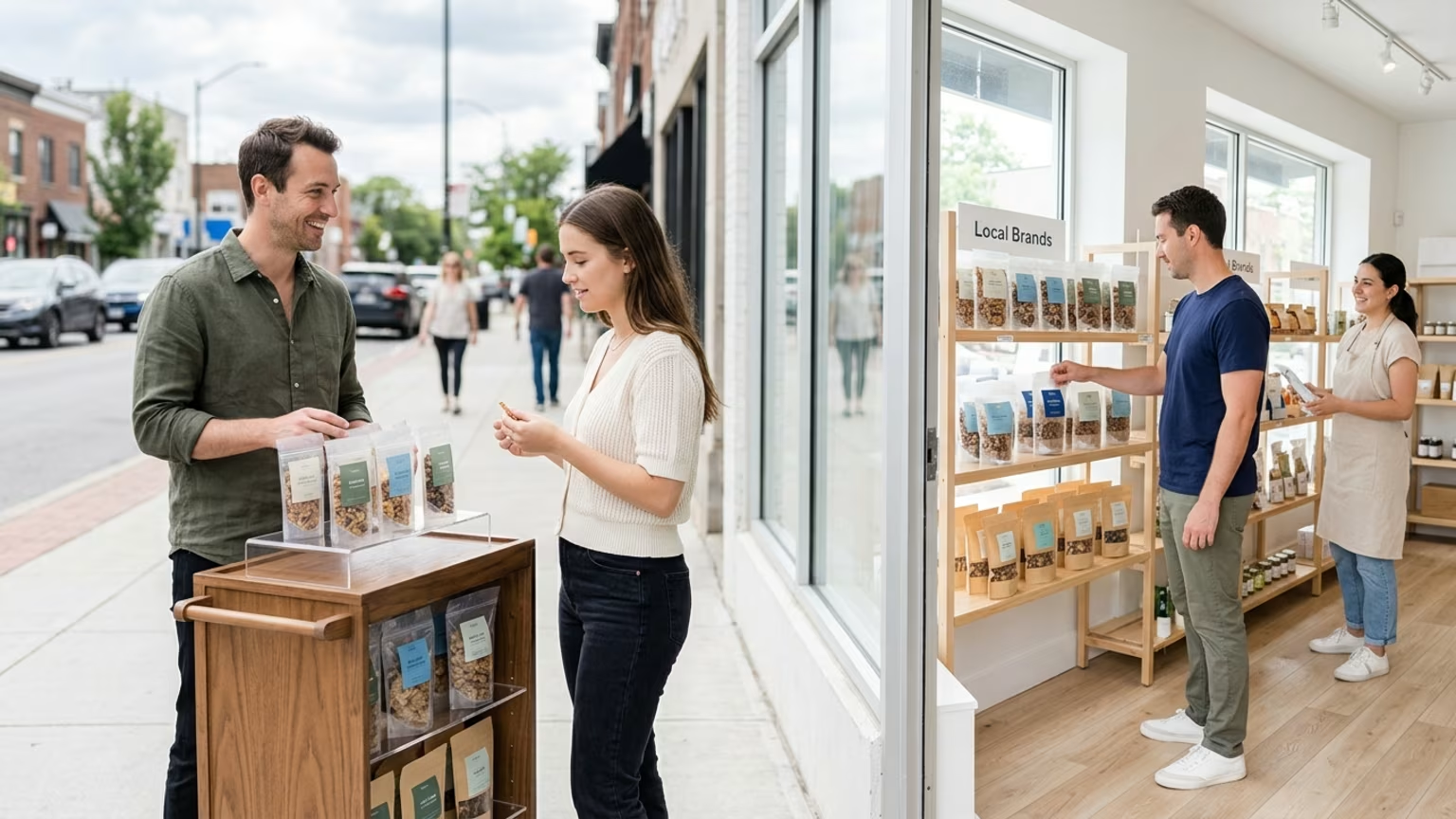
The reality on the ground tells a very different story. When a street activation operates independently of retail data, it generates empty enthusiasm rather than measurable pipeline. Consumers are easily distracted, and asking them to remember a brand hours later creates too much friction. If the product is out of stock at the nearest store, that newly generated intent is completely wasted.
The consequences of ignoring local inventory are immediate and financially punishing. Generating excitement for an unavailable product actively alienates your potential buyers. These frustrated shoppers are highly unlikely to seek out the brand a second time. This operational failure turns what should be a profitable marketing investment into a net negative for brand perception.
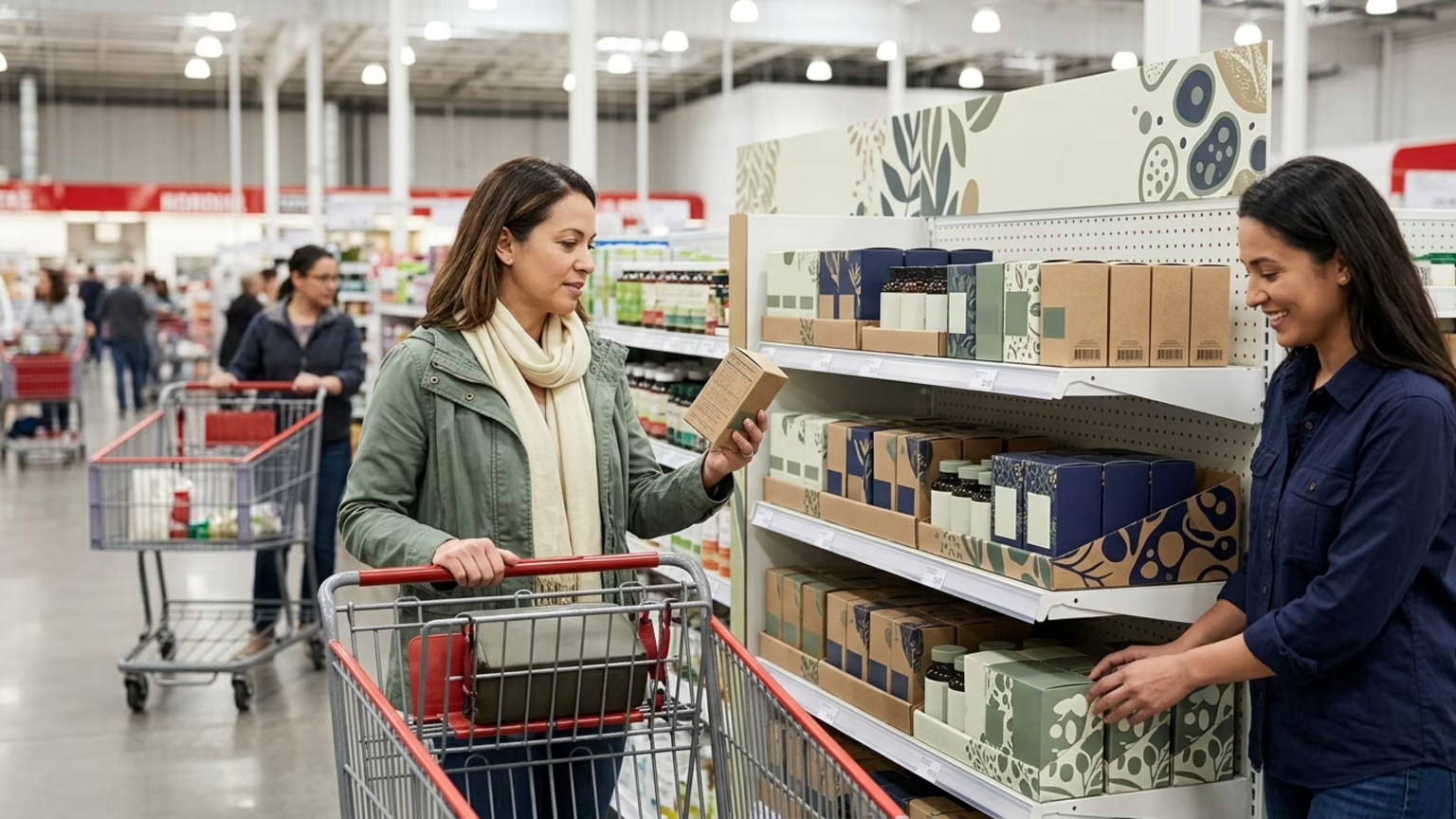
Retail buyers now demand proof of foot traffic and concrete retail conversion rather than just free sampling metrics. According to industry analysis from Fractional Brand Managers, Costco members have an average household income of roughly $128,000. These shoppers respond to quality-first positioning and require label-literate staff to answer specific clinical or ingredient questions. A basic street team handing out flyers simply cannot convert this highly discerning demographic.
Without route-to-market automation syncing the activation with real-time local store inventory, brands risk severe stockouts. Platforms like SimplyDepo, Repsly, and FieldAssist have matured in 2026 to offer this exact CPG-specific automation. These tools allow mobile sampling teams to align their physical presence with real-time SKU inventory at the local store level. When teams operate blind to these inventory levels, they actively damage retailer confidence by creating localized product shortages.
We have been connecting brands with people through live experiences and national activations since 1995. Over three decades, our team has built a track record of creating meaningful brand moments across the country. Our roster includes Dole, Popchips, Pulmuone, and Kona Brewing. We know firsthand that supply chain alignment is the only way to protect your brand equity during a live campaign.
To fix this operational gap, brands must design their activations as direct retail drivers. Planning should center on measurable velocity benchmarks rather than arbitrary sample counts. If a regional retail test is lagging, a roadshow acts as the most effective tool to close the velocity gap to the expansion threshold. Marketing teams should link the exact hours of street and store activations directly to register receipt data.
Using control-market baselines helps isolate the actual sales lift from the event itself. You must compare matched stores without events to the locations receiving active sampling support. Brands should plan their routes based on outlet intelligence and live inventory to ensure mobile teams are positioned where the product is actually in stock. Incorporating route planning that aligns with retail inventory transforms a basic pop-up into a highly effective conversion engine.
A successful roadshow must also act as a real-time feedback loop for the wider marketing strategy. Field teams should constantly monitor which product variations generate the highest immediate conversion. This data allows brands to adjust their supply chain orders before expanding into new regional markets. Treating every street activation as a live intelligence gathering operation maximizes the value of the original investment.
Marketing leaders must also focus entirely on retention-first growth. The ultimate goal of any physical engagement is the second purchase, not just a fleeting moment of trial. When evaluating retail demos against larger mobile tours, the priority must remain on building a lasting customer relationship. Retailers place a much higher value on repeat purchase rates than they do on one-time trial surges.
This shift requires bringing in sales and operations stakeholders early to co-create the activation. Experts suggest that securing cross-stakeholder collaboration ensures the team has the internal champions needed to manage the operational risks of live events. By aligning marketing goals with supply chain realities, you ensure that every sample handed out has a direct path to the register. This is how makai turns physical interactions into highly qualified consumer leads.
The data proves that closely aligned physical activations create massive retail outcomes. Reports from Retail Insider indicate that well-executed experiential campaigns are delivering returns ranging from 3:1 to 5:1 on spend. Data cited by Retail Insider suggests that 85% of consumers are more likely to purchase a product after an in-person brand engagement. These numbers demonstrate the raw power of physical trust in consumer purchasing decisions.
For CPG brands in regional tests, achieving a velocity of 25 or more units per location per week is the standard threshold to justify national expansion. According to industry analysis from Fractional Brand Managers, roadshow events at warehouse locations can accelerate a product's weekly sell-through by two to five times the baseline rate. Moving beyond the event week itself, the lasting impact remains highly measurable. Analysis of warehouse club performance suggests that successful roadshows can result in a post-event baseline velocity uptick of 20% to 40%.
The broader retail media environment is also expanding to support these in-store efforts. In-store retail media ad spending is projected to climb 33% in 2026. This signals a massive reallocation of marketing budgets toward physical store environments. Connecting trade show momentum to ongoing retail success relies heavily on taking advantage of this increased store-level investment.
Additional data reinforces the value of physical proximity to the product. Grocery TV conducted a meta-analysis of 16 sales lift studies for CPG brands sold throughout the store. Their findings show that on average consumer packaged goods brands achieve a 14% incremental lift in sales by advertising on their network. When you combine targeted media visibility with a perfectly timed physical roadshow, the resulting retail velocity becomes undeniable.
Street activations only generate real revenue when they are meticulously engineered to pull local inventory right off the shelf.

30 Years Experiential & Retail Activation Partner for CPG & Beverage Brands | Multi-Market Demos, Roadshows & Costco/Club Programs That Actually Sell