Robbie Thain
Founder, CEO

Target Corporation is replacing passive beauty aisles with interactive trial zones. Learn how CPG marketers must adjust their retail sampling strategies.
Retail demo programs get judged on cups poured, not on incremental pipeline. That operational mismatch is why passive shelf displays are dying out across national retail chains. Shoppers demand structured trial environments that force them to interact before they buy. Target Corporation is leading this shift by replacing basic aisles with interactive hubs.
This macro trend forces a massive change in how marketing teams allocate their trade budgets. Field marketing operators can no longer rely on simple endcap displays to drive trial. They must build rigorous systems to manage staffing, sampling, and immediate conversion at the point of sale. Without verifiable measurement protocols, field marketing teams risk turning high-potential retail spaces into disorganized sampling stations. Leaders must demand strict operational accountability from their agency partners.
The financial foundation for in-store trials is massive. Target's beauty net sales reached $3.639 billion in the second quarter of fiscal 2026. This figure was up from $3.396 billion in the same period a year earlier. That represents an increase of approximately $243 million.
Based on the figures reported in the announcement, this translates to roughly 7.2 percent growth. The announcement characterizes the quarterly increase as high-single-digit beauty sales growth. These financial results validate why large retailers are heavily prioritizing physical footprints. Field marketers must secure funding to execute within these high-volume retail environments.
According to the announcement, beauty is one of seven core priority areas receiving disproportionate capital and operational resources at Target. Target management said it had seen sustained guest response to earlier beauty investments. This sustained response proves that consumers crave hands-on product interaction. CPG brands must align their budgets with this massive capital flow to secure visibility.
The 7.2 percent growth figure represents a massive shift in shopper behavior. Consumers are explicitly rewarding retailers that offer hands-on product interaction and expert guidance. This financial reality puts immense pressure on CPG marketers to justify their physical event budgets. If a brand cannot prove that its retail sampling drives direct revenue, its funding will be reallocated quickly. VPs of Marketing face intense pressure to justify every dollar spent on field activations. They require execution models that connect a physical handshake directly to a register receipt.
Retailers are continually searching for new ways to connect product advertising directly with physical shopping environments. Brands must treat physical trials as direct performance marketing. The days of treating retail sampling as an untrackable brand expense are over.
Target plans to launch Target Beauty Studio in more than 600 U.S. stores and on Target.com on September 10, 2026. A brand announcement associated with the rollout specifies 611 participating Target locations. The format will feature more than 1,600 beauty products from 90 prestige, emerging and global brands.
The assortment covers skincare, makeup, and haircare. It also includes fragrance, bath and body, and nail segments. Target says more than two-thirds of the featured brands are new to its assortment. This does not necessarily mean these are newly launched brands in the broader market.
However, it gives the retailer a mechanism to use physical trial to introduce unfamiliar products to shoppers. Emerging brands must use this opportunity to capture new customers who would never buy an untested product. For a Vice President of Marketing, securing space in this program is only the first step. The real challenge is executing a flawless physical experience across hundreds of stores simultaneously.
A massive 600-store footprint magnifies small operational failures very quickly. Field teams must supply standardized training modules and clear sampling procedures to prevent execution drift. Brands should connect their physical activations with broader strategies to close the attribution gap between trial and purchase. Managing hundreds of remote brand ambassadors requires intense operational discipline.
Assuming that a beautiful package will naturally sell itself leaves brand teams vulnerable to wasted budget. Operators must ensure their product testers are consistently stocked, clean, and visible. They must also prepare contingency plans for out-of-stock situations. Shoppers will quickly abandon a product if the tester is empty or damaged. Without strict oversight, a beautifully designed retail campaign will fail at the execution level. Operators must prioritize pristine visual merchandising alongside aggressive sales tactics.
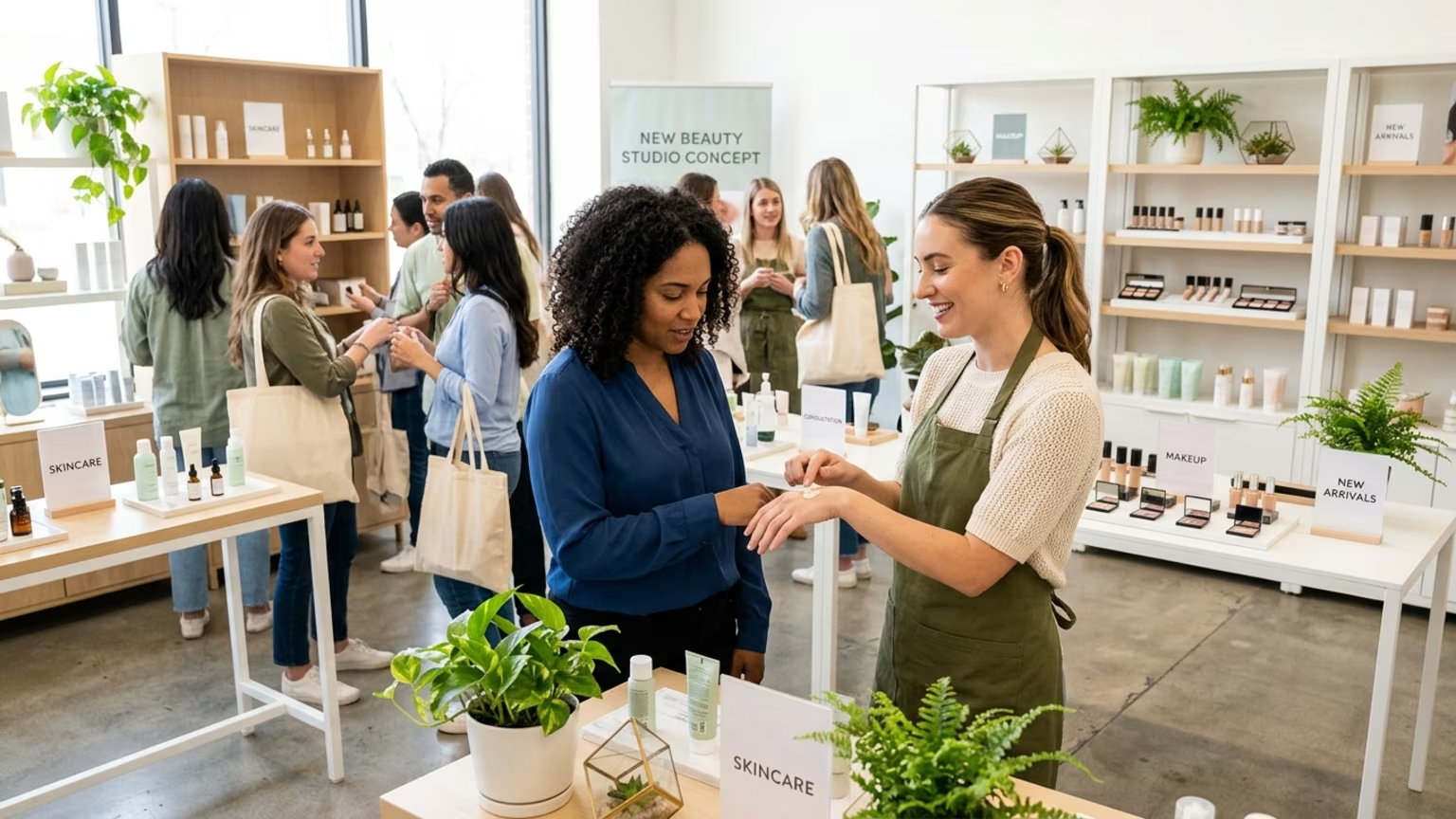
The physical experience will combine dedicated Beauty Advisors, product testing, and rotating product features. It will also feature exclusive Target Circle offers and a center table for brand storytelling and sampling. The studio will have an online component through Target.com. The concept is described as including specialty-level presentation, rotating product spotlights and Target Circle offers across both store and digital channels.
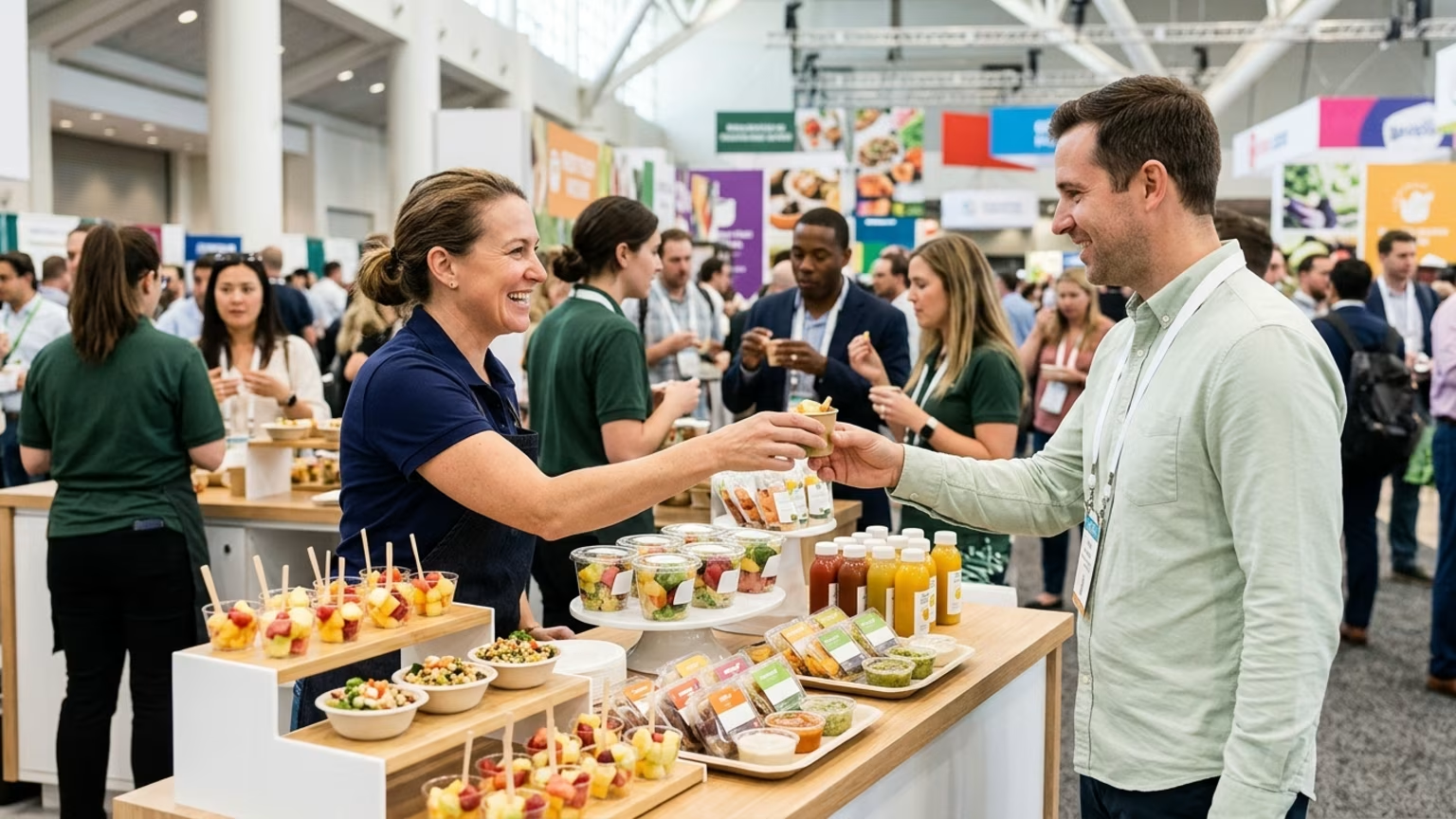
Featured brands include Sunday Riley, Briogeo, and Rom&nd. The assortment also highlights Lake & Skye alongside Tan-Luxe. We have been connecting brands with people through live experiences, retail programs, and national activations since 1995. Over three decades, we have built a track record of creating meaningful brand moments across the country.
In our experience, scaling a national program requires strict adherence to retailer operational guidelines. Representatives must be trained to demonstrate products safely while communicating specific purchase incentives. Brands must design the advisor role carefully to maximize commercial impact. Dedicated representatives should be equipped to demonstrate, recommend, and explain products accurately.
Training programs must cover primary use cases, safe demonstration techniques, and effective objection handling. Advisors must also know how to apply Target Circle promotional triggers to close immediate sales. Connecting digital tools with physical trials adds another layer of complexity for operators. Retail Dive reported that Target planned to use artificial intelligence to make product recommendations as shoppers built wish lists for the back-to-school season.
This digital integration suggests that physical retail spaces are becoming highly connected environments. Marketing operators must adapt to this technological shift. Teams must ensure their online content reinforces the exact same product promise used in stores. Connecting these touchpoints shows why education drives beauty retail sales far more effectively than passive signage.
The center table presents a unique opportunity for immediate consumer engagement. Target intends to use the center table to present brands through storytelling and sampling rather than treating every product as interchangeable shelf inventory. Marketers must sequence this interaction precisely. The strongest execution will make the product benefit understandable within a short in-store interaction.
To capitalize on expanding in-store experiential zones, marketers must build rigorous performance reporting systems. Store-level execution will dictate which brands remain featured on the highly coveted center table. High turnover in these premium spots means that brands must prove their commercial value immediately. A poor opening weekend could jeopardize a national retail partnership.
Operators should track out-of-stock rates, sample distribution volume, and promotional offer activations very closely. Marketers should establish a baseline before the program launches. They must compare performance across comparable stores, time periods, and activation conditions where possible. The key question is whether the physical experience produces qualified trial, improved shopper confidence, and repeatable sell-through.
These metrics determine the true Return on Investment for any retail sampling initiative. Brands must demand clear reporting on new-to-brand customer rates and cost per trial.
The rollout of this beauty studio concept forces brand teams to treat the store as a measurable conversion environment. Marketers must stop judging their retail activations by passive foot traffic or generic brand awareness. Instead, operators must track the number of product tests completed, advisor interactions, and same-day purchase rates. This disciplined approach separates measurable commercial success from basic brand theater.
Brands that adapt to these structured trial environments will capture market share. Those that rely on passive displays will quickly lose their physical retail presence. The ultimate measure of success is moving inventory off the shelf.
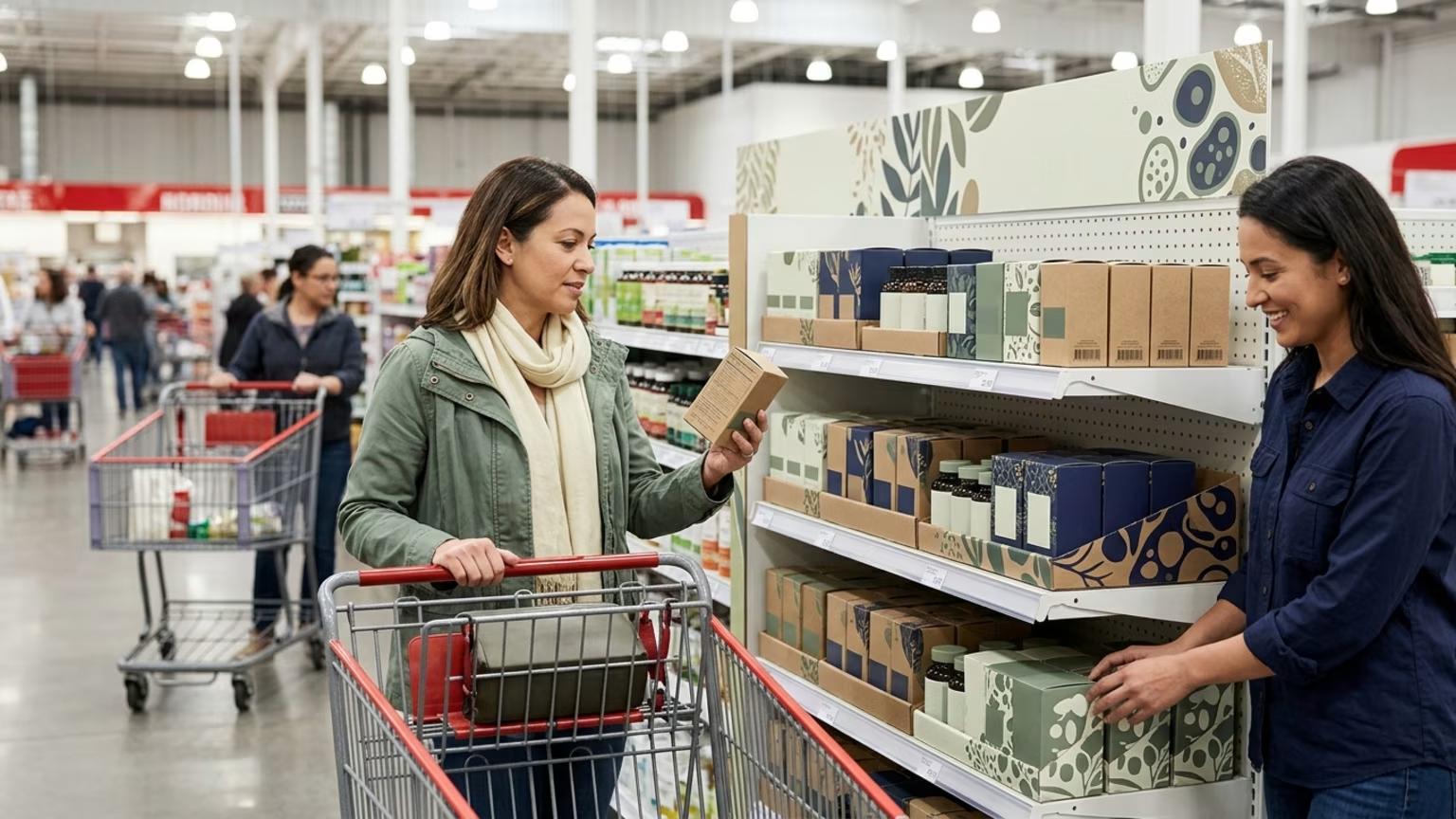
Rolling out unverified retail trial programs across hundreds of locations leaves field marketing teams blind to actual sales performance. Makai eliminates the difficulty measuring real ROI from live events by deploying our Costco Roadshows capability. We manage end to end Costco roadshows that bring brands to shoppers through live demos, real conversations, and measurable sales impact.

30 Years Experiential & Retail Activation Partner for CPG & Beverage Brands | Multi-Market Demos, Roadshows & Costco/Club Programs That Actually Sell