Robbie Thain
Founder, CEO

eMarketer explores how commerce media aligns with shopper needs. Learn why brands must combine digital insights with rigorous in-store operational discipline.
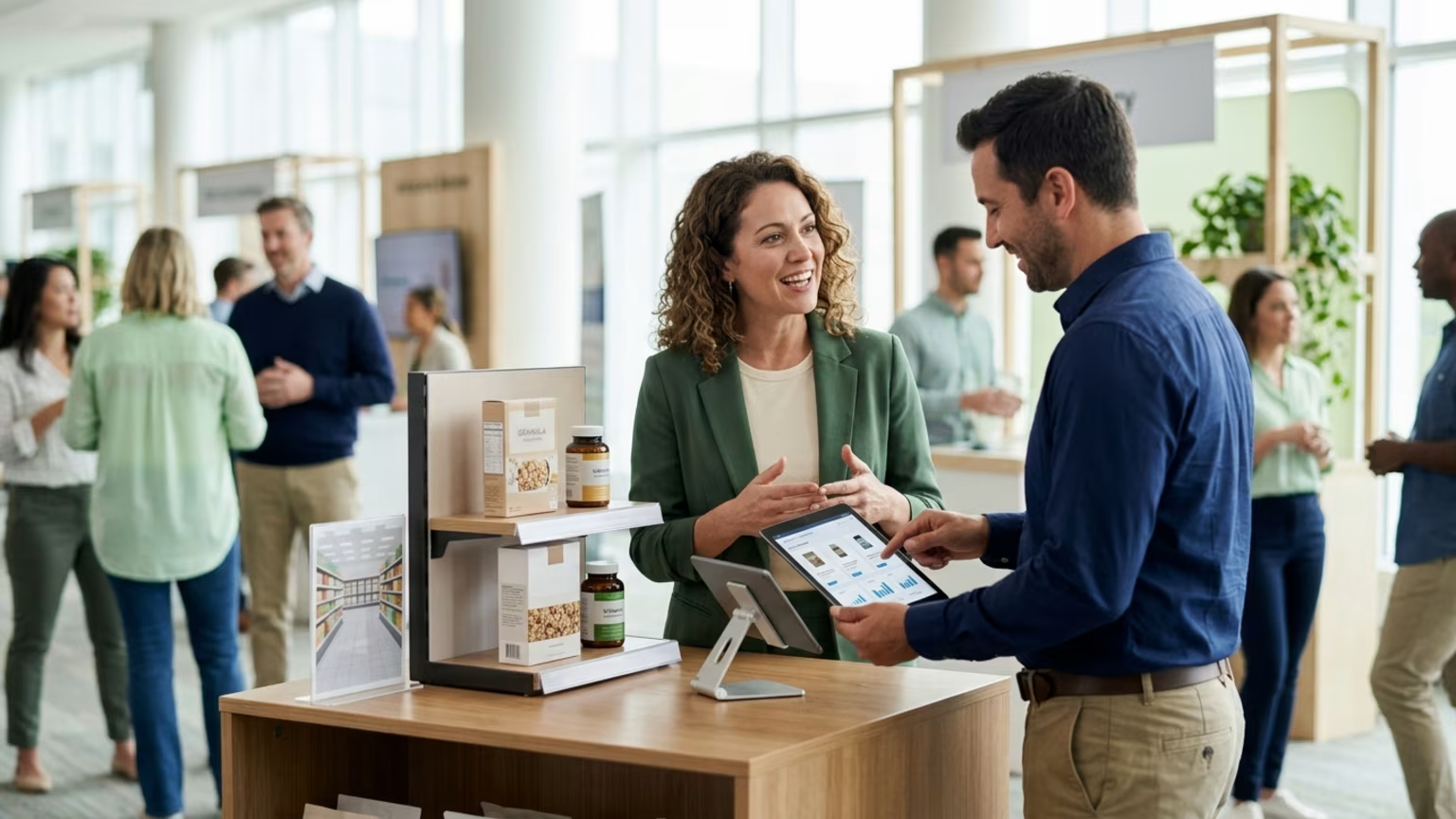
Digital marketers are treating physical retail spaces like giant browser windows. They pour billions into digital networks while leaving actual physical product trial entirely to chance. eMarketer’s August 24, 2026 analysis argues that commerce media is moving from rapid expansion toward operational maturity. Brands must now prove these massive digital investments produce measurable business results.
The central question has shifted completely for executive teams. Marketers are no longer asking if they should invest in retail media. They are desperately trying to determine if their current strategy actually influences real world shopping behavior. A highly targeted message fails instantly if it interrupts the shopper. It also fails if it lacks useful information or creates a massive mismatch between the digital promise and the physical product experience.
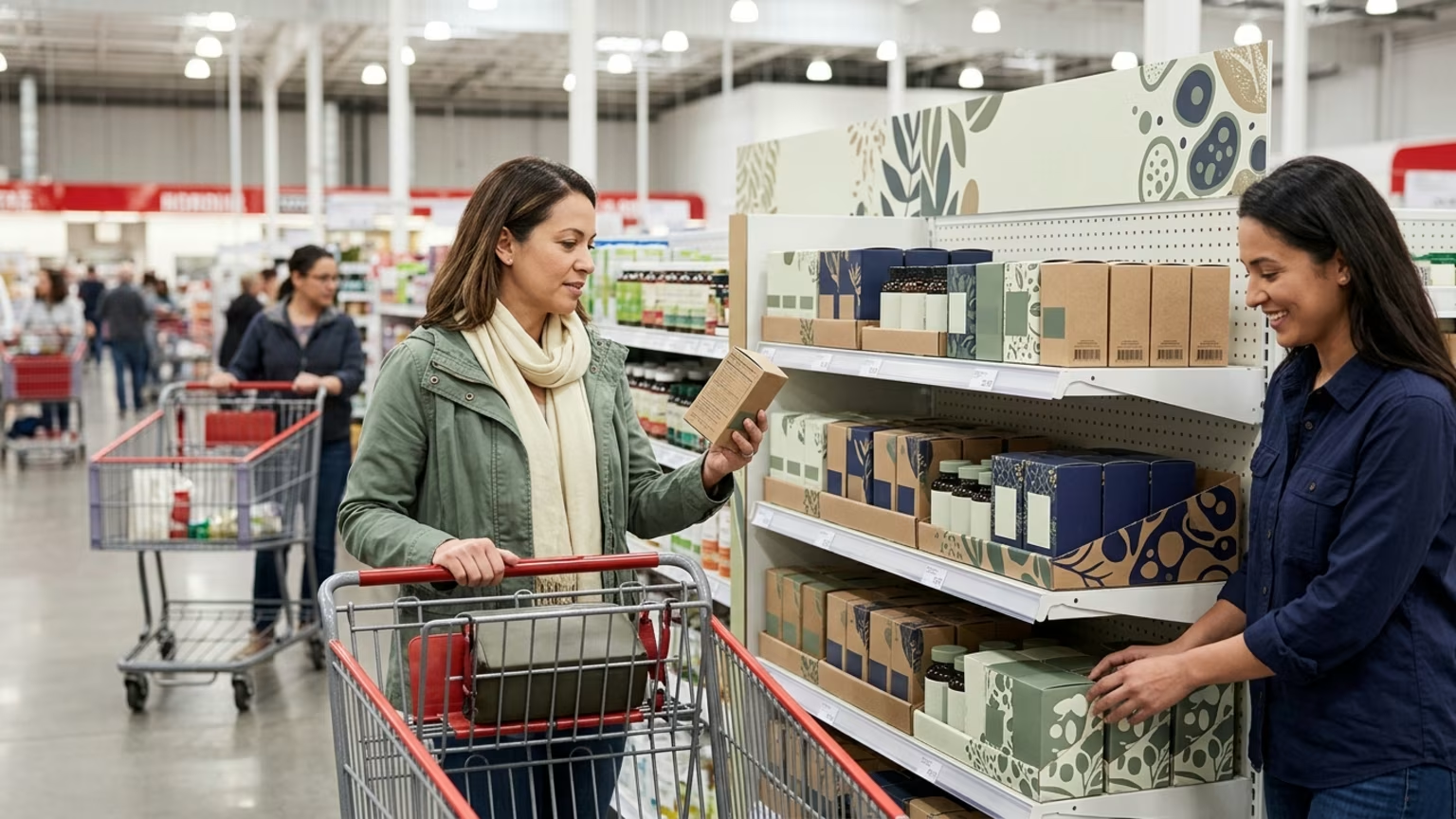
Retail expansion pushes brands to their absolute limits. When a consumer goods company secures new shelf space, they often throw money at digital awareness. They assume digital frequency will automatically drive physical trial. This assumption routinely destroys marketing budgets and damages retailer confidence.
Marketing leaders face intense pressure to justify every promotional dollar. An eMarketer result forecasts U.S. retail media spending at $72.97 billion in 2026. This figure represents an increase of 20.3% year over year. Despite this massive investment, shoppers still encounter disjointed messaging at the point of purchase.
The financial mismatch is absolutely striking. A recent Dunnhumby study surveyed 3,000 grocery shoppers in the United States and the United Kingdom. It reported that roughly 90% of customer engagement and transactions still occur in physical stores in grocery and other core retail sectors. Meanwhile, less than 1% of U.S. retail media investment is directed toward in-store media. Brands are financing digital impressions while starving physical retail environments.
This fragmentation keeps brand directors awake at night as they approve massive budgets. They hope their digital media plan will magically translate to retail sell through. Instead, they get scattered attention and poor physical engagement. The disconnect is so severe that many brands are actively turning physical store spaces into measurable media assets to survive.
Michael Schuh is Dunnhumby’s global head of media. He criticizes fragmented retail media infrastructure. He asks how advertisers can create a consistent customer experience when retailers use multiple ad-tech partners that do not communicate with one another. When technology creates additional friction, personalization becomes completely counterproductive.
Logistics often become the silent killer of great creative ideas. Marketing teams design beautiful digital campaigns but ignore the complexities of physical execution. They forget about local health permits, union regulations, or specialized product handling. A sampling activation fails when the product arrives warm, the ambassador lacks training, or the display is broken. The most sophisticated targeting algorithm cannot fix a sloppy physical presentation.
Reversing this trend requires a fundamentally different mindset. We approach these challenges with a blend of welcoming authenticity and brutal operational discipline. Brands need warm interactions that respect shopper intent. They also need strict logistical control to ensure field teams execute perfectly on the retail floor. You cannot win trust without consistent delivery.
The eMarketer analysis features critical commentary from Arielle Feger. She is a senior eMarketer analyst covering retail and commerce media. Feger identifies two basic consumer benefits that make commerce media useful. Those core benefits are saving time and saving money. A physical product trial must offer immediate value rather than creating an annoying interruption.
Shoppers are incredibly receptive to helpful experiences. The Dunnhumby study reported that 91% of shoppers were comfortable with retailers capturing transactional data when they received meaningful value in return. Furthermore, seven in ten shoppers were likely to trust personalized advertising. This directly compares with one in four who trusted generic advertising. The data proves that consumers crave genuinely helpful interactions.
Execution quality dictates the entire brand perception. Feger warns that one poor recommendation or bad product experience can cause consumers to switch elsewhere. Conversely, consistently relevant recommendations and quality products can build credibility over time. Your brand success hinges on better field staff delivering an excellent experience. Teams must be fully prepared to answer detailed questions about ingredients, sourcing, and price.
We see this reality on the floor every single day. A VP of Marketing reflected on our partnership: 'Robbie, it was a pleasure working with you and your team. You turned our launch into an experience that connected with shoppers and built lasting excitement for our brand. We're already looking forward to the next project together.' Our team created a launch experience that resonated with retail shoppers and generated momentum for future collaborations.
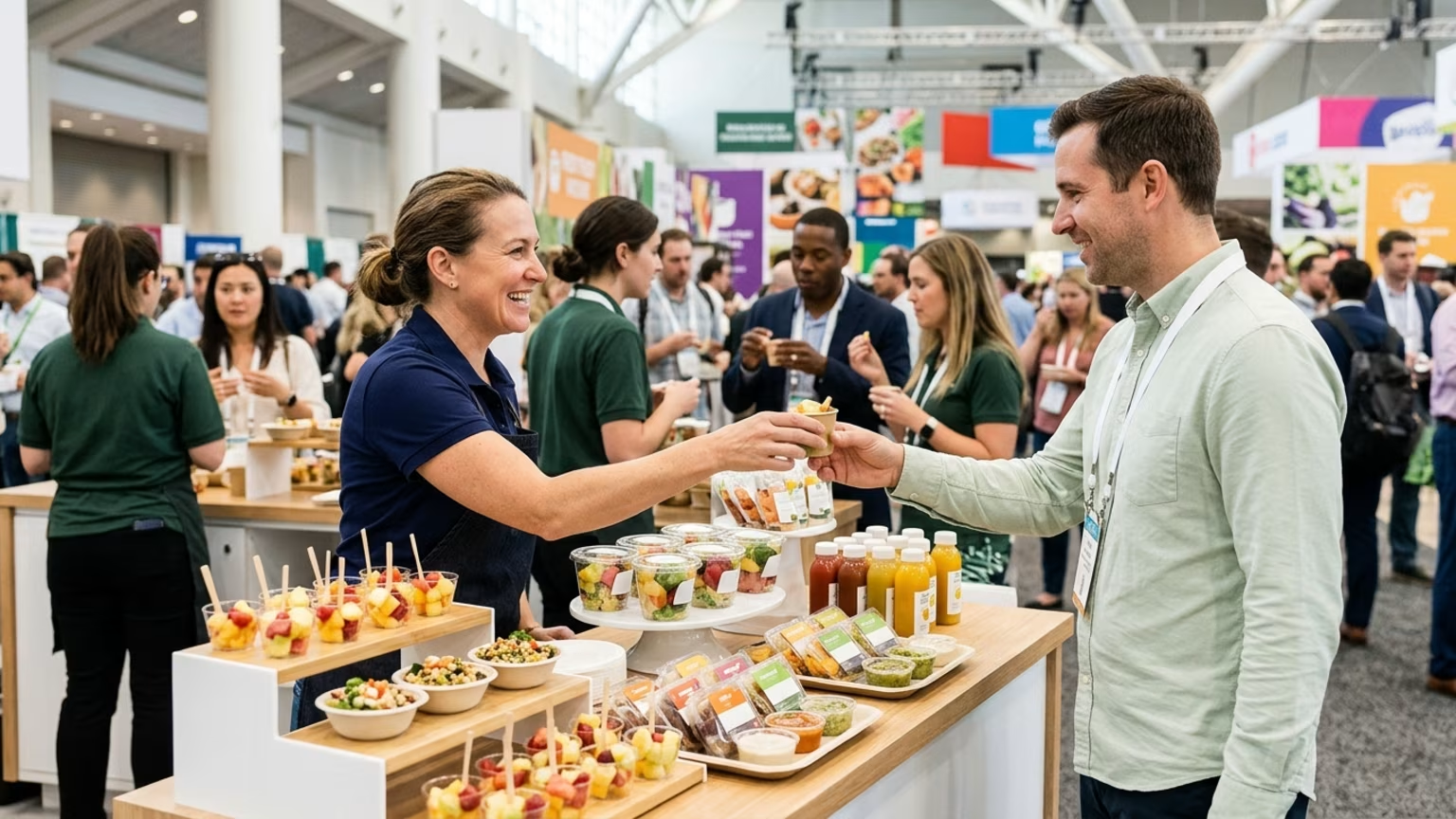
Building this trust demands incredibly accurate communication. eMarketer recommends that brands provide accurate product data, specifications, use cases, and demonstrations rather than relying only on brand reputation. Every interaction must answer a clear question for the consumer. When an ambassador pours a beverage sample, the shopper must understand exactly why the product fits their lifestyle.
Marketers must stop judging physical activations purely on total interactions. The goal is converting those brief engagements into qualified retail outcomes. U.S. commerce media advertising is forecast to reach $83.71 billion in 2026. This massive figure represents 20.5% of total U.S. digital ad spending according to eMarketer’s June 2026 forecast. You must attach that kind of funding to real transaction data.
Mastercard defines commerce media as an advertising model that uses aggregated and anonymized commerce insights to connect brands with consumers across physical and digital touchpoints. This definition correctly spans the entire buying journey. Physical sampling programs should adopt the exact same philosophy. You should evaluate units sold during the activation. You should also track product consideration, offer redemption, and repeat purchase signals.
Automation is definitely not a shortcut around thoughtful measurement. In an eMarketer survey, 42% of surveyed respondents ignored AI recommendations because they felt too generic or unrelated to their campaigns. Additionally, 33% said a clear explanation would make them more likely to act on an AI recommendation. Finally, 31% wanted a direct connection to a business KPI. Technology must always serve clear business objectives.
Consistency across channels remains absolutely paramount. Consumers should experience the same brand promise across all platforms. They should feel the same identity on a retailer website, a delivery platform, or a physical store. Proper planning requires connecting experiential marketing to shopper strategy before a single physical footprint is finalized. If digital messaging promises one benefit, the in-store demonstration must validate that exact claim.
Leadership must define the key metrics every field marketing leader needs to justify future budgets. This alignment keeps everyone focused on generating measurable pipeline rather than collecting empty badge scans. The most effective campaigns pair robust digital insights with a flawless real world presentation.
Aesthetics rarely compensate for weak execution. Brands win by demanding operational rigor at every single retail touchpoint. True retail media success relies on making the shopping experience genuinely better for the consumer. When you prioritize flawless execution over flashy gimmicks, you turn brief product trials into measurable commercial momentum.
Brand managers overseeing retail expansions carry the immense burden of turning passive store traffic into actual buyers, but conversion rates climb when physical execution is flawless. Makai eliminates the headache of navigating complex event logistics, permits, and staffing by deploying our Engagement Marketing capability. We turn audiences into participants with live and digital experiences that invite people to try, share, and act.

30 Years Experiential & Retail Activation Partner for CPG & Beverage Brands | Multi-Market Demos, Roadshows & Costco/Club Programs That Actually Sell