Robbie Thain
Founder, CEO

Indiana food brands gain a WFC demo platform. Makai examines the staffing, product flow and follow-up planning behind a commercially useful activation.

On October 15, 2026, the World Food Championships (WFC) is scheduled to begin in Indianapolis with a new Taste of Indiana area. The Republic reports that the event will run through October 18 at the Indiana State Fairgrounds.
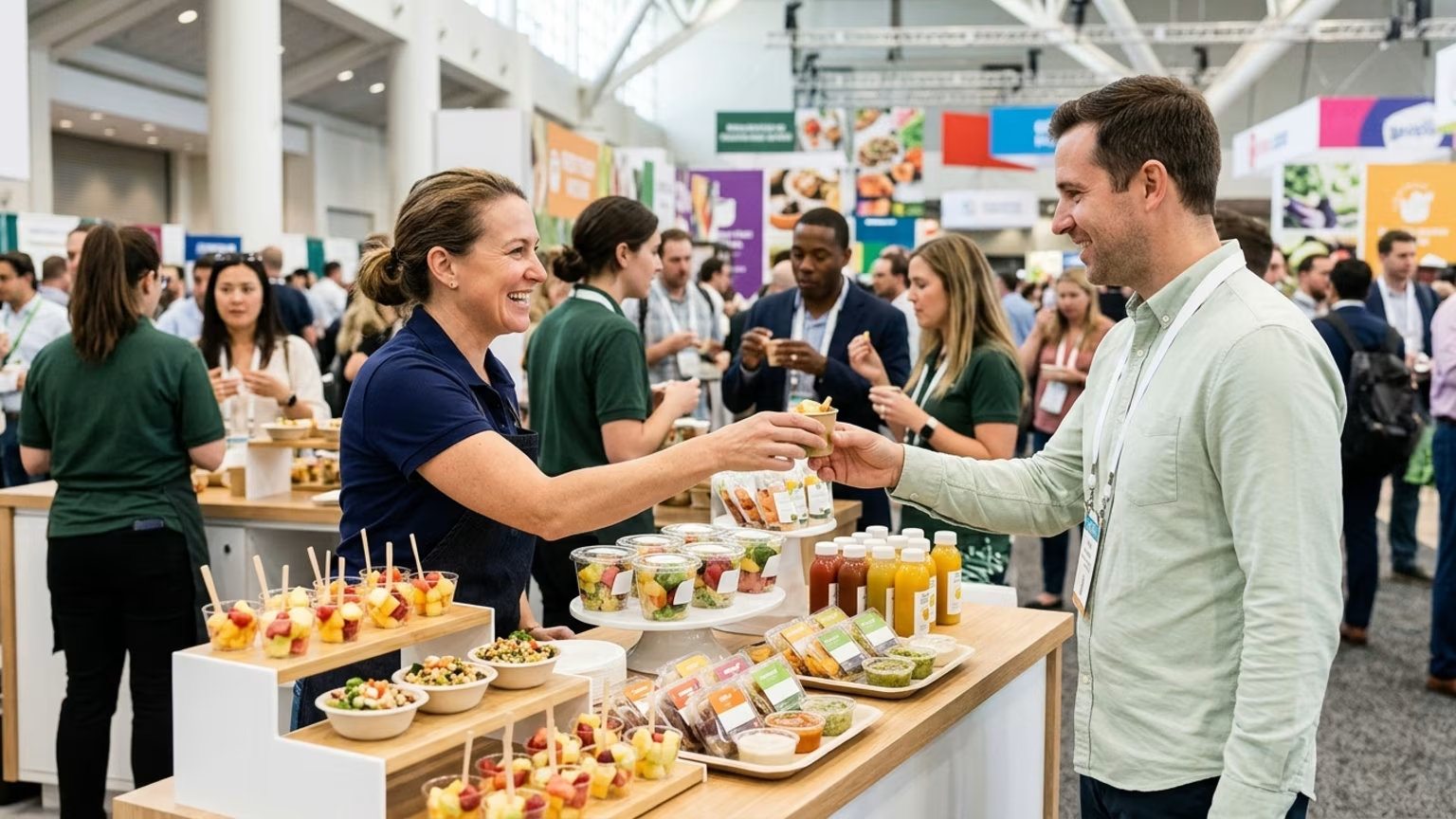
According to The Republic, more than 20 Indiana food companies are participating in Taste of Indiana. Small-business owners are scheduled to demonstrate and discuss their products on the new Sysco Demo Stage during the four-day event. The stage is being introduced as part of Sysco’s sponsorship of WFC.
The practical change is access to a live presentation setting within a food competition. Participating owners have a place to show how a product works and explain its story. That is a different opportunity from simply placing a package in view.
According to the coverage, the event’s audience includes professional chefs and home cooks from more than 40 countries and all 50 U.S. states. WFC founder and CEO Mike McCloud said the new area is intended to connect competitors with Indiana products and give local businesses national or international exposure.
The reporting describes the activation’s design and intent. It does not provide attendance totals, sampling volume, qualified leads or commercial outcomes such as sales lift and Return on Investment (ROI). It also does not detail exhibitor staffing or follow-up systems; the operational implications below are Makai’s analysis.
Our view at Makai is straightforward: welcome the attention, then give it a useful destination. A friendly product conversation has value. For a CPG or beverage marketer responsible for pipeline, the plan also needs to distinguish casual interest from a meaningful commercial next step.
We specialize in retail demos, product sampling programs and roadshows that bring brands face to face with their audiences. Each program is designed to drive trial and build consumer relationships while accelerating retail velocity across multiple locations. That positioning shapes how we read the Indiana announcement: the physical experience is the opening, not the whole commercial plan.
A chef considering an ingredient and a consumer looking for something to buy represent different kinds of interest. In our assessment, a demonstration brief should make room for that distinction rather than treating every interaction as an equivalent lead. The welcome should feel easy. The handoff should be disciplined.
Across our history, we have delivered more than 1,000 campaigns in all 50 states for more than 200 brands. That range covers different products and audiences rather than a single activation format. From that perspective, we believe the objective should be defined for the actual setting instead of borrowed from another event.
For food and beverage marketers, that distinction matters when an event report reaches the leadership team. Product trial can be an objective in its own right. Pipeline is a different objective. Our view is that the brief should say which outcome the activation is designed to support before the reporting format is chosen.
That is also the connection to linking tasting with purchasing. A stage presentation and an in-store demo are different formats. The same strategic question belongs behind both: what useful action is the experience designed to support after someone tries the product?
The stage creates a presentation opportunity. Our operational reading is that the staffing brief and physical footprint deserve equal attention. Neither should be treated as background to the product pitch.
Because the announced format includes both demonstrating and discussing products, the staffing question goes beyond who can deliver a presentation. The plan needs to account for interest that calls for a longer conversation. For comparable programs, our view is that product knowledge and a clear commercial purpose belong in the same brief.
Makai’s retail demonstrations use trained brand ambassadors to drive in-store sales through real conversations and product trials. Applied as a planning principle here, that means giving the human interaction as much attention as the visible demonstration. A stage appearance is a scheduled activity; a useful conversation needs a defined purpose.
At Natural Products Expo West 2025, we designed and managed a 40 by 20 foot trade show environment for Glanbia. Our team handled concept, operations, staffing and breakdown. More than 14,000 recorded product samples were distributed across the activation stations.
That experience gives us a practical reason to assess footprint and conversation planning together. The operational brief needs to describe where the product interaction happens and how an interested visitor continues the discussion. In our view, a sample count is an activity measure rather than a substitute for qualified pipeline.
For a stage-based format, the planning issue is how the presentation relates to any other brand space. A team can assess whether its proposed footprint supports both product interaction and continued discussion without treating the stage slot as the entire experience.
The field brief should also keep stage activity and any retail-facing message connected. If the goal is consumer trial, the discussion can point toward existing purchase availability. If the goal is trade interest, the discussion needs a commercially relevant continuation. The choice comes from the brand’s stated objective rather than the sponsor’s profile.
Physical execution also includes getting sampling product and event gear into position. Makai’s Storage & Logistics service covers storage plus nationwide shipping and tracking. For a comparable program, our view is that the product movement plan belongs alongside the staffing and footprint brief. The consumer-facing moment should not be planned separately from the materials needed to deliver it.
The research points to a useful planning question: whether trial has a path to follow-up. Makai’s positioning connects face-to-face experiences with measurable sales pipeline and includes services from permitting to CRM reporting. From that perspective, the brief needs to distinguish consumer purchase interest from interest that warrants a sales conversation.
For a comparable activation, practical planning can address three points:
Those decisions give the marketing team a way to evaluate execution beyond whether a stage session looked busy. For a broader retail program, the same discipline belongs in connecting multi-market demos with sales measurement.
The Republic reports that JohnTom’s Barbecue is sold through Meijer and Kroger stores. CEO Lathay Pegues said in-person sampling and telling the company’s story have helped the brand build loyal customers. He also welcomed opportunities to stand in front of consumers and talk about the business.
That is a named operator’s account of why direct contact matters. The useful detail for marketers is the connection between a live conversation and existing places to buy. A product story has a practical destination when the audience can relate it to retail availability.
Our assessment is that this makes the purchase pathway worth including in the event brief. Consumer interest and potential trade interest do not need identical follow-up. The planning task is to identify the kind of interest expressed and connect it with the relevant next step.
The Indiana showcase is a timely reason to look past the stage booking itself. For Makai, a useful brief connects the live interaction to the business objective and gives follow-up a clear owner. That is a more actionable standard than treating exposure as the final deliverable.
Retail availability, product education and qualified commercial interest each deserve a defined place in that plan. The event format supplies the opportunity for contact. The brand’s operating decisions determine what it is prepared to do with that contact.
As CMO or VP of Marketing, will you use today’s event brief review to name the owner of qualified follow-up and define how that interest reaches your CRM?
A stage demonstration can leave interested visitors without a clear next step; Makai’s retail demonstrations put trained brand ambassadors into real product conversations and trials. For CPG marketers facing inefficient post-event follow-up and CRM routing, Makai also develops experiential campaigns and trade show activations designed to turn consumer interactions into qualified leads.

30 Years Experiential & Retail Activation Partner for CPG & Beverage Brands | Multi-Market Demos, Roadshows & Costco/Club Programs That Actually Sell