Robbie Thain
Founder, CEO

Petco’s Petsgiving announcement puts sampling logistics in focus, from store-level delivery and staffing to recipe-card handoffs and event measurement.
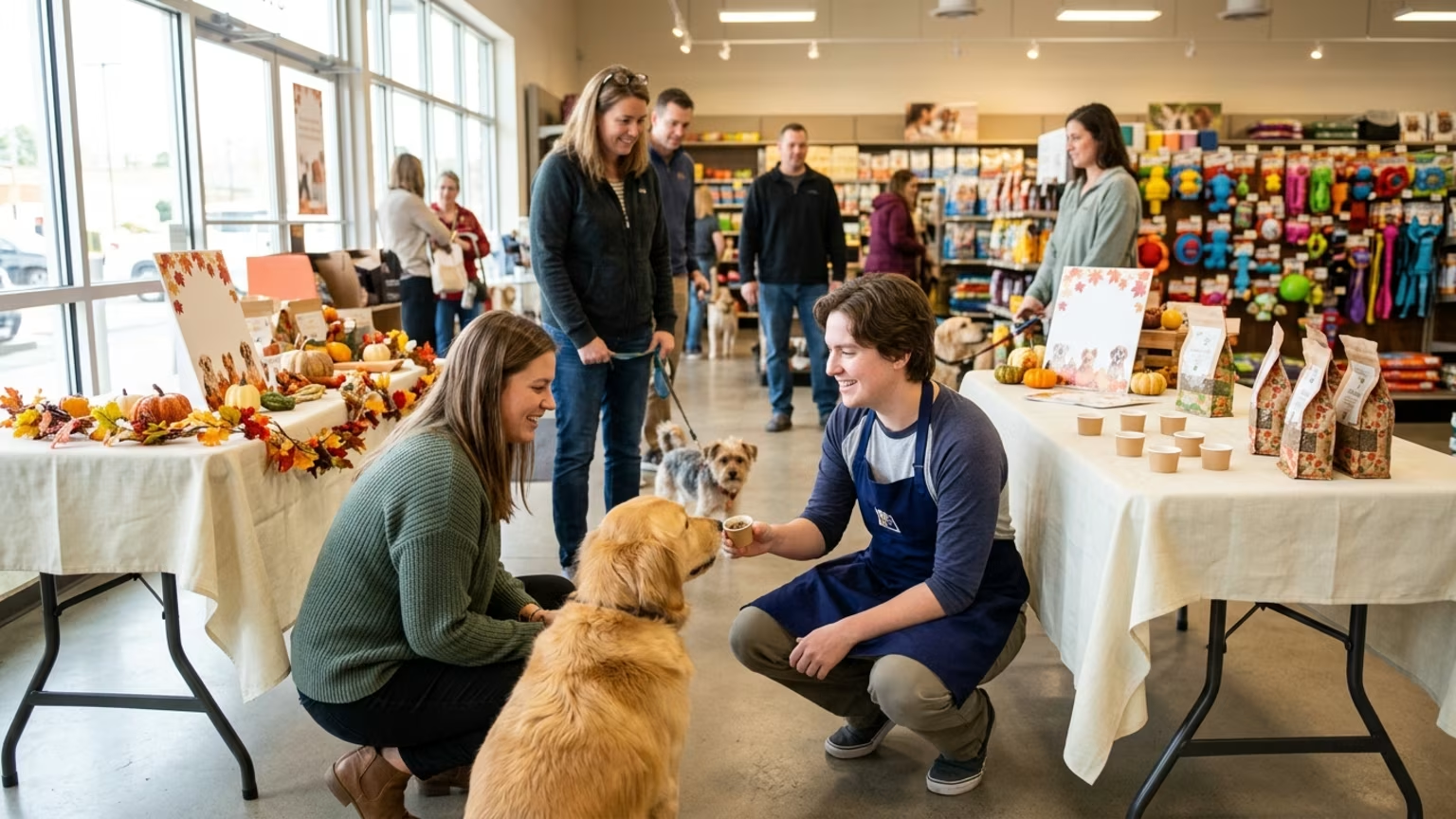
On October 13, 2026, pet retailer Petco announced its “Never Naughty, Always Nice” holiday campaign. Its planned Petsgiving food-sampling events are scheduled for November 21 and 22 at select stores nationwide. According to Petco’s campaign announcement, pet parents can bring their pets to try foods and receive recipe cards for recreating the holiday meals at home.
For CPG and beverage marketing leaders, the useful development is the pairing of an in-store trial with a take-home use occasion. The operational question is how that promise becomes a consistent experience at each participating location. Makai’s view is that the handoff deserves as much attention as the invitation.
Petco says the events will feature fresh-frozen nutrition, freeze-dried raw bites and meal toppers. The announcement names products from Hill’s, Ollie and Badlands Ranch. It describes the events as free and directs customers to Petco’s Store Events page to find participating locations.
The shopper-facing sequence is straightforward: bring a pet, sample a food and take home a recipe card. The recipe card gives the trial a stated purpose beyond the store visit. For marketing operators, that is a design choice to evaluate rather than a sales outcome to assume.
Petsgiving is part of a broader holiday program. Petco also announced free Santa photos at select stores on December 12. The company says every location will feature a “Naughty vs. Nice Meter” photo backdrop. These are distinct experiences with different location commitments.
Petco’s announcement describes a plan rather than a performance case. It does not publish a participating-store list, sample quantities or staffing details. It specifies neither sampling-linked purchase offers nor event-level attendance, sales or conversion results. The named brands also should not be read as a confirmed assortment for every participating store.
At Makai, we like the hospitality in the idea: give people and their pets a holiday moment with something useful to take home. The welcome matters, and so does the work behind it. A welcoming interaction should sit inside a plan that accounts for the product, the people serving it and the next consumer action.
We specialize in retail demos, product sampling programs and roadshows that bring brands face to face with their audiences. Those programs are designed to drive trial and support retail velocity across multiple locations. For us, the relevance of Petsgiving is not the pet category alone. It is the challenge of making a physical brand promise repeatable.
Food and beverage brands face a comparable planning question when a trial depends on both the live interaction and a later purchase decision. A product explanation can create interest. A clear connection between the experience and the retail purchase gives the activation a defined commercial purpose. Neither replaces execution.
We also design mobile activations and roadshows around 90-day product launch windows. That experience shapes our view that product availability and delivery coordination belong in the marketing conversation. Return on Investment starts as a question about what the program is meant to accomplish, not as a label attached to a busy event.
An announcement gives the audience a reason to visit. In our view, the field brief has to translate that invitation into location-specific work. For a CPG marketing team evaluating this format, the operational implications span logistics, staffing and reporting.
Petco directs shoppers to its Store Events page because the sampling is scheduled for select stores. For operators considering a similar program, the participating-location list should be the common reference for consumer communication and product allocation. A national campaign message and a local execution assignment serve different purposes.
Makai’s Storage & Logistics service covers sampling product and event gear. We store those materials, then ship and track them while coordinating delivery nationwide. That capability is relevant to this format because the consumer-facing promise depends on product and equipment reaching the activation.
Fresh-frozen nutrition, freeze-dried raw bites and meal toppers are the formats Petco names. From an operator’s perspective, those labels raise different storage and service questions. A planning discussion should stay specific to the actual products rather than treating every sample as the same logistical unit.
For us, storage is part of the activation rather than a disconnected warehouse task. The practical goal is alignment between what the campaign invites consumers to experience and what is available for the field team to present. Product movement deserves a place in the brief alongside the creative concept.
Petco’s announced format involves pets trying foods and pet parents receiving recipe cards. The human conversation still carries the explanation of the product and its suggested home use. Our retail demonstrations use trained brand ambassadors to support product trials and in-store sales through real conversations.
We believe the staffing discussion should address how the product conversation and recipe-card handoff fit together. Those moments have different jobs even when the same person handles them. Treating the card as part of the consumer experience gives the field team a clearer purpose than simply distributing another printed item.
The useful footprint question is whether the layout supports trial, explanation and the take-home handoff without treating them as competing activities. In a retail environment, that means thinking about the sampling interaction alongside the shopper’s continuing visit. For an expo team, the comparable issue is how product trial fits with a qualified conversation rather than becoming the whole booth experience.
Makai plans and manages trade show spaces designed to attract attention and start conversations. Our view is that a sampling footprint should protect time for the exchange the brand actually values. More activity is not the same goal as a more useful interaction.
The announced holiday program includes both sampling and photo experiences. For teams evaluating a comparable campaign, a combined traffic total would answer a different question from sampling participation or product purchases. Our recommendation is to define attendance, samples distributed and purchases as separate outcomes before launch.
That framing supports measurement beyond event headcount. It also keeps the post-event follow-up process tied to the purpose of the interaction. The reporting brief should reflect whether the activation is meant to generate consumer trial or qualified pipeline, rather than treating every contact as interchangeable.
The useful lesson for marketing leaders is to carry the invitation all the way into the operating brief. For a sampling program with a take-home component, that means connecting location details and product delivery with the ambassador conversation. It also means defining how the team will recognize the intended consumer response.
At Makai, our integrated services span permitting through CRM reporting. We see those responsibilities as parts of the same face-to-face experience. Creative intent sets the direction; operational clarity gives the team a way to deliver it.
For CMOs and VPs planning the next seasonal activation, will your operating brief make the intended journey as clear to the field team as the campaign makes it to the shopper?
Seasonal sampling brings a practical trade-off: the invitation can be simple while product movement is not; Makai’s Storage & Logistics service supports the physical side through nationwide delivery coordination. For marketers assessing live-event Return on Investment, Makai stores sampling product and event gear, then ships and tracks those materials to support scheduled activations.

30 Years Experiential & Retail Activation Partner for CPG & Beverage Brands | Multi-Market Demos, Roadshows & Costco/Club Programs That Actually Sell