Robbie Thain
Founder, CEO

Plan activation logistics from warehouse to venue with a checklist for asset ownership, delivery, staffing, CRM handoffs, returns, and contingencies.
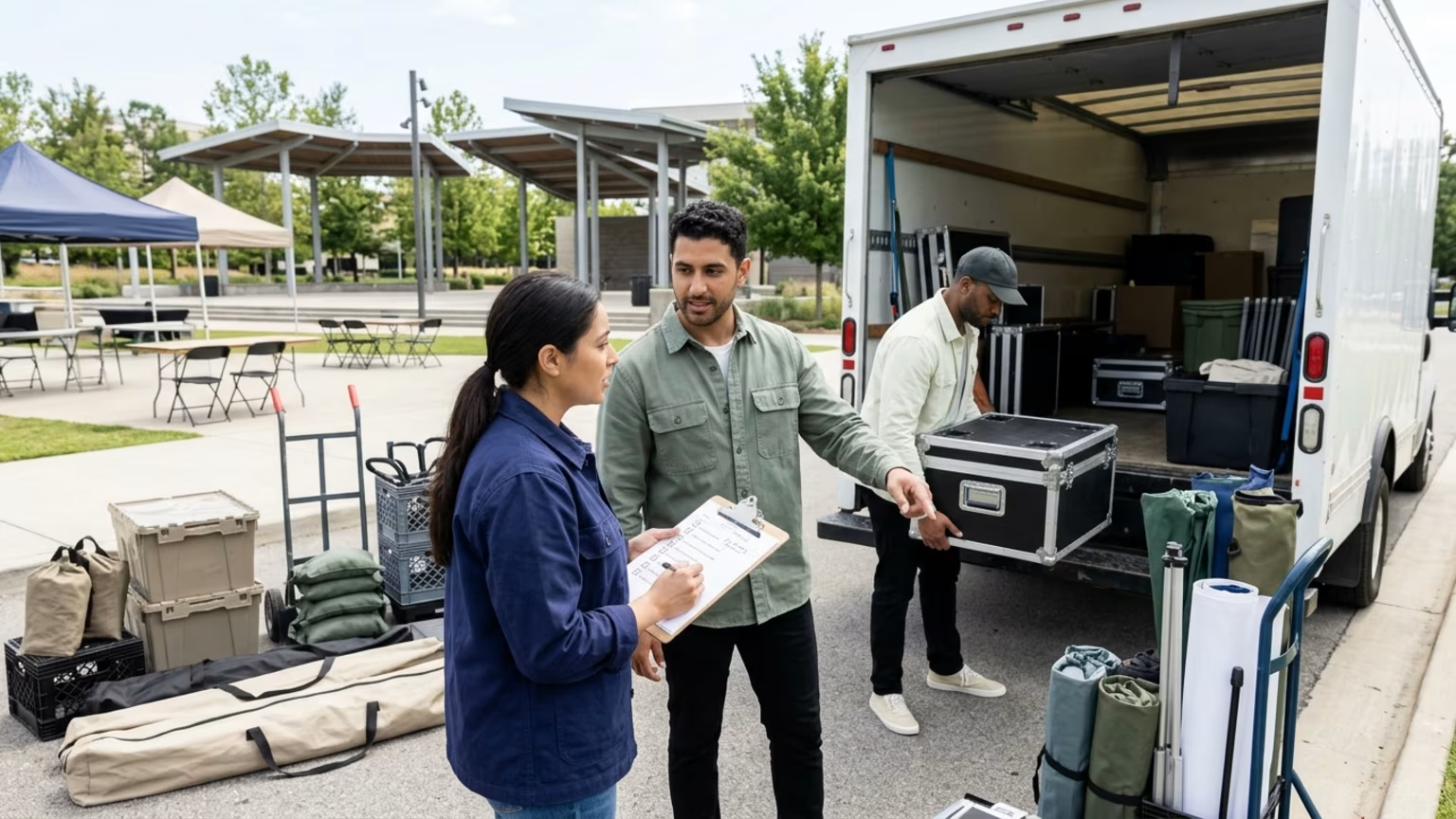
A field activation logistics checklist starts with product staged in the warehouse and equipment checked for use. It follows shipments through venue access and setup into onsite storage and replenishment. It closes with asset returns and inventory reconciliation, with an owner identified for every handoff. Staffing responsibilities and contingency decisions belong alongside that physical movement.
This lifecycle appears in Chobani's Field Production Manager posting. The role spans planning and transportation through breakdown and post-event reporting. A practical checklist should make ownership visible throughout that process, together with asset location and condition.
At Makai, we store sampling product and event gear and coordinate shipping, tracking, and delivery nationwide. Our services extend from permitting through CRM reporting. For us, the logistics plan should support both a ready activation and a useful face-to-face interaction.
The Chobani and Daily Harvest listings describe employer expectations rather than tested procedures or measured results. They do not prescribe permit procedures or training protocols. Delivery buffers and reserve quantities are not specified, nor are CRM routing rules. The framework below turns their documented responsibilities and Makai's stated capabilities into planning questions rather than a universal operating procedure.
Start with the actual venue rather than a shipping template. Chobani's posting identifies access and delivery schedules alongside storage and refrigeration. It also names power and parking, plus security and consumer flow. These are concrete inputs for the venue brief.
The planning brief should identify who owns venue permissions and permit questions. Makai's nationwide execution combines local crews with logistics and permit expertise. Keep that work connected to the physical setup plan so the team can review both together.
Use the following checklist to organize the warehouse-to-venue handoff:
For multi-market programs, review each destination's receiving conditions rather than copying them unchanged. A shared asset record can hold the repeatable information while the venue brief captures local differences. Our guide to connecting warehouse preparation with event-site delivery offers a related planning perspective.
Our view of aloha is practical: make the interaction welcoming without losing operational discipline. Makai's retail demonstrations use trained brand ambassadors for real conversations and product trials. The human connection is the point, not an extra task squeezed between inventory problems.
A useful preparation brief should connect the ambassador's consumer-facing role to the operating plan. It should address product availability and the intended interaction. It should also identify who handles replenishment or equipment questions so those responsibilities are not left undefined.
The preparation discussion should cover:
We ran a four-week Dole Whip summer sampling program across San Francisco and Boston as well as Tampa and Orlando. The activations distributed more than 64,000 servings. We also built the creative assets so the concept could be reused in future campaigns.
That experience puts two planning needs side by side: consumable product and reusable creative assets. Both belong in the logistics brief, but their closeout decisions are different. Product requires reconciliation and disposition while reusable assets need a defined next assignment.
For the staffing side, review how field-team selection connects with activation readiness alongside the shipment plan.
Start by separating consumer activity from commercial follow-up. A distributed sample is not automatically a qualified lead. Makai's experiential campaigns and trade show activations are designed to turn brief consumer interactions into qualified leads, with integrated services extending through CRM reporting.
For a planning brief, connect the physical handshake to the CRM record through four decisions:
A Daily Harvest Sr. Specialist, Product Activation listing names sample distribution and consumer impressions among the measures to monitor. It also includes conversion rates and qualitative field feedback. These are useful categories for the reporting discussion, not reported campaign results.
For Return on Investment (ROI), define how commercial outcomes will be evaluated before labeling activity as financial return. Keep the asset reconciliation and consumer measures available for that review. A separate discussion of event measures connected to revenue goals can help frame the next planning phase.
Chobani's posting includes contingency planning for weather and medical incidents as well as power loss, refrigeration failure, and equipment issues. A field lead's contingency brief should connect each disruption to a decision owner and an updated operating picture.
Use specific scenarios rather than a general instruction to improvise:
Contingency stock belongs beside storage and replenishment in the planning brief. Record who decides what reserve product or supplies to hold and who owns unused inventory afterward. Avoid treating spare stock as a substitute for a defined delivery and handling plan.
After a disruption, update asset location and condition before completing reconciliation. Carry the revised product and supply records into post-event reporting. That creates a documented closeout for the next market's planning discussion.
A broader brief for weather and logistics disruptions can bring these scenarios into the same review.
Build one market's complete brief from staging through return before copying the format across the program. Review venue conditions beside the asset record and proposed staff responsibilities. Then review the lead handoff alongside the inventory reconciliation plan.
The next research should be site-specific: confirm receiving arrangements and permit requirements with the relevant venue and authority. Use unresolved questions to guide planning for the next market. A repeatable checklist should preserve ownership and visibility without pretending every location has identical operating conditions.
Trade show coordinators balancing delivery details with staffing and permits can place product storage and nationwide shipping coordination within Makai's Storage & Logistics service. The service stores sampling product and event gear, then coordinates shipping, tracking, and delivery to support activation schedules across multi-regional or national campaigns.

30 Years Experiential & Retail Activation Partner for CPG & Beverage Brands | Multi-Market Demos, Roadshows & Costco/Club Programs That Actually Sell


