Robbie Thain
Founder, CEO

Stop guessing about event ROI. Learn how to align sales and field marketing teams with exact KPIs that turn live activations into measurable commercial pipeline.
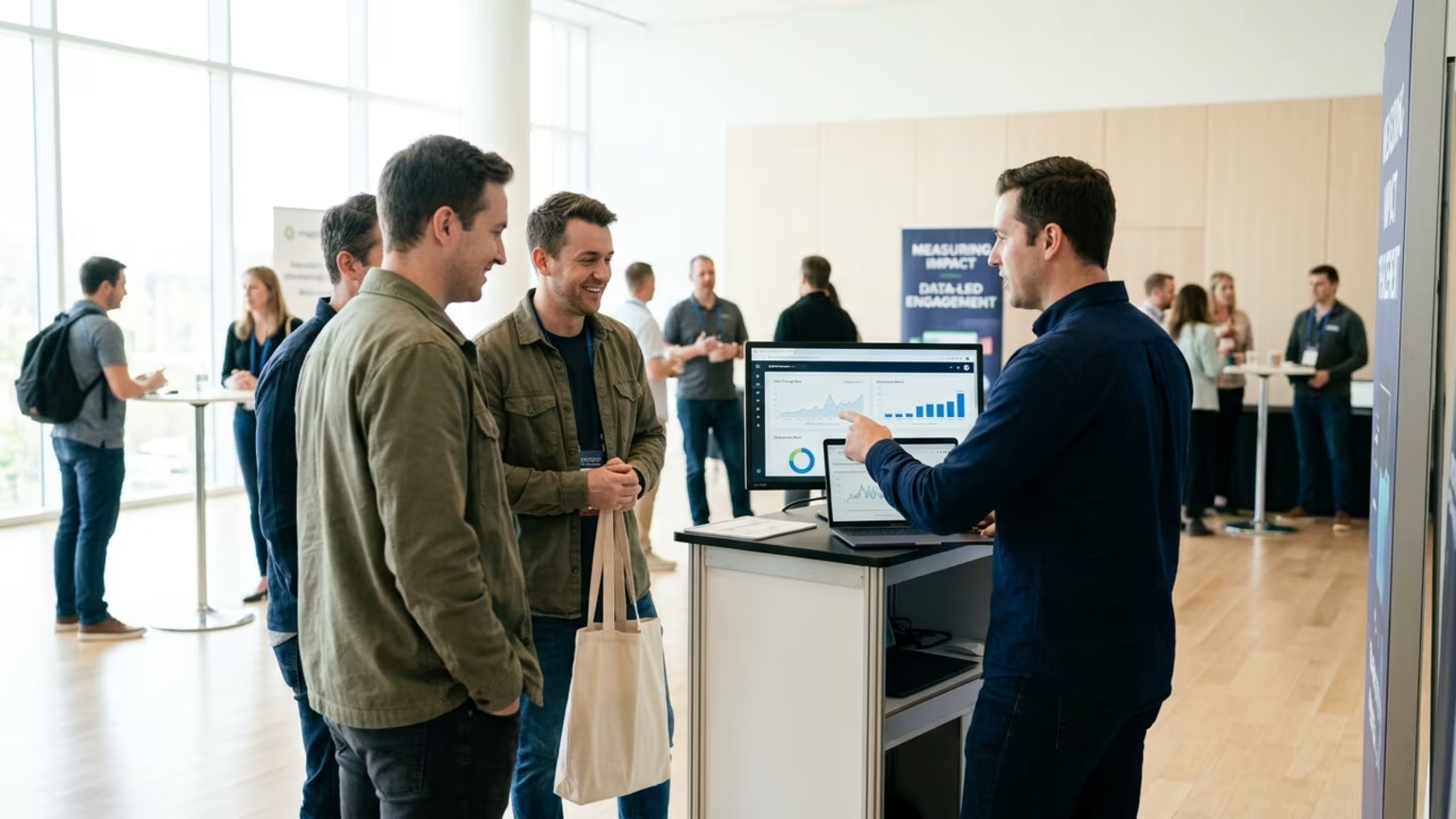
Sarah stands in the center of a crowded convention hall holding a clipboard full of email addresses. She knows her team scanned a thousand badges over the past three days. She has zero idea if a single one of them will ever buy a case of her new beverage line. The disconnect between booth traffic and commercial reality feels overwhelming.
Field activations demand rigorous measurement frameworks that connect temporary real-world experiences directly to permanent commercial pipeline. Establishing clear performance metrics before the event begins guarantees that your sales and marketing teams pull in the exact same direction.
Trade show floors breed a specific kind of well-funded panic. A brand team drops six figures on a booth build and staffs it with a dozen expensive reps. The doors open and a sea of attendees descends on the free sample bowl. Hours pass in a blur of handshakes and casual conversations.
When Monday morning rolls around leadership demands to see the Return on Investment. The team hands over a spreadsheet of raw badge scans. No one knows which leads hold actual buying power. The resulting pipeline looks like a beautiful dumpster fire.
Sales teams often reject event leads outright. They complain that marketing simply captured contact information from people hunting for free swag. Marketing defends the effort by pointing to total impressions and foot traffic. This familiar standoff happens when teams lack a unified measurement strategy.
The disconnect often creates lasting tension between the field marketing team and regional sales directors. Sales leaders feel they wasted their top performers on booth duty for three days. Marketing leaders feel their creative execution was ignored in favor of spreadsheets. The true failure rests in the lack of a shared language around event performance.
The core problem stems from a failure to define success criteria early. Brands treat field events as standalone marketing plays rather than integrated commercial operations. This disjointed execution leads to wasted budgets and fractured reporting. You need a better way to translate live engagement into hard numbers.
The best experiential campaigns operate as precision instruments for revenue generation. We build festival zones, film premieres, and pop-ups that turn viewers into fans and fans into advocates. We design moments people want to share using music tie-ins, creative screenings, and live stunts. Our field crews manage the execution and track reach metrics alongside these live efforts.
This approach thrives when you build the strategy backward from a concrete revenue target. A brand seeking retail expansion in the Midwest must measure meetings booked with regional buyers. A consumer packaged goods company launching a new energy drink should track wholesale distribution agreements. The framework forces you to decide what matters before you spend a single dollar.
The strategy requires a formal pre-event alignment meeting between sales and field teams. Both departments must agree on what constitutes a qualified lead before anyone packs a shipping crate. Without this alignment field reps will chase volume instead of value. According to industry analysts reporting on event metrics, teams must unify commercial goals with activation targets early.
This creates a closed-loop system where every action points toward a financial outcome. Marketing handles the live experience and sales handles the rigorous follow-up protocol. Getting this right prevents friction and saves your budget from producing fog instead of evidence. Smart brands that invest in up-front event measurement alignment secure operator-grade control over their field campaigns.
Aligning teams requires discarding vanity metrics that offer comfort without insight. A thousand badge scans mean nothing if none of those individuals have purchasing authority. True strategic alignment shifts the focus from gathering crowds to curating profitable conversations. This disciplined mindset separates successful field operators from those who just throw expensive parties.
Translating a boardroom strategy into live event execution requires strict operational discipline. Your field generals need a clear set of instructions to capture the right data accurately. Every brand ambassador must know exactly what questions to ask on the floor. Here is how to execute this playbook during a live activation.
Technology plays a massive role in standardizing this data collection process on site. Relying on paper forms or disconnected spreadsheets invites human error and delays critical follow-up. Modern field teams use integrated software that pushes booth data directly into marketing automation platforms. This seamless transfer allows the sales team to begin their outreach before the prospect even leaves the venue.
Implementing these steps requires strong leadership on the trade show floor. A field manager must constantly monitor the pace and quality of lead capture. If staff members fall back into passive sampling the manager must intervene immediately. Real-time course correction keeps the entire operation focused on revenue generation.
You cannot afford to wait until the event ends to assess your performance. Daily huddles allow the team to review the previous day of data collection. If the qualification rate looks low you can adjust your engagement scripts immediately. This active management style prevents a weak Monday from ruining a Wednesday wrap report.
Raw foot traffic numbers look great on a wrap report but they rarely pay the bills. You need lead metrics that track engagement quality alongside lag metrics that prove financial return. Splitting these numbers gives your operations team the feedback they need to adjust tactics midday. It gives leadership the hard proof they require to fund the next campaign.
Lead metrics act as your early warning system during the live activation. Track qualified conversations per hour to gauge if your staff is engaging the right people. Monitor your sample-to-scan ratio to see if product trials are converting into captured data. Measure the meeting booked rate to confirm that visitors have real buying intent.
Lag metrics tell the story of your final commercial success after the dust settles. You should track the cost per qualified opportunity to understand your actual acquisition expenses. Measure total pipeline generated from specific event cohorts over a six-month tracking window. Closing the gap between booth traffic and measurable revenue requires tracking closed-won deals back to their original event source.
Different campaigns require specific indicator stacks to measure success accurately and fairly. A product launch should focus heavily on targeted trial volume and retail buyer feedback. A retail expansion push needs to track wholesale meetings and regional buyer commitments closely. A sponsorship activation must measure brand sentiment shifts and targeted account engagement rates.
You must train your financial stakeholders to look at these metrics in context. Experiential marketing often accelerates deals that are already sitting in the sales pipeline. Tracking multi-touch attribution helps prove that the live event influenced the final contract signature. This level of reporting sophistication earns trust from the executive board.
Consider a premium snack brand launching a new organic line at a major natural foods expo. The brand team wanted to secure shelf space in three major grocery chains immediately. They ignored vanity metrics like total booth visits and focused entirely on buyer engagement. The team trained their staff to identify retail category managers instantly on sight.
The booth featured a targeted sampling station reserved only for verified wholesale buyers. The staff logged sixty qualified meetings over two days of the crowded expo. Six months later those meetings translated into distribution deals with two target chains. This focused approach to measuring pop-up field performance turned a chaotic event into a predictable revenue engine.
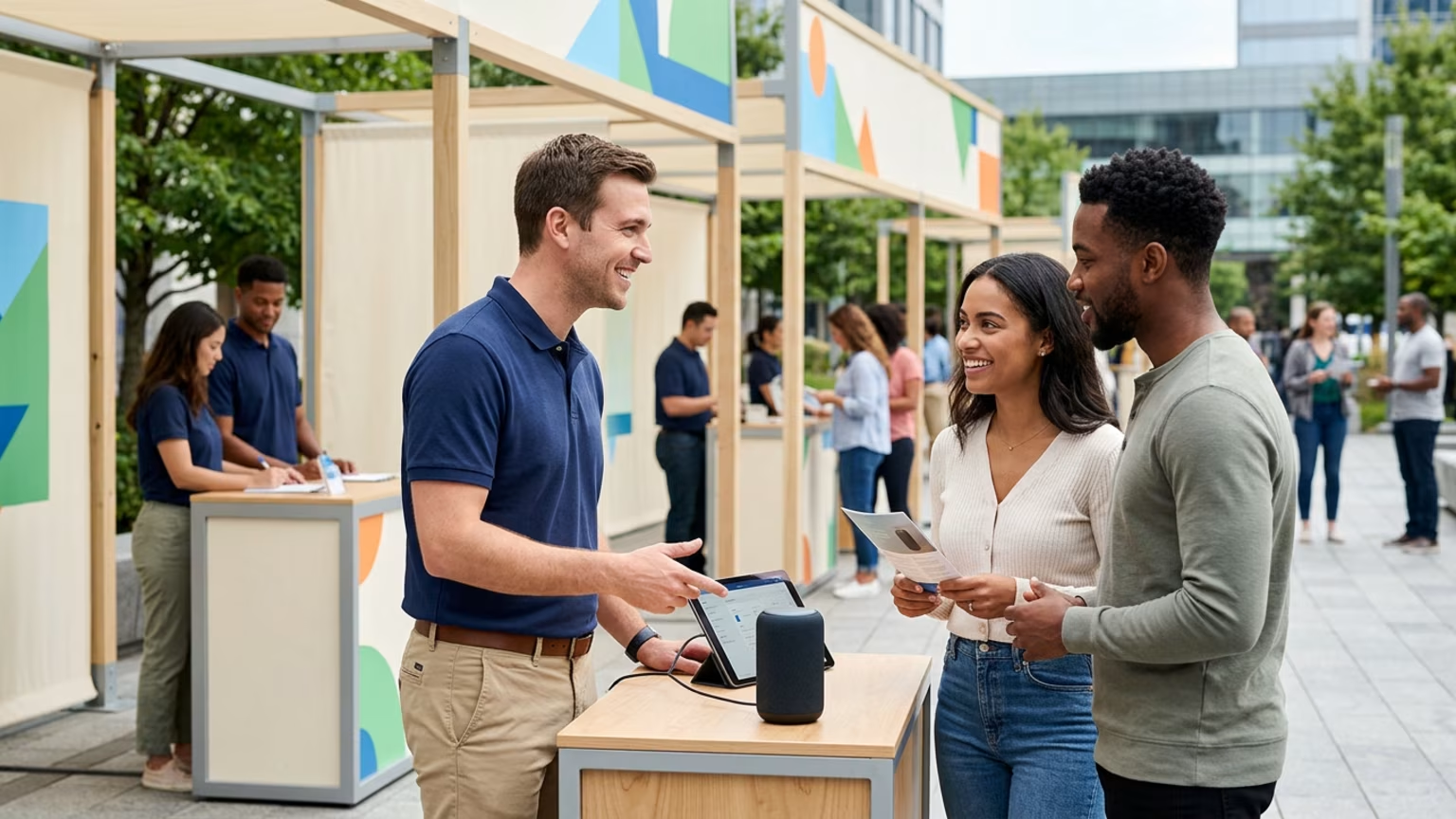
Another beverage company deployed a mobile roadshow across ten college campuses. The goal was driving immediate trial and securing local retail sell-through within a specific radius. The field team tracked the number of samples distributed against localized sales lift data. By isolating these metrics the brand proved the roadshow paid for itself within ninety days.
Your team can achieve these same operator-grade results with the right pre-event planning. Stop guessing about the financial impact of your expensive field marketing efforts. Bring clarity to your reporting and turn real-world interactions into qualified commercial pipeline. Book a strategy call with our team to map out your next activation correctly.
Sit down with your sales director tomorrow morning and agree on exactly three metrics that will define success for your next activation.

30 Years Experiential & Retail Activation Partner for CPG & Beverage Brands | Multi-Market Demos, Roadshows & Costco/Club Programs That Actually Sell