Robbie Thain
Founder, CEO

Explore how brands like Heineken and Goldfish integrate physical product experiences into multi-channel campaigns. Learn key experiential marketing strategies.
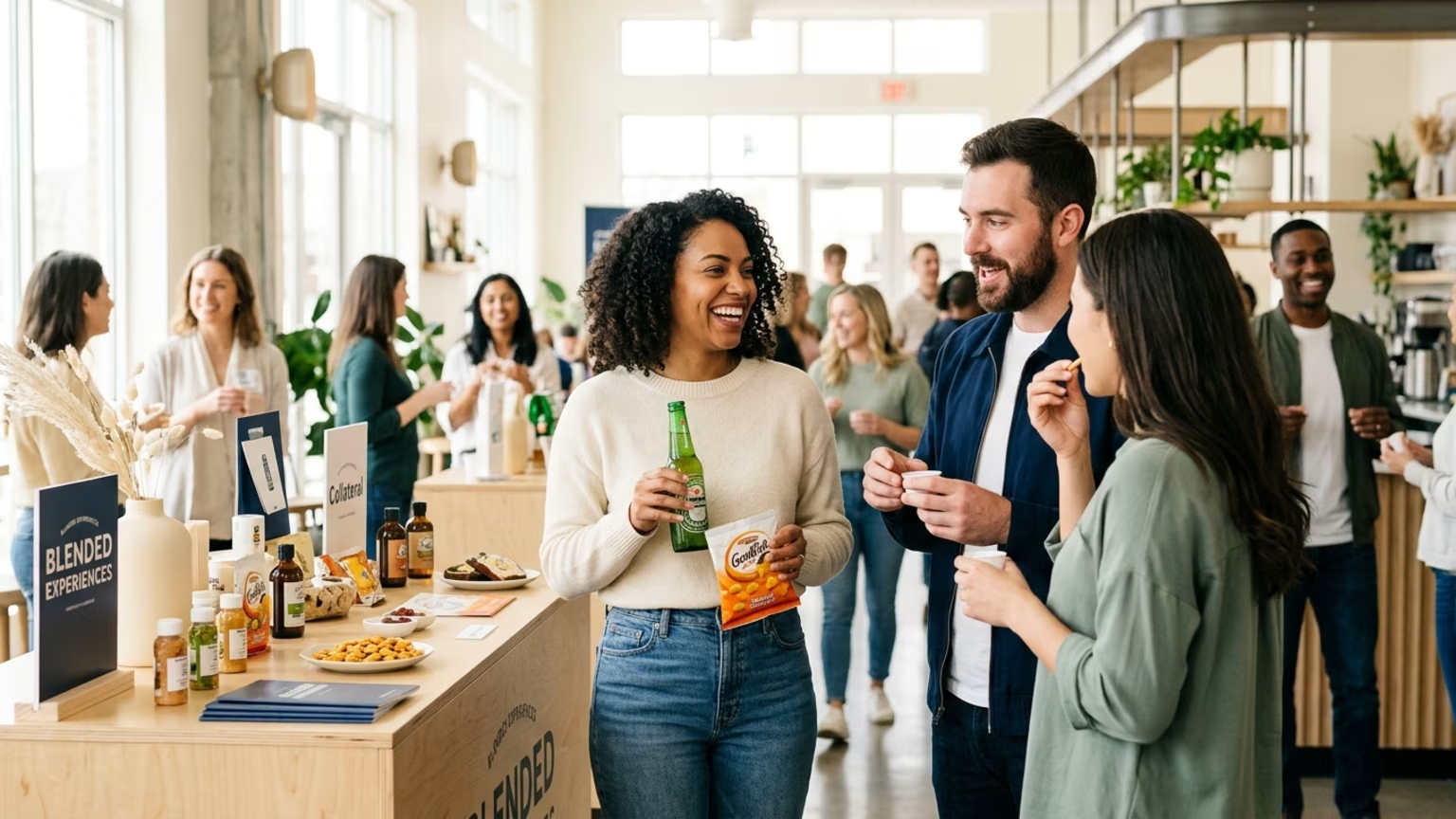
Global experiential marketing spend reached $138.94 billion in 2025. One industry source forecasting a 10.3% growth rate in 2026 confirms this massive capital allocation. Physical touchpoints are replacing passive digital impressions as the primary engine for consumer trust. For companies like Heineken N.V., Goldfish (the snack brand), Old Navy and Reebok, physical experiences are central to modern media models.
Adweek’s recent August 2026 “Ads of the Week” roundup is a 12-campaign edition featuring several major brands. The list includes Marc Jacobs, Gap, CeraVe and Always Discreet. It also highlights Heinz, Hinge, Kalshi and Google Pixel. The newer August 2026 Adweek roundup includes a Heinz campaign introducing a control option for its sauce squeeze.
This report links to the previous week’s Adweek roundup. That earlier edition featured Heineken N.V., Goldfish and Audible. It also highlighted campaigns from Old Navy and Reebok. These executions prove that physical product experiences remain vital for brand growth and consumer engagement.
National Experiential, citing EventTrack, says 74% of Fortune 1000 marketers are increasing experiential budgets in 2026. Marketers require programs that connect emotion with action while returning hard data. A separate 2026 trend report says experiential teams are prioritizing cross-channel storytelling. This storytelling continues across physical spaces, social content and broadcast-style programming.
A successful field activation begins with rigorous operational prep and strict compliance. Securing health permits, retail footprint approvals and municipal clearances requires detailed advance work. Food and beverage sampling demands strict adherence to local temperature controls and waste disposal regulations. Teams must map every operational contingency before a single product hits the floor.
A July 2026 report says consumer brands were using pop-ups, hybrid installations and multisensory product demonstrations. These tactics were deployed to encourage trial, social sharing and longer dwell time. Executing participatory in-store experiences demands flawless venue coordination. Retailers require approved schematics for any physical buildout inside their stores.
A separate industry report notes a shift for brands in food, beauty and beverage. These companies increasingly used smaller retail experiences in July 2026. The goal was generating product trial, direct feedback and longer dwell time. Managers should draft clear site surveys to identify power drops, loading zones and storage constraints early.
National Experiential reports that 91% of activation attendees carry more positive brand sentiment after a visit. You can only achieve this sentiment shift if the physical environment functions perfectly. Careful event planning prevents logistical bottlenecks that would otherwise frustrate consumers. The foundation of a strong live event is invisible operational discipline.
Technology cannot replace a knowledgeable human guiding a consumer through a product trial. We create experiential marketing programs built to connect emotion with action. Our process blends creativity with strategy and data to ensure every interaction drives results. We craft experiences that engage all five senses.
This sensory engagement helps people feel our brands and turns moments into meaningful business outcomes. Ambassadors must understand the product mechanics, the target buyer persona and the primary sales objectives. They act as the physical extension of the brand voice in the market. Consistent event staffing and training protocols give operators confidence that every interaction meets quality standards.
Training programs should focus on active listening and objection handling rather than robotic script reading. Staff must learn how to read crowd dynamics and adjust their approach for different shopper profiles. Effective talent management ensures that every product sample distribution feels like a genuine human connection. The best ambassadors listen closely to direct feedback during multisensory product demonstrations.
National Experiential notes that 85% of attendees report higher purchase likelihood after visiting an activation. That metric depends heavily on the caliber of the staff representing the brand. A poorly trained representative will waste expensive retail footprints and squander high-value leads. Investing in proper talent acquisition pays dividends in long-term consumer loyalty.
Modern activations must function as sophisticated data capture engines. National Experiential reports that 98% of activation attendees create digital or social content from events. Teams must capture this momentum by routing interactions directly into a centralized customer relationship management platform. Clean data collection bridges the gap between physical trials and digital retargeting campaigns.
Marketers are abandoning vanity metrics like raw footfall for harder performance indicators. A 2026 trend report identifies flexible build-outs and tools for measuring participation, dwell time and content output as priorities. Every scan, sample distribution and conversation should log a clear timestamp and location identifier. This structured routing provides the evidence needed to prove Return on Investment.
Many operators use quick response codes and gamified surveys to incentivize immediate data entry. The goal is removing friction from the sign-up process while maintaining data hygiene. You must clearly establish how to blend physical sampling with QR codes without interrupting the user journey. Accurate routing ensures the sales team receives qualified leads rather than useless spreadsheets.
Effective data routing gives regional managers visibility into field performance across multiple markets simultaneously. Teams can track conversion metrics in real time and adjust their tactics mid-campaign. This transparency is mandatory for executives managing massive experiential marketing budgets. Accurate measurement separates successful campaigns from temporary visual spectacles.
Live environments introduce unpredictable variables that break even the best operational plans. Wireless networks fail, digital displays malfunction and shipments occasionally arrive damaged. The true test of a field general is how quickly the team pivots to analog backup systems. Paper lead forms, offline data caching and spare hardware must be ready on site.
Unforeseen weather events or sudden crowd surges demand immediate tactical adjustments. Managers should assign specific contingency roles to senior ambassadors before the doors open. If the digital registration system crashes, the human greeters must seamlessly transition into verbal data collection. Clear escalation protocols prevent technical glitches from ruining the customer experience.
Sometimes the product packaging itself introduces physical challenges on the floor. The newer August 2026 Adweek roundup includes a Heinz campaign introducing a control option for its sauce squeeze. If a physical brand experience relies on demonstrating new packaging, teams must bring surplus inventory for breakages. A disciplined operator anticipates failure points and prepares redundant supplies to keep operations moving.
Field teams must also prepare for rapid shifts in venue access or retailer compliance rules. Event managers should maintain direct communication lines with venue security and local permitting offices. Having physical copies of all insurance certificates and layout approvals resolves floor disputes quickly. Operational readiness is the only defense against inevitable floor friction.
Brands looking to scale their field operations must focus on integrated measurement frameworks. Marketers must map the complete consumer journey before selecting event venues. Future programs must weave live interactions seamlessly into broader retail and media ecosystems. A truly effective campaign captures attention physically and extends it digitally.
Revisit your upcoming quarterly plans and audit your current physical touchpoints. Evaluate whether your in-person programs are operating in silos or actively feeding your digital funnels. Cross-channel storytelling relies on connecting physical merchandise drops with paid media amplification. Marketers should prioritize direct consumer feedback mechanisms within every experiential footprint.
The $138.94 billion global experiential market shows that consumers crave tangible proof of brand promises. Begin your next campaign by designing the physical interaction first. Only once the physical behavior is defined should you build the media layer around it.
Makai creates high impact experiential marketing campaigns and trade show activations that turn fleeting consumer interactions into qualified leads for premium CPG brands. We solve the difficulty of measuring real ROI from live events by navigating complex event logistics, permits and staffing.

30 Years Experiential & Retail Activation Partner for CPG & Beverage Brands | Multi-Market Demos, Roadshows & Costco/Club Programs That Actually Sell