Robbie Thain
Founder, CEO

Plan trade show visitor flow around attendee intent, with clear messaging, staffed demos, open access, and next steps tied to measurable goals.
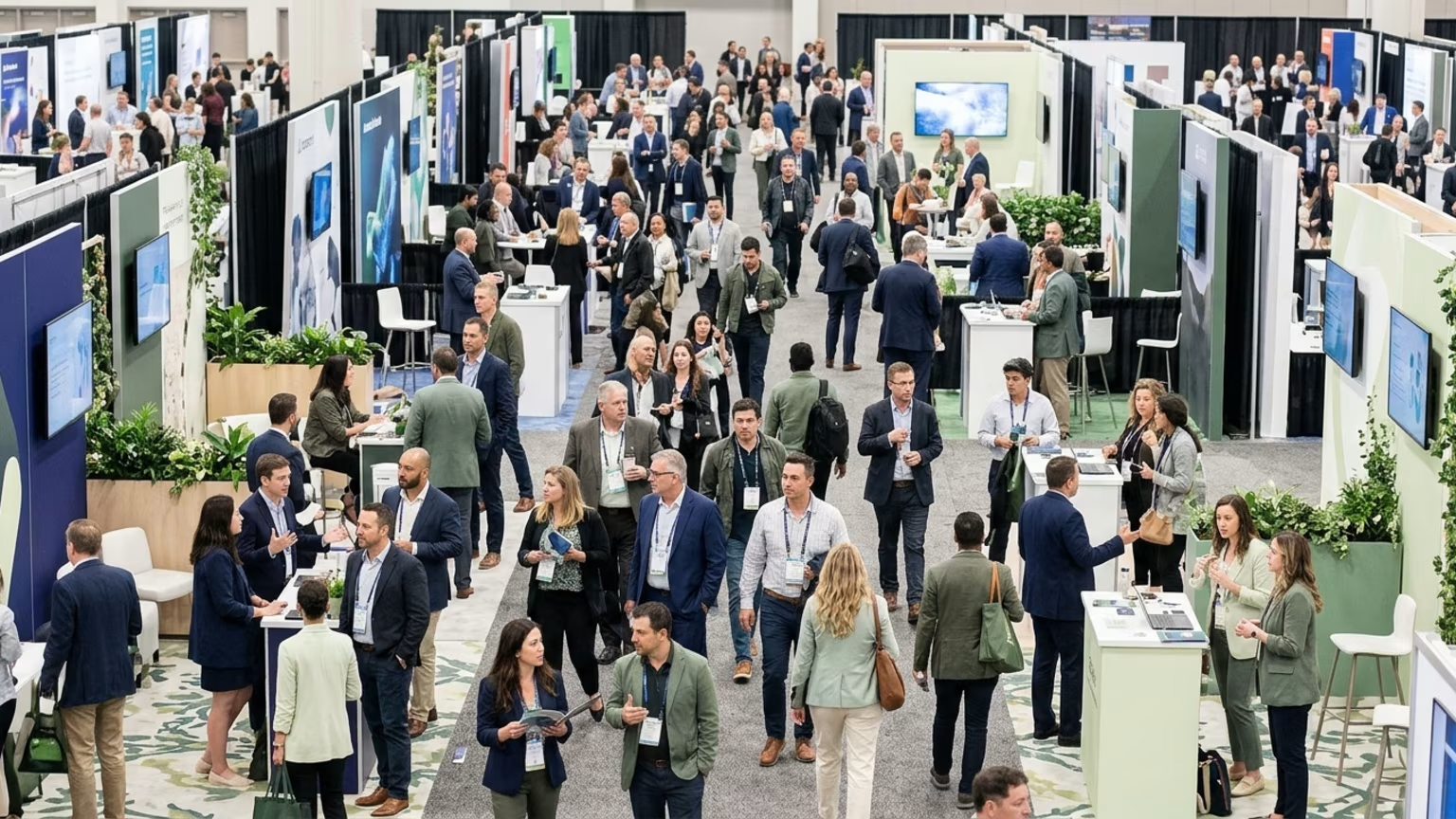
Myth: Every visitor should move through the same booth journey. Truth: Effective visitor flow supports different intentions while making each next step clear.
A product sample and a retail buying discussion do not represent the same level of interest. A booth can give those interactions a common home without forcing them into one sequence. The planning task is to connect attention with an appropriate action, not march every attendee through identical stations.
The single-path plan is attractive because it looks manageable on paper. One entrance feeds one demonstration, followed by one conversation and one capture point. Under pressure to control build costs, that simplicity feels like discipline.
For a Head of Field Marketing facing a tight production schedule, fewer moving parts can seem easier to brief and budget. An agency proposal centered on a signature demonstration can make the plan look even more contained. The rendering has a clear story, and the presentation is easy to approve.
We understand the appeal. The problem is not having a sequence in mind. It is treating that sequence as a requirement for people whose questions and readiness may differ.
A visitor who already knows the product should not need to complete an introductory presentation before reaching the relevant conversation.
In Freeman’s Q4 2026 pre-event report, 54% of attendees said they start planning what to do onsite three or more weeks ahead. Freeman says the report draws on a September 2026 survey of more than 3,400 attendees and exhibitors. That finding gives planners a reason to account for visitors arriving with an existing agenda.
These are survey responses about event preparation, not a test of booth design. The layout recommendations below come from practitioner guidance rather than a controlled study. Together they support a planning framework, not a guaranteed sales lift or a prescribed allocation of floor space.
At Makai, our trade show work combines planning and management of spaces designed to attract attention and start conversations. From that operating perspective, flow should connect the visitor’s purpose with an interaction the brand can deliver.
A practitioner guide to booth layout and messaging recommends moving from aisle visibility and initial relevance toward product detail and an explicit action. It gives signage distinct jobs at different stages of engagement.
That sequence works as an information hierarchy. It does not need to become a compulsory itinerary.
Aisle-facing identification should tell people who the exhibitor is and what it offers. The next layer explains the product or problem for someone who stops. Deeper detail and an action point belong where a visitor chooses to engage.
The operational mistake is asking one message to do every job. A technical explanation is not a substitute for clear identification from the aisle. A large logo is not a substitute for useful product information once someone has entered.
The same guide recommends an open front and unobstructed entry and exit paths. It also calls for a demonstration that is visible from the aisle, easy to join, and assigned to a person and schedule.
The operating conflict appears when the place to watch is also the only way to enter. A visitor seeking a representative should not have to become part of the demonstration audience first.
Visibility and access are separate design decisions. The demo can explain the product while the layout preserves another route to a conversation. An unattended looping screen does not fulfill the guide’s recommendation for a staffed demonstration.
At Natural Products Expo West 2025, we designed and managed a 40 by 20 foot trade show environment for Glanbia. The space brought think! and Isopure together with Optimum Nutrition and Amazing Grass. Our team handled concept and operations as well as staffing and breakdown. More than 14,000 recorded product samples were distributed across the activation stations.
For this discussion, the distinction is between coordinating activity and interpreting it. The recorded sample count documents distribution across those stations. It does not establish how many recipients were qualified buyers.
Our retail demos and sampling programs are designed to drive trial and build consumer relationships. Those aims give sampling a defined role. A trade show buyer conversation can sit alongside that role without being treated as another sampling interaction.
Freeman found that 56% of surveyed exhibitors wanted information about the types of organizations attending. In the same survey, only 16% rated events very or extremely effective at explaining the Return on Investment (ROI) of exhibiting or sponsoring.
Those findings concern audience information and value communication. For booth planning, the useful response is to define the intended interactions and their measures before deciding how everyone should move.
Start with the needs supported by the activation’s purpose. A visitor seeking a sample needs a different exchange from a buyer seeking product specifications. Someone ready for a sales conversation should have access to that conversation without repeating introductory steps.
For each intention, identify the information or interaction that makes sense next. That might be product detail or a discussion with a representative. It might also be lead capture when there is a relevant reason to continue the relationship.
This is a practical place to define what makes a visitor a qualified prospect. Qualification should describe audience fit rather than simply confirm that someone entered the booth.
Use the guide’s layered approach to separate identification from explanation and action. Review the booth message from the perspective of someone approaching from the aisle. Then review what becomes available after that person stops.
The question is not whether every surface carries branding. It is whether the information matches the decision being made at that location.
Keep detailed product information available for visitors who need it. Do not make reading that detail a prerequisite for understanding the basic offer. Clear hierarchy lets the booth support both a brief introduction and a more informed discussion.
The guide’s open-front recommendation gives the layout a practical starting point. Review where people enter and where they gather to watch. Then check whether someone can reach another interaction or leave without passing through that gathering area.
This review is about usability, not a universal footprint formula. A smaller space still needs a clear relationship between viewing and movement. A larger space still needs a reason for each interaction area.
When assessing how entry and demonstration areas work together, judge the layout by the interactions it accommodates rather than by how orderly an empty plan looks.
The practitioner guide recommends assigning the demonstration to a person and schedule. Give the action point the same attention. A visitor should be able to understand how to get more product information or continue a relevant conversation.
Do not leave the demonstration’s purpose at “attract a crowd.” Connect what people see with what the product offers. Then make the available next step explicit.
Planning staff responsibilities around visitor interactions connects the physical layout with the people operating it. The booth plan and staffing brief should describe the same experience.
Set the measurement plan before the show, as the research’s practical implications recommend. Match each reported measure to the goal it actually describes. Product sampling can document trial activity without being labeled qualified pipeline.
For lead acquisition, define the audience fit the program is intended to reach. Capture what the visitor wanted and the appropriate next step rather than treating contact collection as the completed commercial outcome.
Keep those distinctions visible in reporting. A trial-focused interaction and a qualified buyer conversation can both matter. They answer different questions about the activation’s performance and should not be collapsed into one success count.
A trade show booth should make the right interaction easier, not make every visitor complete the same journey.
Different visitor intentions call for more than a compulsory tour, and Makai plans and manages trade show spaces built to attract attention and start conversations. For teams facing low-quality leads from crowded shows, Makai’s activations are designed to turn brief consumer interactions into qualified leads for premium CPG brands.

30 Years Experiential & Retail Activation Partner for CPG & Beverage Brands | Multi-Market Demos, Roadshows & Costco/Club Programs That Actually Sell


