Robbie Thain
Founder, CEO

Plan trade show roles, briefings and handoffs that connect visitor conversations with useful CRM records, with practical staffing contingency guidance.

A staffing vendor reports that 84% of exhibitors invest in booth-staff training, citing an IAEE/CEIR report. The practical question is what that training prepares each person to own. Staff the booth around visitor needs, then connect those responsibilities through practiced conversations and clear handoffs.
The work includes greeting and qualifying visitors plus product demonstrations. It also includes lead capture, meeting hosting and floor coordination. Assign named owners and backups before opening rather than expecting everyone to handle everything.
Treat the training figure as a vendor-reported citation rather than an independently verified current benchmark. The staffing guides support operating recommendations, not a universal headcount or fixed shift length. They do not establish that a particular staffing method causes sales lift.
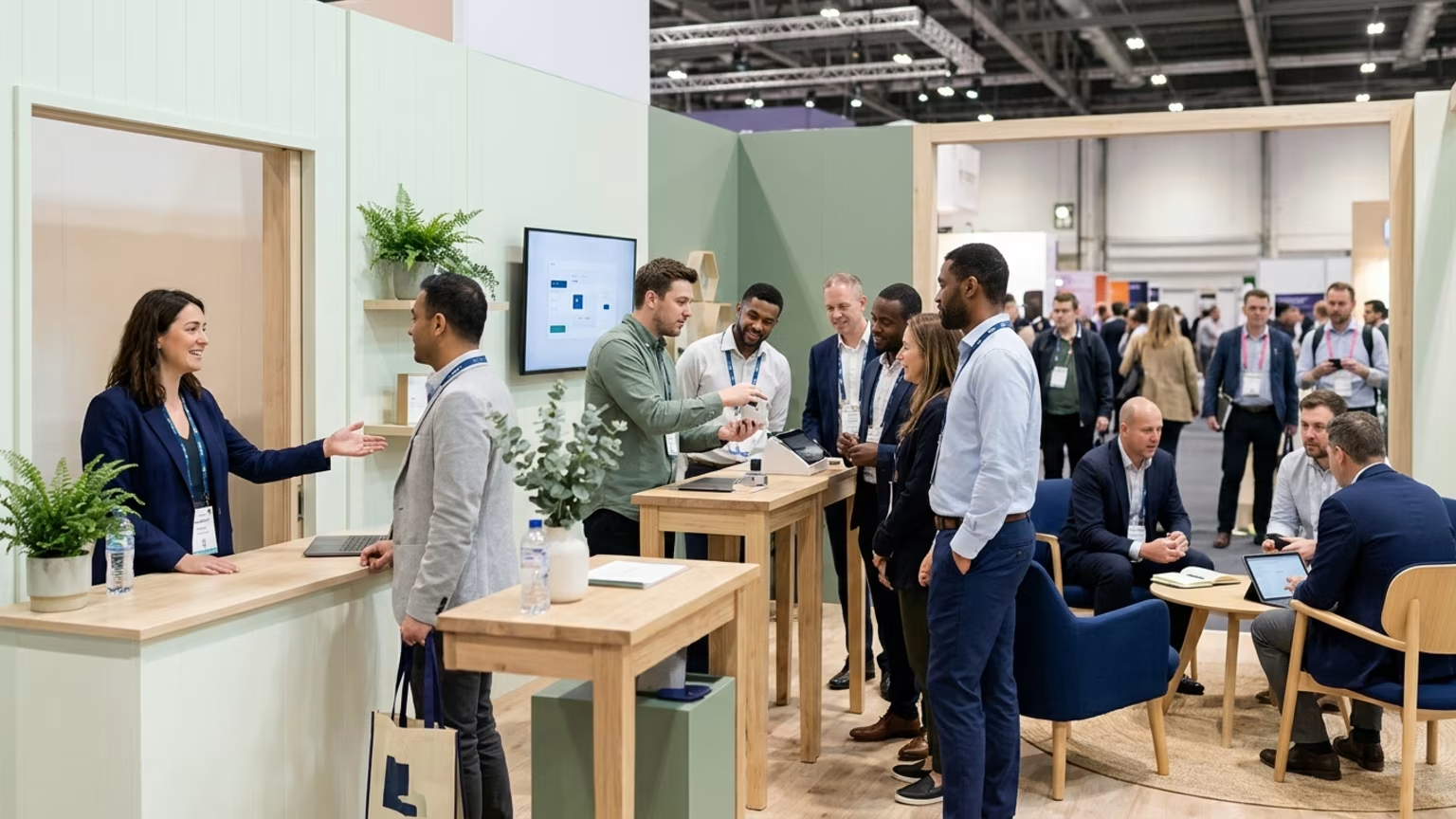
Makai's services span permitting through CRM reporting. Our trade show work includes planning and managing spaces that attract attention and start conversations. For us, staffing decisions belong inside that experience: someone needs to welcome the visitor, someone needs to handle the product interaction and someone needs to preserve the next step.
Start with the work the booth must accomplish. One staff-training guide recommends covering show goals and booth roles alongside visitor conversations, lead capture and etiquette. It also recommends practicing opening lines and qualification questions while clarifying schedules and break coverage.
Turn that guidance into a role map with explicit ownership:
These are responsibilities, not a requirement to hire a separate person for every bullet. The planning question is whether each responsibility has an owner and a backup under the proposed schedule.
Brief the team on the event objective and visitor profiles. Include approved messages, product boundaries and the handoff process. Then practice with the actual lead-entry tools rather than treating a verbal explanation as a complete rehearsal.
Our guide to preparing and managing booth teams offers a related planning reference for that discussion.
At Natural Products Expo West 2025, we designed and managed a 40 by 20 foot environment for Glanbia. We handled concept and operations as well as staffing and breakdown. More than 14,000 recorded product samples were distributed across the activation stations.
That experience provides a useful coordination lens. A shared environment brings several kinds of work together, but its footprint and sample count do not reveal an ideal staffing number. The role map still needs to describe the work rather than borrow a headcount from a different activation.
Give people enough knowledge for their role and a clear route beyond it. A role-based briefing guide advises matching product and process training to the interaction expected of each staff member. Reception-focused staff may need basic company and stand information while demonstration staff need deeper product knowledge.
For Makai, an aloha-style approach means respecting the person behind the badge. We believe warmth and disciplined execution belong together. A visitor should feel welcomed without being pushed through a conversation that ignores their actual interest.
Our retail demonstrations bring trained brand ambassadors into real conversations and product trials. That human connection is also relevant to trade show planning: the product interaction and the conversation should support each other rather than compete for attention.
In an IAEE interview, exhibition researcher Patrick described hands-on exposure and access to subject-matter experts as valuable booth experiences. The staffing implication is practical. Visitors need both an opportunity to experience the offering and a route to someone who can answer deeper questions.
A rehearsal can therefore cover several different moments:
The goal is not to turn every ambassador into a technical specialist. It is to make the limits of each role clear enough that nobody has to guess. Product knowledge includes knowing when to refer the question.
A handshake becomes useful follow-up material when the visitor's context survives the interaction. The vendor guidance behind the opening figure recommends that live introductions convey the visitor's role, stated need and agreed purpose for the next conversation. For later handoffs, it recommends recording those details in a shared system.
That provides a practical sequence from the floor to the CRM:
At the CRM stage, the operating recommendation is to retain that context. The record should tell the next owner why the conversation is continuing, not merely that someone visited the booth. This describes the information handoff rather than a particular software integration.
Practice both conversation and entry with the tools the team will use. A staff member may understand qualification yet still be unclear about where to record the visitor's stated need. Rehearsing the complete exchange makes that uncertainty visible before opening.
For Return on Investment (ROI) reporting, keep activity counts separate from claims about qualified pipeline. Our Glanbia sample count documents distribution across the activation stations. It should not be relabeled as a count of qualified leads or sales opportunities.
The same discipline applies to scans. Our discussion of stronger lead-capture practices is a useful next reference when reviewing what the record needs to preserve.
The contingency plan starts with ownership, not improvisation. The staffing research supports named backups and planned break coverage alongside tool practice and referral routes. Those are the supported building blocks for a floor lead's response.
If someone does not arrive: Review the uncovered responsibilities and activate the assigned backup. Check welcome coverage and product support as well as capture and coordination. Filling a physical position is not the same as covering the work that person owned.
If an expert is unavailable: Keep ambassadors within approved product boundaries. Use the defined referral route rather than asking a generalist to invent an answer. The visitor's question and stated need belong in the later handoff.
If capture technology fails: Distinguish the conversation from a completed record. Check whether the shared system remains available to preserve the handoff context. An offline recovery procedure requires separate validation; a staffing rehearsal is not a technical recovery specification.
If a shift handoff becomes unclear: Return to the role assignments and break-coverage plan. Confirm who now owns the visitor conversation and who owns its next step. Do not assume that another person standing nearby has accepted responsibility.
For us, the field lead's priority should be a clear next owner. A staffing gap and an unanswered product question require different responses. The common thread is keeping the visitor from becoming an unassigned task.
Review the role map and lead handoff together before revisiting the headcount. Walk through a welcome conversation, a product question and a later follow-up using the actual tools. Check whether ownership remains clear when a backup takes over.
Then review the transition from captured context to follow-up. The next planning question is whether the receiving team will know the visitor's need and the agreed purpose of continuing the conversation.
Once staffing responsibilities are defined, Makai’s consumer-event work addresses how people interact with the brand. For CPG teams facing low-quality trade show leads, Makai designs experiences built around interaction and emotion, with experiential campaigns and trade show activations focused on turning consumer encounters into qualified leads.

30 Years Experiential & Retail Activation Partner for CPG & Beverage Brands | Multi-Market Demos, Roadshows & Costco/Club Programs That Actually Sell